Narrative Technique
Narrator
The narrator is the voice or textual presence through which a narrative is told.
Narrator in a story
The narrator may be a character, an observer, an unnamed storytelling intelligence, or a collective voice. The narrator is distinct from the real author.
Original fiction example
A town narrates the disappearance using we, while individual residents disagree about who first saw the abandoned car.
This example is original to the NovelOS glossary. It illustrates the term without borrowing a passage from a published novel.
Why writers use it
Choose a narrator whose access, language, and stake create the most revealing version of the story.
A useful revision question: Where does this device change what the reader understands, expects, or feels? If removing it leaves the passage unchanged, it may need a clearer function.
A common mistake
Treating narrator and author as identical can flatten deliberate bias, performance, or irony.
Use narrator in NovelOS Studio
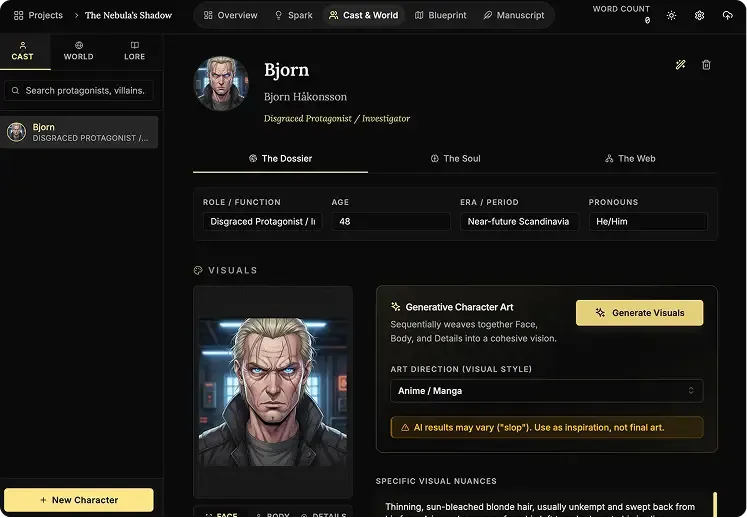
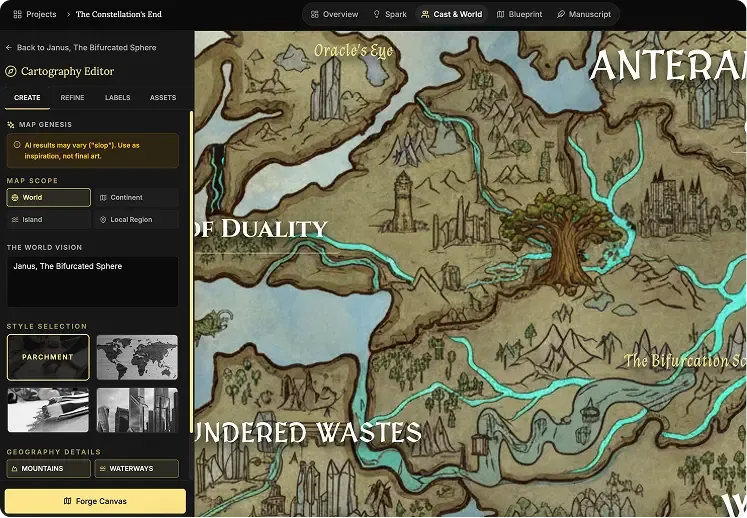
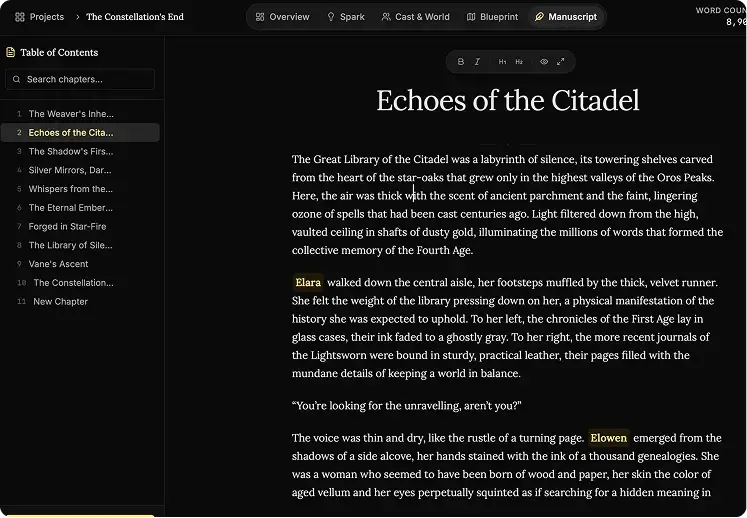
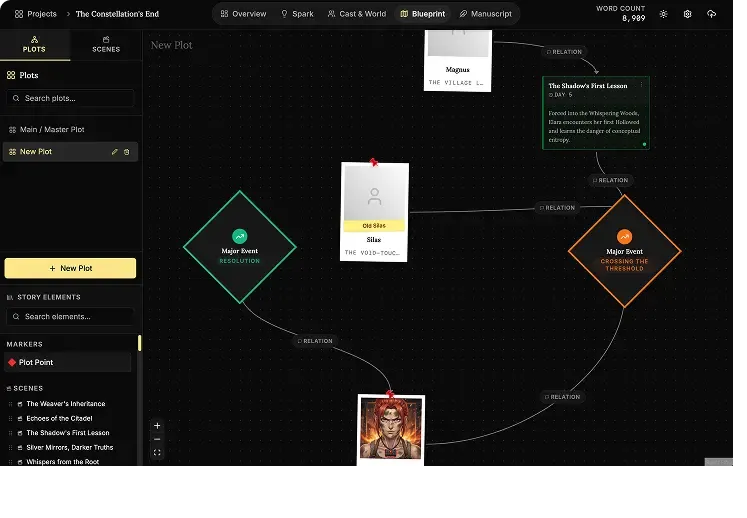
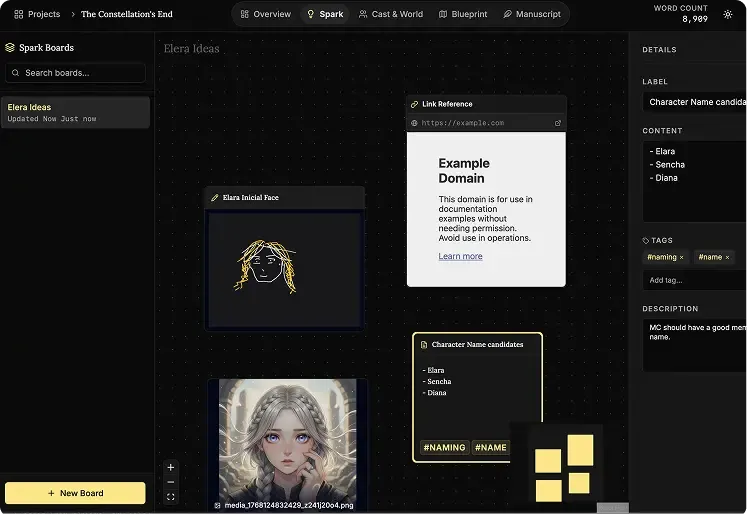
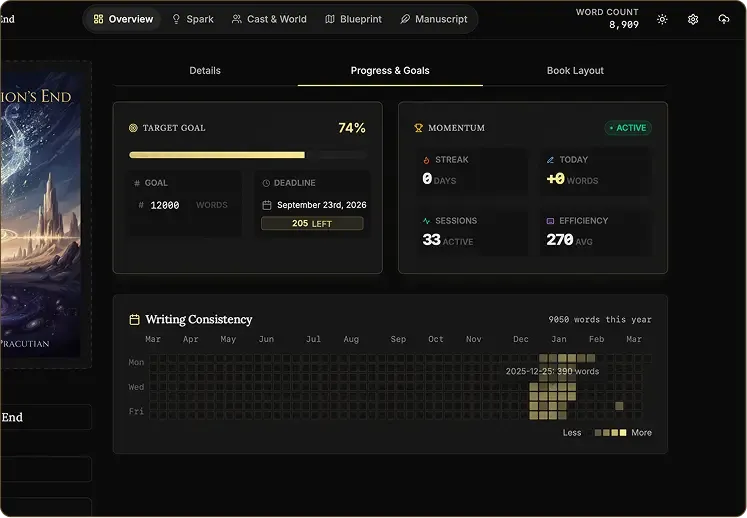
Draft with story knowledge, annotations, entity mentions, and project context nearby. The Manuscript sits inside the same NovelOS Studio project as your characters, world, timeline, manuscript, goals, tracker, revision tools, and publishing exports.
Record the idea where it affects the book, test it in scenes, and revise it beside the surrounding prose. NovelOS Studio keeps the craft decision attached to the novel instead of leaving it in a separate worksheet.