Narrative Technique
Unreliable Narrator
An unreliable narrator gives an account readers have reason to question because of deception, bias, limited understanding, memory, or self-protection.
Unreliable Narrator in a story
Unreliability exists on a spectrum. The narrator may report events accurately while misreading motives, or may deliberately alter the record.
Original fiction example
A memoirist insists she never opened her father's letters while quoting phrases that appear only inside them.
This example is original to the NovelOS glossary. It illustrates the term without borrowing a passage from a published novel.
Why writers use it
Use unreliability to make interpretation, self-knowledge, or contested truth part of the reading experience.
A useful revision question: Where does this device change what the reader understands, expects, or feels? If removing it leaves the passage unchanged, it may need a clearer function.
A common mistake
A late reveal that every earlier fact was fabricated can erase the evidence readers needed to participate.
Use unreliable narrator in NovelOS Studio
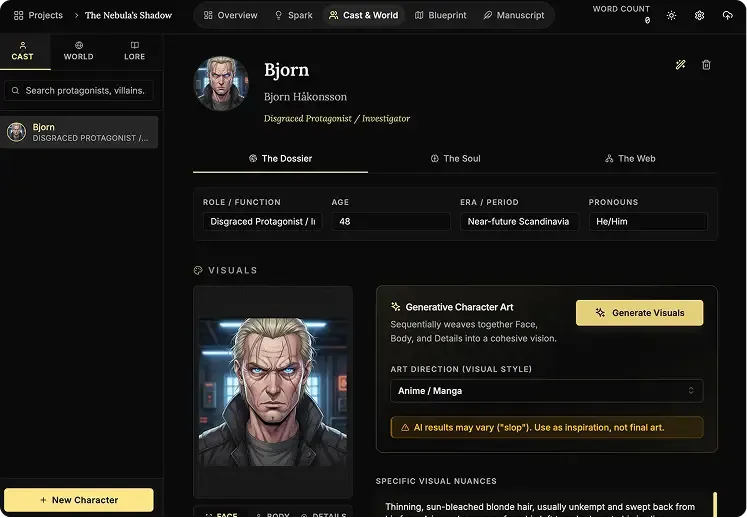
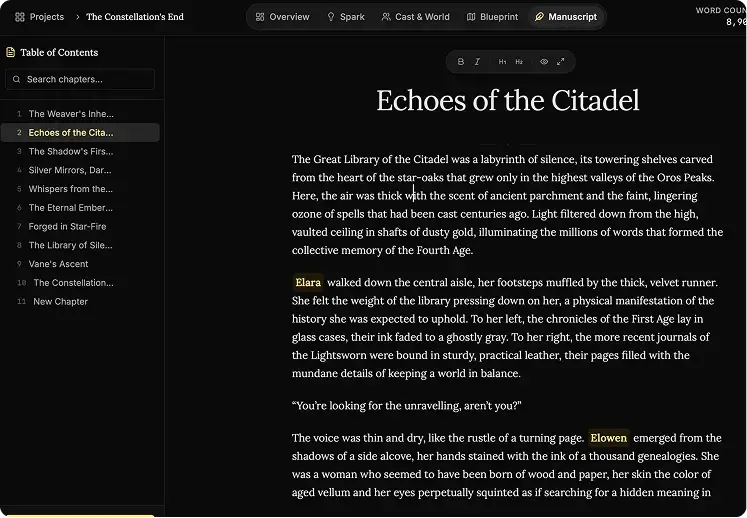
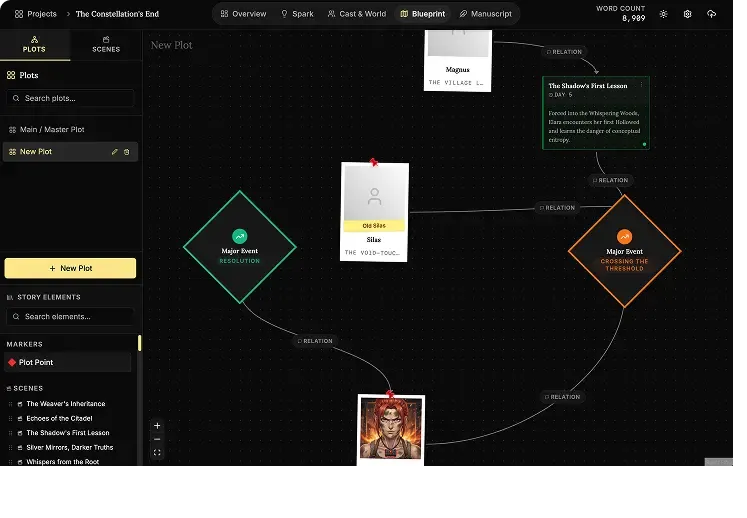
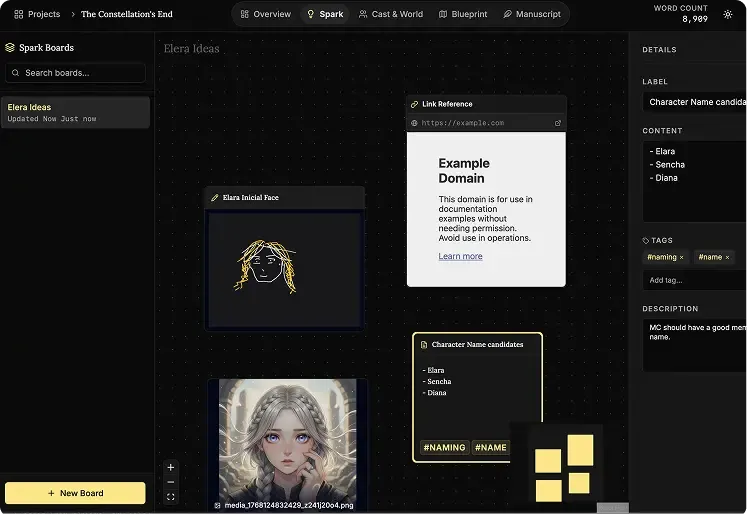
Draft with story knowledge, annotations, entity mentions, and project context nearby. The Manuscript sits inside the same NovelOS Studio project as your characters, world, timeline, manuscript, goals, tracker, revision tools, and publishing exports.
Record the idea where it affects the book, test it in scenes, and revise it beside the surrounding prose. NovelOS Studio keeps the craft decision attached to the novel instead of leaving it in a separate worksheet.