Narrative Technique
Omniscient Point of View
Omniscient point of view uses a narrator able to know more than any single character, potentially including several minds, histories, and future outcomes.
Omniscient Point of View in a story
Its defining feature is authoritative range, not random head-hopping. A coherent narrator decides when broader knowledge matters.
Original fiction example
While the bride counts empty chairs, the narrator reveals that three absent guests are approaching from different borders for incompatible reasons.
This example is original to the NovelOS glossary. It illustrates the term without borrowing a passage from a published novel.
Why writers use it
Use omniscience when the novel's meaning depends on a social field, historical scale, or deliberate comparison between minds.
A useful revision question: Where does this device change what the reader understands, expects, or feels? If removing it leaves the passage unchanged, it may need a clearer function.
A common mistake
Frequent unstructured switches can weaken intimacy and make readers unsure whose experience organizes the scene.
Use omniscient point of view in NovelOS Studio
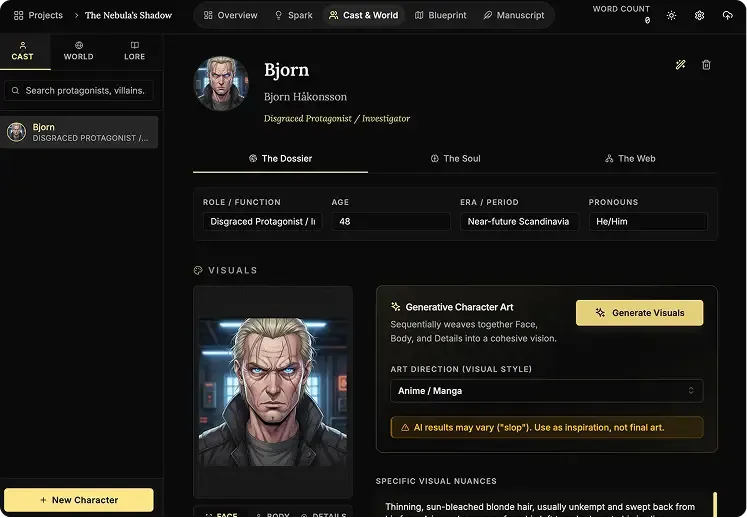
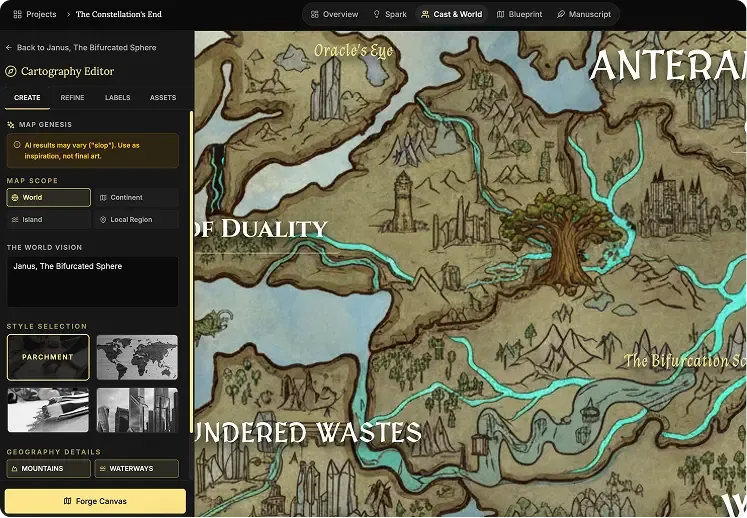
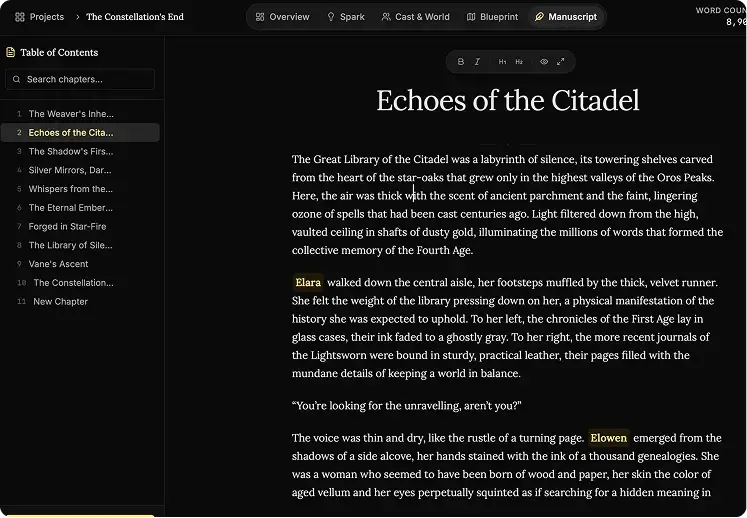
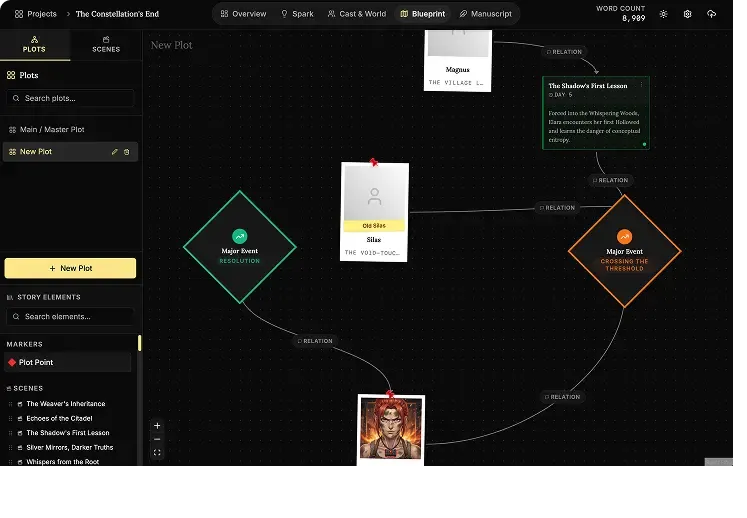
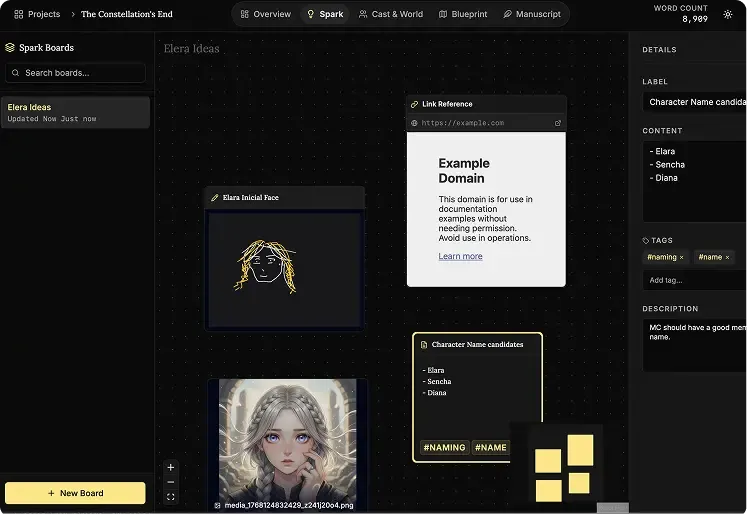
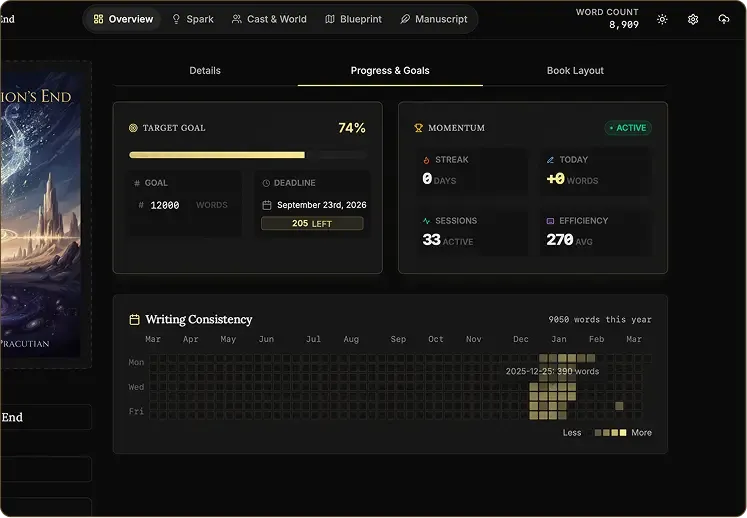
Draft with story knowledge, annotations, entity mentions, and project context nearby. The Manuscript sits inside the same NovelOS Studio project as your characters, world, timeline, manuscript, goals, tracker, revision tools, and publishing exports.
Record the idea where it affects the book, test it in scenes, and revise it beside the surrounding prose. NovelOS Studio keeps the craft decision attached to the novel instead of leaving it in a separate worksheet.