Slipstream Fiction Keeps Emotional Logic Intact as Reality Slips

Slipstream fiction unsettles the reader without offering the familiar contract of a puzzle. An office may employ two bodies for every worker. A dead parent may continue receiving mail from years that have not happened. A suburb may add a doorway to every street at midnight, though nobody agrees on what counts as entering one. These conditions can borrow from fantasy, science fiction, surrealism, horror, or realism while refusing to settle comfortably inside any one of them.
The refusal is purposeful. Slipstream asks readers to inhabit a reality whose categories no longer provide reliable shelter. The difficult craft problem is making that instability feel designed. If every strange event can mean anything, consequence disappears. If every event receives a tidy explanation, the dissonance closes and the story becomes a different kind of speculative narrative.
A useful solution is to keep emotional causality firm while loosening ontological causality. The reader may never learn why a worker’s second body arrives ten minutes late. They should understand what its absence does to the worker’s job, family, memory, and capacity to choose. Reality can slip while action still leaves a trace.
This article builds that effect through five controls: shared normality, selected deviation, social language, viewpoint distance, and consequence. The example follows an unnamed translator whose late body fails to arrive after eleven years of divided work. The premise supplies pressure, while the method remains applicable to any slipstream novel.
Treat slipstream as an effect before treating it as a shelf
Bruce Sterling’s 1989 discussion of slipstream emphasized a quality of feeling strange in a strange modern world. Later critics, editors, and anthologists have disagreed about whether the term names a genre, a category, a mode, a reading effect, or simply a useful gathering place for work between literary and speculative conventions. That disagreement is part of the form’s history.
For drafting, a functional definition is more useful than a definitive border:
Slipstream fiction produces sustained cognitive dissonance by changing the terms of ordinary reality while preserving a legible human pressure.
This definition contains two requirements. The changed reality must affect more than decorative imagery, and the human pressure must require action. A room full of hovering furniture may create a surreal image. It becomes story material when the furniture changes how someone works, cares for another person, keeps a promise, or understands a loss.
The term cognitive dissonance does not require characters to remain shocked. Often the characters accept what readers find impossible. The friction comes from seeing a social order built around a premise that our categories cannot comfortably absorb. In the translator’s office, late bodies are part of payroll, lift capacity, labor law, and domestic etiquette. The impossible has become administrative.
Compare adjacent forms only to sharpen the intended effect. Weird fiction may place greater emphasis on an encounter that changes the rules of attention or exposes an inhuman order. Magical realism can present the marvelous as part of lived reality within particular historical and cultural conditions. Slipstream may use either kind of material, but its central energy often comes from instability between explanatory habits.
Write a one-sentence effect contract before outlining: The reader should gradually feel that divided identity is less strange than the institutions that profit from it. This does not explain the premise. It tells you what kind of discomfort each major scene should deepen.
Build a shared normal and break one load-bearing assumption
Readers need enough stability to notice displacement. Start with three kinds of consensus:
- Material consensus: what bodies, rooms, objects, money, and time normally do in the story world.
- Social consensus: which behaviors are polite, legal, employable, shameful, or unremarkable.
- Narrative consensus: what the viewpoint treats as needing explanation.
For the translator, both bodies share memory until sleep. The early body handles scheduled work. The late body performs tasks the first considered and deferred. Payroll counts them as one employee. Apartments issue two keys but charge one tenant. Nobody explains the origin because the viewpoint has never lived outside this arrangement.
Now identify the load-bearing assumption. It is not merely that two bodies arrive. The society assumes division guarantees additional capacity without producing an additional person. Employment, housing, relationships, and language all depend on that convenient classification.
The initiating deviation removes the late body. At 9:10, the expected copy does not enter. This absence matters because the office has assigned two simultaneous deadlines, the apartment refuses to lock while it detects only one occupant, and the translator cannot tell which private commitments the missing body intended to keep.
Use a deviation budget. Choose one primary impossibility, two or three social adaptations, and one later mutation that revises what the premise means. Restraint gives each change weight. A vertical sea, a talking lift, disappearing currency, backward rain, and a third moon may each be striking, yet five unrelated marvels can turn the novel into a parade.
The later mutation should press on the same assumption. Perhaps other late bodies begin vanishing and sending postcards from unmapped suburbs. The event expands from one person’s loss into a dispute about whether the absent bodies fled, died, merged, or were never legally recognized. The new strangeness deepens the labor and identity pressure already present.
Keep ordinary facts alive. Rent rises. A parent moves into care. The department faces automation. Mundane pressures create surfaces where the speculative condition can be felt, while keeping the premise from becoming the world’s only interesting property.
Escalate dissonance across four connected layers
Slipstream escalation rarely needs a stronger monster or a larger explosion. It can proceed by making one condition harder to classify. Move the deviation across four layers, with each layer changing the next decision.
The practical layer concerns immediate function. The translator must cover two workloads, carry both keys, answer two invitations, and decide which appointment to miss. The absence is an operational problem before it becomes a philosophical one.
The social layer concerns other people’s categories. Coworkers offer bereavement leave, then withdraw it because no death certificate exists. A paired-breakfast vendor will not sell half an order. The translator’s parent asks whether the “braver one” will visit later. These responses show how the culture has assigned value to each body.
The personal layer concerns self-interpretation. Unsent letters, a train reservation, and an enrolled language class reveal actions the early body assumed the other would perform. The translator cannot decide whether those records belong to a separate person, an unrealized self, or an obligation still owed.
The ontological layer concerns the category itself. A postcard arrives in the translator’s handwriting from a district absent from every map. It describes the missing body as the one that arrived first. Evidence now destabilizes the words missing, copy, late, and self.

Link these layers by cause. The workload forces the translator to search the late body’s desk. The records found there force a trip to the station. The ticket clerk’s recognition changes the missing-body theory. The postcard creates a choice between returning to care for the parent and following a route that may redefine who left whom.
This chain protects the novel from episodic weirdness. Every strange discovery arrives because the previous disturbance produced an action. Each discovery then changes the available interpretation or choice.
Let viewpoint grammar carry the instability
Slipstream depends on the difference between what the viewpoint accepts and what readers find unfamiliar. Explanatory prose can erase that difference. If the narrator pauses to define second bodies, explain their history, and compare them with our reality, the voice starts behaving like a tour guide.
Use operational context instead. The translator left the second key under the mat because either body might reach home first. The sentence presents the practice, the reason, and the impossible condition without announcing that the condition is strange.
Narrative distance determines how much interpretation enters with the fact. Close third person can reproduce the translator’s habitual categories. A more distant narrator can expose contradictions in the social order. First person can make pronoun choice part of the pressure. Choose deliberately rather than shifting whenever the premise becomes hard to explain. Our guide to controlling narrative distance provides a fuller method for changing proximity without losing viewpoint authority.
Create a language-change ledger. Record the accepted term at the opening, the context that destabilizes it, and the replacement or refusal that follows.
| Opening term | Pressure | Later language |
|---|---|---|
| early body | the “late” body sends a message dated earlier | scheduled body |
| singular | one body remembers two incompatible days | unpaired |
| convergence leave | memories fail to join after sleep | memory dispute leave |
| one employee | both bodies independently resign | employment case under review |
The table is a planning device, not a glossary to paste into the manuscript. On the page, vocabulary should change through use. A manager corrects a form. A parent rejects a pronoun. A public notice invents a euphemism. Workers deliberately adopt a term the company avoids.
Sentence movement can participate too. Ursula K. Le Guin asks writers to make rhythm embody physical and emotional reality. Early scenes may use balanced clauses that reflect paired work: one body attends the meeting, the other calls home. After the disappearance, sentences can begin symmetrically and fail to complete the second action. At the point of decision, a short singular sentence can carry unusual force: The translator goes home.
Use pattern with restraint. If every line performs the concept, the prose becomes a demonstration. Reserve the clearest rhythmic changes for moments when the character’s way of perceiving has actually shifted.
Preserve consequence even when explanation remains open
Readers can tolerate unresolved ontology when they can follow desire, evidence, choice, and effect. Build every major scene around those four elements.
The translator wants to know whether the missing body abandoned their shared life. A train ticket provides evidence of a planned journey. The translator chooses to follow it, missing the meeting that will decide the department’s future. The department closes. That consequence cannot be undone by learning what the second body “really” was.
Keep competing explanations active through differentiated evidence. One theory says the late body escaped exploitation. Another says both bodies are temporal versions of the same person. A third says the city creates surplus selves whenever decisions are deferred. Each theory should explain some facts and fail on others. No theory should free the protagonist from deciding.
Track emotional causality separately from speculative causality:
- The parent praised the late body for making difficult visits.
- The early body learned to assign courage elsewhere.
- The disappearance exposes that division as a habit of avoidance.
- The translator must now choose whether to visit the parent without a substitute.
- The visit changes the relationship, regardless of where the missing body went.
This sequence is firm. The cosmology can remain porous because the character movement is traceable.
Supporting characters should represent experiences rather than positions in a debate. One divided coworker may feel exploited by double output. Another values the companionship. A third hides an extra body from census officials. Their lives complicate any slogan that declares division wholly liberating or wholly oppressive.
The climax should combine a practical deadline with a category decision. The employer may require all remaining workers to register one “primary” body before midnight. The translator has received a return ticket with no passenger name. Choosing to reject the primary-body form can protect absent workers’ claims while costing the translator severance and housing eligibility. Choosing whether to use the ticket remains a different question.
That distinction matters. A slipstream climax can resolve what someone does without resolving what reality is.
End with an afterimage that revises the opening
Return to an opening routine after the character’s attention has changed. The translator enters the closed office at 9:00. At 9:10, late versions of abandoned furniture arrive: another clock, a second chair, a desk containing letters never written. No second translator appears.
The image should alter the story’s central category. The reader once treated duplicated bodies as the strange element. Now the institution’s certainty about ownership, labor, and singular identity feels stranger. The furniture suggests the phenomenon was never limited to people, but the novel does not need to explain its mechanism.
Close the practical lines you promised. Show where the translator will sleep, what happened to the parent visit, whether the worker claim survives, and which letter is delivered. Leave open the questions whose openness creates the intended afterimage.
An ending audit can separate three levels:
- Resolved action: what decision was made and what immediate result followed.
- Changed interpretation: which familiar category can no longer be used innocently.
- Productive remainder: which image or contradiction continues working after the last page.
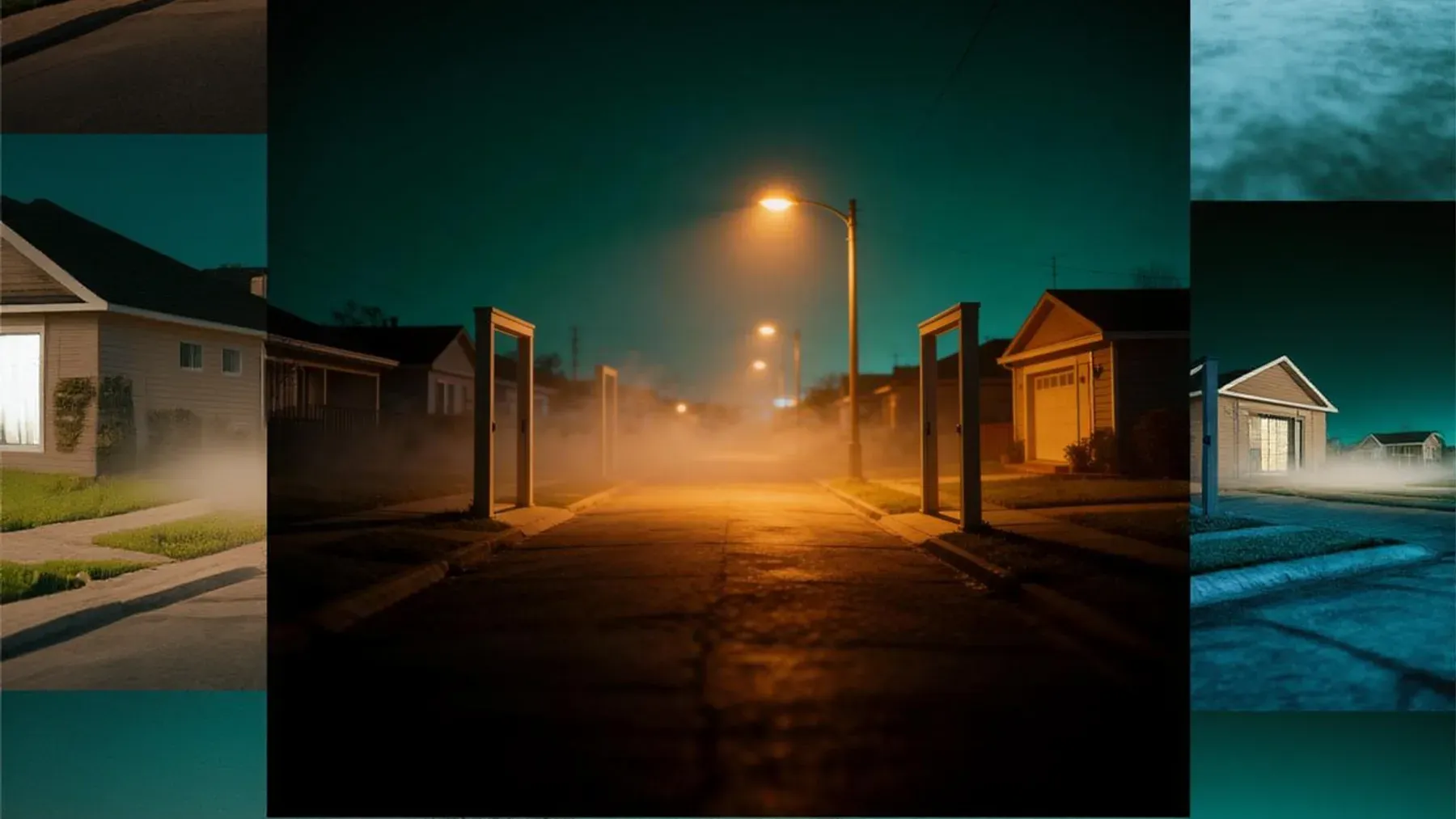
The productive remainder should arise from the novel’s established vocabulary and pressure. A random final marvel merely starts another story. A transformed version of the office clock, paired key, blank form, or missing district returns the reader to material they already know and makes it newly unstable.
Keep every reality state connected in NovelOS Studio
A slipstream manuscript can look deliberately unstable while the underlying project remains exact. The writer needs to know which facts are fixed, which are viewpoint assumptions, which explanations compete, how vocabulary changes, and where each consequence lands. NovelOS Studio gives those layers separate places without forcing the published novel to explain them all.
For the divided-worker novel:
- Use Cast & World to record each body’s memories, desires, social status, pronoun choices, relationships, and disputed identity. Give coworkers distinct experiences instead of assigning them abstract arguments.
- Build office policy, housing rules, arrival customs, the unmapped district, accepted vocabulary, and the writer-only premise boundaries in The Architect.
- Map body-to-body memory, employment control, family attachment, document ownership, and public recognition in Connections. A relationship can change even when its ontological label remains unresolved.
- Use Spark to compare later mutations of the opening premise. Test each option against the effect contract and deviation budget before adding it.
- Arrange arrivals, missed meetings, letters, train journeys, policy deadlines, and memory joins in The Blueprint and Timeline View. Keep physical event order distinct from what each body remembers and what readers learn.
- Draft normalized impossibility and changing language in The Manuscript. The surrounding scene remains visible while you judge whether a strange image changes action or merely decorates it.
- Use The Alchemist to test sentence rhythm, remove tour-guide explanation, and vary repeated institutional language while preserving the original text for comparison.
- Create Goals and Trackers for deviation count, vocabulary changes, theory evidence, emotional cause and effect, closed practical lines, word count, and revision progress.
- At production time, Editorial Foundry can make EPUB, DOCX, RTF, Markdown, text, standalone HTML, and PDF editions for screens or print.
Writers can use the desktop app on macOS or Windows. Project data remains on the author’s machine, and a single purchase permits activation across unlimited owner computers. This gives an experimental novel a stable, private source of truth while the reading experience remains productively uncertain.
Slipstream succeeds when readers can describe what changed even if they cannot settle what the change is. Preserve that distinction from first routine to final afterimage. Build the unstable world, its human consequences, and the book readers will carry away in NovelOS Studio.
Sources and further reading
- The Encyclopedia of Science Fiction, “Slipstream SF”: the term’s relationship to genre science fiction and work that uses speculative devices outside conventional genre expectations.
- Tachyon Publications, Feeling Very Strange: The Slipstream Anthology: publisher context for James Patrick Kelly and John Kessel’s influential anthology of visionary strangeness between literary and popular forms.
- Oxford Research Encyclopedia of Literature, “Speculative Fiction”: slipstream within the fuzzy-set supercategory of non-mimetic and hybrid speculative forms.
- Victoria de Zwaan, “Slipstream,” in The Oxford Handbook of Science Fiction: the term’s history, reading lists, aesthetic effect, and relationship to counterrealism, experimental fiction, and speculative fiction.
- Lawrence Person, “Slipstream Master List”: a preserved working list combining Bruce Sterling’s original selection with later additions.
- Ursula K. Le Guin, Steering the Craft: viewpoint as the position from which a story is told, narrative voice, and rhythm that embodies physical or emotional movement, visually checked on physical PDF pages 15 through 17 and 51 through 54 of the local reference copy.
- Lummi: Ambient Room With Blurred Figures, Abstract Figure Behind Glass, and Surreal Night Street. Each exact record was checked as free, non-Pro, and available before local WebP conversion.