Biopunk Begins Where a Living Product Meets Institutional Power
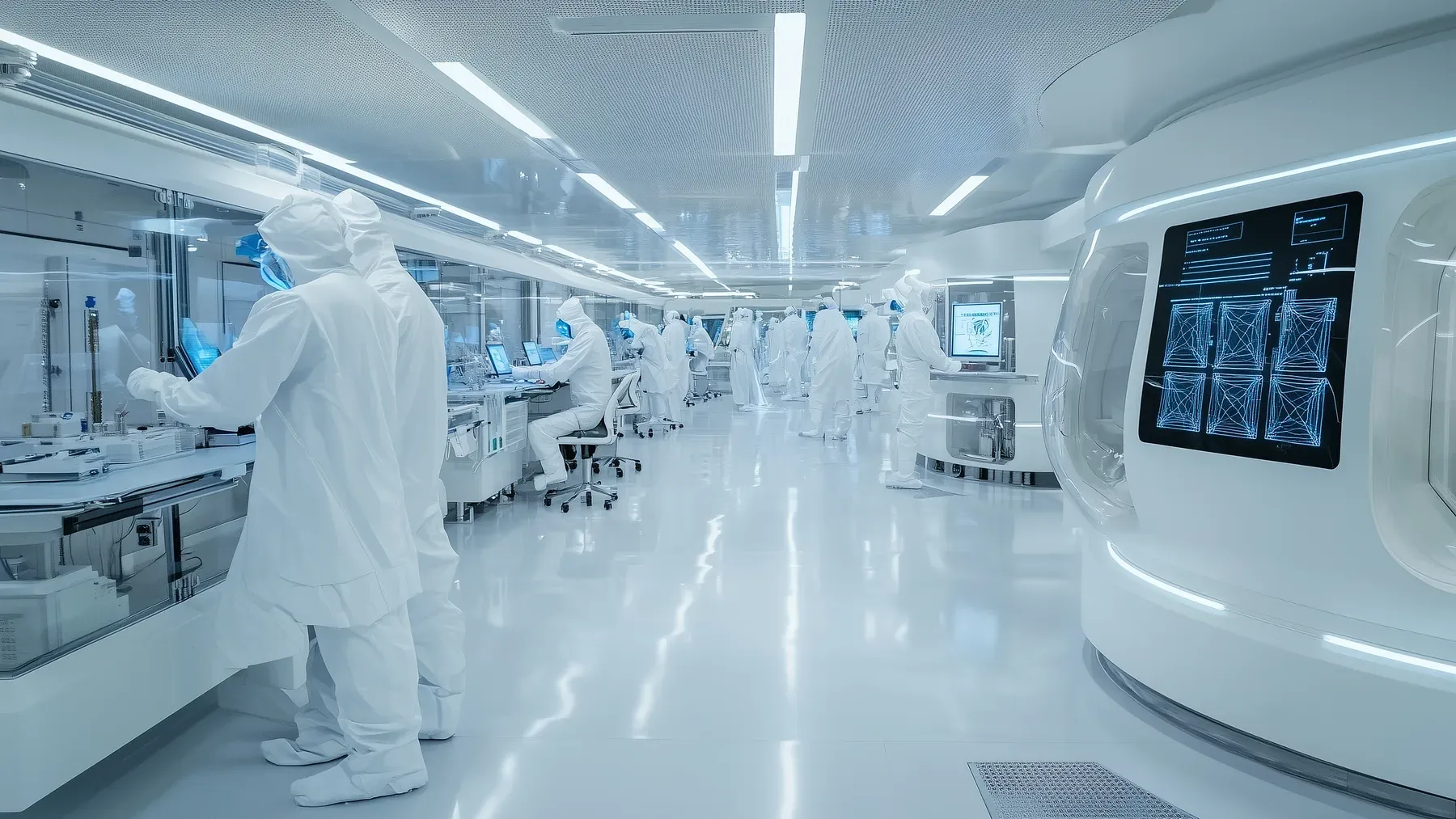
Biopunk is speculative fiction about biotechnology and the power built around living systems. The defining conflict can involve gene editing, cultured tissue, engineered microbes, synthetic organs, reproductive technology, body modification, or ecological design. The genre gains its force when an intervention has owners, operators, patients, regulators, waste, failures, and unequal routes of access.
Consider a temporary lung lining grown from a patient’s cells. It filters refinery dust and must be replaced every month. The clinic calls it a therapy. The employer calls it a benefit. The manufacturer calls each living strip a licensed product. The patient experiences it as breath.
When the employer cancels coverage, the tissue continues functioning for seven days. A laboratory worker knows that an unauthorized growth medium might keep it alive. The same medium can also change where the cells grow.
That premise contains the central biopunk question: who may accept biological risk when survival depends on a process controlled by someone else?
Treat the Biotechnology as a Living Product
Start with one biological capability stated plainly: cultured tissue replaces a damaged lung surface and filters one class of industrial particle. Then describe what the treatment is expected to be at the moment a patient receives it.
Cell and gene therapy manufacturing offers a useful vocabulary. Regulators and manufacturers care about identity, purity, potency, safety, consistency, and stability. Those terms can become story questions:
- Identity: Are these the intended cells, and do they belong to the intended patient?
- Purity: Which other cells, microbes, chemicals, or process residues are present?
- Potency: Does the tissue perform its claimed filtering function strongly enough?
- Safety: Can it spread, transform, trigger an immune response, or carry contamination?
- Consistency: Does this month’s batch behave like the previous one?
- Stability: How long does it remain usable during storage, transport, and implantation?
A living product can change while it is being made and after it enters a body. Patient-derived cells vary. Culture conditions select some cells over others. Temperature, time, nutrients, equipment, operator technique, and starting material affect the final batch. This makes “the treatment works” an incomplete rule.
Build a specification sheet with a target, acceptable range, test, test duration, and consequence of failure. Perhaps potency testing takes twelve hours while the tissue remains stable for eighteen. A sterility result may arrive after a desperate clinic must decide whether to implant. A batch can pass identity and fail purity. Another can meet every release criterion and cause a rare immune reaction that the current assay does not predict.
Choose the fictional departure carefully. The tissue’s rapid growth is invented. Its dependence on materials, process control, qualified labor, testing, and follow-up remains recognizable. Readers need enough mechanism to understand why the seven-day deadline exists and why substituting a nutrient creates a particular danger.
In the local reference collection, EA Younker’s Eighth Day Genesis essay follows an invention’s lasting benefits and harms through society. Biopunk makes that ripple bodily. The therapy returns people to work, reduces deaths, creates specialist employment, expands corporate data, locks patients to clinics, and gives employers new leverage over injured workers.
Draw the Process Before You Draw the Conspiracy
A biological treatment reaches a patient through a chain of actions. For an individual cell product, that chain might include consent, sample collection, labeling, transport, cell isolation, editing, expansion, washing, testing, release, shipment, clinical preparation, administration, monitoring, and disposal.
Give every step five fields:
| Process field | Story question |
|---|---|
| input | Which cells, reagents, data, equipment, and instructions enter? |
| operator | Who performs the work, and which qualification do they need? |
| controlled condition | Which temperature, time, pressure, cleanliness, or sequence must hold? |
| evidence | Which record or sample shows the step occurred correctly? |
| failure destination | Is the material destroyed, reworked, quarantined, reported, or quietly released? |
This process map creates a plot more durable than a vague evil laboratory. A night-shift culture technician notices that three supposedly contaminated batches survive without the patented enzyme. A courier knows that shipments to one district repeatedly exceed their temperature window. A waste operator discovers viable tissue in containers marked sterile. A clinic pharmacist sees labels that nearly match and patient identifiers that do not.
The workers possess different pieces of the truth because the process distributes knowledge. The culture technician can explain cell behavior and cannot see insurance cancellation. The clinician sees symptoms and cannot inspect proprietary manufacturing records. The patient knows appetite, fatigue, pain, sleep, and work tolerance that a dashboard reduces to acceptable oxygen levels.
Patient-specific production also makes identity a physical stake. A switched label sends living material grown from one body into another. Chain of identity follows whose cells these are. Chain of custody follows who controlled them at each stage. Add one broken handoff, then ask what evidence could reconstruct it.
Labor changes the product. If a company raises each technician’s workload from seven cultures to twelve, the effect may appear through delayed observations, hurried cleaning, skipped double-checks, and fewer chances to investigate unusual growth. A resilient cell line can emerge from biological variation and altered process conditions rather than a convenient miracle.
The method used to create a believable fictional system helps connect these stations. A rule becomes meaningful when someone applies it, someone benefits from it, and someone absorbs the exception.
Separate Ownership, Custody, Permission, and Control
“The company owns the patient’s body” sounds forceful and often conceals the actual conflict. Divide control into narrower rights that characters can exercise or contest.
The patient may retain a claim over the original sample. The manufacturer may hold patents or trade secrets covering a process, engineered sequence, vector, medium, cartridge, or quality test. A clinic may possess the current batch and have professional authority to administer it. An employer may control payment. A regulator may permit production and suspend a facility. A database operator may control access to monitoring records.
Create a rights ledger for the central biological material:
- Who may collect it?
- Who may possess and transport it?
- Who may reproduce or modify it?
- Who may administer, remove, repair, or destroy it?
- Who receives the data it generates?
- Who may profit from later discoveries?
- Who bears liability for contamination, mutation, or injury?
- What changes when the patient withdraws, dies, changes employers, or crosses a border?
The answers can conflict. A patient may lawfully possess an implanted cartridge and lack permission to refill it. A laboratory worker may know how to reproduce the culture and lack authorized access to one reagent. A clinic may have emergency inventory and be contractually barred from treating patients whose coverage ended.
Avoid presenting patents as ownership of every naturally occurring biological fact. Laws differ by jurisdiction and change over time. Research the legal system used in the novel, decide which claims have actually been granted, and distinguish a company’s public threat from a court-tested right. Institutional uncertainty can be a source of power because a patient cooperative may lack money to challenge an aggressive interpretation.
Access should appear as a procedure. Which diagnosis qualifies? Who orders the test? Which evidence does an appeal require? How far must a patient travel? What happens during an employment gap? Which complication makes a person ineligible? A benefit becomes a mechanism when the reader can identify its gatekeeper, waiting time, data demand, and appeal route.
This is where biopunk’s punk energy becomes specific. Resistance might include worker organizing, patient-owned production, open assays, community monitoring, collective purchasing, data refusal, legal challenges, sabotage, or an underground clinic. Each tactic should address one control point and create a new responsibility.
Make Consent a Set of Changing Permissions
Consent is more useful in fiction when it covers distinct actions instead of appearing as one signature. The patient may agree to treatment, storage of remaining cells, safety follow-up, use of clinical data, future research, commercial development, recontact, or sharing with another institution. Those permissions do not have to travel together.
Write a consent timeline:
- During intensive care, the patient authorizes treatment and necessary safety monitoring.
- Six months later, the manufacturer asks to retain unused cultures for product improvement.
- Two years later, monitoring data contributes to a filter sold back to the refinery industry.
- After coverage ends, the company continues collecting signals because remote surveillance is embedded in the cartridge.
At each point, ask what the person understood, which alternatives existed, what refusal would cost, and whether the proposed use changed. A decision made during a medical emergency may be formally documented and still occur under severe dependency.
The WHO governance framework for human genome editing stresses robust oversight and the scientific, ethical, social, and legal dimensions of emerging biotechnology. It also places governance across institutional, national, regional, and global levels. A biopunk novel can dramatize the gaps between those levels. A hospital ethics board can reject a study while a private clinic offers it abroad. A national registry can expose unsafe trials while driving desperate patients toward an unrecorded network.
Keep the body present during institutional debate. The tissue tightens around scar tissue when the patient bends. Immune calibration causes fever. A failing strip changes taste and sleep before a monitor flags danger. Gratitude and anger can coexist. A therapy can genuinely save a person and still organize that person’s life around corporate permission.
The craft of body horror can help render this intimacy, especially when the physical change threatens identity or bodily autonomy. In biopunk, keep the sensation attached to the treatment’s process and power structure rather than treating transformation as isolated spectacle.
Consent also belongs to communities when an organism can spread or alter shared environments. Releasing an engineered microbe into a river affects people who never entered a clinic. The relevant question expands from who accepted treatment to who had authority to expose others.
Give Liberation Its Own Quality-Control Problem
An unauthorized cell line is not safe because a cooperative controls it. If the resilient tissue survives without the company’s enzyme, investigate what else changed. It may migrate beyond the cartridge, respond differently to inflammation, carry contamination, lose filtering potency, or remain viable in waste.
Build an evidence ladder before characters choose distribution:
- Observation: several cultures remain alive after the expected failure point.
- Replication: a worker repeats the condition in separate samples.
- Characterization: tests compare identity, purity, growth, function, and abnormal behavior.
- Containment: the team determines whether cells survive outside the device and how to deactivate them.
- Limited use: a monitored case proceeds under stated stopping rules.
- Follow-up: symptoms and biological changes remain observable long enough to detect delayed harm.
Urgency puts pressure on every rung. The patient’s tissue expires in seven days. Replication needs three. A meaningful abnormal-growth assay needs ten. Characters now argue over a defined uncertainty instead of taking generic positions for courage or caution.
The cooperative may decide against immediate implantation and use its conventional inventory to extend six patients while testing continues. That choice protects scientific responsibility and leaves hundreds exposed to cancellation. Another group may distribute the cells without authorization. Shared opposition to the manufacturer does not create agreement about acceptable risk.
Containment creates setting-level consequences. Waste treatment, air handling, water systems, protective clothing, sample storage, cleaning chemistry, insects, animals, and human movement can become routes. If the organism cannot survive outside a controlled temperature, establish that property and how it was tested. If it can persist, let the city, clinic, and ecosystem respond.
An earlier guide to writing plague fiction through investigation provides a useful model for competing hypotheses and evidence dates, even when the biopunk organism is therapeutic rather than infectious. State what is known, what remains suspected, and which observation would change the plan.
Resolve Production Capacity Alongside the Data Leak
Publishing a formula does not create treatment. The process still needs qualified workers, clean space, equipment, raw materials, assays, release decisions, transport, clinicians, and follow-up. Make the climax fight over capacity.
The manufacturer locks the culture facility and orders destruction of the resilient line. Workers occupy the production floor and preserve environmental controls. Patients hold licensed clinics open through public presence. A clinician proposes a monitored protocol with explicit stopping rules. The patient whose coverage ended releases evidence that the refinery owns part of the treatment company and profits from both exposure and therapy.
Each action addresses a different control point. Workers preserve physical capacity. Patients create political protection. Clinicians preserve a safety pathway. The disclosure changes public understanding and cannot operate a bioreactor.
The outcome should alter rights and capability in measurable ways. A court might suspend termination for current patients. A city may receive temporary authority over local manufacture. The cooperative may gain seats in trial design and access to adverse-event data. Patents remain disputed. The resilient line remains under study. Some people still lack supply.
The body closes the argument. The first patient receives a conventional strip made during worker control of the facility. The seven-day clock ends, while the governance fight continues. Survival came from collective command of a process rather than possession of one secret file.

Keep the Living System Legible in NovelOS Studio
Biopunk joins intimate bodily change to manufacturing, law, labor, data, ecology, and public power. NovelOS Studio provides a local-first Windows and macOS workspace where those layers can remain connected to the manuscript.
- Develop patients, relatives, culture technicians, couriers, waste workers, clinicians, regulators, executives, organizers, and researchers in The Oracle and Cast & World. Give each person a defined field of observation, authority, repair skill, exposure, and evidence.
- Trace treatment, employment, tissue origin, care, surveillance, patents, samples, secrecy, and dependence in Connections. The same biological material can link several people through different duties.
- Store cell rules, quality specifications, assays, facilities, clinics, companies, laws, consent records, supply inputs, waste routes, and containment limits in The Architect.
- Use Spark to compare plausible side effects, control points, resistance tactics, and institutional responses before choosing the version that creates the strongest causal pressure.
- Align biopsies, culture time, transport windows, test duration, tissue expiry, symptoms, appeals, shutdowns, and follow-up in The Blueprint. Separate the biological timeline from the dates when people learn each result.
- Draft bodily experience, laboratory decisions, consent conversations, and collective action in Manuscript. During revision, Alchemist can explore alternatives without hiding the source passage or taking the decision away from the writer.
- Use goals and trackers for research, batch state, character knowledge, scene completion, word count, unanswered safety questions, and revision. Editorial Foundry can form an EPUB or fixed-page PDF. It also prepares DOCX and RTF handoffs, Markdown or TXT copies, and a self-contained HTML edition.
Move the project through .novelos archive export and import whenever you change computers. The personal license can be active on unlimited supported desktop devices, and Mobile ships on iOS and Android on the same licence, installed from the browser. NovelOS Studio helps the writer follow a living product from cell sample to final consequence while keeping the patient, worker, and contested institution in the same story.
Sources and further reading
- FDA: Cellular and Gene Therapy Guidances, covering manufacturing, controls, potency, safety, comparability, clinical development, and long-term follow-up.
- FDA: Guidance for Human Somatic Cell Therapy and Gene Therapy, on production controls, characterization, individual-recipient products, and release testing.
- World Health Organization: Human Genome Editing Governance Framework, on oversight across scientific, ethical, social, legal, institutional, national, regional, and global contexts.
- GMP-Grade Manufacturing and Quality Control of a Patient-Specific Cell Product, on qualified people and devices, identity, viability, sterility, process parameters, transport, batch variation, and release criteria.
- EA Younker, “Shaping Societies: Technology and Its Effects,” in Eighth Day Genesis, especially printed pages 177 to 179 on social consequences, mixed benefit and harm, and effects that persist beyond an invention’s immediate use.
- Lummi: High-Tech Laboratory Environment, Worker in High-Tech Industrial Facility, and Doctor Patient Discussion. Each exact record was checked as free, non-Pro, and available before conversion.