Climate Fiction Lives in the Consequences People Must Inhabit
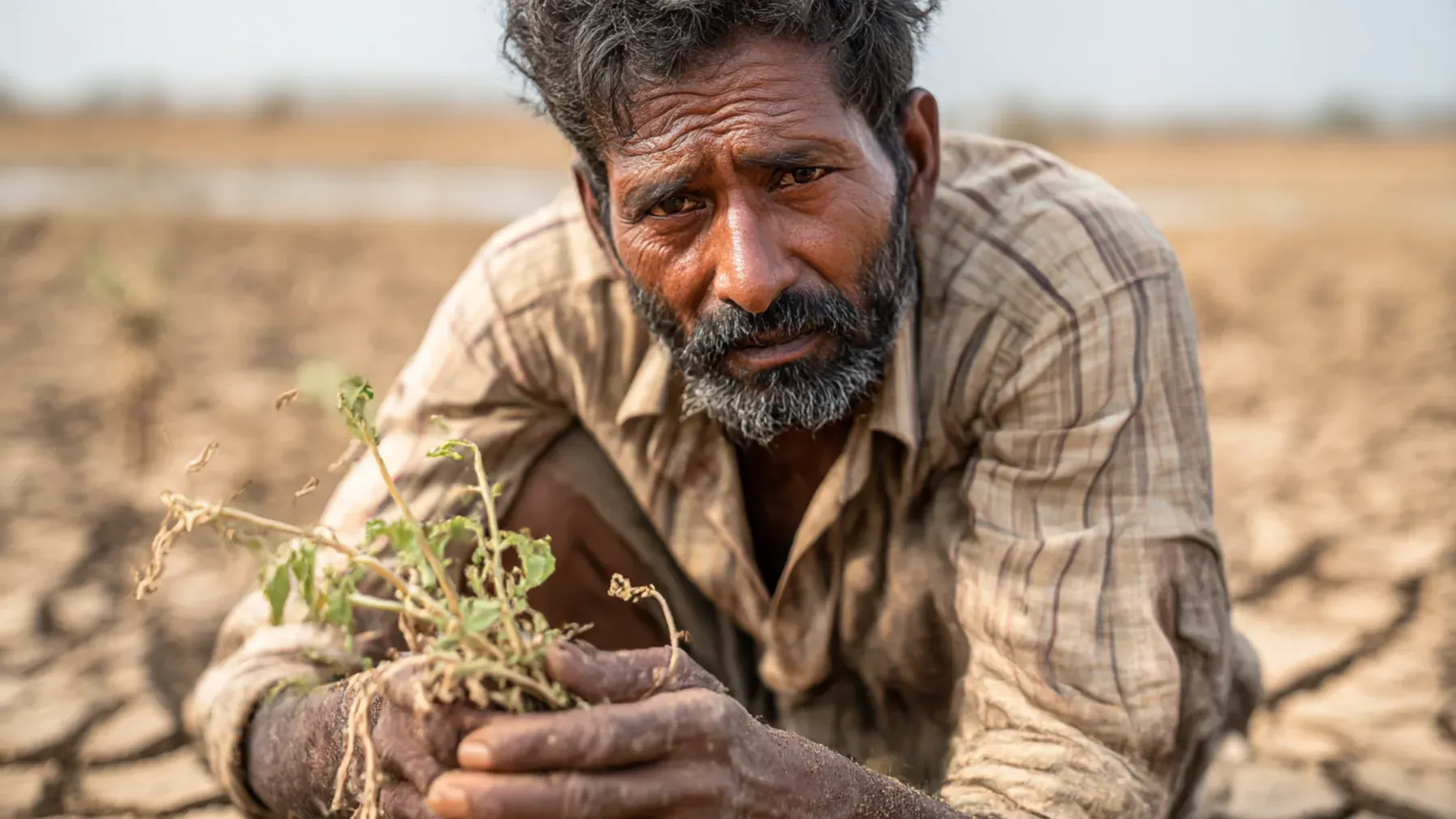
By the third summer without a full rainy season, a clinic physician can identify an illegal well by sound.
Legal pumps shut off when the district groundwater meter reaches its daily limit. Illegal pumps continue with a low metallic shudder after midnight. She follows that sound beneath the clinic floor and discovers that the director has diverted water from three neighboring farms to keep five dialysis patients alive.
He has protected people who cannot travel for treatment. He has also accelerated the failure of wells supporting hundreds of residents.
This is where climate fiction becomes immediate. Temperature, rainfall, and atmospheric change enter the story through labor, medicine, food, debt, housing, transport, law, family, and unequal power to adapt. A hazard establishes conditions. People turn those conditions into decisions with consequences.
What Is Climate Fiction?
Climate fiction, often shortened to cli-fi, explores lives and societies shaped by climate change, its causes, its impacts, or responses such as adaptation and mitigation. It can be contemporary, historical, speculative, literary, commercial, hopeful, tragic, or spread across several genres.
The definition is broad because climate change is not one plot. It alters physical hazards and intersects with exposure, vulnerability, development choices, infrastructure, institutions, ecosystems, and resources. The same heat event has different consequences for a sheltered office worker, an outdoor laborer, a tenant in an uncooled apartment, and a patient whose medicine requires refrigeration.
The IPCC Working Group II summary emphasizes that risk, adaptation, equity, and sustainable development vary by geography, capability, culture, values, and past decisions. For fiction, that means a global trend must become a local causal system before it can drive a scene.
The clinic story focuses on unreliable seasonal rain, groundwater decline, heat, and unequal allocation in one agricultural valley. It does not need to represent every climate impact. Its depth comes from following a bounded set of changes through health care, farming, loans, electricity, household labor, and migration.
Build a Hazard Brief Before You Build the Plot
“The climate has worsened” is too general to control a novel. Write a hazard brief with location, period, baseline, direction of change, variability, extremes, confidence, and unresolved questions.
The valley has experienced twelve years of less reliable seasonal rain. The important change is uneven timing as well as the annual total. A destructive cloudburst can occur within a drying trend, followed by weeks in which hardened soil absorbs little water. One wet season offers temporary relief without restoring aquifers or reversing the long pattern.
This distinction protects the story from a common error. Climate describes patterns across time; weather describes shorter conditions. Long-term evidence remains necessary whether characters experience a cool week or one destructive storm. They can still argue over those events because evidence, interest, and timescale shape their interpretations.
Use regional and local sources when choosing exact effects. Global average temperature does not specify one watershed’s rainfall, soil moisture, disease range, or crop response. Regional assessments, observation records, land use, elevation, hydrology, infrastructure, and community knowledge narrow the possibilities.
Mark every claim in your notes as observed, projected, extrapolated, or invented. Add a source date and geographic scope. If precise local data is unavailable, use fewer exact numbers and preserve well-supported relationships. A fictional projection can extend evidence, but readers should be able to distinguish researched direction from authorial invention.
The local worldbuilding reference Eighth Day Genesis recommends examining climate, water, ecology, resources, and changes that affect a society rather than treating a world as one uniform biome. That advice fits climate fiction particularly well. The valley floor, upland farms, reservoir town, and receiving city should not share identical exposure.
The guide to a realistic storm scene applies the same discipline at scene scale: track information, location, timing, and compound hazards instead of using weather as spectacle.
Follow One Change Through a System Map
Start with one physical change and draw arrows until you reach a character decision. Lower groundwater increases pumping depth. Deeper pumping raises electricity demand. Grid instability threatens refrigeration. Failed refrigeration changes which medicine the clinic can store. Treatment schedules shift. Families travel farther. Lost work increases debt.
For each arrow, record five fields:
- Mechanism: Why does one condition affect the next?
- Lag: Does the effect appear in minutes, seasons, or years?
- Threshold: At what point does inconvenience become failure?
- Intervention: Who can interrupt the chain, and with what resource?
- Distribution: Who receives the benefit and who carries the cost?
The illegal well interrupts one chain by protecting dialysis. It worsens another by reducing farm water. The director’s choice is legible because both effects are concrete.
Extend the system beyond the first sector. Lower yields reduce income. Debt prompts livestock sales. Less dairy work changes household labor and school fees. Export contracts penalize crop changes. Young adults seek work elsewhere, leaving older residents and children with fewer caregivers. Hotels with purchased water rights continue operating and market themselves as climate-secure retreats.
These links prevent a shallow split between people who understand climate change and people who deny it. The physician, farmers, director, hotel owner, and officials may agree that water is declining while disputing priority, timescale, evidence, ownership, and acceptable sacrifice.
Infrastructure adds history. The reservoir was designed from older rainfall assumptions. Canal allocation favors people holding title when it opened. Informal households buy tanker water at a higher price. The current hazard exposes past allocation rather than creating inequality from nothing.
If food belongs in the chain, the food-scarcity worldbuilding guide shows how supply, price, storage, substitution, labor, and political legitimacy interact. Select only the links the viewpoint can encounter and act upon.

Let Adaptation Create New Conflict
Adaptation is action that adjusts to actual or expected climate effects. Mitigation reduces or prevents greenhouse gas emissions or strengthens removals. A novel may include both, but they operate on different causal levels and timescales.
The valley adapts through water schedules, crop changes, shade, solar refrigeration, mobile treatment, early warnings, rain capture, and mutual aid. Each measure requires land, money, labor, knowledge, authority, or maintenance. Each can help one group while burdening another.
Create an adaptation ledger with the proposed measure, intended benefit, eligible users, excluded users, upfront cost, maintenance owner, failure condition, and possible maladaptation. Maladaptation means a response that increases climate risk, vulnerability, or inequity now or later.
The clinic’s deeper borehole keeps treatment local. It may pull poorer-quality water upward, increase electricity use, and accelerate aquifer decline. A hotel-funded tanker route guarantees delivery while raising prices and normalizing private control. Drought-tolerant seed reduces water demand but may violate an export contract and leave farmers dependent on one supplier.
The IPCC technical summary stresses that effective adaptation can require changes to goals, values, power, governance, and root causes of vulnerability. This gives the novelist more than a technology list. A dispute over who defines success can carry the middle of the book.
Research ordinary adaptation with the same care as disaster. Shade design, schedule changes, cooling centers, crop diversity, wetland restoration, insurance reform, managed retreat, and social protection create jobs and procedures. Characters inherit earlier programs, including incomplete or failed ones.
Avoid one expert who predicts the whole future. The physician understands treatment and dehydration. A farmer reads soil below the crust. A hydrologist models recharge. A teenager tracks tanker arrivals. Each holds practical knowledge and a blind spot. Disagreement becomes useful when a decision must combine their models.
Write Human Mobility as a Household Strategy
The physician’s niece receives a place at a nursing school in a northern city. Her departure could add income and reduce demand on the farm. It also leaves her aunt caring for two elders while running the clinic.
Movement may be voluntary, constrained, temporary, repeated, planned, or forced. Climate often interacts with livelihoods, conflict, policy, housing, services, and family rather than acting as one isolated cause. The UNHCR glossary recommends “human mobility” as an umbrella covering migration, displacement, and planned relocation, and warns that “climate refugee” has no recognized status in international law and can falsely imply a single driver.
Translate that precision into character questions. Who chooses? What alternatives exist? Who pays for transport and paperwork? Can the person return? Which household member remains? What money, care, information, and authority move afterward?
Show the destination. The niece shares one room with four students, works nights, and sends money home. The city offers reliable water at school and dangerous heat in inexpensive housing. Movement changes exposure rather than ending it.
Follow remittances and requests in both directions. Her wages fund seed. Family needs limit rent money. Video calls let her join water meetings while hiding exhaustion. When she returns, tasks and relationships have been rearranged around her absence.
People who stay also possess futures. A farmer experiments with millet and a cooperative solar pump. Older residents map springs buried during road construction. The physician argues for medical water as a protected public allocation. Staying can contain innovation, attachment, coercion, denial, and grief.
If a sudden hazard forces evacuation inside this longer story, the wildfire evacuation guide offers a useful principle: shared danger produces different choices because responsibilities and information differ. Keep that plurality across years too.

Resolve a Decision at the Scale the Novel Earned
The climax does not need to stop climate change. It needs to resolve the decision chain the novel has developed.
The physician exposes the clinic diversion at a public water hearing, risking closure and criminal charges. She presents treatment needs, farm drawdown, hotel allocations, reservoir loss, and the time required to establish mobile dialysis. She also admits that she delayed reporting the well because patients had no immediate alternative.
Her proposal reallocates part of the hotel’s entitlement, caps water-intensive export contracts, funds transport during the clinic transition, and publishes pump data. The assembly passes it narrowly. Another weak rainy season remains forecast.
Success has a measurable form: five patients retain treatment, three farms receive emergency allocation, pump records become public, and the mobile unit begins before the clinic well closes. Costs remain: reduced hotel work, crop-contract penalties, travel burdens, and conflict over the next allocation.
This ending changes capacity and distribution. People can make better-informed decisions, and fewer costs remain hidden. The valley has not defeated drought. It has revised who decides, whose knowledge enters, and which needs receive protection.
The niece leaves knowing migration is part of a household strategy rather than proof that she abandoned the valley. The physician begins the next season with no guarantee of rain and a more accountable system. That combination of unfinished climate pressure and completed human decision gives the resolution its scale.
Keep Climate Evidence and Character Choices Together in NovelOS Studio
Climate fiction crosses research notes, physical trends, institutions, livelihoods, households, parallel places, and decisions unfolding on several timescales. NovelOS Studio keeps those materials connected to the novel instead of leaving the evidence in a folder the scenes never use.
- Develop the physician, patients, farmers, officials, hotel workers, migrants, and relatives in The Oracle, including their expertise, exposure, obligations, resources, and acceptable risks.
- Map care, debt, water rights, employment, political leverage, family support, and knowledge exchange through Connections and Cast & World.
- Explore different adaptation packages, complication chains, and endings in Spark before deciding which changes become canon.
- Store the valley, clinic, farms, reservoir, receiving city, water rules, crops, infrastructure, and sourced assumptions in The Architect.
- Use The Blueprint for the illegal-well discovery, treatment decisions, farm responses, hearings, movement, and adaptation. Timeline View can align rainy seasons, heat spikes, planting windows, deliveries, medical schedules, and delayed effects.
- Draft each consequence through lived scenes with The Manuscript. A later The Alchemist pass can examine clarity, repeated explanation, sensory precision, and the balance between research and viewpoint while the writer controls the text.
- Goals and trackers can separate source review, system mapping, drafting, fact-checking, and revision. Editorial Foundry creates ebook-ready EPUB, print PDF, editorial DOCX, web-ready standalone HTML, plus Markdown, TXT, and RTF editions of the finished novel.
The Windows and macOS desktop applications keep active projects local. Exporting a .novelos archive preserves the entire research-linked manuscript for backup or transfer. One personal license covers every computer you own, and mobile applications remain planned for a later release.
Climate fiction earns attention when its researched conditions change what people can do and when adaptation reveals who has power. Develop the novel in NovelOS Studio so every statistic that enters the project eventually changes a choice, a relationship, or a material outcome on the page.
Sources and further reading
- IPCC, Climate Change 2022: Impacts, Adaptation and Vulnerability, Summary for Policymakers, on regional variation, vulnerability, equity, adaptation, and climate-resilient development.
- IPCC Working Group II Technical Summary, on cascading and compound risks, adaptation, governance, knowledge, and transformative change.
- UNHCR Master Glossary, for current distinctions among human mobility, migration, displacement, planned relocation, and the legally misleading phrase “climate refugee.”
- Sabrina A. Gelbart, ed., Eighth Day Genesis: A Worldbuilding Codex for Writers and Creatives. Local reference copy consulted; PDF pages 75, 80, and 253 were visually inspected for climate questions, geographic ecological variation, and social consequences of environmental change.