Status Can Shift With Every Dance in a Ballroom Scene
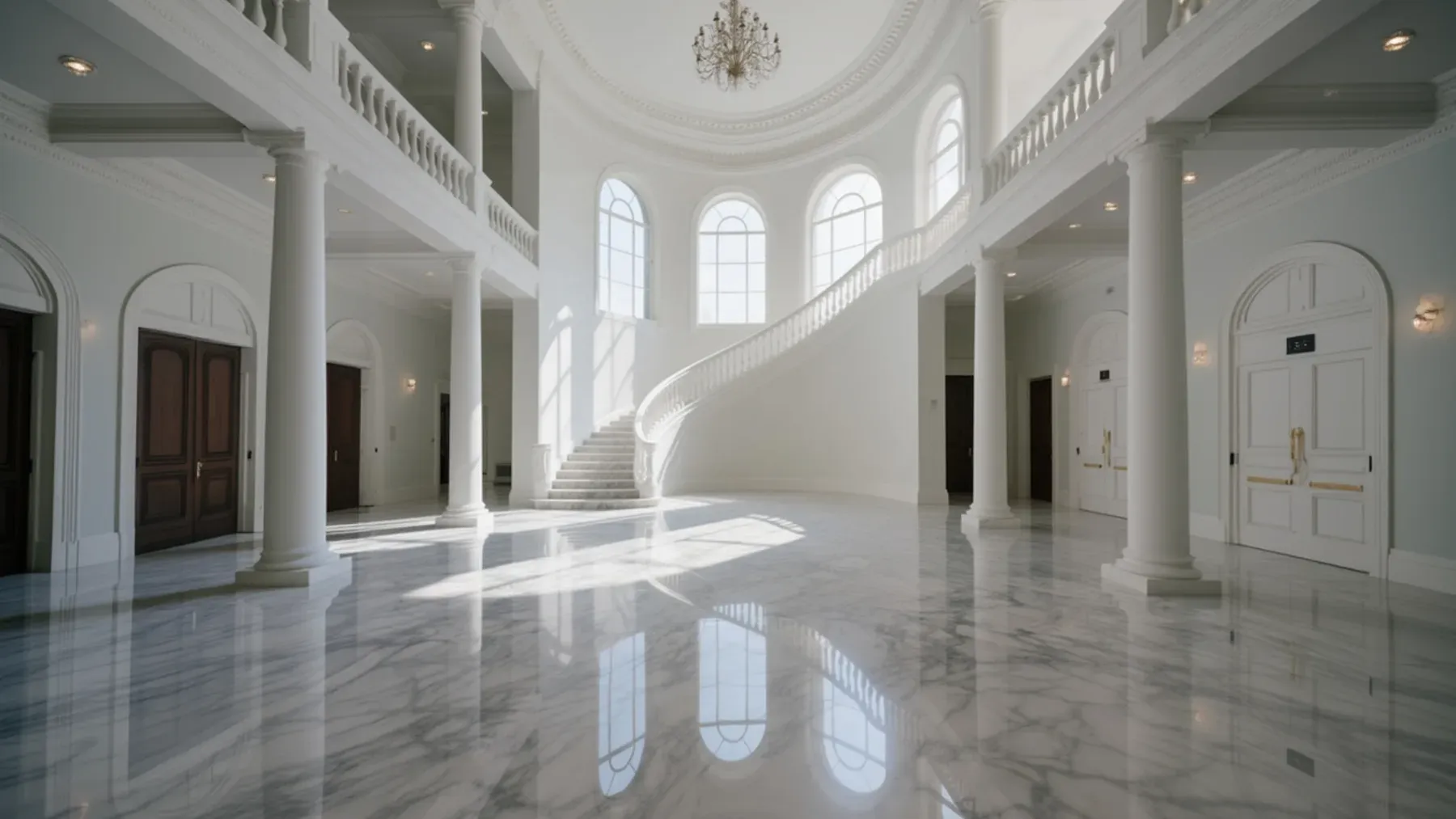
A ballroom scene becomes dramatic when etiquette controls access. An invitation admits the character to the building without granting equal freedom inside it. Introductions determine who may approach. Scheduled dances create brief conversations under observation. A refusal, repeated partner, or unexplained departure changes what the room believes.
An unsigned document is hidden inside a guest’s glove at the Winter Assembly. Her river district needs a noble official’s approval before midnight to stop demolition of its public stairs. She cannot request an audience openly because she entered as a musician’s guest. The official’s sister controls his dance card, and three families are watching every approach before a council vote.
The ball gives her access that an ordinary day would deny. It also makes access legible to hundreds of observers. A dance request may look like courtship. A side-gallery meeting may suggest conspiracy or intimacy. A public refusal could weaken the petition before anyone reads it.
The setting now has a job. Music, rooms, partners, hosts, clothing, staff, and schedule regulate how a practical signature can be obtained.
Research One Social System, Then Invent Deliberately
Ballroom etiquette changes across period, place, class, community, and kind of event. A London private ball in the nineteenth century did not operate like an American assembly, a twentieth-century hotel dance, a court masque, or a fantasy winter festival.
Historical manuals are useful evidence of prescribed behavior, though they cannot prove that every guest complied. George Routledge’s nineteenth-century manual describes introductions before invitations to dance, obligations attached to engagements, rules around repeated partners, movement to refreshments, gloves, dress, and the expectation that grievances remain outwardly polite. Other period guides differ on whether a stranger may refuse an introduction or whether private gatherings create a broad social introduction.
Those disagreements are helpful. They warn the writer against borrowing a generic package called “ballroom etiquette.” Choose a society, year, event type, and viewpoint. Compare several contemporary sources with modern scholarship, diaries, newspapers, floor plans, clothing, and the dances actually performed.
For an invented culture, answer the same operational questions:
- Who receives invitations, and who may bring a guest?
- Who can introduce two strangers?
- Who asks, accepts, refuses, or records a dance?
- Does one dance imply courtesy, alliance, attraction, or obligation?
- Which people work at the event without sharing its privileges?
- What public penalty follows a broken engagement?
Make rules enforceable through relationships. A hostess can withhold future invitations. A floor official can deny an introduction. A patron can legitimize a guest. Gossip can turn a third dance into evidence of attachment. Etiquette matters because somebody has the power to interpret and remember it.
Give the Character a Route Through the Evening
“Attend the ball” is an occasion. The river-district guest needs the signature before the council bell. Another protagonist might identify a masked visitor, secure patronage, expose fraud, protect a sibling, carry a warning, or avoid the person who recognizes them.
The objective selects detail. This guest notices the official’s partners, writing tables, exits, witnesses, council corridor, and pauses between musical sets. Embroidery matters only when its color reveals faction or mourning status.
Divide the event into phases:
- Arrival and presentation establish who is present.
- Opening dances display rank and expected pairings.
- Later sets permit negotiated access.
- Supper redistributes groups into smaller rooms.
- The midnight bell removes voting officials from the floor.
Each phase changes the available route. Before presentation, the guest cannot approach anyone. During a figure dance, partners repeatedly separate and return. At supper, conversation lasts longer while observation becomes less predictable. Once the bell rings, the petition is late.
Give the route two or three points where success appears possible for different reasons. The guest might reach the official early and discover that he will only discuss council business after supper. She might secure a later dance, then learn that the witnesses plan to leave during the same set. These reversals keep the evening from becoming a straight walk toward the correct partner. They also distinguish delay from repetition: every failed approach reveals a new condition, removes an option, or forces a more visible tactic.
Add a personal pressure that affects tactics. The official once courted the guest’s sister and withdrew when her family lost status. Obtaining help requires deference toward someone connected to a family humiliation. The guest may enjoy the music and beauty while resenting the institution they adorn. Pleasure makes exclusion more tangible.
The festival-scene guide develops this principle across public celebrations: cultural detail becomes active when a temporary permission meets a specific objective and deadline.
Make a Floor Plan That Also Maps Permission
The physical room determines who can see, hear, intercept, and withdraw. The Winter Assembly contains a central floor, musicians’ gallery, refreshment room, card room, terrace, two side galleries, dressing rooms, service passages, and a guarded council corridor.
Give each place a permission profile:
| Place | Who normally enters | What it permits | What presence may imply |
|---|---|---|---|
| dance floor | introduced partners | close timed conversation | courtesy, alliance, courtship |
| musicians’ gallery | performers and staff | observation from above | lower status or professional role |
| card room | invited players | debt and political bargaining | membership in an inner circle |
| side gallery | guests who withdraw | quieter exchange | secrecy or intimacy |
| service passage | workers | rapid hidden movement | trespass for a guest |
William Dunne’s The Dramatic Writer’s Companion recommends exploring a setting through its physical life, including objects, sensory conditions, concealed areas, and what lies beyond the immediate room. Apply that exercise to action. Heat changes concentration. A polished floor limits hurried movement. A writing desk creates an opportunity. A service door offers speed and risks discovery.
Introduce space through decisions. The guest leaves the petition at a writing desk because dancing may tear it. A musician warns that servants monitor the council corridor. The official’s sister redirects the pair toward the most visible side of the floor. Readers learn the building while watching a plan adapt.
Status also appears through treatment. Staff bring one official water without being asked. The guest waits for an introduction. A wealthy merchant receives many dance requests and no seat at the political card table. A widow moves between groups because her social role follows different constraints.
Partial knowledge creates useful error. The guest understands guild marks and mistakes a court mourning color. A companion corrects her before she makes a cheerful request to a bereaved official. The correction reveals both the custom and who can teach her.
Treat Every Dance as a Change in Public Evidence
A dance needs an entry condition, private objective, public interpretation, interruption pattern, and changed exit.
The first partner is the official’s political rival. Accepting brings the guest onto the floor and makes observers associate her petition with his faction. He offers to obtain the signature if the district grants his family control of river tolls. She leaves with better access and a dangerous apparent alliance.
The second partner is the official’s sister. The sister explains that a public demand will force her brother to refuse or appear weak before the vote. She also recognizes the guest’s family. The exchange provides procedural knowledge while reopening the emotional wound.
The third dance is with the official. He has already seen the rival partnership, knows a request is coming, and suspects entrapment. Their conversation begins before either speaks.
Choreography controls the exchange. Partners move apart and return. A turn exposes expression to watchers. Music masks one sentence, then a pause makes the next audible. A repeated figure brings them near the writing desk. Describe steps when the viewpoint uses them to time, conceal, approach, or resist.
A missed step should have a proportional effect. It can interrupt a sentence, draw a rival’s attention, reveal that the official steadies the guest instinctively, or block the route to the document. Instant ruin from one mistake will feel arbitrary unless the society has already established that consequence.
Private meaning and public evidence can diverge. The official chooses the guest because he wants information about river access. Her sister interprets the pairing as romantic betrayal. A rival sees political alignment. The subtext method helps keep the spoken request, emotional history, and observer inference active without explaining all three in every line.
Let the Whole Institution Make Countermoves
The dance floor is one part of the event. Between sets, observers compare interpretations, servants carry messages, chaperones redirect partners, musicians alter timing, and card games create debts.
The official agrees to sign only if two district representatives witness the clause. One representative is outside with the musicians. The other has entered the rival’s card game and now owes him money. The signature goal turns into a movement and leverage problem.
Secondary characters should have terms. The orchestra leader wants the guild announced as an official participant. A countess offers entry to the card room because she wants the official embarrassed. The guest’s sister wants to stop gossip from reviving her past. Help changes the coalition around the petition.
Workers belong to the institution. A server knows which ink is used for binding agreements. A cloak attendant remembers who arrived together. A musician can repeat a section and lengthen the current dance. Their knowledge should arise from labor, rather than from conveniently overhearing every secret.
Objects can carry the countermove. The petition disappears from the desk. The guest reconstructs who crossed the refreshment room and discovers that the official’s sister moved it before the rival could take it. The torn glove, dance card, ink, key, debt marker, and folded paper can all change access or public interpretation.
The negotiation-scene guide is useful once the signature gains conditions. Every concession should alter leverage, obligation, or the next available choice.
Make the Result Public and the Cost Personal
The guest gathers both witnesses before midnight. The official will sign if she accompanies him onto the floor afterward, allowing the concession to appear as his generous response to a social introduction. That performance protects his authority and wounds her sister.
She proposes a different public story. The orchestra announces a river-district composition, and both witnesses enter at the floor’s edge. The official signs while their music plays. He retains enough dignity to support the measure, while the district becomes visible as the source of the petition.
The outcome should update several records:
- The signed clause pauses demolition.
- The rival loses control of the petition and gains evidence of the guest’s skill.
- The musicians receive public recognition.
- The official’s sister becomes a cautious ally.
- The guest’s sister understands the tactic and still feels hurt.
- Observers create competing accounts of romance, bribery, and political defiance.
Carry those accounts forward. A legal result can succeed while public interpretation changes whose leadership is trusted. The ball matters after midnight because invitations, debts, photographs, rumors, and remembered pairings follow everyone home.
Choreograph the Social Machine in NovelOS Studio
A ball combines cast, rank, rooms, schedule, hidden objectives, simultaneous conversations, objects, and observer knowledge. NovelOS Studio keeps that machinery close to the prose it drives.
- Create guests, relatives, hosts, rivals, officials, musicians, servants, and witnesses in Cast & World and The Oracle. Record invitation source, rank, objective, permitted approaches, secrets, and interpretation of each pairing.
- Map courtship history, sponsorship, introductions, debt, rivalry, patronage, employment, and signature authority through Connections.
- Define ballroom customs, dance meanings, dress signals, voting procedure, guild status, and room permissions with The Architect.
- Explore different partners, offers, missing documents, public stories, and final presentations on Spark.
- Arrange arrival, presentation, dances, supper, card-room debt, witness gathering, signature, and council bell in The Blueprint and Timeline View.
- Draft the close physical and social experience in The Manuscript. Use The Alchemist when choreography becomes stage direction or polite dialogue loses its tactical pressure.
- Track etiquette research, character knowledge, partner order, observer inference, and aftermath gossip in Progress & Goals.
- Open Publish when the manuscript is ready for production. Its publication formats include EPUB and PDF, editable DOCX and RTF files, Markdown, plain text, and standalone HTML.
NovelOS Studio supports local-first work on Windows and macOS. A .novelos export carries the complete project for import on another supported computer, while one owner may activate unlimited personal devices.
The ballroom should change more than the romantic temperature. Build its permissions, choreography, alliances, deadlines, and public consequences in NovelOS Studio, then make the final dance leave evidence that later chapters must interpret.
Sources and further reading
- William Dunne, The Dramatic Writer’s Companion, local theory reference library, PDF pages 122 through 124, printed pages 95 through 97, on physical setting, sensory conditions, objects, concealed areas, and the world beyond a scene.
- George Routledge, Routledge’s Manual of Etiquette, a digitized nineteenth-century prescriptive source on introductions, engagements, refusals, repeated partners, dress, refreshments, and ballroom conduct.
- Arthur Martine, Martine’s Hand-book of Etiquette, a second period source on masters of ceremonies, social position, introductions, public balls, and partner obligations.
- Elegant Grand Interior, Grand Opulent Hallway, and Dancing Couple Dreamscape, Lummi free-use image records.