A Battle Scene Is a Chain of Local Decisions
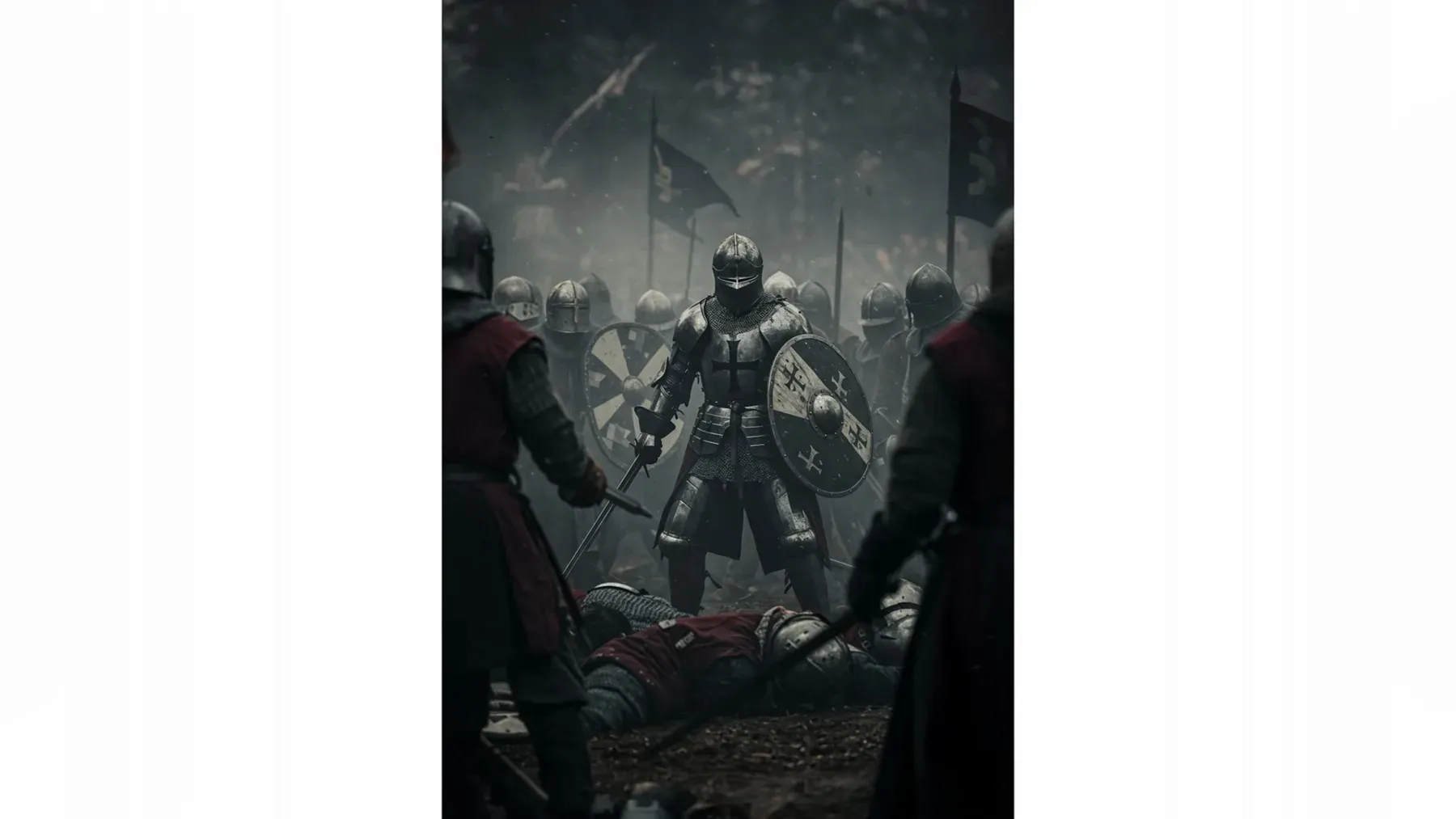
At dawn, a bridge officer receives one assignment: keep the eastern crossing open until the field hospital has withdrawn.
The writer knows that enemy infantry will reach the north bank first, allied cavalry will arrive from the south, and a damaged signal station will send the wrong flag. The officer knows none of this. From the bridge, they can see a mill roof, one stretch of river, the hospital road, and the signal station when smoke permits. They can hear fighting beyond the ridge, but sound cannot tell them which unit is winning.
That difference between the writer’s map and the character’s usable picture is the foundation of a clear battle scene.
To write a battle scene clearly, give the viewpoint character a local assignment, establish a few functional landmarks, control when information reaches them, and make each update force a decision. Readers experience scale through pressure on one understandable task.
Research on narrative comprehension helps explain why continuity matters. Zwaan, Langston, and Graesser’s event-indexing research describes connections among time, space, protagonist, causality, and intention. Their experiment used simple narratives and offers an editorial lens rather than a formula for war fiction. When all five dimensions change at once, a reader must rebuild much of the represented situation.
A National Research Council review of battlefield displays identifies changing information, overload, uncertainty, and limited attention as constraints on situation awareness. U.S. Army writing on mission command emphasizes purpose, a desired end state, shared understanding, and subordinate decisions when circumstances change. These sources concern particular institutions. Other forces will organize authority differently. For fiction, ask what a person was prepared to do when the plan stopped matching reality.
Draw the Battle Twice
The writer needs a complete version of the battle before deciding what enters the prose. Draw the terrain, units, civilian movement, supply routes, communications, reserves, weather, and major changes. Add time estimates based on the story’s technology and conditions. A runner on a clear road, a horn in fog, a radio in damaged terrain, and a telepathic network with rules will create different delays.
Then draw the viewpoint map. Include only what the character can see, hear, infer, remember, or learn from another person. Mark obstacles to perception such as ridges, walls, smoke, noise, darkness, weather, crowding, unfamiliar uniforms, magical interference, and broken equipment.
On the full map, allied cavalry is moving toward the crossing. On the viewpoint map, riders appear below the mill in colors obscured by rain. On the full map, the northern company has withdrawn under orders. At the bridge, its missing banner looks like defeat. The writer can now create uncertainty honestly because the answer exists even though the character has not earned it.
Use three kinds of location on the viewpoint map:
- An anchor tells the reader where the character is, such as the eastern bridge tower.
- A dependency must remain available for the assignment to succeed, such as the hospital road.
- A threat route is where the next dangerous change can arrive, such as the mill lane or north bank.
These editorial labels keep geography tied to action. A ruined chapel may deserve one sentence; if nobody uses it to navigate, hide, signal, retreat, or remember a loss, repeated mentions compete with useful landmarks.
Before violence begins, let the character use the terrain. The officer checks whether stretchers can turn at the bridge tower, sends two people to watch the mill lane, and tells the hospital staff where to wait if the road is blocked. Orientation occurs through preparation. When a cart later overturns at that turn, readers understand the consequence without receiving a fresh map.
Rayne Hall’s battle chapter in Writer’s Craft Power Pack also recommends planning the battle, choosing consequential terrain, staying with the selected viewpoint, and allowing aftermath. Its tactical generalizations and historical claims require independent verification for a particular period. Its strongest narrative principle is simpler: the close character cannot observe the whole field, and the scene should respect that limitation.
Give the Character an Assignment That Can Survive Surprise
“Win the battle” rarely works as an immediate objective. It belongs to the side or commander. A person needs an assignment they can act on during the next few minutes.
The bridge officer must keep the crossing usable until the hospital staff, patients, and records reach the eastern bank. That sentence establishes an action, a place, beneficiaries, and an end condition. It also allows several forms of failure. The bridge may remain standing while the road becomes impassable. The patients may cross while the records burn. The officer may preserve the route by abandoning wounded soldiers from another unit.
Write the assignment in four lines before drafting:
- Purpose: preserve the hospital’s ability to withdraw.
- Immediate result: keep one lane across the bridge clear.
- Authority: redirect carts and nearby defenders, but do not destroy civilian property without command approval.
- Failure threshold: if the northern bank is lost, move the patients and deny the crossing to pursuit.
This fiction-planning method makes adaptation visible. The character understands the purpose, current success condition, available authority, and decision that would exceed it.
Now remove access to that authority.
The signal station fails. A messenger reports that command has moved, though nobody can confirm where. The bridge officer must decide whether the purpose still authorizes action beyond the original instruction. The decision reveals training, trust, fear, moral limits, and relationships within the organization.
A rigid unit may punish initiative even when it saves lives. A decentralized force may rely on shared purpose and local judgment. An army organized by kinship may treat an elder’s spoken request as stronger than a written order. A magical collective may share sensation while concealing intention. Design the command culture before the battle so that obedience and improvisation carry specific social prices.
Personal stakes should tighten the assignment. The officer’s parent is a patient, so duty and private attachment collide when the officer controls passage.
The earlier guide to strong scene goals can help define an objective that produces visible tactics. For a surprise attack, the ambush scene guide explains how the writer can preserve concealed causality while the character struggles with incomplete knowledge.
Give Every Report an Age and a Consequence
Battlefield confusion becomes readable when uncertainty is attached to a source. “Everything was chaos” gives readers no basis for following the next choice. A precise report can be wrong, delayed, incomplete, mistranslated, or correctly understood too late.
Create an information budget for the viewpoint character:
| Update | Source | Age when received | Confidence | Decision it affects |
|---|---|---|---|---|
| northern company still holds | runner who left before the rain | twelve minutes | medium | whether to send bridge defenders north |
| riders are approaching the mill | direct sight through smoke | current | high on position, low on identity | whether to close the hospital road |
| command ordered withdrawal | wounded signaler recalling a flag | unknown | low | whether the bridge should be prepared for denial |
| last ambulance has departed | hospital quartermaster | two minutes | high | whether the officer can begin retreat |
Age matters because a report describes a past battlefield. Distance, route, technology, fatigue, interference, and the sender’s own limited view determine how stale it becomes. A ten-minute-old message may be useful for explaining why a unit moved and dangerous as a statement of where it is now.
Divide confidence by claim. The officer sees thirty riders beside the mill, while rain prevents identification. Observation is strong evidence for position and weak evidence for allegiance.
Let reports enter through action. A runner arrives without a helmet, repeats the northern captain’s order, then cannot answer whether the captain was alive when the company moved. The missing answer matters more than a paragraph announcing widespread confusion.
Establish one horn, flag, flare, drum pattern, radio phrase, messenger token, or magical sign before the battle. Define who knows it, how far it travels, and what distorts it. Later, a retreat flag appears without the unit marker specifying which company should move.
Every meaningful update should do at least one job:
- revise the location or capability of a force
- change the credibility of an earlier account
- remove an option the character expected to have
- reveal a conflict between mission and command
- create a new deadline
- transfer responsibility to the viewpoint character
If the new information changes nothing, compress it. The battle feels large because consequential news arrives from beyond the frame, while clarity survives because only a few reports alter the task.

Build the Sequence From Updates, Decisions, and Visible Results
Once the maps, assignment, and information budget exist, draft the battle as a decision chain. Use four beats for each important movement:
Condition: What has become true within the character’s reach?
Interpretation: What does the character think it means, based on available evidence and experience?
Choice: What do they do, refuse, delay, or delegate?
Receipt: What visible result confirms, complicates, or disproves the interpretation?
At the bridge, the chain might run like this:
- Riders appear beside the mill while patients are still on the road.
- The officer cannot identify them and assumes the hospital route may be cut.
- They close the western approach and move a reserve to cover the road.
- The riders signal as allies, but the diverted reserve leaves the northern stair unguarded.
- Retreating soldiers reach that stair and collide with the patient convoy.
- The officer opens the blocked lane to prevent crushing, surrendering control of cart order.
- A wagon axle breaks at the tower turn established earlier.
The battle remains spatially clear because each result changes a known location. It remains dramatic because the character’s reasonable choice creates the next difficulty. Skill can reduce one danger while redistributing pressure elsewhere.
Control prose scale inside this chain. Use close physical detail for actions that change the task: cutting a trapped harness, failing to lift the axle, recognizing an allied token, losing grip on the bridge lever. Compress repeated blows once their result is established. The published article on writing a fight scene readers can follow addresses body-level action; a battle adds units, communication, and simultaneous events.
Paragraph openings can help readers reorient. Begin a new phase with the current anchor and changed condition: “At the tower, the lane was blocked.” Later sentences may narrow into breath, weight, sound, or pain. After a substantial shift, name the anchor again. Repetition of a functional place is useful; repetition of the entire map is tiring.
Keep sensory details diagnostic. The viewpoint smells river mud because the wind has turned and cleared smoke from the north bank. A drum becomes faint because its unit is moving away. The bridge vibration changes after the heaviest wagon crosses. Each sensation either updates the situation or alters the body performing the task.
Avoid giving the character retrospective language in the dangerous minute. They may notice that the northern stair is empty. They cannot yet know this was the exact opening that decided the eastern defense. Historical meaning belongs to later reports, testimony, propaganda, or memory.
Let the Aftermath Decide What the Battle Was About
The horn that ends combat does not settle the result. A battle produces several outcomes at once.
The hospital crossed the river, which fulfills the officer’s purpose. Six patients died during the blockage. The medical records were saved, while food and sterile supplies were abandoned. Allied command calls the withdrawal orderly. Witnesses remember soldiers forcing civilian carts aside. The bridge remains usable, which helps refugees leave and allows pursuit to continue.
Write an outcome sheet across five categories:
- Mission: which stated purpose was achieved, delayed, or abandoned?
- Capacity: which people, supplies, routes, institutions, and knowledge remain available?
- Authority: who obeyed, improvised, disappeared, took credit, or acquired practical control?
- Relationship: whose trust changed because of a specific decision?
- Account: what do official reports, participants, enemies, and civilians say happened?
This sheet prevents victory from erasing cost and defeat from erasing achievement. It also turns battlefield detail into later plot material. A lost engineer changes the next crossing. A disputed order creates a hearing. Patients whose identities were separated from saved records create an administrative crisis. A bridge officer praised in public is privately investigated for exceeding authority.
Return to the viewpoint’s mistaken beliefs. The northern company did not collapse; it withdrew to escort civilians through a ford. The allied riders were late because they rescued the failed signal crew. Learning this should revise judgment, responsibility, or the next objective. Information that merely corrects the map has less force than information that changes a relationship.
Give responses individual timing. One survivor begins practical work before recognizing grief. Another repeats the same decision. A commander reads casualty totals as capabilities, then encounters a familiar name. The article on turning shock into the next choice extends this aftermath work.
Hold the Full Field and the Limited View in NovelOS Studio
A writer must understand more of the battle than any one participant. NovelOS Studio keeps the complete event, the competing accounts, and the close scene inside one novel project, so complexity can support the prose without flooding it.
Build this battle through the studio according to the work each system performs:
- Cast & World and The Oracle hold the viewpoint officer, commanders, runners, medical staff, civilians, patients, unit roles, private stakes, capabilities, fears, and decisions under pressure.
- Connections maps command, trust, kinship, responsibility, rivalry, and which later relationships are altered by the crossing.
- The Architect records terrain, command culture, communications, equipment, medical constraints, weather, institutions, laws, and the history that makes the bridge strategically important.
- Spark develops alternative reversals, signals, tradeoffs, and aftermath disputes before the writer chooses the causal line that belongs in the novel.
- The Blueprint and Timeline View align movements, report departure and arrival times, signal changes, casualties, bridge decisions, and later discoveries while Scene Cards preserve viewpoint, cast, location, purpose, and consequence.
- The Manuscript keeps the drafted sequence beside the planning context while the prose stays at the tower, road, stair, and river the character can actually perceive.
- The Alchemist supports focused alternatives for crowded action, unclear orientation, repeated sentence shapes, or a transition that reveals too much, with the source passage retained for comparison.
- Progress & Goals tracks research, map design, the battle draft, continuity review, aftermath chapters, word targets, deadlines, streaks, and manuscript progress.
- Editorial Foundry prepares the finished war story for EPUB and PDF editions, editable DOCX or RTF files, Markdown, TXT, and a standalone HTML book.
The local-first NovelOS Studio desktop app supports macOS and Windows. Exporting a .novelos archive and importing it on another supported computer moves the connected manuscript and planning work together. A license can be activated on the owner’s personal computers without a fixed device limit.
Readers do not need a general floating above the battlefield. They need a person whose assignment makes the next landmark, late report, and irreversible choice matter. Build the full battle in NovelOS Studio, then reveal it through the knowledge one character can earn and the consequences they must carry away.
Sources and further reading
- Zwaan, Langston, and Graesser, “The Construction of Situation Models in Narrative Comprehension”, proposing and testing an event-indexing model across time, space, protagonist, causality, and intentionality in simple narratives.
- National Research Council, Tactical Display for Soldiers: Human Factors Considerations, chapter 3, on situation awareness, changing information, uncertainty, overload, attention, working memory, team knowledge, and decision support.
- U.S. Army NCO Journal, “Mission Command”, summarizing mission command, shared understanding, purpose, desired end state, disciplined initiative, and risk through a U.S. Army institutional lens.
- U.S. Army Center of Military History, Battle of Antietam staff ride guide, a terrain-based historical guide drawing on official records and addressing command, communication, intelligence, technology, and battlefield uncertainty.
- Rayne Hall, Writer’s Craft Power Pack, local theory reference library, PDF pages 115 through 117 on preparation, terrain, viewpoint limits, battle structure, and aftermath.