Leverage Must Keep Shifting in a Hostage Scene

The weapon determines who controls the room. It does not determine who can satisfy the demand, verify a claim, authorize a concession, reach the public, or decide what happens next.
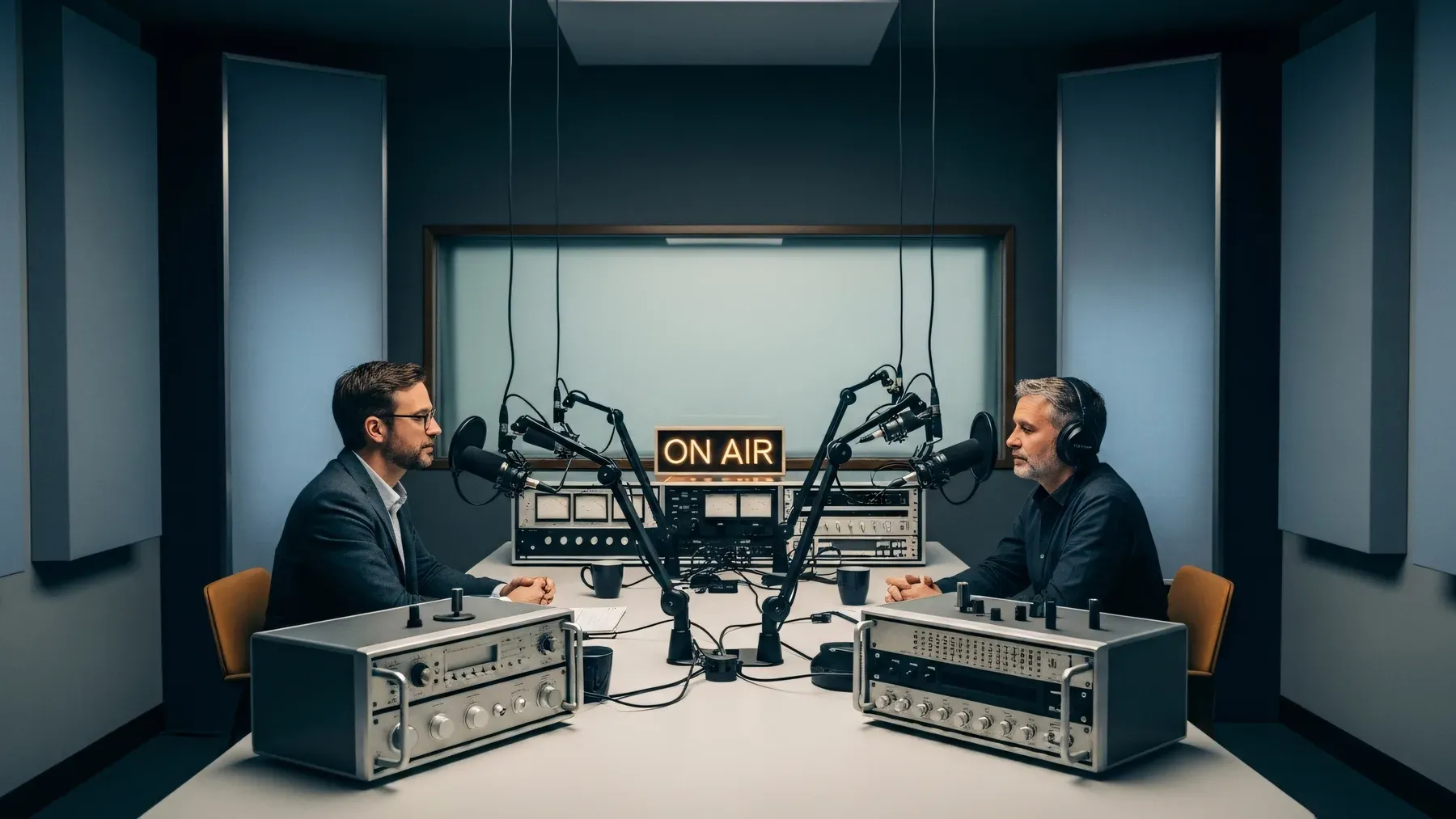
That separation is why a hostage scene can sustain more than immediate fear. One person controls bodies inside a radio station. A crisis negotiator controls the only direct phone channel. A justice minister can authorize review of three cases but cannot release the twelve prisoners named in the demand. A broadcast engineer knows the emergency transmitter still works. One captive knows that a person on the list died that morning, making the demand partly impossible.
Every participant has a different piece of the decision. Tension grows when new information changes the value of those pieces.
Official FBI accounts of crisis negotiation also distinguish goal-directed bargaining from expressive behavior driven by rage, despair, humiliation, or frustration. The distinction matters for fiction because a demand may conceal the actual problem. Releasing prisoners might be the stated outcome while public recognition, proof of government abuse, or control over an unbearable situation is the emotional objective. A negotiator who treats every sentence as a straightforward trade can misunderstand the scene.
To write a hostage scene with sustained tension, begin with the coercive relationship, then track decision rights, knowledge, credibility, and cost. Threats create danger. Changed decisions create the story.
Define the Coercive Triangle Before the First Demand
A hostage situation has three essential positions:
- The captor restrains or threatens a captive.
- The captive bears the immediate cost.
- A third party is pressured to act, refrain from acting, provide something, or recognize a claim.
The positions can overlap. A captive may also be the person whose signature is required. A captor may hold a colleague while demanding that the colleague reveal a code. Even then, identify who experiences the threat and who possesses the requested decision. The distinction keeps the scene from becoming a shapeless standoff.
Write the first demand as a complete sentence:
If the minister does not reopen twelve convictions before the evening broadcast, the captor will harm the four people inside the station.
Now test each part. Can the minister legally reopen convictions? What counts as proof? Does the captor want review, immediate release, or public admission that the trials were corrupt? Why does the evening broadcast matter? Who can verify whether the hostages remain alive? What consequence can the captor credibly impose, and what would carrying it out destroy about their own objective?
Break the demand into four layers:
| Layer | Question for the writer | Radio-station case |
|---|---|---|
| Stated result | What action is requested? | Reopen twelve convictions |
| Verification | What would convince the captor it happened? | A signed order read live |
| Audience | Who must witness or recognize the act? | Families and the national public |
| Underlying need | What change does the captor hope the act will produce? | Public confirmation that the cases were concealed |
These layers can diverge. The minister might be unable to reopen a case immediately but able to publish sealed hearing records. That offer fails if release is the real objective. It may succeed if acknowledgment is central. The writer gains several plausible moves without inventing a fresh threat whenever pace slows.
Give the captor a reason for choosing these captives and this site. The station offers an audience and access to records. The broadcast engineer once aired interviews with prisoners’ families. The justice reporter investigated the trials. The selection tells readers whether the act was planned, opportunistic, personal, symbolic, or some combination.
Keep the grievance and the coercive act morally distinct. Evidence of wrongful convictions can be true while the danger imposed on uninvolved people remains wrong. Complexity comes from competing obligations and consequences, not from forcing readers to excuse harm before they can understand motive.
Track Decision Rights Instead of Passing “Power” Around
Writers often describe leverage as though one participant owns all of it until a reversal hands it to somebody else. A more useful model asks who can make which decision at this exact moment.
Create one row per participant:
| Participant | Can decide | Needs from others | Cannot verify yet | Cost of delay |
|---|---|---|---|---|
| Captor | Access, movement, use of the studio | A credible public response | Whether an order is genuine | Loss of control and audience attention |
| Negotiator | Questions, pacing, proposed exchanges | Continued communication | Captives’ condition and captor’s priorities | Rising medical and emotional risk |
| Minister | Disclosure of records, limited administrative action | Legal and command cooperation | Who inside supports the demand | Political exposure and lives at risk |
| Broadcast engineer | Technical information and whether to assist a transmission | A safe moment and help from another captive | What is happening outside | Equipment failure and discovery |
| Reporter | Which facts to reveal and whose privacy to protect | Access to records or a live channel | Whether officials will acknowledge the evidence | A lost story and danger to sources |
Update the table after every major beat. When the minister reveals that one named prisoner is dead, the captor loses confidence in the list and gains reason to suspect deception. The minister gains verifiable information but risks appearing responsible for a concealed death. The reporter can authenticate an internal memo, yet doing so may expose a source. No single person becomes powerful. The available decisions change.
Credibility deserves its own line because a promise only matters when the listener expects it to be kept. Track three ingredients:
- Capacity: Can this person perform the promised action?
- Commitment: What will it cost them to withdraw?
- Evidence: What can the other side observe or verify?
A minister saying “I will look into it” offers little capacity, commitment, or proof. A signed order witnessed by an independent judge has more of all three. The captor’s promise to release one person after a record is published also needs an observable sequence. If the captor breaks the first limited exchange, later assurances lose value.
This is where political intrigue built from competing leverage can support the larger plot. Agencies, courts, police commanders, families, and media have separate mandates. Treating “the authorities” as one mind erases the pressure produced by institutional disagreement.
Make Dialogue Change the Usable Information
Conversation in a hostage scene serves as action. Robert McKee describes verbal action as what characters do to one another through speech, and he asks writers to identify the desire and action beneath each line. Under pressure, “Tell me who is hurt” can be gathering facts, testing honesty, slowing escalation, or establishing that the speaker recognizes the captives as individuals.
The FBI’s Behavioral Change Stairway places active listening before empathy, rapport, influence, and behavioral change. For fiction, this creates a causal sequence. A negotiator cannot plausibly jump from first contact to a decisive request solely because the plot needs progress. They first need enough conversation to identify emotion, meaning, priorities, and possible alternatives.
Use a dialogue ledger with four columns:
| Spoken move | Intended action | New evidence | Resulting adjustment |
|---|---|---|---|
| Captor repeats the twelve names | Demonstrate command of the cases | One date is incorrect | Negotiator asks how the list was obtained |
| Negotiator summarizes the grievance | Show accurate attention | Captor corrects one motive | Public recognition becomes more important than transport |
| Reporter interrupts a live reading | Protect a prisoner’s family | She knows the prisoner is dead | Captor questions the source and the minister’s honesty |
| Minister admits the death record exists | Restore factual credibility | The state withheld information | Captor lowers one demand and insists on publication |
Each reply should make some information more usable. A fact becomes verified. An inference becomes doubtful. A participant discovers what another values. A channel proves compromised. Repetition can work when its purpose changes. The first “Are they alive?” seeks a baseline. The second challenges an inconsistency. The third may demand proof after a broken promise.
Avoid manufacturing mystery by withholding thoughts from the active viewpoint. If the reporter knows why the dead prisoner’s name matters, her narration can preserve suspense by focusing on the cost of disclosure and uncertainty about the response. It does not need to pretend she lacks the fact.
Silence also produces evidence, though its meaning remains uncertain until tested. A gap on the phone might indicate reflection, an injury, an argument inside, or a failed connection. Let the negotiator form a provisional interpretation and choose a low-risk question. The consequence can confirm or revise that reading.
The principles in suspenseful dialogue help keep every exchange directional. Questions project possible answers, and answers close some paths while opening others. The best line is rarely the sharpest quotation in isolation. It is the line that changes what another person can responsibly do.
Give Captives a Narrow but Consequential Decision Bandwidth
Confinement removes options. It does not remove perception, values, relationships, or choice.
Define each captive’s decision bandwidth: the actions realistically available within surveillance, fear, injury, layout, knowledge, and responsibility. Keep this high level unless the novel has expert-reviewed procedural research. The goal is credible agency, not an operational escape manual.
The reporter can decide which evidence to confirm and whose identity to protect. The engineer can explain how an automatic broadcast works, refuse to operate it, or negotiate a practical need related to the equipment. An injured producer can decide who receives limited medicine first. A young intern can observe changes in language that experienced colleagues miss. None of these choices require improbable physical resistance.
Agency becomes dramatic when every option protects one value and endangers another. If the reporter authenticates the concealed death, she weakens the government’s denial and strengthens the captor’s public case. She may also expose a bereaved family that requested privacy. If the engineer activates a transmitter, the truth may reach listeners while the visible equipment change increases immediate danger. If the captives cooperate with a safe release, they may lose custody of documents that could prevent future abuse.
Give captives disagreements grounded in roles and knowledge. The reporter prioritizes evidence. The engineer prioritizes immediate physical safety. The producer worries about staff responsibility. The intern wants to prevent the captor from reading an unverified accusation on air. Their conflict keeps “the hostages” from becoming one passive unit.
Time pressure should narrow decisions rather than supply decorative numbers. Use clocks with different consequences:
- the scheduled broadcast will open a public channel
- medication will lose value as an injury worsens
- a court office will close, limiting which order can be authenticated
- an incoming storm threatens backup power
- an outside command decision may end the negotiation channel
Connect every clock to a character who can respond. The ticking-clock guide offers a useful test: if the deadline passes, name the state change. “Ten minutes remain” creates little pressure by itself. “After 6 p.m., no clerk remains who can authenticate the sealed order” removes a settlement route.
Let captives affect the climax through established decisions. The reporter’s earlier refusal preserves the source’s identity. The engineer’s technical explanation proves that the captor cannot reach the national feed without cooperation. The intern remembers a corrected date that authenticates one case file. Their contributions alter the possible agreement without turning them into implausible action heroes.
End the Crisis by Changing the Story Each Side Can Tell
The climax should force a decision that the opening conditions could not produce.
In the radio-station case, the demand for twelve immediate releases is legally impossible. Through verified records and conversation, the minister learns that public acknowledgment is a central need. The captor learns that the list contains a dead prisoner and that officials can expose sealed evidence tonight. The reporter learns that publication will protect some families and endanger others.
The decisive offer might combine three limited actions: publish the death record with protected identities, appoint an independent review whose authority can be verified, and open a short live statement after one captive is released. The captor must decide whether the grievance matters more than total control. The minister must decide whether preserving institutional secrecy matters more than credibility and lives. The reporter must decide which facts can ethically enter the broadcast.
Do not make a neat agreement inevitable. An outside commander may believe delay has become too dangerous. A captive’s medical condition may worsen. The captor may reject the face-saving route because public surrender conflicts with the identity they have performed. Fictional resolution remains credible when it grows from established motives, evidence, and commitments, even if it fails.
After the door opens, write competing accounts. Officials call the outcome a successful intervention. The reporter describes reckless concealment. A captive remembers the negotiator as the only person who listened. Another remembers every minute officials allowed the danger to continue. The captor’s recorded statement circulates without context. Families argue over whether publication served justice or exploited them.
Choose concrete aftermath actions:
- the engineer secures a recording before leaving the console
- the minister signs the review order under cameras
- the reporter withholds one name despite public pressure
- a released captive challenges the official timeline
- the negotiator logs the exact promise that an agency now wants omitted
These actions preserve the moral and political consequences of the scene. Survival does not settle trust, responsibility, trauma, or the truth of the grievance.
For revision, audit every turn with one question: What became newly decidable? If the answer is nothing, the beat may be atmosphere, repetition, or an unsupported escalation. Compress it or give the exchange a verifiable result, a changed commitment, a lost option, or a narrower risk.

Keep Every Decision Legible in NovelOS Studio
A hostage scene combines personal motive, institutional authority, incomplete knowledge, physical constraints, dialogue, clocks, and an aftermath that can reshape the novel. NovelOS Studio gives each layer a clear place while keeping the crisis part of one causal story.
- Define the captor’s stated demand, underlying need, limits, contradictions, and anticipated ending in The Oracle, alongside each captive’s expertise, risk threshold, and private obligation.
- Use Connections to map who depends on whom for safety, authorization, evidence, public access, medicine, trust, and release.
- Build the station, justice system, police command, court authority, broadcast rules, emergency services, and public information environment in The Architect.
- Explore different impossible-demand discoveries, face-saving offers, captive decisions, and outside interruptions with Spark.
- Place calls, verifications, promises, released options, captive actions, and the final offer on Scene Cards in The Blueprint. Blueprint’s Timeline View can align the broadcast, medical need, office closure, power risk, and outside command decision.
- Draft each line as an action in The Manuscript, keeping viewpoint knowledge honest. Use The Alchemist later to review passages where a threat repeats without changing pressure.
- Measure drafting and revision sessions through Goals and Trackers. A separate pass can test demands, verification, agency, and consequences before production begins. Editorial Foundry then produces EPUB and PDF books, editable DOCX and RTF documents, plain TXT and Markdown files, or one self-contained HTML edition.
NovelOS Studio supports Windows and macOS. One personal license can be activated across the writer’s own computers, while .novelos archive export and import moves the complete project between machines and provides a portable backup.
A tense hostage scene is a chain of constrained decisions, not a pile of louder threats. Build the coercive triangle, information changes, promises, and aftermath in NovelOS Studio, then make every line alter what somebody can decide next.
Sources and further reading
- Robert McKee, Dialogue: The Art of Verbal Action for Page, Stage, and Screen
- Fifty Years of FBI Crisis (Hostage) Negotiation, FBI Law Enforcement Bulletin
- Indicators of Progress and High-Risk Indicators, FBI Law Enforcement Bulletin
- Focus on Training: An Evaluation Tool for Crisis Negotiators, FBI Law Enforcement Bulletin
- Elements of Police Hostage and Crisis Negotiations, Office of Justice Programs
- Negotiating the Terrorist Hostage Siege, Office of Justice Programs
- Professional Phone Call, Lummi
- Podcast Recording Studio, Lummi
- Solitary Figure Amidst Urban Sunset, Lummi