Story Deadlines Work When Every Minute Removes an Option

A ticking clock in fiction is a time limit that forces a character to act before an event changes the situation. The deadline creates suspense when waiting removes useful options, increases the cost of success, or makes failure irreversible. A display counting down seconds is optional.
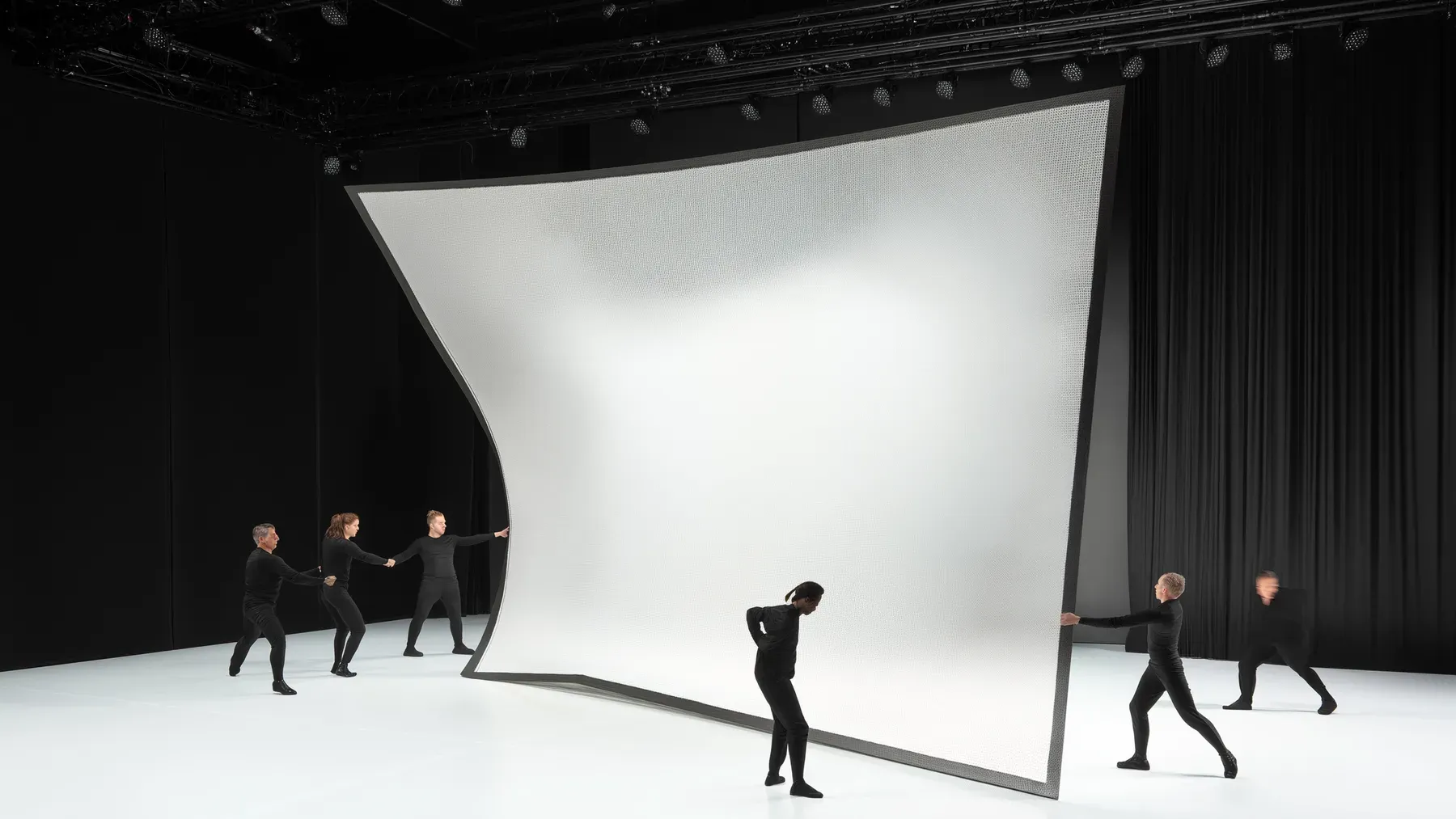
Imagine an unnamed stage manager preparing a theater’s opening night. At 2:10 p.m., a test reveals a frayed line in the counterweight system that moves the largest piece of scenery. The house opens at 7:30. A safety officer will inspect the revised setup at 6:45, the only compatible replacement line is in a warehouse that closes at 4:30, and the cast needs time to rehearse any staging change.
The stage manager has a goal, a cutoff, and a consequence. Yet the clock becomes dramatic only when it changes her choices. Early on, she can preserve the director’s full design. Later, she may have to ground the moving scenery. If the cast loses rehearsal time, she must cut a sequence. If the safety inspection fails, she must delay the performance in front of a full house.
That progression is the core technique: track the options that expire, rather than repeating the minutes that pass. The audience can feel a deadline even when no character checks a watch because every scene inherits a narrower problem.
Prove why the cutoff exists
Before compressing the timeline, establish the event that ends it. “Finish before tonight” is a request. “The safety officer signs the stage at 6:45, and doors open at 7:30” is a usable cutoff because another process begins whether the protagonist is ready or not.
Most credible story deadlines come from one of four sources:
- A scheduled authority acts: a court convenes, a vote is certified, a train departs, an inspector arrives, or an application closes.
- A physical process crosses a threshold: the tide covers a passage, a storm reaches the coast, a medicine warms beyond safe storage, or a damaged structure loses stability.
- Another person completes a competing action: a buyer signs, a rival reaches the witness, a family member returns, or an opponent publishes the evidence.
- A promise or relationship reaches its final test: someone waits at a station, a child expects a parent at the recital, or a partner accepts a job elsewhere.
The source should belong to the story’s world. Story Grid’s guidance on mastering the clock argues that a deadline feels more convincing when its form fits the genre and central conflict. A romance may be compressed by an impending separation. A legal drama may depend on a filing window. A fantasy clock may come from a seasonal crossing or a ritual whose rules have already affected the world.
Run a counterfactual test: what would the protagonist do with another week? If the answer is “exactly the same thing, only faster,” the deadline adds pace but little drama. If extra time would let the protagonist consult an expert, repair a relationship, verify evidence, or choose a safer plan, then the clock has something valuable to remove.
The theater case passes that test. With a week, the stage manager can order the correct line, schedule a complete installation, reprogram cues, and hold a full technical rehearsal. With five hours and twenty minutes, those actions compete for the same crew, stage, and attention.
Also decide whether the cutoff is hard, soft, or uncertain. A hard deadline produces a definite event at a known time. A soft deadline raises the cost after a point but still permits action. An uncertain clock has a credible range, such as a storm expected between dusk and midnight. Tell readers which kind they are following. An uncertain arrival can create suspense, but a deadline that moves whenever the plot needs more room breaks trust.
Build an option-removal schedule
A countdown measures remaining time. An option-removal schedule measures what the character can still do with it. Write the starting plan, then identify the latest moment at which each alternative remains possible.
For the stage manager, the working schedule might look like this:
| Threshold | Option still available before it | What disappears afterward |
|---|---|---|
| 2:45 p.m. | Confirm the fault and preserve the full repair plan | Diagnosis time begins consuming pickup and installation time |
| 3:25 p.m. | Send a crew member to the warehouse | Traffic makes a same-day replacement unreliable |
| 4:30 p.m. | Obtain the compatible line | The full moving-scenery design cannot be restored tonight |
| 5:15 p.m. | Choose the grounded version and reblock it | The cast cannot rehearse every altered entrance safely |
| 6:15 p.m. | Complete a safety run with the final setup | Further changes threaten the 6:45 inspection |
| 6:45 p.m. | Pass inspection | Opening on time is no longer under the stage manager’s control |
This table is the logic beneath the sequence. The story can expand one threshold and summarize another, but each crossing must create a new condition.
Each loss should affect strategy. When the replacement becomes unlikely, the goal changes from restore the design to stage the performance safely. When rehearsal time narrows, the stage manager must choose which scene to simplify. Those decisions create conflict with the director, performers, producer, and crew because each person values a different form of success.
The method also prevents false escalation. A traffic jam consumes minutes, but it becomes story material only if it removes an option or forces a revealing choice. Perhaps the crew member can take the last compatible line now, leaving another theater without a spare, or return empty-handed and protect that professional relationship. The delay has become a conflict over responsibility.
For longer suspense lines, keep the central question separate from the clock. “Will the show open safely?” is the suspense question. “Can the replacement arrive before the staging decision?” is one timed uncertainty inside it. The earlier guide to sustaining tension without empty delay explains how each intervening scene should revise what readers believe about the likely answer.

Make the time arithmetic survive inspection
The spreadsheet belongs in the writer’s working notes. The published sequence still needs defensible arithmetic. An urgent journey loses credibility when characters cross a city, solve a technical problem, hold an emotional argument, and return in twenty minutes without the story acknowledging travel, handoffs, or parallel work.
Build a private deadline ledger with five columns: action, earliest start, likely duration, dependency, and latest safe finish. Use ranges for variable work. The warehouse trip may take twenty-five to fifty minutes each way. Installation may take forty to seventy. The safety test starts only after the line is installed and the moving piece is cleared.
Then distinguish working time from calendar time. A ten-minute installation may require the stage to be empty, the power isolated, and two qualified crew members present. Those conditions can cost more time than the task. Similarly, a laboratory result may take thirty minutes after the sample enters the machine, but transport and queueing determine when that interval begins.
Parallel action must remain legible. While one crew member drives, the stage manager can prepare the grounded alternative and the lighting operator can identify affected cues. This makes competent characters believable while creating coordination risk: when does the stage manager abandon the repair and commit everyone to reblocking?
Add a decision buffer. Real plans rarely use every minute for productive action. People need time to communicate, recover from errors, move equipment, and obtain permission. A character may deliberately spend that buffer on an important conversation, which gives the choice weight. When the stage manager uses ten minutes to persuade a frightened performer rather than inspect the delivered line immediately, readers understand what she risks and why.
Finally, test the consequence at zero. What physically or socially happens at 6:45? The inspector arrives and evaluates the setup that exists. What happens at 7:30? The audience enters only if approval has been granted. If the stage manager misses the replacement cutoff at 4:30, nobody announces failure; one repair route simply closes. This mixture of visible and quiet thresholds keeps the sequence from feeling like a game timer.
A layered scene revision process can then test the prose after the causal timeline works. Polish cannot rescue a schedule whose dependencies contradict one another.
Let the world report the remaining time
Rayne Hall’s Writing Scary Scenes notes that a clock can appear through weather, natural rhythms, other people’s progress, or a worsening disaster. Those signals often feel more specific than repeated watch checks because they belong to the environment and conflict.
In the theater, time advances through observable changes: the afternoon crew signs out, delivery access becomes crowded, musicians begin tuning below the stage, the lobby staff set programs on the counter, and audience members gather beyond the glass doors. Each detail carries a second meaning. The building is moving toward public performance while the stage remains unresolved.
Choose reminders at state changes. Mention the warehouse closing when the diagnosis consumes the pickup window. Show the cast arriving when any staging change begins affecting other bodies. Let the safety officer’s case appear in the aisle when private problem-solving becomes an official judgment. These reminders update the problem instead of restating the premise.
Use exact numbers where characters would use them. A train conductor, surgeon, stage manager, or pilot may think in minutes because the job demands it. A child waiting for a parent may measure the deadline through empty chairs and the beginning of the first song. A farmer may watch the light leave the field. The form of the clock reveals attention, experience, and culture.
Uncertainty needs evidence. Establish the normal travel range and why today’s upper bound may be worse. If the line might hold for one performance, let a qualified character explain what is known and what cannot be guaranteed.
Avoid covering every quiet beat with urgency. Hall warns that too many scene-level clocks can distract from a novel-wide deadline. Breathing room gives the next threshold contrast. A two-minute silence between the stage manager and director can feel expensive because readers know what else could be happening during it. The scene remains connected to time while allowing the relationship to carry the foreground.
Pay off the clock through consequence
The last-second success is one possible ending. Automatic use makes the clock predictable: once the display reaches three seconds, readers expect victory at one. Choose the payoff that completes the sequence of decisions.
The stage manager could receive the line early, then discover that responsible installation still requires canceling the largest scene. She could miss the warehouse cutoff and build a safer, simpler version that exposes the director’s dependence on spectacle. She could pass inspection at 6:44 but lose the trust of a crew she pushed beyond reasonable limits. She could postpone the opening and accept public blame rather than disguise a risk.
These endings answer two questions at once: what happens when time expires, and what has the character decided time cannot justify?
Use one of four payoff shapes:
- Success before zero shifts suspense to the consequences created by the solution.
- Success at the boundary works when prepared skill and character change converge under pressure.
- Failure at zero opens the next phase of the story, where the character must live inside the promised consequence.
- Refusal of the clock’s terms reveals that the protagonist’s real victory is rejecting the value system that made speed more important than safety, loyalty, truth, or love.
Luck can complicate the sequence without performing the decisive work. An early delivery still leaves the stage manager to judge whether a compressed installation is responsible. A line snapping during testing may close one option, while her preparation determines whether the grounded plan can continue.
This payoff should inherit earlier thresholds. The grounded scene succeeds because the cast rehearsed it at 5:30. The cancellation hurts because the producer rejected a cheaper preview plan at 3:00. Strong climactic scene pacing keeps geography, action, and the promised story question readable when those prepared decisions converge.
Model the deadline in NovelOS Studio
A credible clock lives across world rules, character priorities, scene order, and prose. Writers on Windows and macOS can keep those layers together in NovelOS Studio, then test the deadline at several scales before polishing the countdown language.
- In The Architect, record the systems that own the cutoff: operating hours, inspection rules, geography, travel ranges, technical limits, public schedules, weather, or ritual conditions. The deadline becomes part of the world instead of an isolated plot instruction.
- In The Oracle, define what the protagonist protects under pressure. Motivation, fear, habits, strengths, weaknesses, biography, and voice help predict which option the character will cling to after a more efficient person would release it.
- Use Connections to map the people, locations, lore, and scenes affected by each threshold. A delayed warehouse trip can alter the stage manager’s relationship with the crew, director, producer, and supplier at once.
- In The Blueprint, give each Scene Card a time setting, POV character, associated cast and locations, synopsis, and status. Use Timeline View to arrange the sequence chapter by chapter. Keep exact duration ranges and latest-safe-finish calculations in the scene notes or synopsis where their assumptions remain visible.
- Explore alternate threshold orders in Spark. One note can test an early repair failure, another can test a late inspection change, and a canvas can compare how each version alters the protagonist’s decision rather than merely adding obstacles.
- Draft the lived signals in Manuscript: the loading door closing, the orchestra arriving, the director resisting the cut, and the safety officer entering the aisle. The clock should reach readers through action as well as explanation.
- After the causal structure is stable, use Alchemist on selected passages that overstate urgency or repeat the same time reminder. It presents a suggestion beside the original and leaves every replacement under your control.
For each threshold, keep a compact record: trigger, latest safe action, lost option, resulting decision, visible signal. The 4:30 warehouse closure matters because the replacement route ends; the stage manager commits to the grounded design; the loading door rolls down while the driver is still across town.
Read the complete sequence with two lines in mind. Remaining time must shrink, while available choices change shape. If forty minutes pass and the protagonist can still use every original solution, compress or repurpose the interval. If a quiet conversation makes the safest option emotionally impossible, the clock has advanced even without a number on the page.
A strong story deadline feels inevitable in retrospect because its source, arithmetic, thresholds, and consequence agree. NovelOS Studio keeps that agreement visible from the world record and character motive through Blueprint, Timeline View, and the finished manuscript. Readers remember the choice made under pressure, while the clock is the structure that made postponing it impossible.
Sources and further reading
- Renee Decker, “Mastering the Clock,” Story Grid: known and unknown clock durations, genre fit, hard cutoffs, consequences, progressive complications, and reader reminders.
- K. M. Weiland, “The Top Trick for Heightening Story Suspense”: deadlines, consequences, shortened timelines, and new information that compresses an existing window.
- Reedsy, “How to Create Suspense in Your Writing”: the difference between narrative and short-term suspense and the need for proportionate payoff.
- James Scott Bell, Conflict & Suspense: the ticking clock as a structural device that attaches a time limit to something important and compresses tension.
- Rayne Hall, Writing Scary Scenes: world-based clocks, visible reminders, last-moment climaxes, and the drawbacks of repeating clocks across too many scenes.