Epic Fantasy Becomes Large Through Consequence
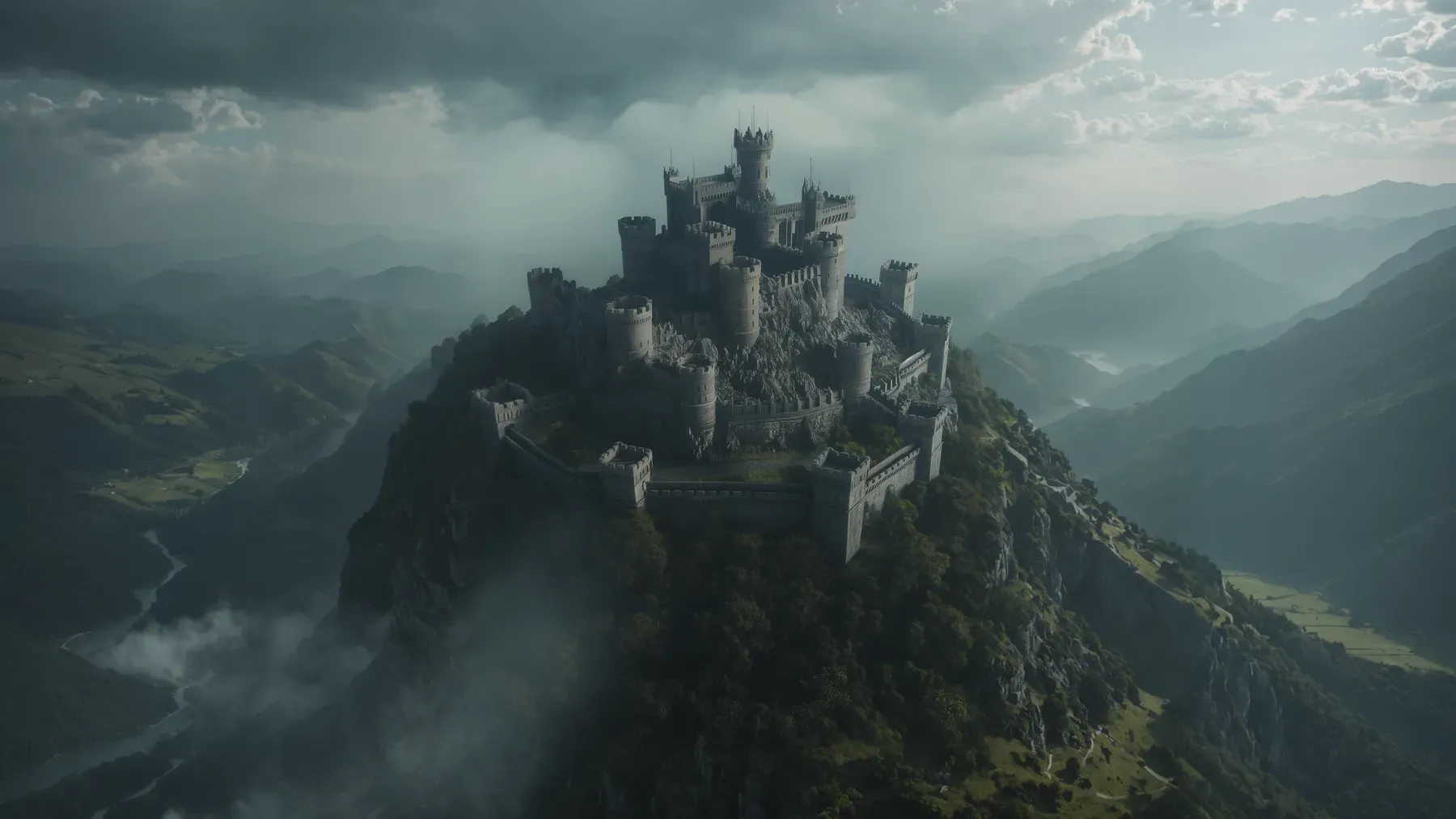
Epic fantasy feels large when a decision made by one person changes the choices available to people far away. A huge map can suggest distance. A long list of rulers can suggest history. Neither creates scale until the novel shows consequence traveling through the world.
That is the central answer to how to write epic fantasy without losing character intimacy: begin with a choice the reader can understand, then follow its effects through relationships, institutions, geography, resources, belief, and time. The world becomes epic because it responds.
Imagine a ferrymaster who refuses to carry a royal messenger across a flooded border river. The messenger claims to bear a peace seal. The ferrymaster remembers soldiers burning the village granary under that same seal, so she demands witnesses before granting passage. The river rises before the council assembles.
The refusal lasts less than a minute. Its reach is enormous. The capital receives no proof that negotiations succeeded. A queen orders scouts toward the border. An opposing council interprets those scouts as preparation for invasion. Grain merchants hold their carts. A mountain temple hears an oath bell that should ring only when the crown violates a public promise. The ferrymaster’s family prepares to abandon the home she meant to protect.
Every part of that expansion remains attached to a human action: refuse, wait, mobilize, interpret, hoard, listen, leave. Readers can follow the world because they can follow the verbs.
Scholarly definitions often associate epic fantasy with a secondary world whose destiny, founding, or lasting defense is at stake. Large casts, magic, journeys, and detailed settings are common. Those elements describe the subgenre’s range. For the novelist, the harder task is making that range causally legible from chapter to chapter.
Use a consequence relay. One character acts. A person, message, object, institution, rumor, or material shortage carries the result. Another character receives an incomplete version and must decide what to do. That response creates the next consequence. By the climax, several relays return to the original conflict and force a choice that can change the world’s order.
Measure Scale by How Far a Choice Travels
“The world is at stake” is an outcome label. It does not explain what changes for anyone. Break epic scale into five levels that readers can observe:
| Level | What the reader can see |
|---|---|
| Body | injury, hunger, fatigue, magical cost, physical safety |
| Household | care, inheritance, separation, work, shelter, private loyalty |
| Community | trade, local law, shared memory, ritual, conflict over resources |
| Institution | crown, temple, guild, army, court, archive, council |
| Historical order | borders, succession, public rights, ecological survival, accepted truth |
A major turn gains scale when it crosses at least two levels. The ferrymaster’s refusal protects a community’s right to control its crossing. It delays a treaty at the institutional level. Mobilization then consumes household grain and places bodies in danger. If the climax changes who may command a crossing, the action also alters the historical order.
Build a scale ladder for your premise. Write the opening choice at the bottom, then ask what carries it one level upward. Continue until you reach the book’s widest conflict. Work backward too. If the final war depends on a failed treaty, what earlier decision made the treaty vulnerable? If the kingdom’s magical barrier collapses, who maintained it, what material did they require, and which smaller dispute interrupted that supply?
This backward pass exposes decorative stakes. A prophecy may announce that an empire will fall, yet no chapter shows how imperial rule affects food, safety, speech, family, or work. A battle may involve fifty thousand soldiers, yet its result leaves every relationship and institution unchanged. In both cases, size appears on the surface while the story remains small.
The scale ladder also protects intimacy. When the plot reaches a council chamber, retain the household and bodily levels. The queen deciding whether to mobilize knows which noble houses can remove her child from succession. She understands that the order will requisition seed grain after a poor harvest. Her public authority and private fear operate in the same decision.
Keep the chain specific. “Tension spreads across the realm” offers no scene. “The mobilization order sends tax riders to the ferry villages, where the ferrymaster’s brother must surrender the mules needed for evacuation” gives a carrier, destination, conflict, and cost. The guidance on writing political intrigue through competing leverage can help identify what each faction actually controls.
Build a Consequence Relay Across the World
Epic fantasy often separates characters by mountains, borders, languages, and weeks of travel. That distance can make the story feel broad, though it can also produce disconnected plotlines. A consequence relay turns geography into structure.
Give each relay six parts:
- Origin: the action that changes conditions.
- Carrier: the person, object, resource flow, rumor, or magical signal that moves the effect.
- Delay: the time required to reach another place.
- Distortion: the information lost, added, mistranslated, or deliberately altered.
- Receiver: the person with authority or need to respond.
- Return cost: the later effect that reaches the originator.
The ferrymaster’s refusal becomes the origin. A courier on the safe bank carries a short coded report. Flooded roads create a three-day delay. The code records “seal impeded” without explaining that the ferrymaster requested witnesses. The queen receives the report and sends scouts. Tax riders then requisition village animals, delivering the return cost.
This relay does more than move information. It reveals how the world works. Roads control diplomatic speed. Code compresses context. The crown can claim village resources. Communities remember earlier military abuse. Weather has political force. Five pieces of worldbuilding become dramatic through one sequence.
Use different carriers so the novel does not become a parade of messengers. A salt shortage can move through prices. A religious dispute can move through altered ritual. A magical injury can appear downstream in water, soil, or bloodlines. Refugees can carry eyewitness accounts and urgent material needs. A forged order can travel quickly through an obedient command structure. Each carrier has a characteristic speed, reach, credibility, and failure mode.
Travel time must affect choice. If news crosses the mountains in twelve days, a commander acts with twelve-day-old knowledge. If temple bells transmit a warning instantly, perhaps they can communicate only a fixed set of meanings. The fast channel brings speed with ambiguity. The slow channel brings detail after conditions have changed.
Dwight V. Swain’s Scene & Structure argues that plotted effects need credible causes and that causes should produce later effects. Epic fantasy multiplies the number of places where that promise can fail. Audit every spectacular development from both directions. Find the cause that earned it, then find the downstream response that proves it mattered.
The audit may reveal a dragon attack that never changes transport, defense, food, public belief, or a relationship. It may reveal a broken alliance that has no effect until the author needs an army to arrive late. Repairing those gaps usually produces stronger scenes because characters must respond to altered conditions rather than discuss abstract danger.
Give Each Viewpoint One Pressure Station
Multiple viewpoints widen a novel by giving readers access to different parts of the consequence network. They also create a memory cost. Research into the narrative network of A Song of Ice and Fire found that its total cast can be sprawling while the active social networks around characters remain closer to patterns people can follow. That finding suggests a useful craft principle: localize complexity.
Treat every viewpoint as a pressure station. A pressure station is a position in the world where consequences arrive, acquire meaning, and leave in a new form. The ferrymaster receives royal demands through local history. The queen receives village resistance through diplomacy and succession politics. A temple novice receives political breach as a magical signal. A border negotiator receives troop movement through the terms of a fragile alliance.
For each proposed viewpoint, answer four questions:
- Which part of the central consequence network can this person perceive?
- What authority, skill, vulnerability, or relationship lets this person alter it?
- How does this person’s interpretation differ from the previous viewpoint’s report?
- Which later decision becomes impossible to understand if this viewpoint disappears?
If the fourth answer is vague, the person may be an important character without needing viewpoint status. A general does not earn chapters merely because battles occur. Give the general a perspective only if command decisions, supply knowledge, divided loyalty, or responsibility for casualties changes the story in a way other viewpoints cannot provide.
Switch after transmission rather than by rotation alone. End the ferry chapter when the coded report leaves. Enter the queen’s chapter as the report arrives, stripped of context. End her chapter when scouts depart. Enter the negotiator’s chapter when border observers see those scouts. The reader carries more context than each receiver, so tension arises from the collision between understandable decisions.
Every return still needs orientation. Establish the viewpoint, place, immediate demand, and changed condition early. A palace chapter should open with the consequence currently pressing on the queen, instead of spending two pages reintroducing court architecture. The detailed method for managing multiple points of view clearly can help distinguish each narrator’s knowledge, attention, voice, and narrative job.

Make Worldbuilding Carry Weight Into the Climax
Jill Williamson warns against spending so long building a storyworld that the book itself never advances. Her practical remedy is to identify the worldbuilding areas the plot requires, develop those, and return for more when the draft creates a real need. Epic fantasy benefits from this discipline because its possible lore is effectively endless.
Choose systems according to the consequence relays. The ferry premise requires river ecology, crossing rights, occupation history, royal authority, diplomatic seals, military supply, temple communication, and village memory. It may eventually require succession and neighboring languages. It does not yet require the burial customs of a desert continent that never touches the conflict. The broader guide to worldbuilding through institutions that affect daily life offers another test for deciding which lore belongs on the page.
Test each world system with four verbs:
- Permit: What action becomes possible because this system exists?
- Prevent: Which option does law, terrain, scarcity, belief, or magic close?
- Price: Who must pay in labor, time, status, health, or resources?
- Transmit: How does the effect reach someone elsewhere?
Take oath magic. It permits a ruler to bind a public promise. It prevents certain commands while the oath remains intact. It prices violations through a physical reaction in the river. Temple bells transmit that reaction across distance. Now magic participates in law, geography, religion, and plot.
Limitations need social consequences. If oath magic responds to exact wording, lawyers and ritual specialists gain power. Communities may preserve oral accounts of intent because courts privilege written language. A commander may obey the sentence while betraying its purpose. The magic system produces professions, inequalities, resistance, and strategic behavior.
The same test works for ordinary infrastructure. A mountain road permits grain transport, winter prevents passage, tolls price movement, and caravan schedules transmit shortages. Epic scale often becomes convincing through such mundane systems because armies, palaces, and sorcerers still depend on food, shelter, information, maintenance, and trust.
Plan the climax by collecting the relays you have already established. The armies converge near a failing river barrier. The queen needs village boats she cannot command without breaking her oath. The temple novice can transmit a new pledge, though the bells require recognition from independent towers. The border negotiator can gain that recognition from the opposing alliance. The ferrymaster can persuade local crews, but only if the crown returns authority over the crossings.
Each person brings a capacity created in an earlier strand. Each world system constrains the choice. Victory changes the governing arrangement instead of merely removing one enemy. The queen publicly surrenders a portion of crown power to save the valley, and the ferrymaster accepts a regional duty that will keep her away from home. The private and historical prices arrive together.
After spectacle, show the changed normal. Who controls tolls now? Who repairs the barrier? Which households lost seed, relatives, or legal standing? What story does the temple record? What alliance has become possible, and what grievance has survived? Consequence gives the ending weight and supplies honest pressure for another volume.

See the Whole Causal Map in NovelOS Studio
An epic draft can scatter quickly across character sheets, maps, timeline notes, lore documents, chapter files, and word-count trackers. NovelOS Studio treats them as one novel project. That matters here because a consequence relay crosses every category a separate notebook would keep apart.
Use the studio according to the pressure each part of the epic carries:
- Develop rulers, villagers, envoys, priests, soldiers, traders, relatives, and rivals in The Oracle. Record the private need beneath each public role, plus the knowledge and authority that make a viewpoint necessary.
- Build rivers, passes, kingdoms, institutions, laws, economies, religions, languages, magic rules, and historical disputes in The Architect. Focus entries on what each system permits, prevents, prices, and transmits.
- Draw kinship, command, debt, oath, trade, mentorship, enmity, and alliance through Connections. Relationship changes can then remain visible beside territorial changes.
- Use Spark when a relay needs plausible carriers, distortions, bottlenecks, or return costs. Keep only possibilities that follow the world’s established constraints.
- Arrange origins, transmissions, arrivals, and responses with The Blueprint and Timeline View. You can compare narrative order with the actual time required for travel, weather, mobilization, and communication.
- Draft each pressure station inside Manuscript, where intimate scenes remain part of the same project as distant political and magical consequences.
- Review passages with The Alchemist while keeping the starting prose available for comparison and accepting only the revisions you choose.
- Track daily words, manuscript progress, and custom writing goals inside the studio. For an epic, a useful custom goal can measure completed consequence relays, viewpoint returns, or climax obligations alongside raw word count.
- Prepare the completed book through Editorial Foundry. Send the book to ebook readers as EPUB or toward print as PDF. Other routes include DOCX, RTF, Markdown, TXT, and one HTML file containing the entire edition.
The studio has desktop builds for Windows and macOS; manuscript and planning data stay on the writer’s machine. To change computers, package every part of the novel into a .novelos file, then import that archive at the destination. Your purchase allows activation across all computers you own. Phone and tablet editions are still on the product roadmap.
Epic fantasy earns its size when every widening circle returns to a person who must choose. Build the scale ladder, trace the relays, give viewpoints distinct pressure stations, and make the world’s systems determine the climax. Build your epic fantasy in NovelOS Studio so characters, worldbuilding, chronology, manuscript, progress, and finished-book production remain one connected creative system.
Sources and further reading
- A. S. L. Thompson, The Story of Epic Fantasy, for scholarly discussion of epic fantasy, secondary worlds, and world-level stakes.
- Thomas Gessey-Jones and colleagues, “Narrative structure of A Song of Ice and Fire creates a fictional world with realistic measures of social complexity”, for analysis of character networks, viewpoint, story time, and reader accessibility.
- Jill Williamson, Storyworld First: Creating a Unique Fantasy World for Your Novel, for plot-relevant worldbuilding and organizing a story bible.
- Dwight V. Swain, Scene & Structure, for cause, effect, scene linkage, and credible story progression.
- Reedsy, “Multiple Points of View”, for current guidance on scope, viewpoint purpose, balance, and clear transitions.