Dark Fantasy Worldbuilding Begins With What a Character Must Pay

Dark fantasy worldbuilding and character stay balanced when every major world rule changes what a person can protect, refuse, understand, or become. Balance does not mean alternating one page of lore with one page of emotion. It means building a causal route from the world’s supernatural and social conditions into a character’s next decision.
Dark fantasy sits along an unsettled border between fantasy and horror. Magic, monsters, inherited powers, and invented institutions create possibility. Dread, violation, corruption, and consequences expose the danger inside that possibility. A bleak landscape can establish tone, but the novel becomes dramatic only when someone depends on what makes the landscape bleak.
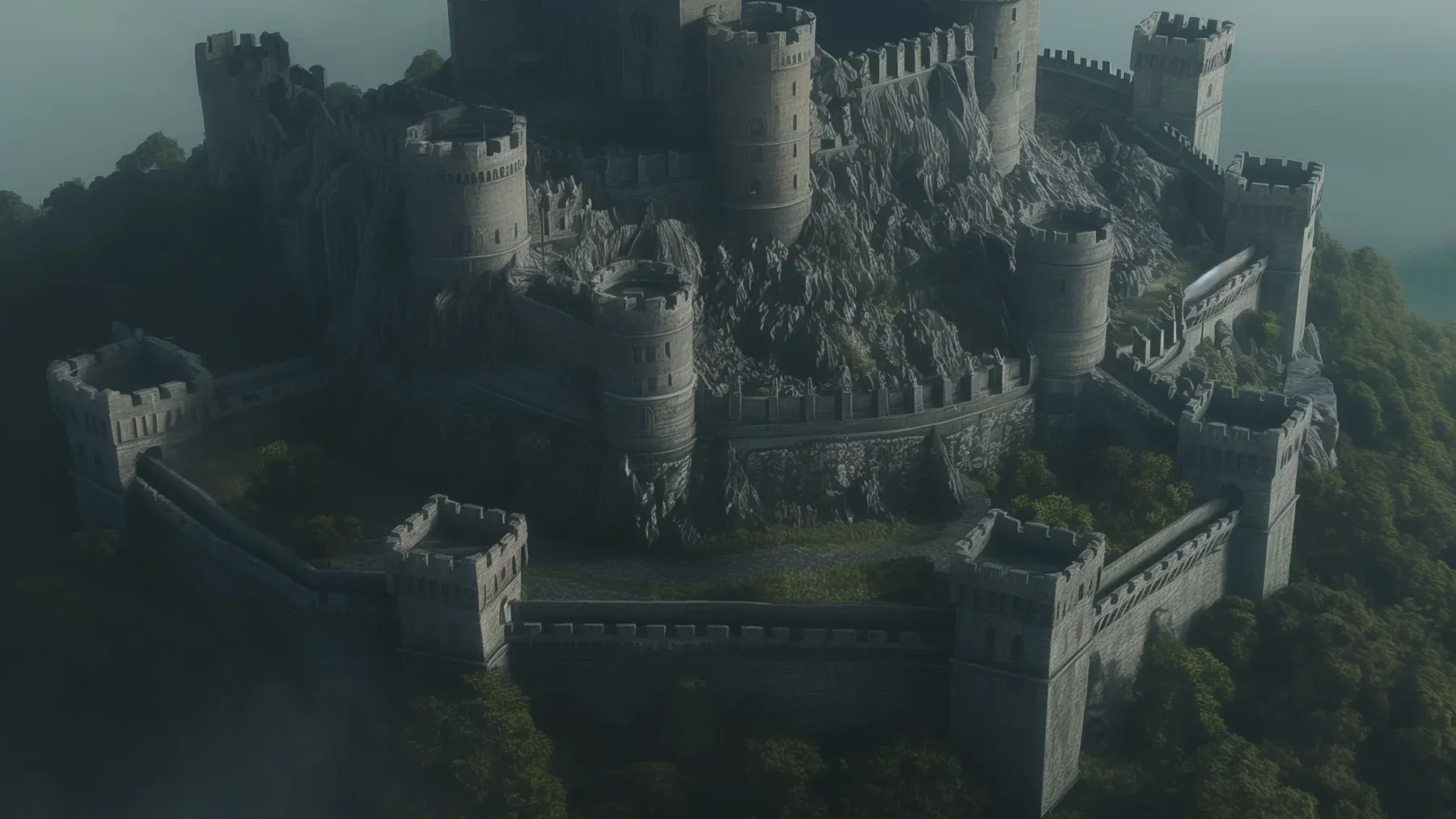
Imagine a valley where mined black salt keeps buried bodies from returning. The hill fortress controls the mine, distributes household rations, and demands a year of military service from anyone who applies for more. An herbal healer needs extra salt after floodwater exposes a cemetery. The healer’s younger sibling has already deserted from that army.
The mine, revenants, ration law, river, fortress, family history, and military obligation belong to one problem. Worldbuilding supplies the pressure. Character gives that pressure meaning.
Replace the Lore List With a Pressure Circuit
Begin by selecting one world condition that reaches the protagonist repeatedly. Write it as a circuit with six stations:
- Rule: what the world reliably does.
- Access: who can use, prevent, or interpret it.
- Dependency: which ordinary need makes people participate.
- Personal exposure: why this protagonist cannot remain neutral.
- Decision: which costly action the rule forces now.
- Residue: what persists after the immediate scene.
For the valley story, the rule is that properly measured black salt prevents a corpse from rising for one season. The fortress controls access because its soldiers guard the only known seam. Every household depends on the ration because burial without salt risks an attack. The healer’s exposure comes from the flooded cemetery and the deserter sibling. The immediate decision is whether to report the flood and identify the sibling’s hiding place in exchange for salt. The residue includes poisoned water, political debt, disturbed graves, and the healer’s changed standing in the village.
This circuit tells the writer which lore deserves page space. The chemical appearance of black salt matters when the healer must distinguish an adulterated ration. The mine’s founding legend matters when it grants the fortress legitimacy. Eleven extinct noble lineages can wait unless one owns a current claim.
The existing guide to worldbuilding that creates consequences offers a broad version of this test. Dark fantasy adds a further demand: trace where the world’s protection becomes a source of harm. The salt suppresses revenants and contaminates the river. The fortress prevents mass death and exploits the dependency. Removing either half makes the choice simpler and the darkness flatter.
Show the World Through Ordinary Dependence
Writers often introduce dark worlds at their most spectacular. An execution, monster attack, or ruined cathedral can promise genre, yet spectacle reveals little about how people live between crises. Start with a recurring task that the world’s danger has made normal.
The healer checks salt marks on grave doors every seventh morning. Children learn to keep rain channels clear of cemetery runoff. Bakers wrap salt receipts in wax because inspectors can demand proof. A household hangs an empty black pouch outside after a death so neighbors know to keep lamps lit.
Each detail should answer an operational question:
- Who performs the task?
- What knowledge does it require?
- What happens when it is delayed?
- Who benefits from doing it correctly?
- Who bears its hidden cost?
These questions convert atmosphere into a society. They also reveal character. The healer smells every ration before using it because an adulterated batch once failed. A fortress clerk trusts stamped weight. A grieving parent uses too much salt, depriving another grave. People occupy the same world through different responsibilities.
Marlon James has described fantasy characters as feeling connected to their surroundings in the way people inhabit history. The world is extraordinary to the reader and ordinary to the character. Apply that distinction to exposition. The healer does not explain why revenants are dangerous while one is climbing from a grave. The healer checks jaw movement, distance to the nearest iron gate, wind direction, and whether the corpse still wears a family cord. Attention reveals trained knowledge.
Ordinary dependence also prevents darkness from becoming decorative misery. Readers see what is worth saving: clean wells, burial customs, apprenticeships, meals, kinship, and the quiet competence that keeps a village alive. Threat matters because life exists around it.
Filter Each Rule Through Unequal Knowledge
A coherent world does not require every character to know its true explanation. Separate what happens from what people believe about it.
For each important rule, create four records:
- observable pattern: what several people can verify;
- working explanation: the model used by a profession or community;
- official doctrine: the account backed by authority;
- concealed mechanism: the deeper cause, if the novel eventually needs one.
Everyone can observe that treated graves remain quiet. Village healers believe salt slows the memory left in bone. Fortress priests teach that the ruling line received the mineral through a saint’s sacrifice. Mine records show the salt is residue from a buried magical organism, and extraction wakes more of that organism each year.
The protagonist should know enough to act and little enough to make meaningful errors. The healer understands dosage and bodily signs, has heard the doctrine, and has never seen the restricted mine levels. A soldier knows guard rotations and labor punishment. A miner knows which tunnels grow warm. Their accounts overlap without becoming interchangeable exposition channels.
The article on letting character bias reshape a setting can help distinguish the physical place from a viewpoint’s interpretation. In dark fantasy, bias may also be an adaptation. A miner who calls the warm tunnel “generous” may be protecting a belief that makes hazardous work bearable. Correcting the belief carries emotional and social cost.
Reveal information when it revises action. A ledger showing that salt output increased after each revenant season is trivia until the healer realizes the fortress benefits from the disaster it claims only to contain. A warm tunnel becomes evidence after the organism responds to the sibling’s blood. Place lore at the decision it changes.
Make the System Offer a Real Benefit
An oppressive institution becomes more convincing when it performs a function people cannot casually replace. The fortress distributes salt, organizes guarded burial teams, maintains hill beacons, and keeps records of treated graves. Villagers may fear it, resent it, work for it, and still call for its soldiers after a flood.
Write the institution as a chain of offices and incentives. The mine captain must meet extraction quotas. The ration clerk loses status when unauthorized salt disappears. Priests certify burials because their seals create public trust. Village elders receive emergency reserves if they supply recruits. No single villain needs to control every outcome.
Now give the protagonist several routes through the system:
- comply and surrender the deserter’s location;
- steal salt and expose the village to collective punishment;
- substitute another mineral whose effect is uncertain;
- enter the mine to prove that extraction causes the worsening curse;
- persuade several households to pool rations, leaving their older graves vulnerable.
A false choice offers one sensible path and several irrational ones. A dark fantasy choice should protect different legitimate goods. Reporting the sibling saves exposed graves. Hiding the sibling protects family and resists forced service. Pooling rations preserves the cemetery while transferring danger to private burial plots.
This is where dark fantasy differs from a parade of cruelty. The setting narrows action, but the character still selects which duty to honor. The earlier article on choices that retain meaning in grimdark fantasy develops moral agency under corrosive systems. Here, the worldbuilding task is more specific: every option must be supported by known resources, authority, geography, and belief.
Let Magic Change Relationships Before It Changes History
Large world consequences become legible through smaller transfers of trust, obligation, and danger. Track who must ask whom for what.
At first, the healer needs the ration clerk’s seal. The clerk needs the healer to certify that the flood qualifies as a burial emergency. The sibling needs medicine and concealment. The village elder needs soldiers before dusk. These dependencies form the human surface of the magic system.
When the healer discovers that a fresh corpse can be quieted temporarily with river reeds, the information changes relationships before it changes policy. Sharing it with the elder may buy time. Sharing it with the clerk threatens the fortress monopoly. Telling the sibling creates a route into the mine because deserters know the drainage passages.
For every revelation, list three effects:
- What can a person do now that was impossible before?
- Whose authority weakens or grows?
- Which relationship inherits the risk?
The reeds do not solve the curse. They create six hours of quiet, which allows workers to move bodies uphill. The elder gains temporary independence. The healer becomes responsible if the method fails. The sibling’s knowledge becomes valuable enough that former comrades hunt them alive rather than execute them on sight.
Magic costs work the same way. The guide to creating meaningful magic costs traces source, payer, beneficiary, and residue. Avoid attaching a cost only to the caster’s fatigue. The healer’s binding may draw warmth from a room, spoil stored medicine, mark the patient’s bones, or require salt that another household surrendered. The payment enters relationships and institutions.
Lisa Cron argues in Story Genius that external events acquire emotional meaning through how they affect a protagonist pursuing a difficult goal. Treat that as a revision test. If discovering a new burial rite does not alter the healer’s goal, internal conflict, or next move, the revelation is still lore. Connect it to the sibling, the village, or the protagonist’s belief about who deserves protection.
Escalate by Making the Protection Produce the Threat
Dark fantasy gains coherence when its central danger grows from the mechanism people use to survive. The black salt does restrain revenants. Mining it also feeds heat into the buried organism, poisons water, and increases the number of disturbed dead. The fortress is neither lying about every benefit nor innocent of the cycle.
Escalate through feedback:
- A larger flood exposes more graves.
- The fortress increases extraction to meet demand.
- Mine heat wakes the organism further.
- The river carries residue toward newer cemeteries.
- More graves require treatment.
- Emergency rationing expands military power.
The protagonist enters this loop at a different point in each act. Early scenes show ration dependence. Middle scenes reveal water damage and extraction incentives. Late scenes force a decision about whether to destroy the seam, seize it, change burial practice, or preserve it under new control.
Keep character change inside the same loop. The healer begins believing that individual competence can protect a family from bad rulers. Stealing one pouch appears sufficient. Evidence then shows that every private exception moves risk to another household. The internal conflict shifts from “Will I betray my sibling?” to “What form of shared responsibility can I accept without repeating the fortress’s coercion?”
This movement gives darkness shape. The story can become more frightening while the protagonist gains understanding. Hopelessness is one possible ending, but it should arise from the tested system rather than from an author adding another catastrophe after every success.

Make the Ending Change the World’s Relationship to the Character
The climax should decide more than who controls the fortress. Return to the pressure circuit and ask what changes at every station.
The healer might destroy the central salt seam after proving that extraction feeds the buried organism. That action stops the accelerating cycle and removes the valley’s only reliable burial protection. Success creates immediate work: evacuating low cemeteries, teaching the reed method, negotiating with neighboring regions, and deciding how to treat graves before winter.
The sibling can guide villagers through the drainage passages, but doing so exposes the desertion. The ration clerk can open the stores and destroy evidence of household debts, giving up the office that once provided safety. The elder can organize ration sharing while accepting that an unequal village council cannot remain unchanged.
Now test the protagonist’s final relationship to the world:
- Which world rule has been altered, understood, or accepted?
- Which dependency still binds the protagonist?
- Which authority can the protagonist now challenge or exercise?
- Which cost cannot be repaired?
- What ordinary task looks different the next morning?
The healer still checks grave doors. This time there is no fortress stamp and no promise of a full season. Several households walk the route together, record which reeds fail, and decide publicly where limited protection goes. The work remains grim. Agency has changed its form.
An ending like this preserves the dark fantasy contract. The supernatural threat remains dangerous, losses matter, and the world cannot be cleansed by a speech. Character and worldbuilding finish the same causal movement because the protagonist’s choice changes both a personal belief and a material survival practice.
Connect World Pressure to Character in NovelOS Studio
Dark fantasy requires more than a lore encyclopedia beside a manuscript. The writer must see how rules, institutions, resources, beliefs, relationships, scenes, and consequences converge on a person. NovelOS Studio provides one connected workspace for that full novel.
Use the Studio to preserve the pressure circuit:
- Develop the healer, sibling, ration clerk, elder, miners, soldiers, priests, and affected households with The Oracle, including goals, knowledge limits, adaptive beliefs, skills, and costs they will accept.
- Build the valley, fortress, mine, river, cemeteries, black salt, revenant behavior, reed method, burial customs, ration offices, military service, and buried organism in The Architect.
- Map kinship, command, dependency, debt, professional trust, coercion, secrecy, and later cooperation through Connections.
- Explore alternate sources of the curse, institutional benefits, hard choices, revelations, and endings in Spark.
- Arrange floods, grave failures, ration deadlines, mine shifts, discoveries, pursuit, extraction changes, and the final breach in The Blueprint. Timeline View keeps the supernatural cycle and character consequences synchronized.
- Draft ordinary survival work, conflicting interpretations, bodily fear, moral pressure, and aftermath in Manuscript.
- Track salt supply, exposed graves, river contamination, known rules, faction authority, relationship debt, chapter progress, and revision work with goals and custom trackers.
- Test clearer lore delivery and sharper character reactions alongside existing prose in The Alchemist, retaining the version that advances the decision.
- Turn the complete manuscript into EPUB or PDF through Editorial Foundry. A developmental editor can receive RTF or DOCX, while Markdown, plain text, and a self-contained HTML file cover other handoffs.
For this dark-fantasy project, install NovelOS Studio on Windows or macOS and keep the unpublished material on your computer. Activation covers the machines you own. The world’s rules can remain as rich as the novel demands while every detail stays answerable to character, plot, and the finished book. Build a dark fantasy world readers fear because they understand exactly what it asks people to pay.
Sources and further reading
- The Encyclopedia of Science Fiction, “Horror in SF”, on the porous boundaries among horror, fantasy, supernatural fiction, and dark fantasy terminology.
- TIME, “How Marlon James Is Rewriting the Rules of Fantasy Fiction”, on setting as definer and confiner, character knowledge, movement through a large world, and characters experiencing fantasy as their ordinary reality.
- Lisa Cron, Story Genius, especially PDF page 17 on plot events gaining meaning and emotional weight through their effect on a protagonist pursuing a difficult goal.
- Lummi source: mysterious forest journey
- Lummi source: majestic castle in mystic fog
- Lummi source: mystical Gothic study scene