The City Itself Should Change the Magic in Urban Fantasy
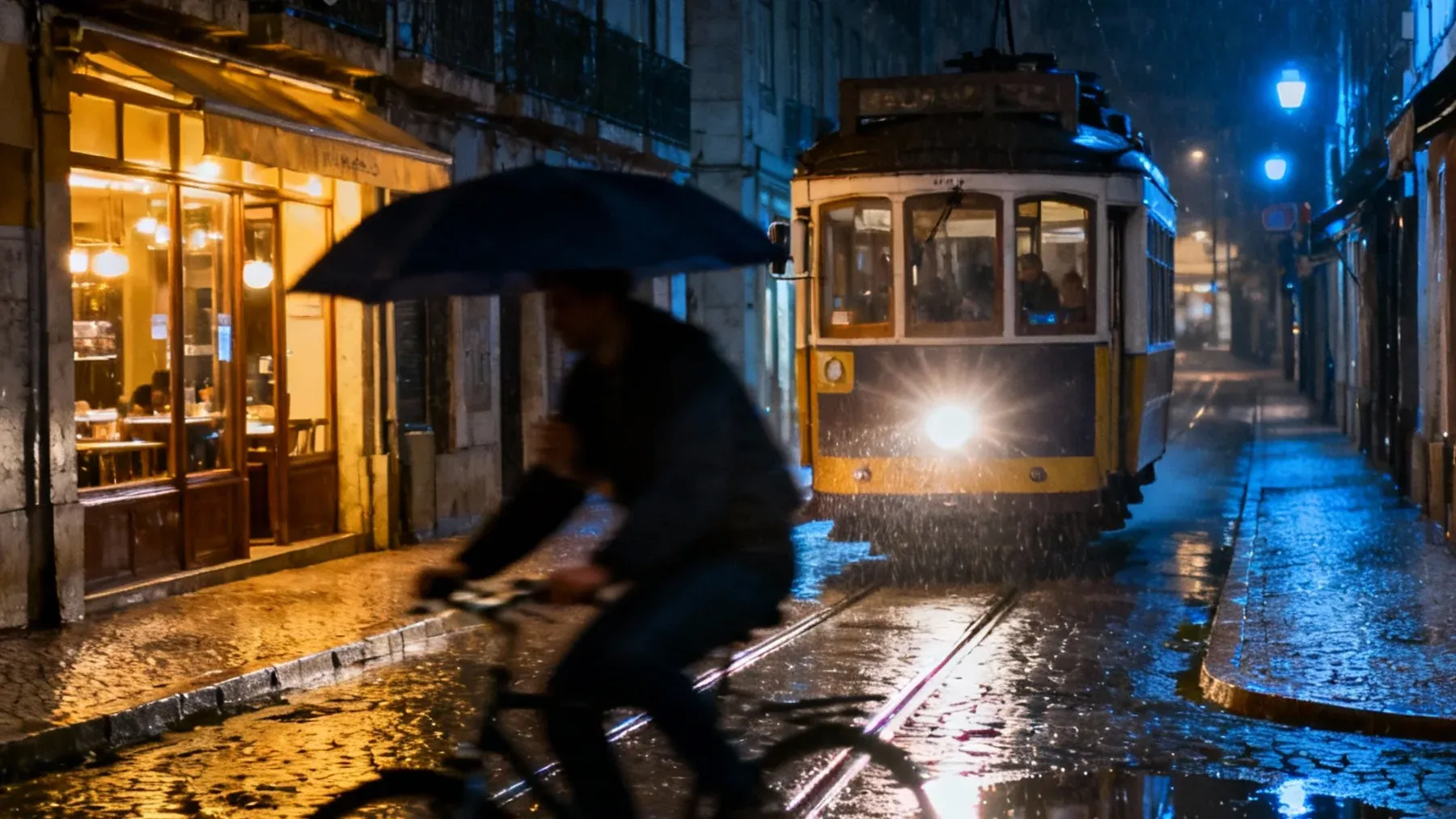
At 1:17 every morning, the Number 8 tram crosses a bridge the city demolished in 1974.
Most passengers miss the change. They sleep, scroll, or watch the river through rain-streaked glass. A transit cartographer notices because the vehicle’s location beacon reports a stop named Bell Foundry, a neighborhood erased when the ring road was built.
She stays aboard. The tram carries her into streets that remember every building removed to make the modern city possible. The magic depends on rails laid over older routes, public records that contradict residents’ memories, and thousands of repeated journeys. It could not be transferred unchanged to another skyline.
That is the test for an urban-fantasy setting. The city should produce opportunities, limits, evidence, and conflict that shape the supernatural plot.
What Makes Urban Fantasy Feel Urban?
Urban fantasy places supernatural events within a city, yet location alone does not give the genre its strongest form. A city becomes consequential when density, infrastructure, government, work, technology, public space, neighborhood history, and unequal access alter how magic is found, used, concealed, or resisted.
Alexander Irvine’s chapter in The Cambridge Companion to Fantasy Literature notes how broad and contested the label has become. Works described as urban fantasy range from contemporary supernatural stories to historical cities and secondary-world metropolises. Across that variety, the city and the redeployment of fantastic traditions in unfamiliar contexts remain central.
For writers, this means “urban” is a causal promise. Replace the city with a village, forest, or isolated estate. If every scene, spell, clue, and institution still works, the setting is mostly backdrop.
In the tram story, the supernatural route needs a transit authority, layered maps, automated beacons, erased stops, public maintenance, old fare tokens, and enough passengers to build a shared expectation of arrival. Replacing the city would require redesigning the premise.
Start research with daily operations before landmarks. Ask how residents move, where water comes from, what happens to waste, who grants permits, where rent rises, which streets flood, how emergency services route calls, and what overnight workers know. Those processes supply repeated actions and contested access, which are excellent foundations for magic.
Attach Magic to One Municipal Process
Choose something the city does continuously: move people, pump water, distribute electricity, record addresses, collect refuse, approve construction, regulate markets, remove graffiti, or maintain public trees. Then decide what repeated human action accumulates inside that system.
The Number 8 route develops memory because generations expect it to connect home and work. A stop gains strength through arrival rituals, announcements, fare exchanges, and people waiting in the same place. Abandoned stations remain reachable while former passengers continue dreaming their commute. A new luxury line cannot manufacture that depth by copying an antique sign.
Build the magical process with five linked fields:
- Carrier: Which material or network transports the magic: rail, water, wire, address, pavement, radio, or refuse stream?
- Human input: Which repeated expectation, promise, grief, labor, or transaction gives it force?
- Local modifier: Which geography, history, weather, policy, or neighborhood practice changes the effect?
- Failure mode: What interruption, neglect, overload, or redesign causes danger?
- Custodian: Who understands enough of the ordinary system to recognize the supernatural one?
For this novel, steel rail carries accumulated route memory. Repeated expectation charges it. Demolition without acknowledged replacement creates ghost stops. Track removal strands them. Night drivers, signal engineers, cleaners, and longtime passengers hold different parts of the knowledge.
The method works for other premises. Storm drains could carry discarded names, with flood-control gates changing where they surface. Addresses could bind household spirits until rezoning divides a property. Heat stored in paved districts could wake a summer entity whose range follows material temperature rather than neighborhood mythology.
The last example benefits from real urban research. The US Environmental Protection Agency’s heat-island guidance explains how buildings, roads, vegetation, material properties, density, and wind flow produce temperature differences within a city. A writer can translate those relationships into fantasy while preserving their ordinary consequences for health and energy use.
This approach extends the craft of active setting. Place changes the available action instead of supplying a visual theme after the plot has already been chosen.
Decide Who Can See and Regulate the Hidden City
“Hidden from ordinary people” is too simple for a dense city. Visibility should follow work, access, memory, technology, language, or deliberate training.
Night drivers know about Bell Foundry because transfer slips sometimes print in obsolete ink. Residents displaced by the ring road recognize passengers who died decades ago. Transit executives classify reports as equipment faults to limit liability. Tourists see a late tram. A cleaner understands the haunted platform better than a famous sorcerer because she works there when the last public train leaves.
The cartographer gains access after deleting Bell Foundry’s final historical alias from a database. Her bureaucratic action completes an erasure, so the route makes her witness what the official map excludes. Ability and responsibility arrive together.
Use a visibility table for each supernatural event. Record who senses it directly, who sees technological residue, who has historical context, who controls the official explanation, and who pays when the event is ignored. This keeps the hidden world from operating as one universal secret.
Institutions respond through their actual interests. The transit authority protects safety, service, budgets, and legal exposure. A developer wants vanished parcels whose old boundaries still carry power. A neighborhood association preserves the ghost stop because displaced families use it to visit former streets. Police treat unregistered magical travel as trespass. Accessibility campaigners support replacing old trams with buses.
Technology belongs inside the same causal world. Phones may lose time on the route, while location data proves impossible movement. Fare records reveal supernatural passengers. Cameras capture the empty carriage but retain sound. Magic can interfere selectively; it does not need to disable every modern tool.
Point of view shapes which city becomes visible. The cartographer notices gradients, transfer geometry, service gaps, and unofficial shortcuts before architecture. The guide to character-biased setting can help separate municipal facts from her trained way of reading them.
Give Neighborhoods Different Relationships to Magic
A city does not think, remember, or benefit as one person. Districts have different histories, built forms, institutions, demographics, schedules, and internal disputes. Their magic should vary for reasons deeper than color palettes.
In the dock district, residents fasten spoken promises to mooring rings because tidal water carries them through the harbor. Around the university, demolished lecture halls return in reflections because archives preserved their plans. The hill district has few stable ghosts because constant excavation disturbs foundations. Bell Foundry preserves routes through schedules once coordinated across factories and homes.
For every important neighborhood, record:
- the ordinary process residents rely on;
- the historical change that altered it;
- the people who gained and lost access;
- the local explanation for the supernatural effect;
- the present dispute about what should happen next.
This turns movement into a change of jurisdiction. A dockside protection may fail inland. A municipal map may omit an alley used daily by residents. A spell licensed in the financial district may be prosecuted as vandalism elsewhere.
Build neighborhoods through people doing work. A depot café owner extends credit to drivers and hears route changes before administrators announce them. An older campaigner preserves demolition records. Teenagers hold concerts on a vanished platform without knowing why previous residents refuse to enter. A wheelchair user supports the bus conversion because the old tram excludes her, even though removal could sever the ghost route.
Conflicting memories improve the world. One resident remembers the foundry district as a community destroyed by planning. Her daughter remembers dangerous crossings and soot. A former official remembers families requesting modern housing. These accounts can all contain evidence. The plot should determine what each account helps the cartographer understand.
The city also changes by hour and weather. Markets, transfer stations, office blocks, and maintenance tunnels have different users at noon and after the last train. Rain overwhelms particular drains. Heat gathers in paved districts. Snow interrupts service unevenly. Researching how setting generates suspense helps turn those conditions into deadlines and restricted routes.
Make the Plot Follow Urban Dependencies
The ghost tram exists through a dependency chain: rail power, remembered schedules, surviving names, fare tokens kept by families, maintenance access, and the expectation of return. An antagonist can exploit the chain without possessing a single all-purpose spell.
A developer purchases old tokens and files claims against vanished parcels. Each token removed from circulation weakens a stop and strands another former resident. The investigation must therefore travel through systems.
The cartographer follows signal anomalies to a substation, oral histories to kitchens, deeds to the municipal archive, token sales to an auction house, and track plans to the bridge. Every location changes her model. City research becomes action because documents, workers, routes, and ownership determine the next move.
Draw a dependency chain with at least five links. For each link, specify its custodian, normal maintenance, evidence of failure, and consequence downstream. Then plan scenes around broken links rather than unrelated encounters.
Urban dependencies also create native deadlines. Power closes for overnight work. The ghost tram runs at 1:17. A council vote authorizes track removal. Spring tide floods the old underpass. The last accessible replacement bus leaves before the supernatural route appears.
Let magic feed back into the ordinary system. When the cartographer redirects current, lights illuminate along demolished streets and the substation overloads. When residents speak erased stop names at a public hearing, route displays briefly restore them and service control logs a network fault. A supernatural act always leaves an administrative, material, financial, or social trace.
The EPA’s current smart-growth guidance is useful as a real-world reminder that urban interventions produce several effects at once. Trees, roofs, pavement, density, cooling, runoff, cost, and community participation interact. Magical infrastructure deserves the same consequence thinking.
Resolve the Civic Choice Through a New Arrangement
The climax should use knowledge accumulated through the city. Defeating the developer in an alley would leave the transport conflict unchanged. Secretly preserving the old route would retain its inaccessibility and allow future officials to erase it again.
The cartographer proposes a replacement network whose buses follow critical historic paths, carries surviving stop names into public signage, and places donated tokens in a community-governed archive. A short rail section remains as an accessible heritage line. Former residents, current riders, disability advocates, drivers, and planners all receive defined authority over different parts.
The solution has costs. Some supernatural streets disappear when track is lifted. Public recognition exposes the route to tourism and regulation. The new buses cannot hold memory in exactly the same way, so residents must create fresh rituals of expectation. The developer loses claims while the city accepts compensation liability.
This ending avoids treating preservation as automatic justice. Old infrastructure can carry exclusion and danger alongside memory. Improvement can repeat erasure when officials define progress without the people who use a place. The final arrangement answers both histories.
Give the protagonist a changed civic role. She began believing an accurate official map could settle disputes. She ends by treating maps as claims built from sources, permissions, omissions, and revision. Her final act is to publish layers rather than one authoritative surface.
The city need not become conscious for the ending to feel alive. Its people, materials, institutions, and repeated practices respond. That is enough to make the supernatural inseparable from urban life.
Build the Magical City as a System in NovelOS Studio
An urban-fantasy novel must connect residents, workers, agencies, districts, rules, historical layers, infrastructure failures, and scene-level discoveries. NovelOS Studio gives those elements a shared project instead of separating world notes from the manuscript they need to affect.
- Develop the cartographer, drivers, residents, planners, developers, activists, officials, and supernatural passengers in The Oracle, including what each knows through work and where their authority ends.
- Use Connections and Cast & World for neighborhood loyalty, institutional power, property claims, message routes, hidden knowledge, and changing alliances.
- Test carriers, local modifiers, failures, custodians, and civic outcomes in Spark before making a magical rule canonical.
- Define transport, districts, utilities, laws, records, customs, and historical layers with The Architect so the supernatural chain remains attached to urban causes.
- Connect each investigation step to its place, dependency, evidence, and decision in The Blueprint. Timeline View can align demolition, displacement, route changes, maintenance windows, tides, hearings, and the 1:17 tram.
- Draft journeys, meetings, hauntings, and civic choices in The Manuscript. Later, The Alchemist can examine clarity, rhythm, repeated explanations, and place-specific language without taking control of the revision.
- Goals and trackers can monitor research, district design, causal checks, drafting, and revision. Editorial Foundry prepares EPUB, print-ready PDF, DOCX, standalone HTML, RTF, Markdown, and TXT outputs when the city is ready for readers.
The desktop studio stores active work locally and supports both Windows and macOS. A .novelos archive captures the complete city and manuscript for safekeeping or transfer. The personal license has no device-count limit for computers you own. Mobile ships on iOS and Android on the same licence, installed from the browser.
Urban fantasy becomes distinctive when magic grows from one city’s dependencies and changes its public choices. Follow the workers, records, routes, and residents who maintain that city. Build the whole magical system in NovelOS Studio so every supernatural event leaves consequences in the streets where it occurred.
Sources and further reading
- Alexander C. Irvine, “Urban Fantasy”, in The Cambridge Companion to Fantasy Literature (Cambridge University Press, 2012), on the genre’s contested scope and relationship between city and fantastic tradition.
- US Environmental Protection Agency: What Are Heat Islands?, current guidance on buildings, roads, materials, vegetation, density, and wind as causes of urban temperature differences.
- US Environmental Protection Agency: Smart Growth and Heat Islands, current guidance on linked design, cooling, runoff, development, and community participation.
- Ron Rozelle, Description & Setting: Techniques and Exercises for Crafting a Believable World of People, Places, and Events. Local reference copy consulted; PDF pages 137 and 165 were visually inspected for setting as an active story force and for enlarging conflict through place.