Story Structure
Worldbuilding
Worldbuilding is the development of the physical, social, cultural, historical, economic, and political conditions that shape a story world.
Worldbuilding in a story
It applies to contemporary neighborhoods as well as invented planets. Useful worldbuilding changes what characters know, value, can attempt, and must risk.
Original fiction example
In a city where water is inherited property, marriage contracts, crime, architecture, and funeral customs all respond to access to wells.
This example is original to the NovelOS glossary. It illustrates the term without borrowing a passage from a published novel.
Why writers use it
Use worldbuilding to create connected causes and consequences around the story's central lives.
A useful revision question: Where does this device change what the reader understands, expects, or feels? If removing it leaves the passage unchanged, it may need a clearer function.
A common mistake
An encyclopedia of facts remains separate from the novel until those facts influence action and choice.
Use worldbuilding in NovelOS Studio
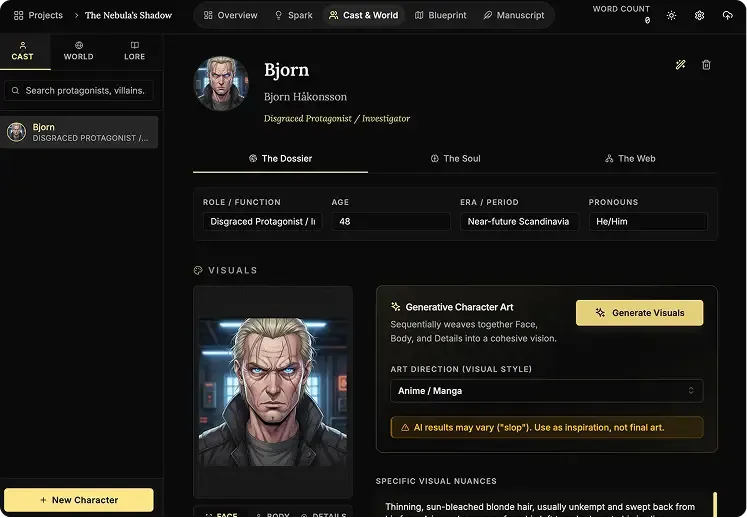
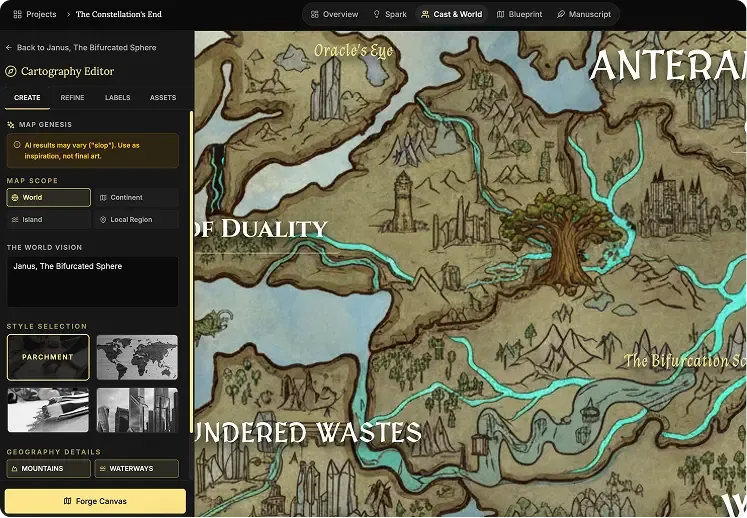
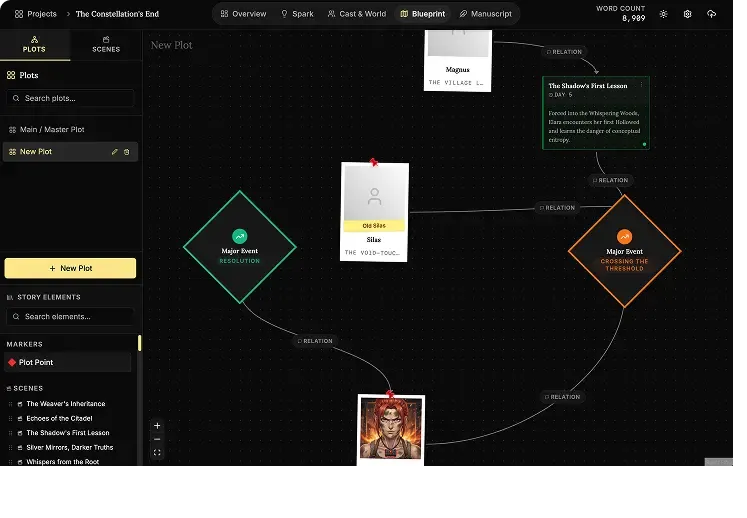
Map the term across scene cards, plotlines, arcs, and Timeline View. The Blueprint sits inside the same NovelOS Studio project as your characters, world, timeline, manuscript, goals, tracker, revision tools, and publishing exports.
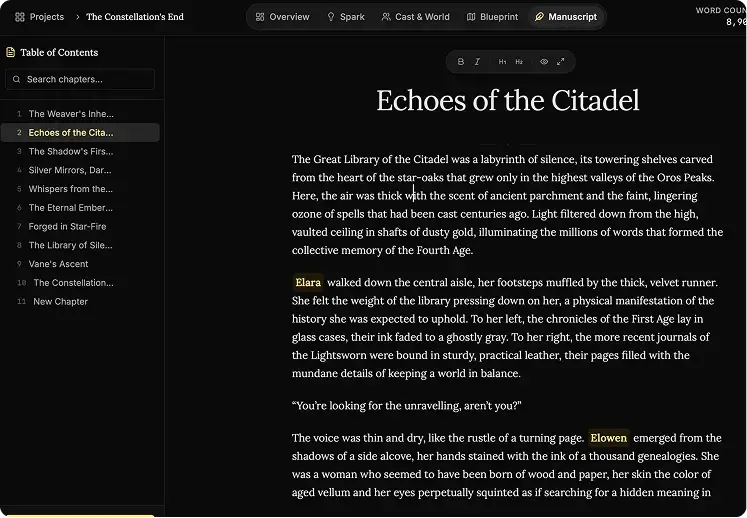
Record the idea where it affects the book, test it in scenes, and revise it beside the surrounding prose. NovelOS Studio keeps the craft decision attached to the novel instead of leaving it in a separate worksheet.