Story Structure
Exposition
Exposition is information that helps readers understand characters, circumstances, history, or the story world.
Exposition in a story
It can appear through narration, dialogue, memory, documents, setting, or action. The relevant question is when the reader needs the information and what changes because they receive it.
Original fiction example
While hiding contraband beneath the chapel floor, Toma remembers which stones were replaced after the occupation.
This example is original to the NovelOS glossary. It illustrates the term without borrowing a passage from a published novel.
Why writers use it
Use exposition to make present action legible and consequential.
A useful revision question: Where does this device change what the reader understands, expects, or feels? If removing it leaves the passage unchanged, it may need a clearer function.
A common mistake
Delivering context before it affects desire or danger asks readers to memorize information without a reason.
Use exposition in NovelOS Studio
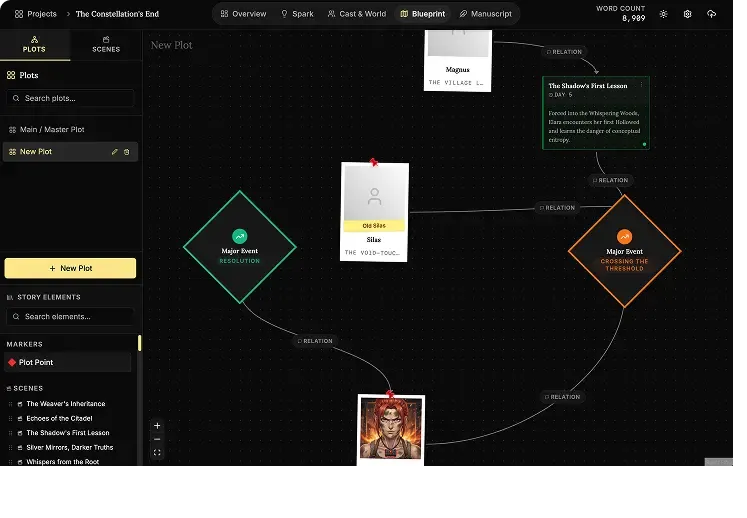
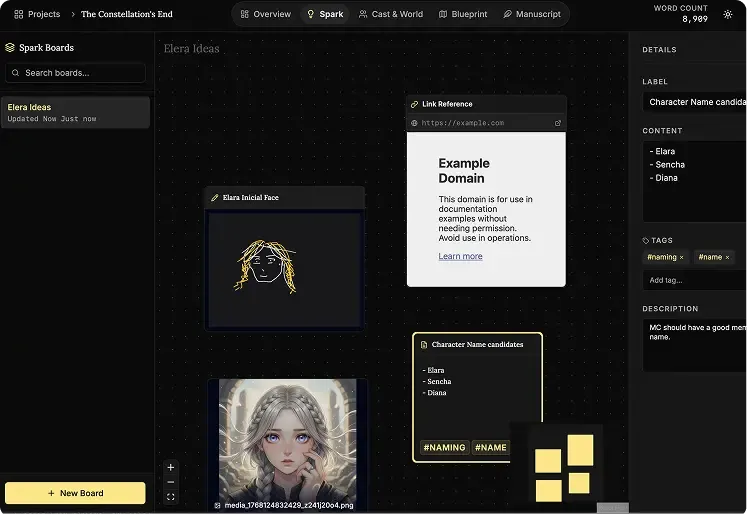
Map the term across scene cards, plotlines, arcs, and Timeline View. The Blueprint sits inside the same NovelOS Studio project as your characters, world, timeline, manuscript, goals, tracker, revision tools, and publishing exports.
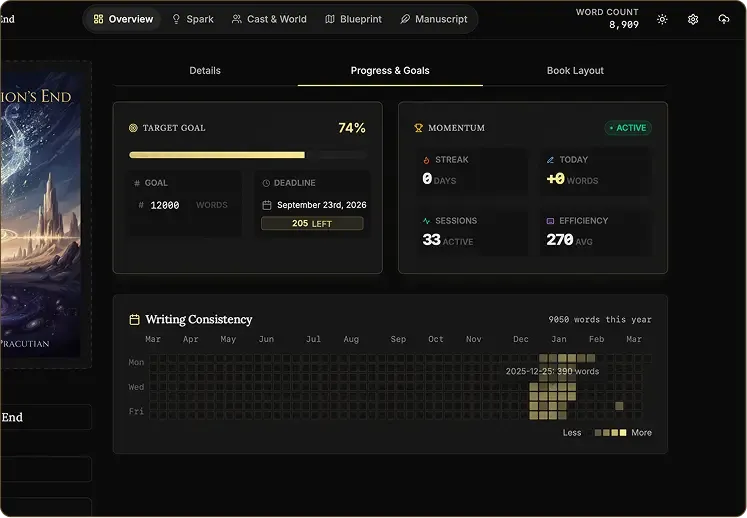
Record the idea where it affects the book, test it in scenes, and revise it beside the surrounding prose. NovelOS Studio keeps the craft decision attached to the novel instead of leaving it in a separate worksheet.