Story Structure
Turning Point
A turning point is an event, choice, or revelation that changes the direction, meaning, or available possibilities of a scene or larger plot.
Turning Point in a story
It prevents action from returning to its previous state. The next movement occurs under altered knowledge, power, commitment, or cost.
Original fiction example
The witness agrees to testify, then names the protagonist as the person who paid her.
This example is original to the NovelOS glossary. It illustrates the term without borrowing a passage from a published novel.
Why writers use it
Use turning points to make scenes and acts produce irreversible movement.
A useful revision question: Where does this device change what the reader understands, expects, or feels? If removing it leaves the passage unchanged, it may need a clearer function.
A common mistake
A surprise that changes nothing is decoration rather than a turn.
Use turning point in NovelOS Studio
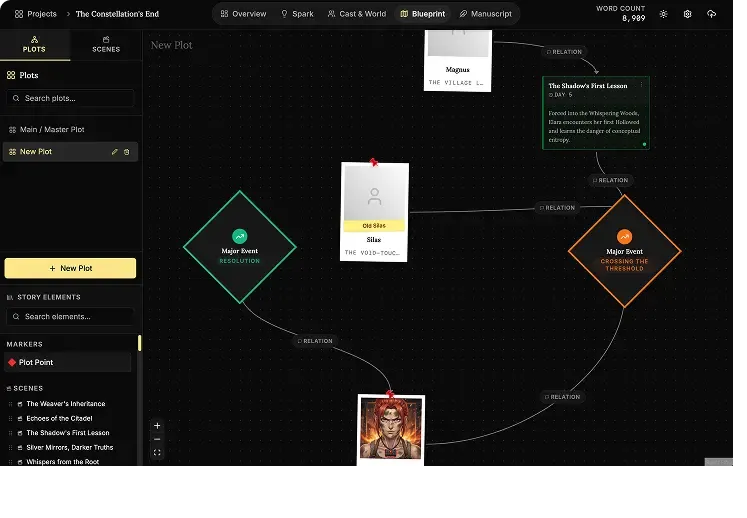
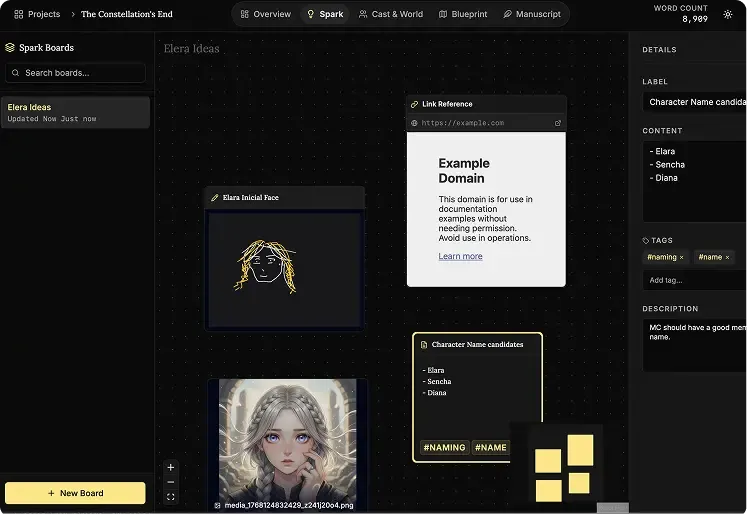
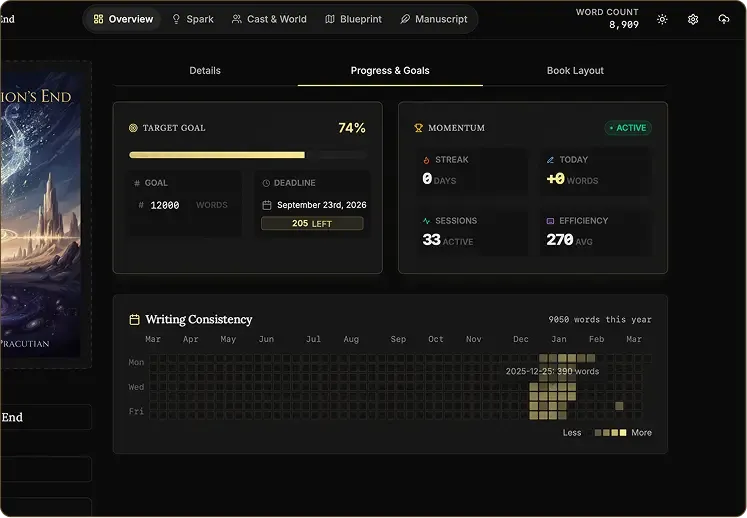
Map the term across scene cards, plotlines, arcs, and Timeline View. The Blueprint sits inside the same NovelOS Studio project as your characters, world, timeline, manuscript, goals, tracker, revision tools, and publishing exports.
Record the idea where it affects the book, test it in scenes, and revise it beside the surrounding prose. NovelOS Studio keeps the craft decision attached to the novel instead of leaving it in a separate worksheet.