Story Structure
Cliffhanger
A cliffhanger ends a scene, chapter, or installment while a consequential outcome remains unresolved.
Cliffhanger in a story
It creates forward pressure by interrupting at a revelation, decision, reversal, arrival, or immediate danger whose meaning the reader wants to learn.
Original fiction example
The detective opens the sealed evidence bag and recognizes her own handwriting just before the chapter ends.
This example is original to the NovelOS glossary. It illustrates the term without borrowing a passage from a published novel.
Why writers use it
Use a cliffhanger when the interruption sharpens a real story question.
A useful revision question: Where does this device change what the reader understands, expects, or feels? If removing it leaves the passage unchanged, it may need a clearer function.
A common mistake
Constant artificial interruption can make chapters feel withholding instead of suspenseful.
Use cliffhanger in NovelOS Studio
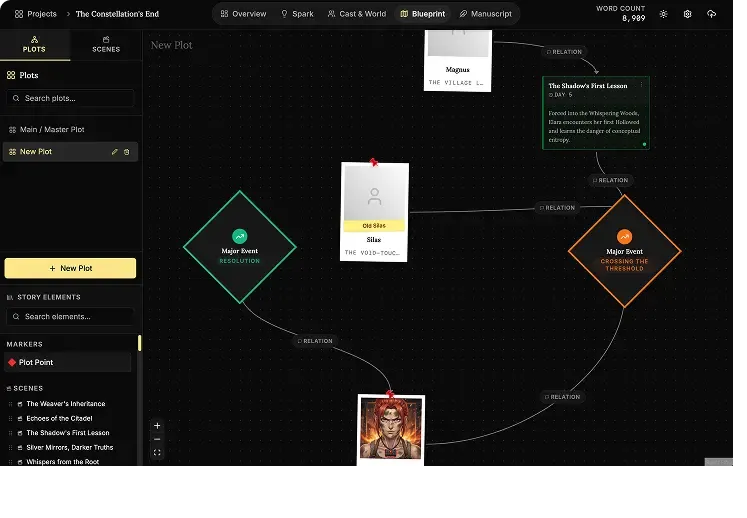
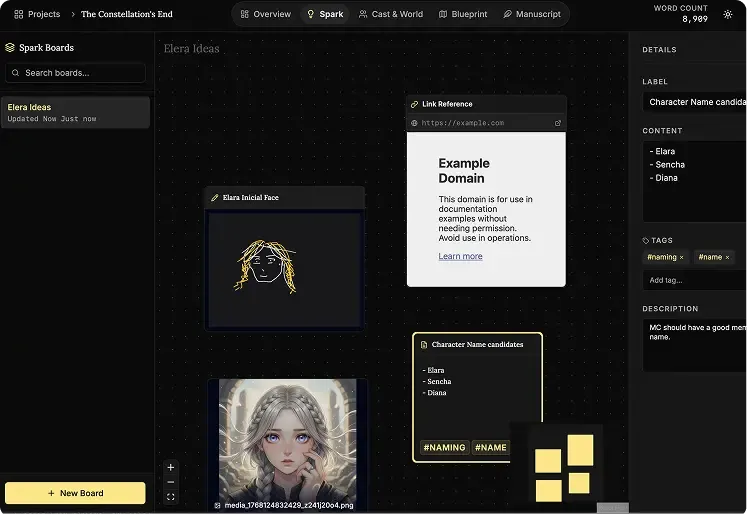
Map the term across scene cards, plotlines, arcs, and Timeline View. The Blueprint sits inside the same NovelOS Studio project as your characters, world, timeline, manuscript, goals, tracker, revision tools, and publishing exports.
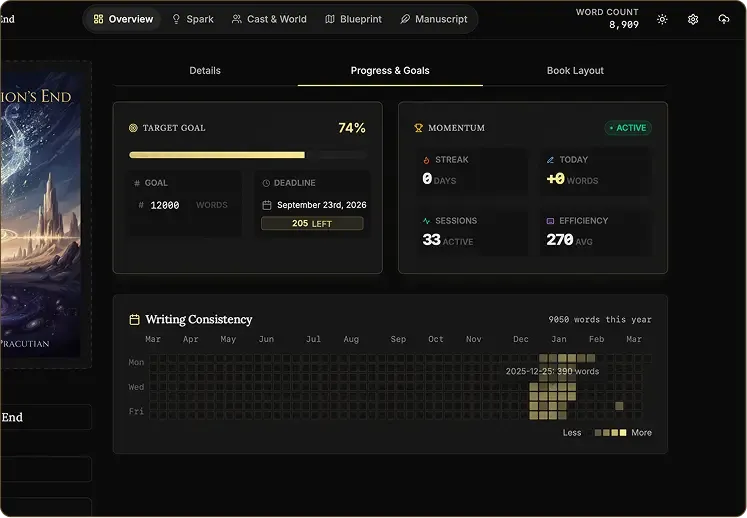
Record the idea where it affects the book, test it in scenes, and revise it beside the surrounding prose. NovelOS Studio keeps the craft decision attached to the novel instead of leaving it in a separate worksheet.