Prose and Style
Tone
Tone is the attitude conveyed by a narrator, speaker, or text toward its subject and audience.
Tone in a story
Word choice, syntax, rhythm, detail, and degree of distance can produce tones such as tender, skeptical, ceremonial, bitter, or amused.
Original fiction example
The narrator describes a disastrous banquet with the careful approval of someone reviewing a successful military operation.
This example is original to the NovelOS glossary. It illustrates the term without borrowing a passage from a published novel.
Why writers use it
Use tone to establish the relationship between the telling voice and what is told.
A useful revision question: Where does this device change what the reader understands, expects, or feels? If removing it leaves the passage unchanged, it may need a clearer function.
A common mistake
A tone that ignores the human weight of events may alienate readers unless that dissonance is deliberate.
Use tone in NovelOS Studio
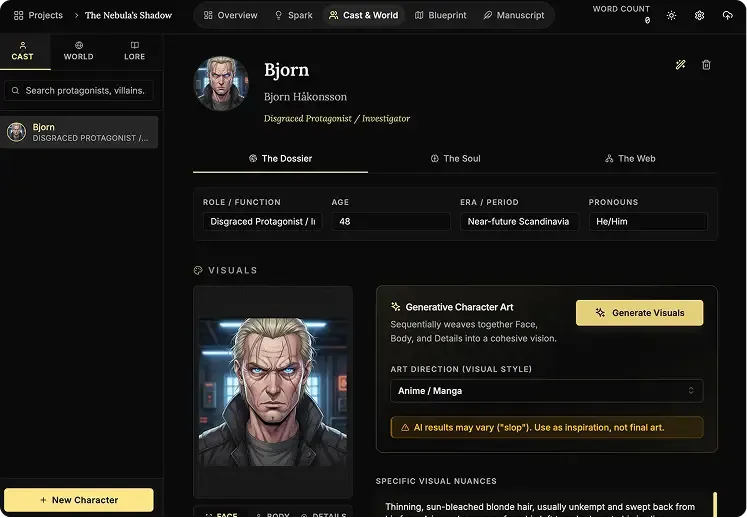
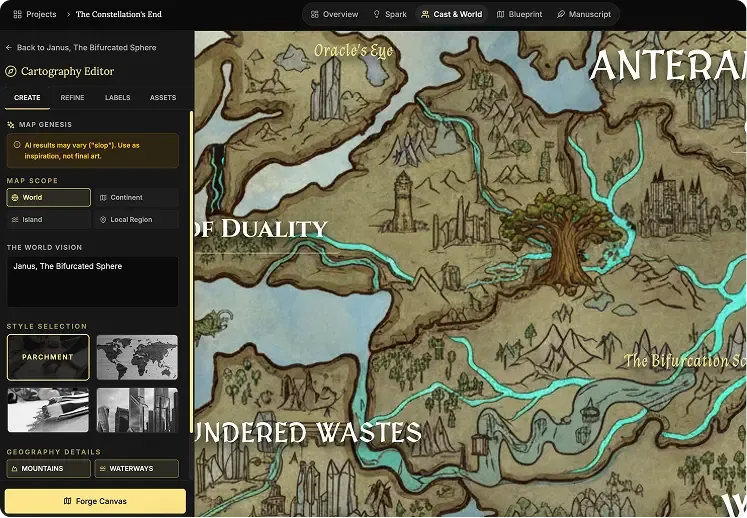
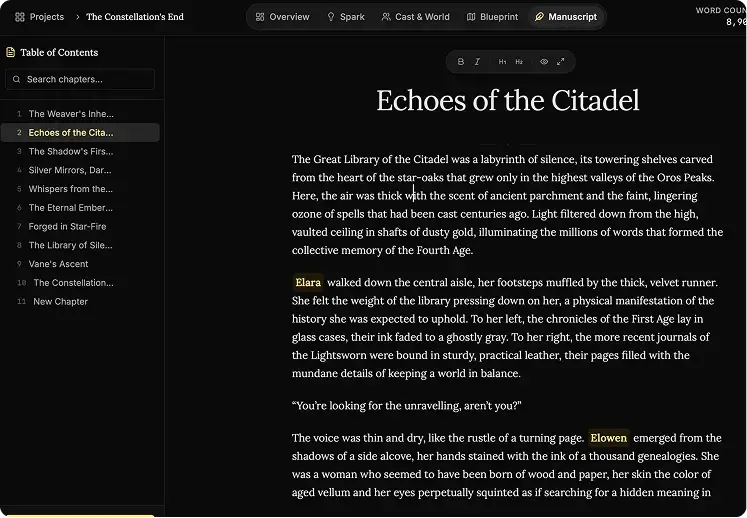
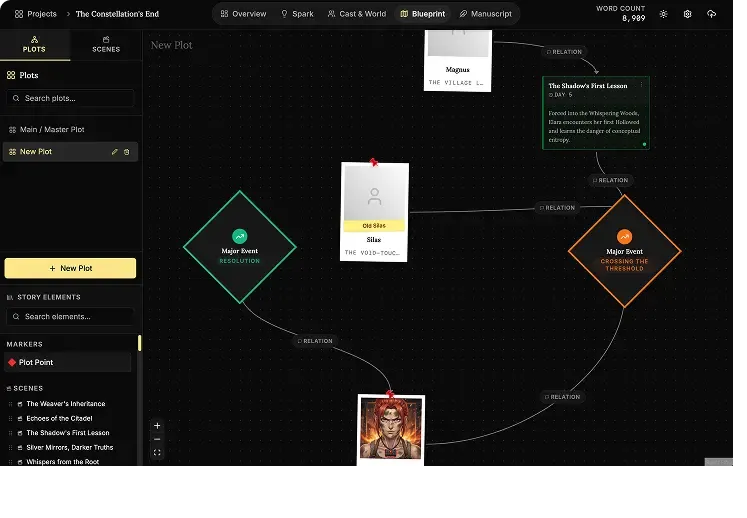
Refine clarity, rhythm, tone, repetition, and deliberate prose while preserving your voice. The Alchemist sits inside the same NovelOS Studio project as your characters, world, timeline, manuscript, goals, tracker, revision tools, and publishing exports.
Record the idea where it affects the book, test it in scenes, and revise it beside the surrounding prose. NovelOS Studio keeps the craft decision attached to the novel instead of leaving it in a separate worksheet.