Figurative Language
Symbolism
Symbolism is the use of a concrete element to carry meanings beyond its literal function.
Symbolism in a story
A symbol gains force through context, recurrence, cultural association, and changing relationships rather than through a fixed universal code.
Original fiction example
A border guard keeps planting confiscated seeds; the hidden garden comes to represent both control and the life his work suppresses.
This example is original to the NovelOS glossary. It illustrates the term without borrowing a passage from a published novel.
Why writers use it
Use symbolism to let objects, places, or actions gather thematic meaning through the story.
A useful revision question: Where does this device change what the reader understands, expects, or feels? If removing it leaves the passage unchanged, it may need a clearer function.
A common mistake
Explaining a symbol immediately after presenting it removes the reader's interpretive participation.
Use symbolism in NovelOS Studio
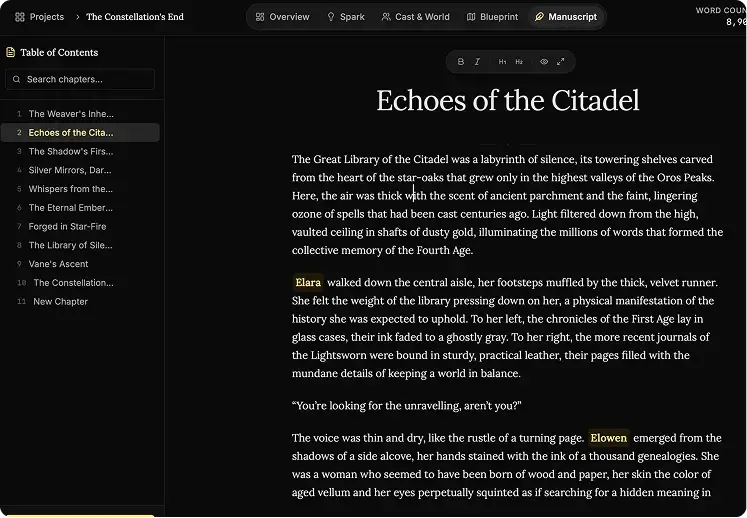
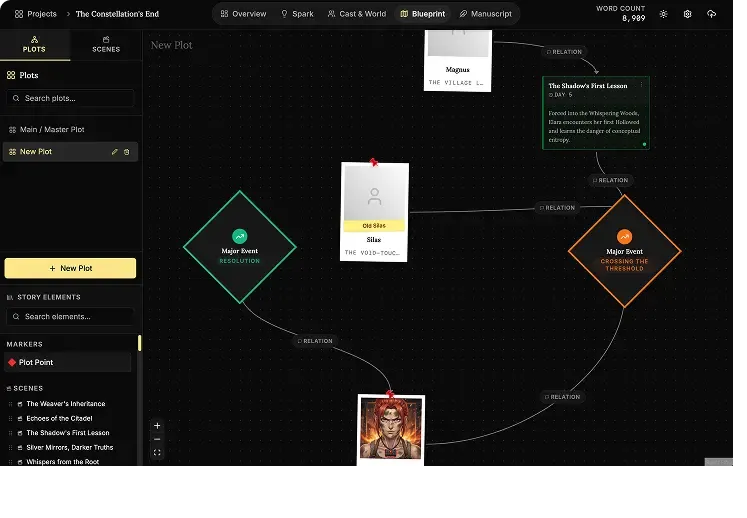
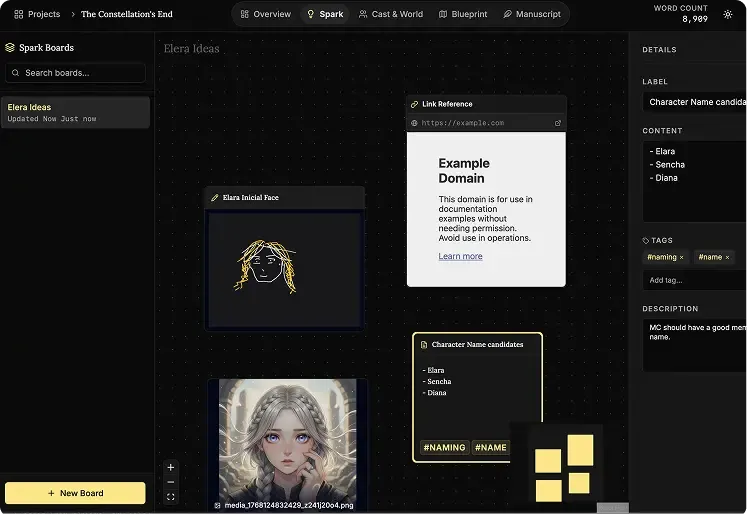
Review imagery, repetition, rhythm, and language choices in the context of the manuscript. The Alchemist sits inside the same NovelOS Studio project as your characters, world, timeline, manuscript, goals, tracker, revision tools, and publishing exports.
Record the idea where it affects the book, test it in scenes, and revise it beside the surrounding prose. NovelOS Studio keeps the craft decision attached to the novel instead of leaving it in a separate worksheet.