Genre and Form
Surrealism
Surrealism disrupts ordinary logic through dreamlike, uncanny, or unexpected combinations that expose hidden associations and realities.
Surrealism in a story
Surrealist events need not follow conventional causality, but their images and transformations create their own emotional logic.
Original fiction example
Every morning the clerk removes a smaller office from inside his desk until he discovers himself working in the final room.
This example is original to the NovelOS glossary. It illustrates the term without borrowing a passage from a published novel.
Why writers use it
Use surrealism when associative imagery can reveal what literal realism keeps concealed.
A useful revision question: Where does this device change what the reader understands, expects, or feels? If removing it leaves the passage unchanged, it may need a clearer function.
A common mistake
Random strangeness lacks force when images have no developing relationship to the work.
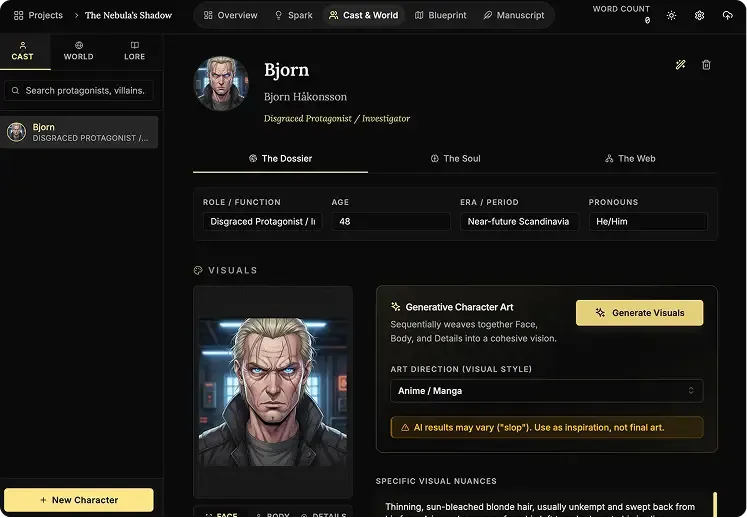
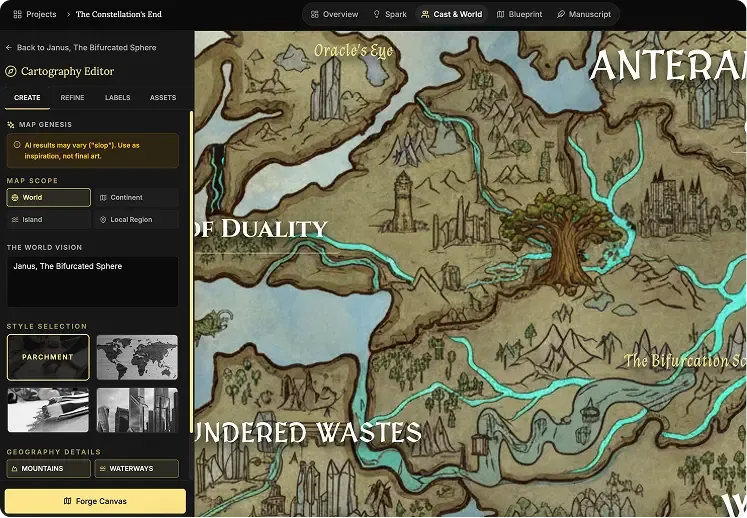
Use surrealism in NovelOS Studio
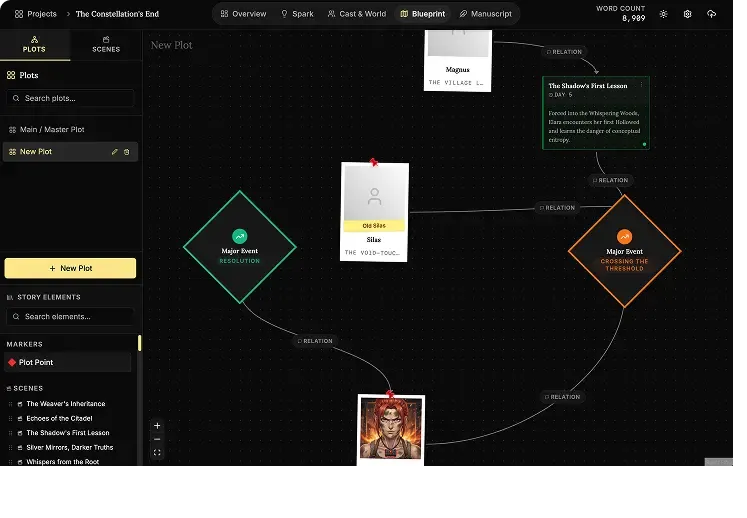
Shape the form through visual planning, connected scenes, plotlines, and arcs. The Blueprint sits inside the same NovelOS Studio project as your characters, world, timeline, manuscript, goals, tracker, revision tools, and publishing exports.
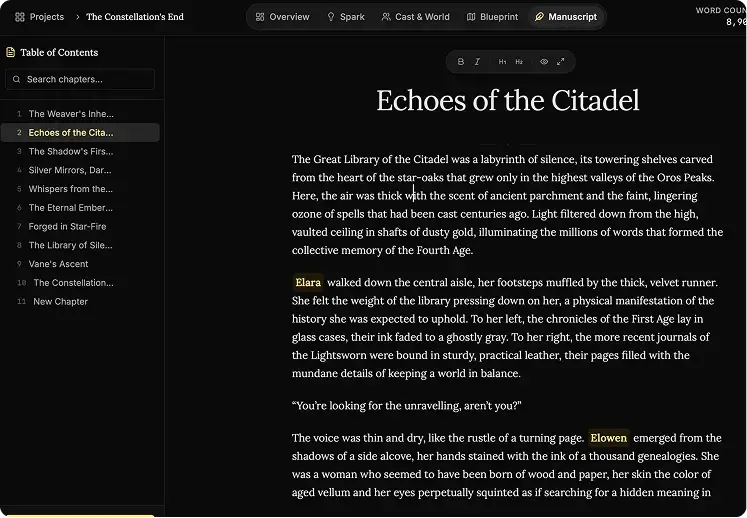
Record the idea where it affects the book, test it in scenes, and revise it beside the surrounding prose. NovelOS Studio keeps the craft decision attached to the novel instead of leaving it in a separate worksheet.