Story Structure
Red Herring
A red herring is a plausible clue or line of interpretation that directs attention away from the truth.
Red Herring in a story
Effective misdirection arises from real evidence interpreted under an incomplete assumption. It remains meaningful after the reveal.
Original fiction example
The victim's missing passport suggests escape, but it was taken earlier by a sibling hiding an unrelated debt.
This example is original to the NovelOS glossary. It illustrates the term without borrowing a passage from a published novel.
Why writers use it
Use a red herring to multiply credible explanations while preserving fair access to the truth.
A useful revision question: Where does this device change what the reader understands, expects, or feels? If removing it leaves the passage unchanged, it may need a clearer function.
A common mistake
Inventing false facts or withholding what the viewpoint plainly sees makes readers feel cheated rather than surprised.
Use red herring in NovelOS Studio
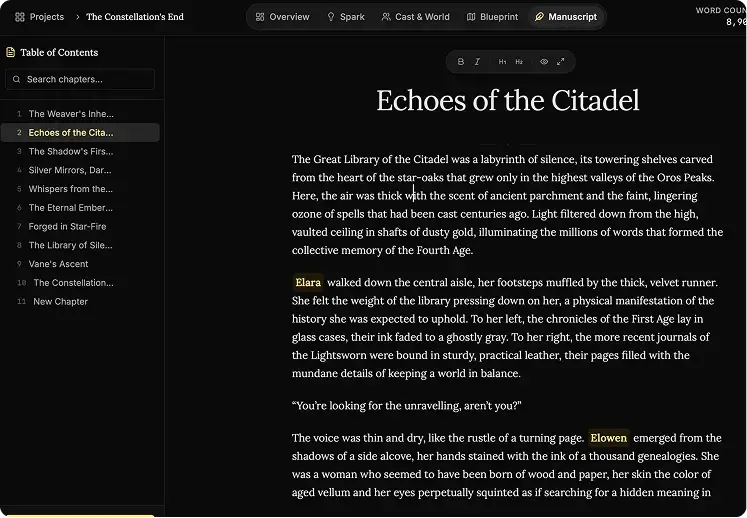
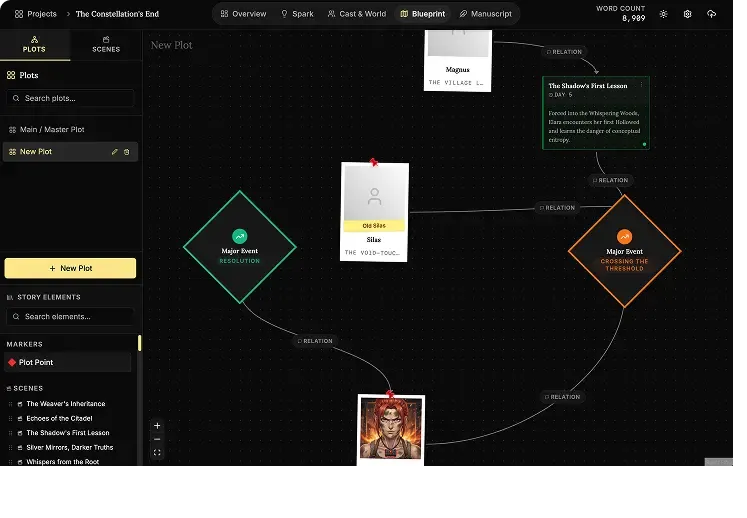
Map the term across scene cards, plotlines, arcs, and Timeline View. The Blueprint sits inside the same NovelOS Studio project as your characters, world, timeline, manuscript, goals, tracker, revision tools, and publishing exports.
Record the idea where it affects the book, test it in scenes, and revise it beside the surrounding prose. NovelOS Studio keeps the craft decision attached to the novel instead of leaving it in a separate worksheet.