Story Structure
Chekhov's Gun
Chekhov's gun is the principle that a conspicuous story element should earn its emphasis through later relevance.
Chekhov's Gun in a story
The principle concerns narrative attention, not a rule that every object must become a plot device. Prominence creates expectation.
Original fiction example
If the opening lingers on a greenhouse door that locks only from outside, that mechanism should later affect a choice, danger, or revelation.
This example is original to the NovelOS glossary. It illustrates the term without borrowing a passage from a published novel.
Why writers use it
Use it to align setup with payoff and remove details that make promises the story does not keep.
A useful revision question: Where does this device change what the reader understands, expects, or feels? If removing it leaves the passage unchanged, it may need a clearer function.
A common mistake
Payoffs feel mechanical when every object returns in an obvious one-to-one pattern.
Use chekhov's gun in NovelOS Studio
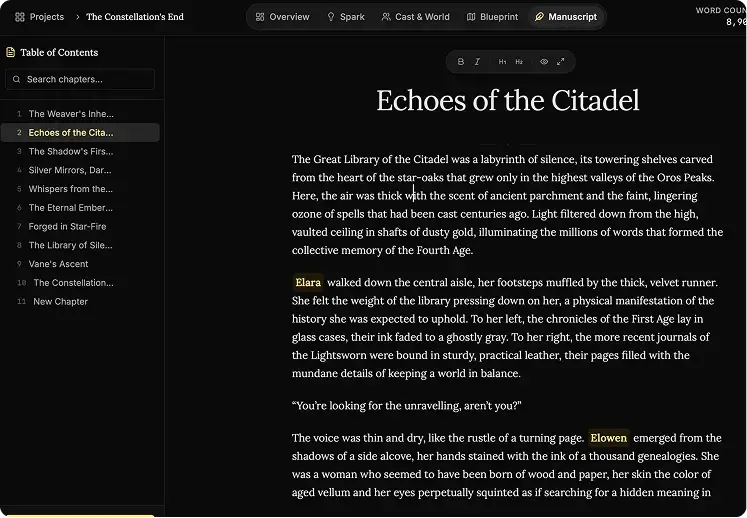
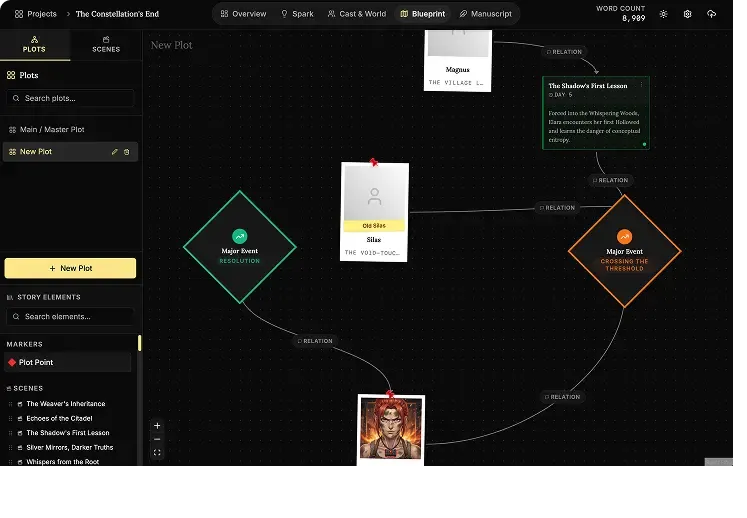
Map the term across scene cards, plotlines, arcs, and Timeline View. The Blueprint sits inside the same NovelOS Studio project as your characters, world, timeline, manuscript, goals, tracker, revision tools, and publishing exports.
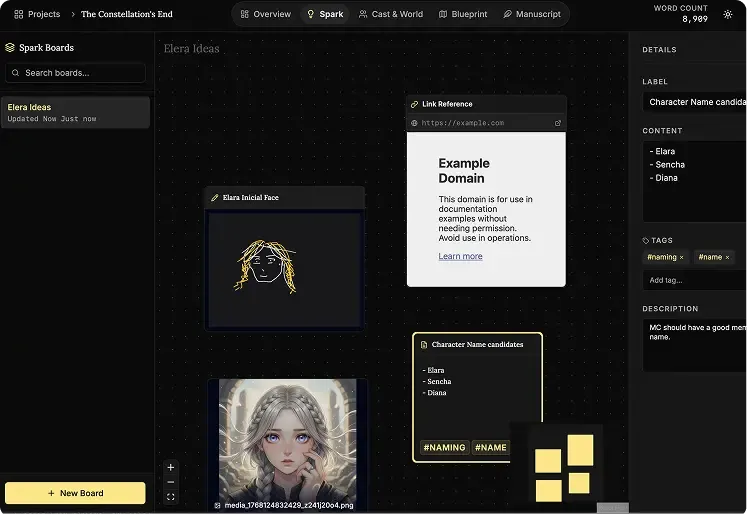
Record the idea where it affects the book, test it in scenes, and revise it beside the surrounding prose. NovelOS Studio keeps the craft decision attached to the novel instead of leaving it in a separate worksheet.