Story Structure
Foreshadowing
Foreshadowing is an earlier detail, pattern, or event that prepares readers for a later development.
Foreshadowing in a story
It makes later events feel possible and coherent without necessarily revealing exactly what will happen.
Original fiction example
A ferryman repeatedly refuses night crossings because the river changes course after dark; later, that change traps the pursuing army.
This example is original to the NovelOS glossary. It illustrates the term without borrowing a passage from a published novel.
Why writers use it
Use foreshadowing to establish possibility, pattern, mood, or thematic expectation before payoff.
A useful revision question: Where does this device change what the reader understands, expects, or feels? If removing it leaves the passage unchanged, it may need a clearer function.
A common mistake
A clue becomes too obvious when it has no credible purpose in its original scene except announcing the future.
Use foreshadowing in NovelOS Studio
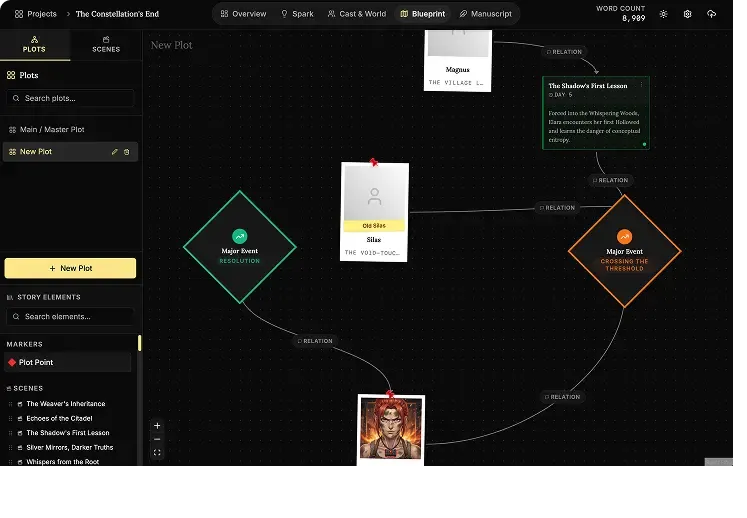
Map the term across scene cards, plotlines, arcs, and Timeline View. The Blueprint sits inside the same NovelOS Studio project as your characters, world, timeline, manuscript, goals, tracker, revision tools, and publishing exports.
Record the idea where it affects the book, test it in scenes, and revise it beside the surrounding prose. NovelOS Studio keeps the craft decision attached to the novel instead of leaving it in a separate worksheet.