Genre and Form
Folklore
Folklore is the shared body of stories, beliefs, customs, sayings, songs, rituals, and practices transmitted within a community.
Folklore in a story
It lives through variation and use rather than through one official text.
Original fiction example
Miners leave a white thread at sealed tunnels, though no two families agree whether it guides the dead out or keeps them below.
This example is original to the NovelOS glossary. It illustrates the term without borrowing a passage from a published novel.
Why writers use it
Use folklore to make culture visible through repeated behavior and competing explanations.
A useful revision question: Where does this device change what the reader understands, expects, or feels? If removing it leaves the passage unchanged, it may need a clearer function.
A common mistake
Borrowing a living tradition without context or research can reduce it to exotic decoration.
Use folklore in NovelOS Studio
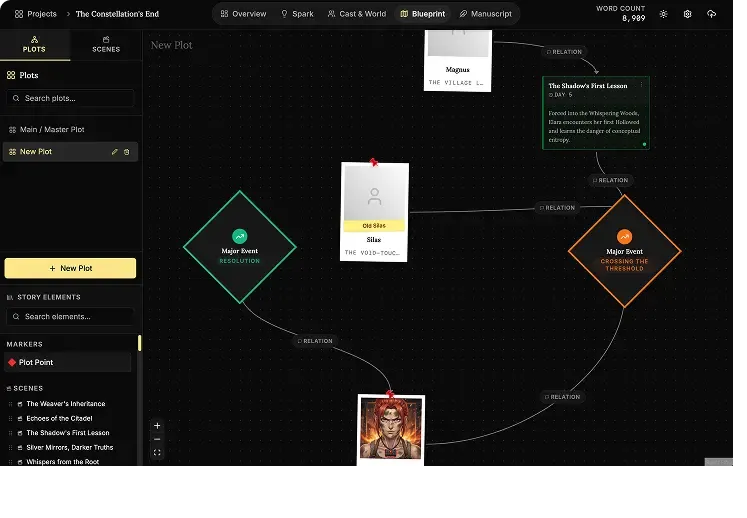
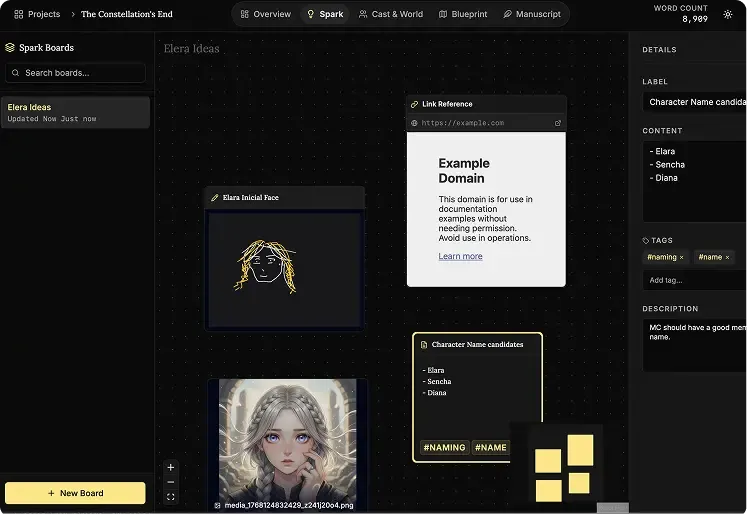
Shape the form through visual planning, connected scenes, plotlines, and arcs. The Blueprint sits inside the same NovelOS Studio project as your characters, world, timeline, manuscript, goals, tracker, revision tools, and publishing exports.
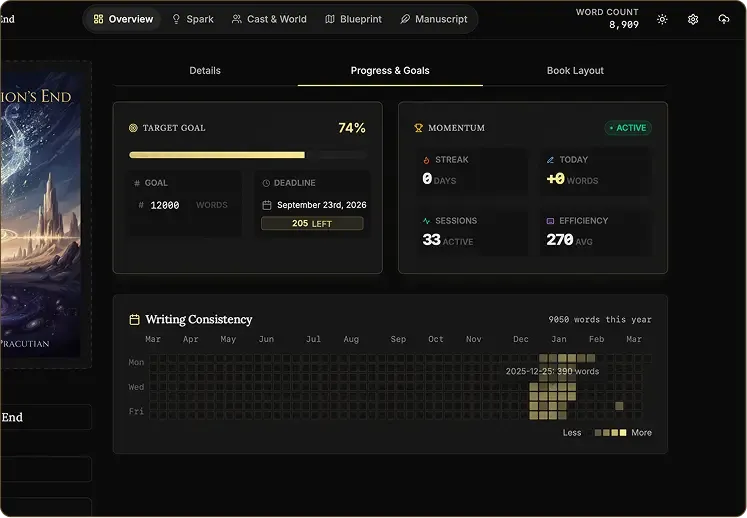
Record the idea where it affects the book, test it in scenes, and revise it beside the surrounding prose. NovelOS Studio keeps the craft decision attached to the novel instead of leaving it in a separate worksheet.