Genre and Form
Legend
A legend is a traditional story associated with a person, place, or event regarded as historical or plausibly historical by its community.
Legend in a story
Legends change through retelling and often preserve values more reliably than factual detail.
Original fiction example
Every district claims the rebel crossed its bridge first, and each version gives the bridge a different keeper.
This example is original to the NovelOS glossary. It illustrates the term without borrowing a passage from a published novel.
Why writers use it
Use legends to show how communities build identity around contested memory.
A useful revision question: Where does this device change what the reader understands, expects, or feels? If removing it leaves the passage unchanged, it may need a clearer function.
A common mistake
Presenting one version as neutral can erase the social work performed by competing accounts.
Use legend in NovelOS Studio
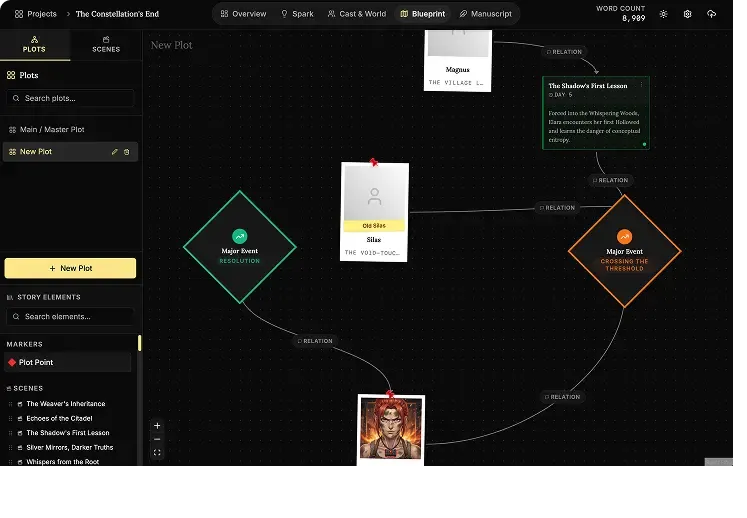
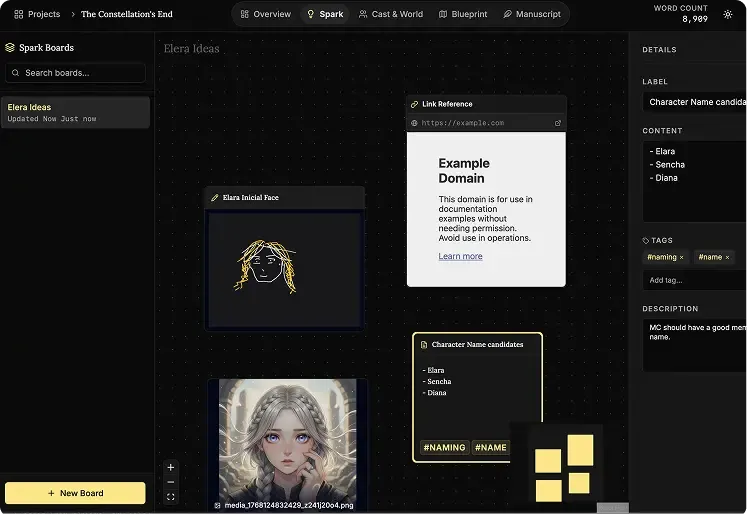
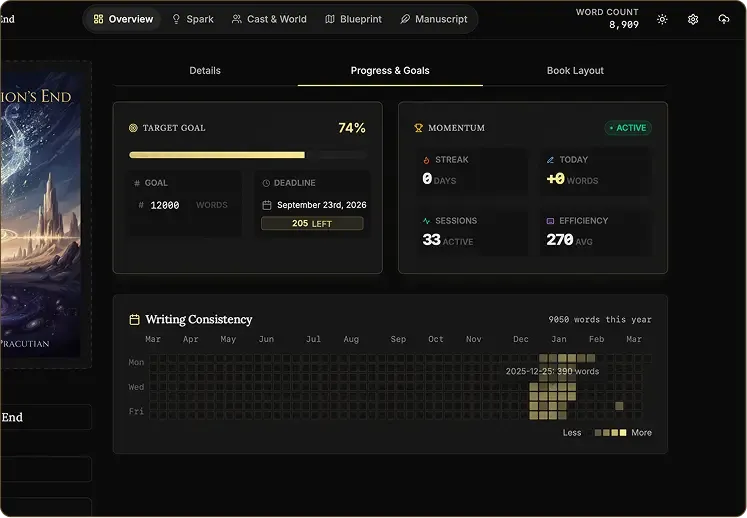
Shape the form through visual planning, connected scenes, plotlines, and arcs. The Blueprint sits inside the same NovelOS Studio project as your characters, world, timeline, manuscript, goals, tracker, revision tools, and publishing exports.
Record the idea where it affects the book, test it in scenes, and revise it beside the surrounding prose. NovelOS Studio keeps the craft decision attached to the novel instead of leaving it in a separate worksheet.