Story Structure
Epilogue
An epilogue is a closing section placed after the main narrative resolution.
Epilogue in a story
It can move forward in time, shift viewpoint, reveal long consequences, or place the completed action in a broader frame.
Original fiction example
Years after the trial, a schoolchild finds the banned testimony printed inside a mathematics textbook.
This example is original to the NovelOS glossary. It illustrates the term without borrowing a passage from a published novel.
Why writers use it
Use an epilogue when distance or a new frame adds meaning beyond the immediate denouement.
A useful revision question: Where does this device change what the reader understands, expects, or feels? If removing it leaves the passage unchanged, it may need a clearer function.
A common mistake
An epilogue that resolves conflicts omitted from the climax may expose an incomplete ending.
Use epilogue in NovelOS Studio
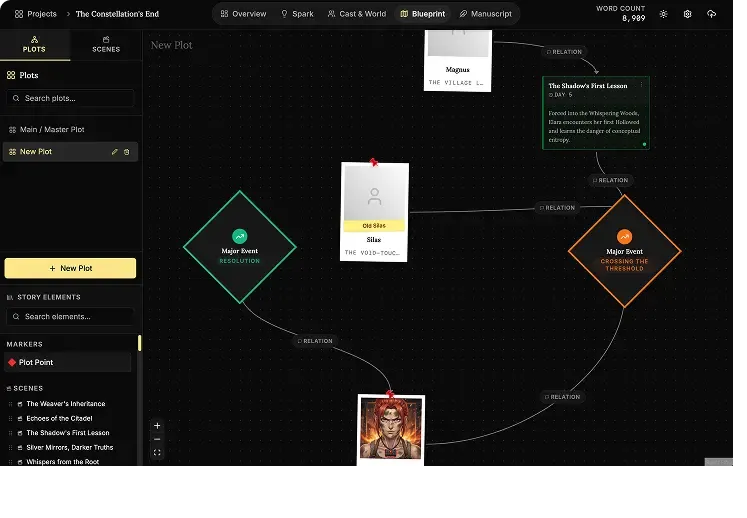
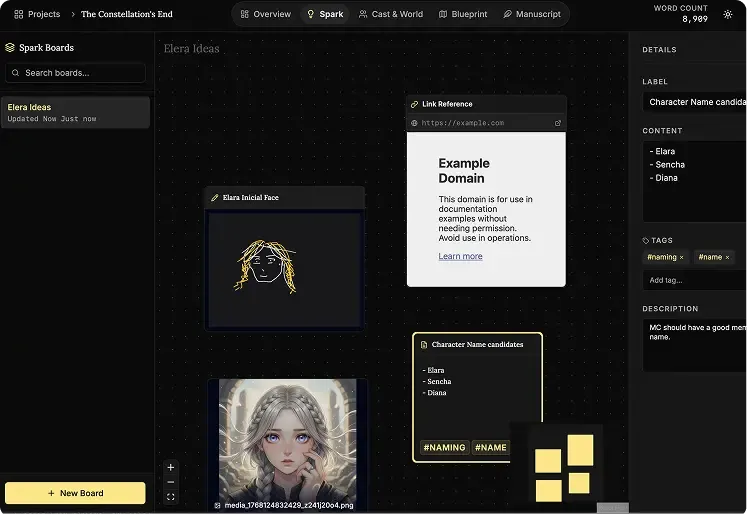
Map the term across scene cards, plotlines, arcs, and Timeline View. The Blueprint sits inside the same NovelOS Studio project as your characters, world, timeline, manuscript, goals, tracker, revision tools, and publishing exports.
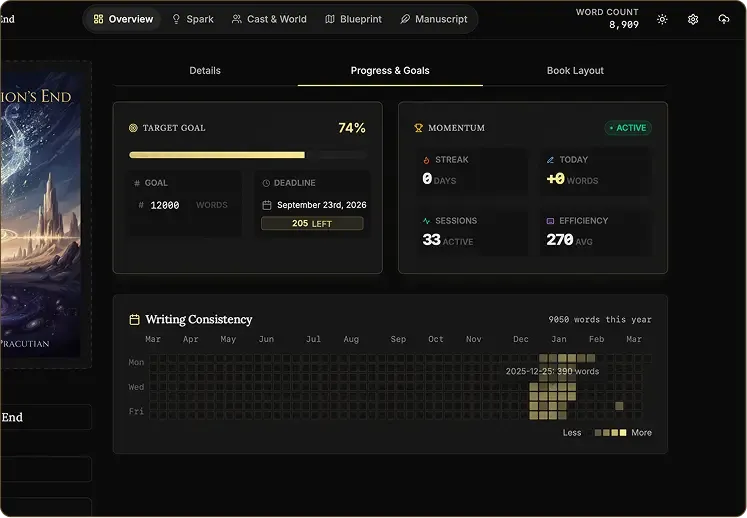
Record the idea where it affects the book, test it in scenes, and revise it beside the surrounding prose. NovelOS Studio keeps the craft decision attached to the novel instead of leaving it in a separate worksheet.