Writing Isolation in Fiction That Feels Dangerous Before Help Disappears

Isolation in fiction becomes dangerous when a character loses the person, system, or resource that normally catches a mistake. Distance can create atmosphere, but the dramatic pressure comes from losing a fallback: nobody can verify the warning, replace the damaged part, share the work, witness the threat, or arrive before a poor decision becomes irreversible.
That distinction matters because a lonely landscape is easy to describe and difficult to sustain. Once readers know the protagonist has food, a charged phone, a working vehicle, and people expecting her, the empty horizon stops carrying much danger. Establish ordinary support, remove one essential part for a clear reason, then keep changing what the remainder can accomplish.
This article will follow one unnamed observatory technician through that process. She has stayed at a remote station to investigate an unusual radio signal while a winter storm closes the mountain road. Her remote engineer usually checks anomalous readings and challenges interpretations distorted by grief for a missing partner. The technician still has power, instruments, a satellite terminal, and professional expertise. The suspense begins because none of those assets can now do everything she needs.
Treat isolation as the loss of a fallback
To write isolation in fiction, begin by asking what becomes impossible without another person or functioning system. “She is alone” describes a condition. “She cannot confirm whether the signal is real before the town below loses power” describes a story problem.
The missing fallback should be specific to this protagonist. A trained technician may enjoy solitude and know the station better than anyone. Removing casual company will not expose her. Removing the engineer who can distinguish a hardware fault from a genuine transmission will. The same storm would endanger a visiting journalist differently because the journalist lacks technical access, emergency training, and authority to alter the equipment.
Think of support as a set of functions rather than a list of people. One colleague may provide technical verification. A road provides evacuation. A radio provides outside knowledge. An institution gives the character authority to be believed. A second pair of hands makes a repair physically possible. Isolation becomes precise when the story removes a function at the moment the protagonist needs it.
| Ordinary fallback | What its loss changes | Question created for the scene |
|---|---|---|
| A second expert | One interpretation cannot be checked | Is the signal evidence or interference? |
| Backup power | Every use of electricity excludes another use | Heat the station, transmit, or preserve the data? |
| A known route | Injury and mechanical failure become deadlines | Can she leave after dark if the road reopens? |
| A credible witness | A true report may still be dismissed | What proof can survive if she cannot? |
| Shared labor | A safe procedure becomes a physical gamble | Which step can one person omit without causing failure? |
Social isolation can operate in a crowd. A whistleblower may stand among coworkers yet have no trustworthy witness. Jane K. Cleland distinguishes physical and social isolation in Mastering Suspense, Structure, and Plot and shows how either can drive action, express theme, or explain behavior. In every case, ask which form of effective help has disappeared.
Build a believable chain from support to exposure
A convincing isolation sequence shows how normal safety stops working. Give readers enough cause and effect to rule out obvious rescue without turning the scene into an engineering report. Modern technology makes this especially important. A sentence saying “there was no signal” can feel like an author closing a convenient door. A chain of established limits feels like the story world continuing to operate.
At the observatory, the storm weakens the microwave relay. Voice calls break into fragments, although low-bandwidth text still works. Ice shifts the backup antenna out of alignment. The satellite terminal can transmit a short burst, but it shares a battery with the instrument holding the anomalous data. Headquarters knows the technician stayed behind, while rescuers cannot use the road until an avalanche check is complete. Each fact closes one route and leaves another partly open.
Partial access is often more useful than complete silence because it produces choices. If the phone is dead, the protagonist can only proceed alone. If one message remains, she must decide what to send, whom to trust, and what she is willing to sacrifice for delivery. Laura McCluskey’s discussion of modern isolation thrillers in CrimeReads makes a related point: contemporary writers can justify disconnection through layered complications, guarded access, monitored communication, or a character’s own decision to give up technology.
Character responsibility strengthens the chain. The technician ignored the first evacuation notice because she wanted another night of data. Earlier, she disabled an automatic upload after headquarters threatened to shut down the experiment. Rayne Hall’s chapter on total isolation in Writing Scary Scenes advises giving the protagonist a reason for facing danger alone. Plant that reason before the danger peaks, and make it arise from motive, expertise, and blind spots. Readers can accept an unlucky storm. They resist a competent professional who forgets every safety procedure because the plot needs her stranded.
This separates isolation from a frightening setting. Darkness and wind create atmosphere. The iced antenna, blocked road, and two-person safety ladder create danger because they change which actions remain possible.
Let every resource do two jobs
Once help is limited, resources create suspense when the same supply serves incompatible goals. A generator described as “running low” offers a vague threat. A generator that can warm the sleeping quarters, power one full transmission, or keep the receiver logging until dawn forces a decision readers can understand.

Choose two or three resources tied to the central dilemma. Survival fiction may use water, heat, medication, mobility, shelter, breathable air, or time. A social thriller may use credibility, privacy, money, legal access, or one remaining ally. Reusing a small set creates consequence because readers remember what each expenditure removes.
For the observatory sequence, power is the main currency. Heat protects the technician’s body and keeps one battery within operating temperature. The receiver preserves the signal long enough to establish a pattern. The satellite terminal can summon advice or rescue. The exterior de-icing system might restore communication, but its startup load could corrupt the stored data. Four sensible needs compete for one finite supply.
Give readers quantities at the level required for judgment. Exact kilowatt-hours may suit hard science fiction. Elsewhere, relative measures are enough: the battery falls one segment per hour with the receiver active, while one transmission costs two segments. The measures should remain stable unless the character discovers a physical reason they were wrong.
The technician can build a short working ledger:
- Current capacity: six hours of receiver time at the present load.
- Known demand: four hours until the next predicted signal window.
- Competing use: one transmission costs roughly ninety minutes of receiver time.
- Uncertain factor: falling temperature may reduce battery output before dawn.
- Irreversible threshold: after the terminal starts, the interrupted observation cannot be reconstructed.
The ledger lets each new fact change the plan. A faster temperature drop makes the original six hours unreliable. A warm spare battery adds capacity, but using it in the receiver leaves the emergency beacon without backup. Progress and danger arrive together.
Fatigue should change what the protagonist can do. A repair that was safe at sunset may require too much grip strength after hours in the cold. A route that took ten minutes now takes twenty. She skips checks, misreads labels, and favors familiar procedures over better unfamiliar ones. The story shows impairment through decisions and errors that belong to the work.
Keep the geography readable while these pressures change. The setting can generate suspense only when readers can forecast how the dome, generator room, antenna platform, road, and shelter relate to one another. If a new tunnel or spare radio appears at the moment it is needed, the resource system loses credibility. Establish useful spaces early, then alter access through ice, darkness, injury, noise, or power loss.
Make uncertainty answer to a test
Isolation removes verification, which means desire and expertise can pull the protagonist toward different explanations. The technician recognizes a repeating interval similar to her missing partner’s emergency code. Atmospheric interference, a damaged oscillator, and a genuine transmission all remain possible. Readers need enough evidence to reason beside her.
Useful uncertainty has boundaries. Define what the equipment measures, what commonly produces false readings, and which test would separate the leading theories. The technician compares the interval with the station log, warms one sensor, rotates the dish away from the suspected source, and marks whether the next pulse moves with the sky. Each test should remove an explanation, expose another problem, or consume a resource.
This creates a stronger sequence than repeated listening. In each scene, track the current belief, the observation that supports or weakens it, the next available test, and the action required by the result.
Suppose rotating the dish causes the pulse to weaken. That supports an external source, though it does not prove the missing partner is alive. The next test requires keeping the receiver active through the final signal window. Now evidence has changed the resource decision. She can preserve a chance of locating the source or spend the same power sending headquarters the partial result.
Memory can complicate the interpretation without permitting arbitrary reversals. She may remember the code’s rhythm accurately and misremember whether her partner used it during tests. A dated log corrects that detail while leaving the source unresolved. Keep the viewpoint equally fair. Jane Friedman’s guide to fiction point of view explains the knowledge limits of first person; third-person limited can create the same boundary. Do not reveal an outside fact merely to reassure readers that rescue is coming.
Do not turn the scene into pages of private calculation. Let equipment and weather interrupt thought. A new vibration means ice has shifted. Warm insulation signals a load problem. Sensory detail matters because the protagonist uses it.
Make contact more expensive than silence
Renewed contact should transform the problem instead of dissolving it. The weakest version of an isolation scene ends when a rescue team arrives and makes every earlier choice irrelevant. A stronger version restores one form of help while demanding a decision only the protagonist can make.
The observatory terminal finally receives a text from headquarters: evacuate on foot to the lower shelter before the storm’s second front. The message provides authority and a route. Following it requires shutting down the receiver minutes before the predicted signal. Staying could locate the source, warn the town below about a separate communications failure, or repeat the same fixation that contributed to her partner’s disappearance. Contact clarifies the stakes and sharpens the choice.
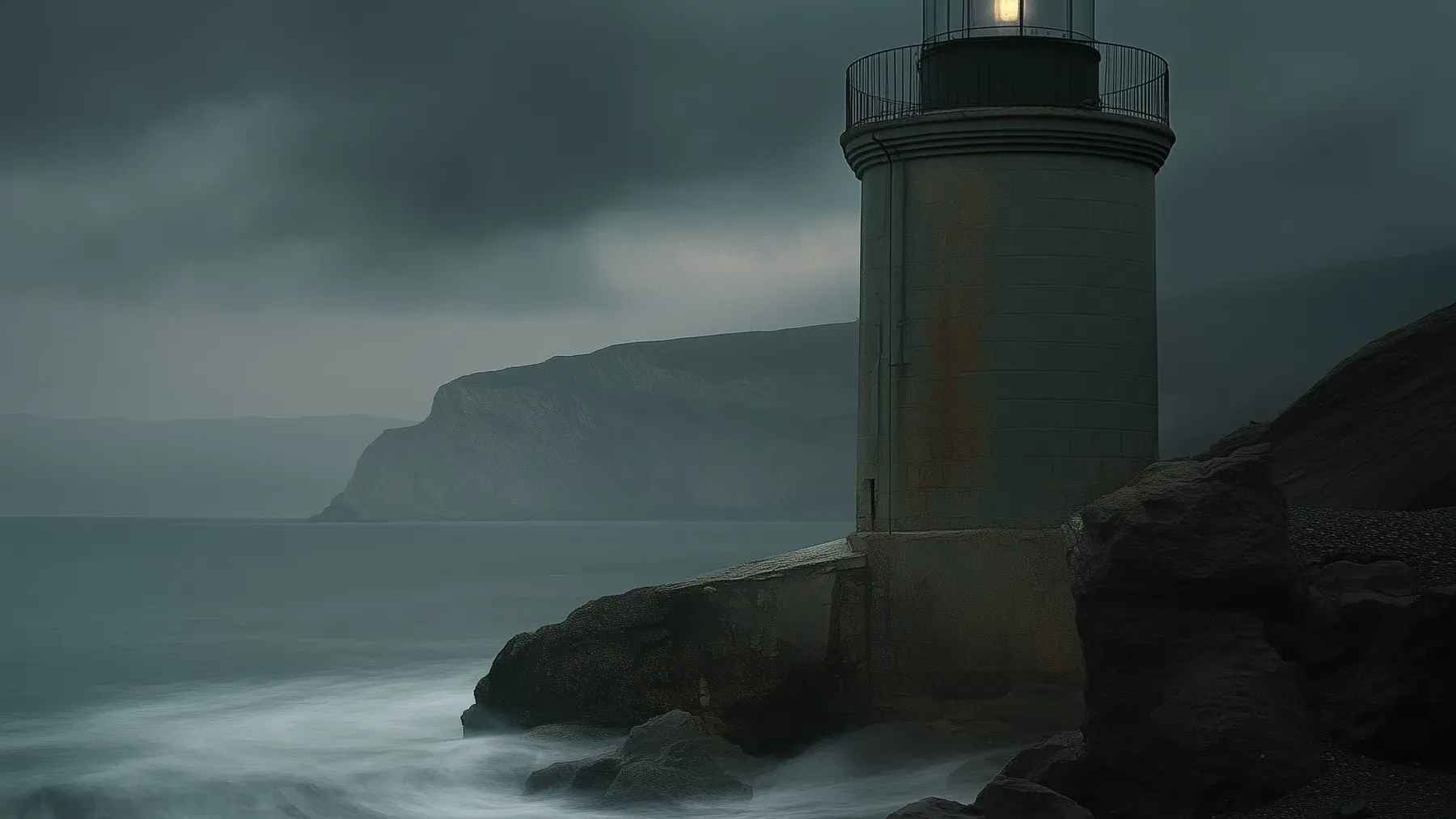
Communication can remain asymmetrical. The protagonist may transmit without receiving, hear instructions based on outdated conditions, or reach a person whose identity cannot be confirmed. A social-isolation story can use the same pattern: an official will protect the whistleblower only if she reveals a vulnerable source. Help becomes available under terms that create a new cost.
Rescue can still arrive. Preserve agency by making it depend on earlier choices: the technician kept the beacon warm, sent coordinates, marked the safe route, or saved enough power to open the service door. The rescuer adds capacity while the protagonist retains the decisive judgment.
Let the aftermath remember the isolation. Equipment is gone, trust at headquarters is damaged, or the signal changes the larger investigation. A specific behavioral residue works better than declaring that she will never be the same. She may log every power transfer or insist on a second reviewer even when delay carries its own risk.
The resulting sequence differs from a captivity scene, where another person or institution controls confinement. Isolation can have no visible captor at all. Its pressure comes from the lost fallback and the protagonist’s shrinking ability to recover from error. Both forms need active choices, but isolation places unusual weight on verification, self-rescue, and the cost of asking for help.
Keep the pressure system visible in NovelOS Studio
An isolation sequence crosses character, setting, resources, chronology, and prose. When those elements live in separate notes, it is easy to change the battery limit in one chapter, forget who knows the station coordinates, or let a rescue depart before the triggering message was sent. NovelOS Studio keeps the whole pressure system inside the same project.
- Build the protagonist’s expertise, grief, blind spots, emergency habits, and threshold for asking for help in The Oracle. Let skill solve real problems while history creates a specific vulnerability.
- Use Cast & World, Connections, and Genealogy to record who verifies her work, who knows she stayed, who can authorize rescue, and what each relationship risks.
- Define the observatory layout, power rules, weather, road, signal behavior, safety procedures, and available equipment in The Architect. Stable constraints prevent convenient failures and supplies from appearing on demand.
- Lay out Scene Cards in The Blueprint with an objective, belief, test, resource change, choice, and consequence. Timeline View can align battery decline, temperature, signal windows, messages, and the rescue route.
- Test alternate failure chains on the Spark Ideation canvas. Keep the route that turns this character’s reliance on outside verification into the hardest decision.
- Draft the scene in The Manuscript so physical action, sensory evidence, and interior reasoning develop at one pace. The reader should understand the calculation while still feeling the cold, delay, and labor required to act on it.
- Ask The Alchemist to inspect repeated fear language, passive stretches, vague resource changes, uninformative sensory details, and rescue elements that lack preparation.
On the final read, ask which fallback disappeared, why it cannot be restored, what resource now serves incompatible needs, which test reduces uncertainty, and what choice survives after contact returns. Repair any answer that depends on coincidence or a newly invented rule.
Dangerous isolation is a loss of recoverability. The character can still think, test, spend, move, and call for help, but each action closes another route. When the setting’s rules remain stable and the protagonist’s decisions keep changing the available future, solitude becomes more than scenery. NovelOS Studio gives those rules, relationships, resource limits, and scene consequences one connected home, so the isolation can tighten without the novel losing its own logic.
Sources and further reading
- Jane K. Cleland, Mastering Suspense, Structure, and Plot, Chapter 6, “Isolate Your Protagonist and Everyone Else.”
- Rayne Hall, Writing Scary Scenes, Chapter 6, “Total Isolation.”
- Laura McCluskey, “How to Isolate Your Characters in the 21st Century”, CrimeReads.
- Jane Friedman, “The Basics of Point of View for Fiction Writers”.
- Writers Helping Writers, “Fear Thesaurus Entry: Isolation”.