A Time-Slip Novel Needs Two Records of the Past
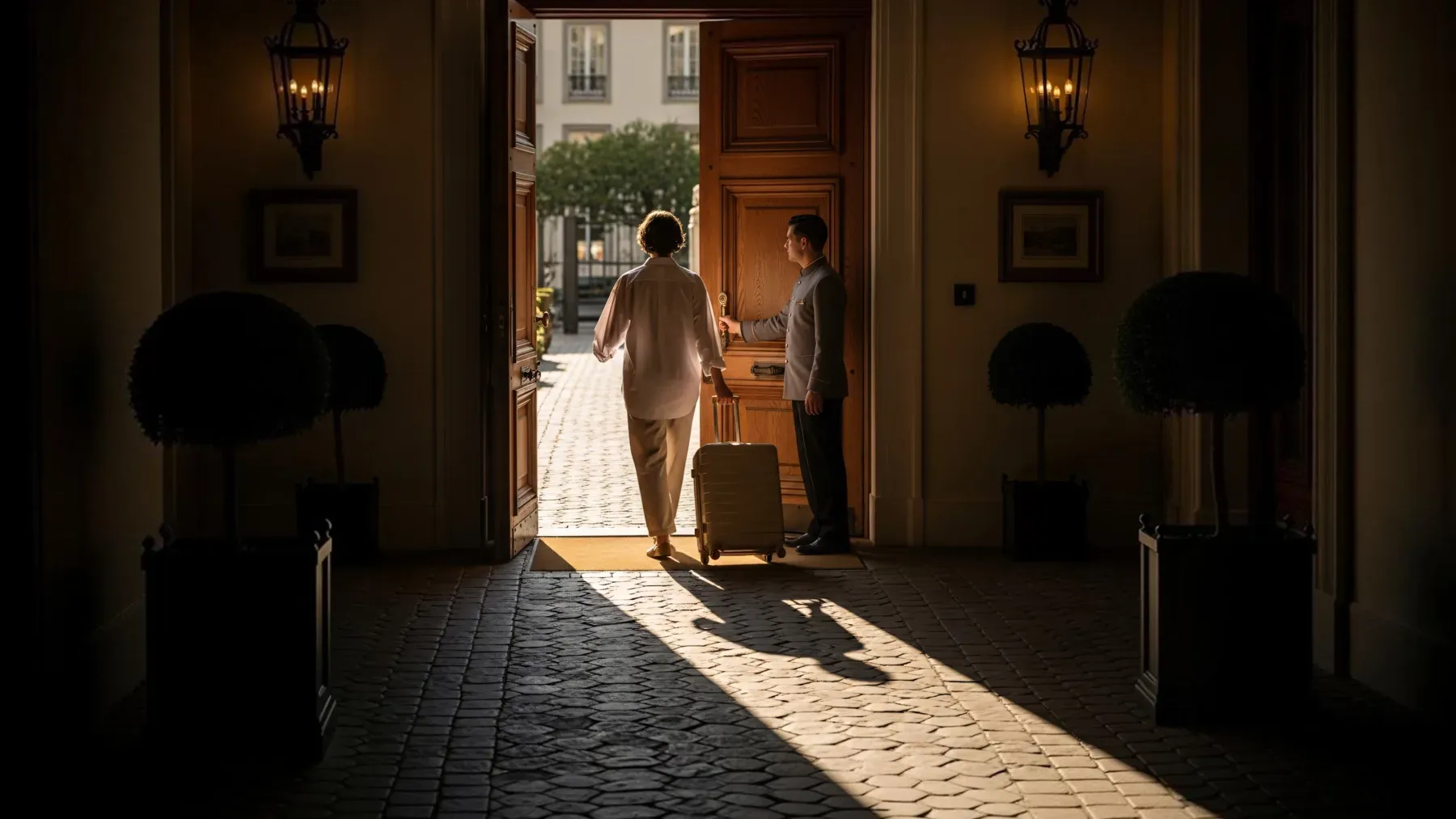
A time-slip novel sends a character into another period through a passage they cannot fully control. A doorway opens during rain. A house restores a vanished room at dusk. A footpath delivers its walker to the same field a century earlier. The lack of control distinguishes a time slip from a story built around a machine, scheduled destination, or repeatable mission.
That definition gives you the device. It does not yet give you a novel.
The story begins when passage changes the protagonist’s relationship with history. A municipal archivist may enter the year recorded on a disputed court file, meet the people reduced to names in that file, and discover that the official record preserved an institution’s version of events. The past supplies lived experience. The present supplies consequences, absences, and later interpretations. Neither period owns the complete truth.
A useful method is to keep two records of every major event. The lived record contains what participants wanted, noticed, misunderstood, and concealed while the event unfolded. The surviving record contains what documents, buildings, objects, descendants, and public stories carry forward. Your plot grows from the distance between those records.
Consider an archivist cataloging a 1912 courthouse fire. The surviving trial transcript says a laundry worker “secured the west door” shortly before the building burned. Local histories treat the phrase as an admission that she locked people inside. During an accidental crossing, the archivist hears workers use secure for bracing the swollen door open with a coal hook. That observation changes the question, yet it proves very little by itself. Who used the phrase in court? Who copied the transcript? Where is the original statement? Why are three hearing days absent from the file?
The slip has opened an investigation rather than solving one. That is the pressure a time-slip novel needs.
Define What the Threshold Permits
Readers can accept an unexplained cause more readily than inconsistent results. You may leave the doorway’s origin mysterious while giving its behavior observable limits. Those limits determine what the protagonist can attempt, what can go wrong, and why another crossing cannot conveniently repair every mistake.
Start a threshold sheet before outlining scenes. Record five things:
- Trigger: What physical or emotional condition opens passage?
- Destination: Does the traveler reach one date, a range of dates, or a period linked to the location?
- Duration: What ends a visit, and how does time pass in the other era?
- Transfer: Which bodies, objects, wounds, memories, or written words can cross?
- Residue: What remains different after the traveler returns?
For the courthouse story, sustained rain opens the basement records corridor. The archivist arrives in the same building during rainy days in autumn 1912, though the date varies. The six o’clock bell closes the passage. Objects already in existence at the arrival date can travel in either direction. A later photocopy loses its ink because its particular marks have no earlier provenance. A period pencil and loose docket paper remain usable. The traveler remembers both versions of a changed present, while everyone else remembers the newest version.
Each rule should create work. Variable arrival dates force the archivist to determine when she has landed from newspapers, office routines, weather, and conversation. The transfer rule makes an object’s history part of the action. The closing bell turns every visit into a deadline. Persistent memory gives her knowledge no colleague can confirm, which threatens her professional credibility.
Write one planned violation beside every rule. A violation is a moment when a character assumes more freedom than the threshold provides. The archivist carries a completed witness statement into a date before the witness signed it. The signature disappears, but an earlier paragraph remains. She learns when part of the document was created without learning whether the surviving page is authentic. A failed shortcut has produced a clue and clarified the system.
Keep the mechanism narrower than the mystery. If the protagonist can select any date, bring unlimited equipment, rescue anyone, and retry a scene until it works, uncertainty collapses. If you need a more elaborate causality contract, the guide to a time-travel story that makes sense covers loops, branching histories, and revision rules. A time-slip novel gains much of its identity from partial access. The protagonist visits history under conditions set by the place.
Let the Past Withhold Its Meaning
Historical detail becomes dramatic when it changes what a person can do. A list of period foods, fabrics, vehicles, and slang may decorate a scene without making it historically alive. Research institutions and routines around the conflict: working hours, filing systems, rent collection, medical treatment, transport, public sanitation, policing, labor organization, inheritance, and who may speak credibly in court.
Janet Burroway explains in Writing Fiction that summary tends to create distance while scene draws the reader close. Her contrast is especially useful here. “There were repeated disease outbreaks” places a period under glass. A doctor angling a patient’s throat toward weak light to inspect a membrane makes the period immediate through an action, a tool, and a risk. Render the past through decisions made with the era’s available knowledge.
The courthouse archivist arrives during a dock strike and a typhoid outbreak. Those facts should touch the plot. Wet wool and coal smoke crowd the records room because witnesses cannot wait outside. A clerk delays a filing while caring for a sick parent. Laundry chemicals on a coat challenge a claim about where its owner spent the morning. An election gives one officer a reason to produce a swift conviction. The setting now exerts force.
Historical characters also need authority over their own present. The laundry worker knows which exit swells in rain, which landlord collects rent at night, and why residents avoid the official staircase. The court clerk knows how pages enter a docket and which unofficial ledger preserves late submissions. A strike organizer understands loyalties the visiting archivist cannot infer from surnames. These people have immediate needs that exceed the visitor’s future interpretation of them.
Give the modern protagonist useful expertise without making it superior to lived knowledge. The archivist can identify a catalog number added decades later. She knows a renovation sealed an old records lift. Census data tells her where a witness eventually lived. Yet she misreads a silence during testimony because she does not understand who controls a worker’s wages. Each era illuminates a different part of the event.
This protects the novel from turning historical people into guides who explain their century to a visitor. Let them evade questions, use familiar shorthand, defend mistaken beliefs, and pursue private obligations. Help should arise from trust, leverage, kinship, guilt, or shared purpose.
Research language with equal care. A familiar word may carry a local occupational meaning. An institution may use a formal term that citizens reject. A later memorial may assign one stable identity to someone whose contemporaries used several. Note who created each label, when it appeared, and whose interests it serves. The advice on building a historical mystery from period-specific clues is useful because the past must remain a functioning environment even when fantasy opens the door.
Make Evidence Travel With a History
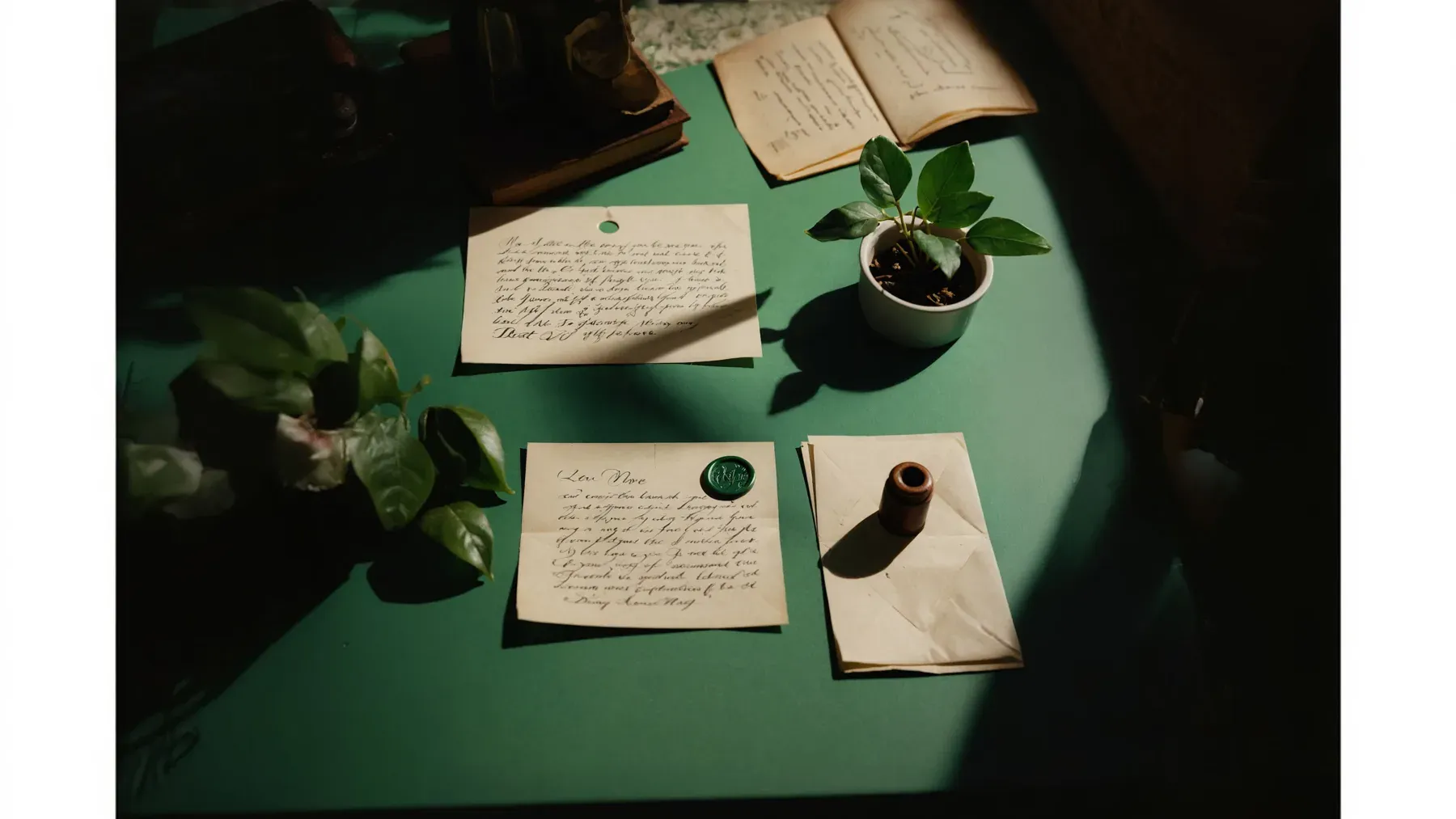
An archive is not a neutral pile of facts. The National Archives describes provenance as preserving records according to the offices and processes that created them. A document’s significance depends on its relationship to nearby records. Fiction can turn that principle into suspense.
Build an evidence ledger with one row per clue. Give each row six fields:
| Field | Question for the novelist |
|---|---|
| Creation | Who made this record, in what role, and for which immediate purpose? |
| Custody | Who held it between creation and discovery? |
| Survival | Why did this item remain when related material disappeared? |
| Present reading | What does the protagonist initially think it means? |
| Past encounter | Which context alters that reading? |
| Remaining doubt | What can neither timeline establish? |
Apply the ledger to the phrase “secured the west door.” A court typist created the surviving transcript for an official proceeding. The clerk later moved several pages into a property ledger to prevent the police from identifying strike witnesses. A courthouse renovation separated that ledger from the trial series. A twentieth-century historian read the transcript without the displaced pages. The archivist hears the period usage during a crossing, but memory alone cannot establish what the defendant said under oath.
Now the discovery must pass a provenance test. The archivist needs a period source that connects the phrase to the door, the defendant, and the hearing. She may find a clerk’s routing note, a newspaper paraphrase, or a maintenance log describing the coal hook. Three modest records can support a conclusion more credibly than one miraculous document that explains everything.
Resist the temptation to let the traveler witness every decisive act. Direct observation still has viewpoint limits. She might see the clerk remove pages and assume he is destroying evidence. A later visit reveals that he concealed them from an officer planning arrests. She misses the fire itself because the bell closes the corridor. Survivors disagree about the first flame. The novel preserves interpretation, testimony, and uncertainty.
Track information separately for the protagonist, each historical character, present-day researchers, and the reader. A fact can enter these columns at different times. Readers may see the clerk hide pages before the archivist understands his purpose. A descendant may know a family story while distrusting the institution asking for it. This distribution creates suspense without making intelligent characters ignore obvious evidence.
If your book sustains full dramatic arcs in both periods, use the causal braid in structuring a dual-timeline novel. A slip novel may instead remain centered on one traveler, but every visit still needs a local objective, reversal, and consequence. “She learns more about 1912” is a research summary. “She must retrieve the docket index before the clerk burns it, then discovers he is burning duplicate arrest lists to protect workers” is a scene.
Charge Every Crossing to the Present
The strongest intervention changes responsibility before it changes history. Ask what the visitor may ethically alter, what she is willing to risk, and who bears a consequence after she leaves.
Give the protagonist an intervention budget. For each possible act, record the intended benefit, the people exposed, the evidence affected, the likely present consequence, and the obligation created if it succeeds. This makes restraint an active choice rather than an excuse for keeping the timeline tidy.
Suppose the archivist tells the strike organizer where the clerk hid testimony. The immediate benefit is preservation. The exposure risk is severe because a police search may reach the same ledger. In the present, a catalog entry appears decades earlier than the archivist remembers. The conviction still stands, though later labor organizers quote the recovered testimony. One intervention alters a chain of public action without erasing every loss.
The traveler should also confront the limits of rescue. The convicted worker may refuse escape through the corridor because disappearance would expose relatives and make the official accusation appear true. She may ask the visitor to carry three survivor statements instead. That choice returns agency to the historical character. Her highest priority comes from her own relationships, not from the visitor’s desire for a clean ending.
The return creates another plot problem: possession is not permission. A statement may identify abuse, illegal work, a hidden child, or descendants who still live nearby. Publication can correct a public account while injuring people whose families never consented to exposure. The archivist must authenticate the material, contact affected families, explain her own conflict of interest, and decide what belongs in a public exhibit, a restricted collection, or a legal petition.
This is where the two records finally meet. The lived record clarifies what participants tried to do. The surviving record shows which actions entered public memory. The conclusion need not deliver total certainty. It should deliver an accountable change: a conviction reviewed, omitted names restored, wages recovered from a surviving trust, a misleading plaque replaced, or access granted to descendants.
Return to the threshold in the final movement. Its rules should force the protagonist’s last choice. If the corridor opens once more, she can chase the missing moment of the fire or carry testimony home before the bell. Choosing the testimony proves that she no longer treats the past as a puzzle arranged for her satisfaction. If repairs later stop the basement flooding, the closed door leaves a productive uncertainty. The supernatural cause can remain unexplained because its dramatic purpose has been fulfilled.

Build Both Records in NovelOS Studio
This story becomes difficult to manage when research notes, speculative rules, character motives, object histories, and scene order live in unrelated files. NovelOS Studio gives the entire time-slip novel one local project, so the historical investigation and the present-day consequences develop as parts of the same book.
For this particular workflow, the studio can hold far more than a chapter list:
- Use The Oracle to develop the traveler, historical witnesses, clerks, officials, descendants, and researchers with goals, wounds, secrets, and scene-relevant contradictions.
- Build period locations, institutions, laws, work routines, objects, terminology, and source notes in The Architect, where setting information remains connected to the story using it.
- Map testimony, kinship, employment, custody, coercion, trust, and institutional authority through Connections. This reveals why the same statement means something different to a worker, officer, descendant, and archivist.
- Ask Spark for possibilities when you need threshold complications, missing-record explanations, or consequences, then choose the ideas that obey your established rules.
- Place crossings, historical events, document creation, concealment, rediscovery, and present-day changes in The Blueprint and Timeline View. Narrative order and chronological order can be checked without flattening them into one sequence.
- Draft the actual scenes in Manuscript, with research and story structure available inside the same project rather than scattered across tabs.
- Use The Alchemist during revision to compare a new version with the untouched passage, choosing every alteration yourself.
- Set manuscript goals and review progress through the built-in trackers. A crossing ledger may be structurally complete while the draft still lacks the scene that makes its consequence felt, and the two forms of progress should remain visible.
- Send a finished draft through Editorial Foundry. It prepares EPUB for ebook readers and PDF for print. Further options include DOCX, RTF, Markdown, TXT, and an HTML file with the book contained inside it.
The desktop application supports both Windows and macOS while storing project data locally. Moving the work to another computer takes a full .novelos archive: create the archive on one machine, then import that file on the next. One license covers unlimited computers you own. Mobile ships on iOS and Android on the same licence, installed from the browser. For a research-heavy novel, this keeps the cast, evidence ledger, timelines, manuscript, and source notes together as one portable project.
The goal is a past that feels inhabited, an archive that can be questioned, and a return that changes what the protagonist owes. Build the two records, test every crossing against its limits, and let the people inside history protect meanings the visitor has not earned yet. Start your time-slip novel in NovelOS Studio and keep every threshold, document, relationship, and consequence inside one complete writing studio.
Sources and further reading
- Janet Burroway, Writing Fiction: A Guide to Narrative Craft, especially the discussion of temporal distance, summary, scene, and immediacy.
- Science Fiction Encyclopedia, “Timeslip”, for the genre device and examples of involuntary temporal displacement.
- National Archives, principles of archival arrangement, for provenance, original order, and the contextual meaning of records.
- National Archives, research tips, for record groups, institutional origin, original order, and finding aids.