Using Sound to Create Fear and Suspense in Fiction Before Danger Appears
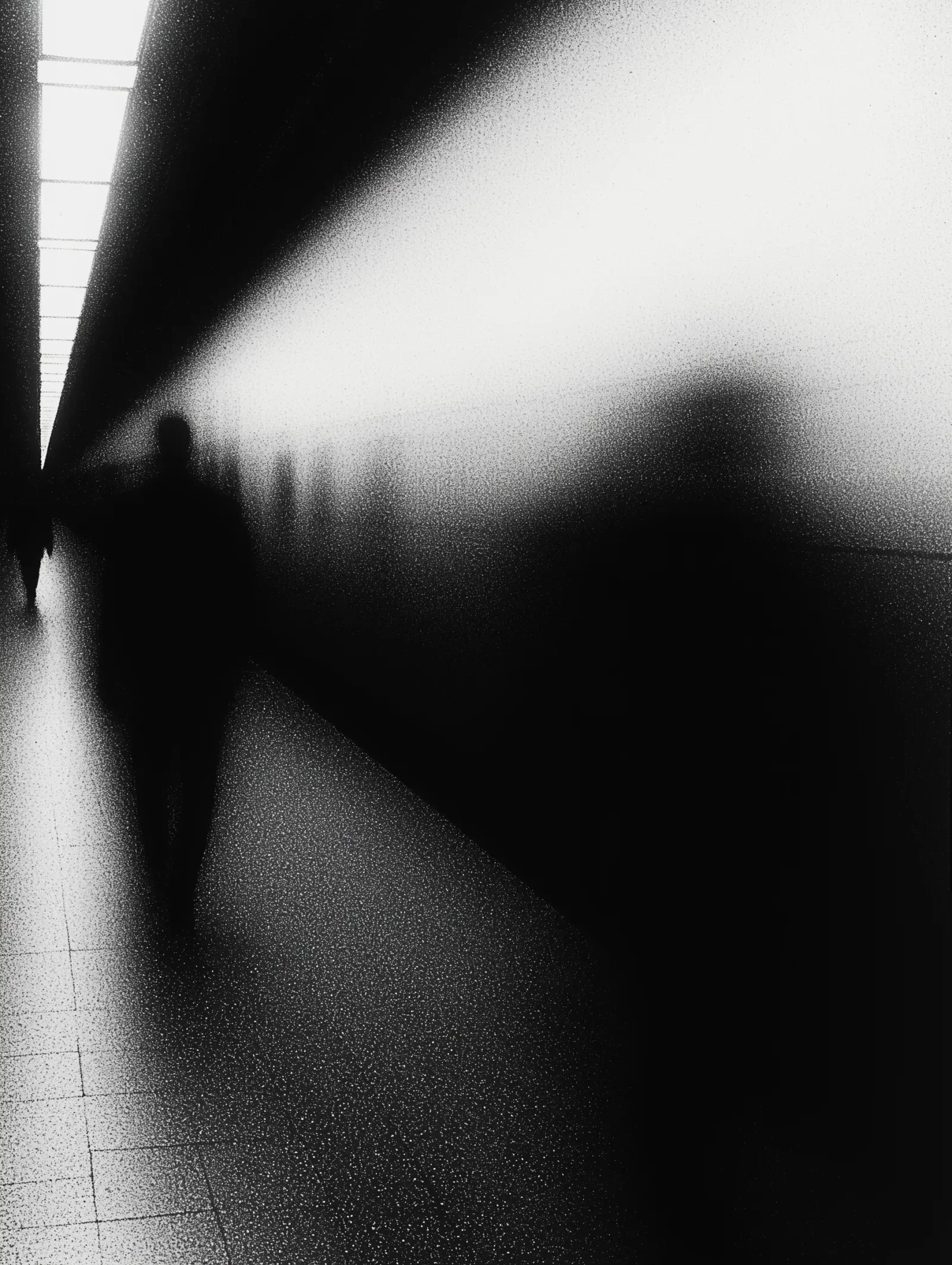
At 10:17 p.m., the security gate rattles at the west end of the museum. Noor barely looks up. The loose gate rattles every forty seconds when the ventilation system changes pressure.
Her colleague Amir is checking the sculpture gallery at the other end of the building. His radio calls give Noor a second familiar sound and confirm where he is working.
At 10:18, it rattles again.
At 10:19, Noor waits for it. Forty seconds pass. Then fifty. The gate stays silent, and somewhere inside the closed gallery a child begins humming.
The humming frightens her because the scene has already taught her how the building should sound. One ordinary pattern has stopped. An impossible sound has taken its place. Noor can estimate where it comes from, but she cannot see the source or decide whether the child is lost, recorded, or deliberately imitated.
That is the central technique for using sound to create fear in fiction: establish an audible rule, change one part of it, and make the viewpoint character act before the source is fully understood. The strongest sound cue is rarely the loudest. It is the cue that changes the meaning of the space while leaving one crucial fact unresolved.
This approach belongs beside the broader principles of writing a scary scene without gore and building suspense through anticipation. Here, though, we will stay with hearing. Sound has a special narrative advantage: it crosses barriers. A character can hear through darkness, walls, floors, fog, and closed doors, receiving evidence without the visual confirmation that would settle its meaning.
Build an Acoustic Baseline Before You Break It
A frightening sound needs a context. If every pipe groans, branch scrapes, floorboard creaks, and animal shrieks from the first paragraph, readers receive a collection of horror signals. They cannot tell which change matters. An acoustic baseline solves that problem by establishing the few recurring sounds that make a place legible to the viewpoint character.
For Noor’s museum, the baseline contains four elements:
- ventilation humming above the conservation rooms;
- the west security gate rattling every forty seconds;
- rain ticking against the glass roof;
- her colleague Amir speaking through a radio from the sculpture gallery.
These sounds do more than establish mood. Each one carries information. Ventilation covers quiet movement. The gate marks time and location. Rain reveals the material overhead. Amir’s radio confirms another person’s position. When a sound changes, Noor loses or gains knowledge.
Rayne Hall’s Writing Scary Scenes distinguishes action sounds from background sounds and recommends distributing sound sentences through a scene. Ron Rozelle makes a complementary point in Description & Setting: writers should observe what real places sound like, including meaningful absences, and use sound words in small doses. Both principles resist the same weak habit, a paragraph that pauses to list noises before returning to the story.
Instead, attach every cue to perception and response:
Sound → inferred source → possible meaning → changed behavior
The gate rattles. Noor infers wind pressure and continues closing the register. The gate misses its next interval. She considers obstruction or interference and stops making noise so she can listen. The child’s humming begins inside a gallery cleared two hours ago. Noor turns off her radio because electronic chatter now prevents her from locating the voice.
The scene advances because hearing changes her conduct.
Baseline also makes silence specific. “The museum went silent” tells readers very little. Museums at night still contain climate control, pipes, traffic vibration, rain, alarms, and a listener’s own movement. Effective silence identifies what has ceased. The ventilation cuts out halfway through its cycle. Amir’s radio stops before he finishes a word. Rain remains audible everywhere except beneath one section of glass. Those absences suggest separate causes.
Absolute silence is uncommon. A quiet scene often magnifies cloth shifting at a shoulder, saliva clicking in a dry mouth, or a key touching metal. As the baseline recedes, the character’s own body can become dangerous.
Turn a Noise Into an Evidence Chain
Readers fear an unseen source when they can reason about it. Give them properties to interpret instead of labeling the sound “eerie” or “terrifying.” A practical acoustic evidence chain tracks six variables:
- Source: What kinds of object, body, machine, animal, or phenomenon could produce it?
- Position: Is it above, behind, enclosed, reflected, or moving between rooms?
- Pattern: Does it repeat, accelerate, answer, hesitate, or stop in response?
- Character reading: Which explanation does this person prefer, and what experience shapes that judgment?
- Test: What can the character do to gather better evidence?
- Payoff: Which earlier properties must the eventual explanation satisfy?
This chain creates fair uncertainty. Noor hears three notes of a children’s song from behind a temporary exhibition wall. The voice is soft, close, and free of the radio’s electrical crackle. It repeats after seventeen seconds. When Noor takes one step toward it, the next repetition begins early.
She first suspects an interactive display left running. That explanation accounts for repetition and location, so it is reasonable. It does not explain why the timing changed after her step. She taps the wall. The humming stops mid-note, which raises the possibility of a listener. Her test improves the evidence and increases the danger.
Naming the sound too early closes the chain. “A ghost hummed behind the wall” may produce supernatural action, but it removes the work of interpretation. Vagueness at the other extreme is equally weak. “There was a strange noise somewhere” gives readers nothing to model. Describe behavior before identity: a breathy three-note phrase; the middle note held too long; the sound close enough to lack echo; the final consonant swallowed as Noor moves.
Research on auditory localization helps explain why these properties matter. A 2024 review in Frontiers in Neuroscience describes how people estimate direction and distance through differences between the ears, reverberation, intensity, frequency, head movement, and familiarity. The system remains imperfect. Rooms reflect sound. Walls filter it. A familiar voice is easier to place than an unknown scrape.
Fiction can exploit those limits without inventing nonsense. A tiled gallery produces reflections that make a footstep seem to come from the wrong doorway. Heavy curtains absorb high frequencies and make a voice appear more distant. Noor turns her head because changing orientation gives her another comparison. She moves into the open atrium, where the same hum acquires a longer echo and reveals that the source has left the enclosed gallery.

Sound that appears to approach deserves special attention. Studies of auditory looming show that approaching sounds receive priority over equivalent receding sounds. A 2017 study found that listeners perceived looming sounds as moving faster, particularly when they were close. Research continues to examine how much of that bias comes from spatial perception, acoustic change, and threat processing. The craft lesson is modest: gradual change in loudness, clarity, reverberation, or interval can suggest closing distance before the source arrives.
Do more than write “the footsteps grew louder.” Let the acoustic evidence develop. Heel impacts gain sharp high-frequency edges as less wall material separates them from Noor. The echo shortens when the walker enters a carpeted gallery. The interval contracts from a measured walk to an uneven hurry. Noor does not need to see the person to know that distance, surface, and speed have changed.
Make Better Hearing Require a Worse Position
Listening becomes suspenseful when certainty has a price. Noor can remain beside the lit security desk with an exit behind her, but the atrium’s ventilation masks the humming. To locate it, she must shut down the fan, enter the gallery, or press an ear to the temporary wall. Each choice improves one kind of information while surrendering safety.
This creates a second chain:
Need to know → listening action → exposure → new evidence
Noor switches off ventilation. The humming becomes clear, and her footsteps become audible throughout the museum. She removes her radio earpiece to judge direction, losing Amir’s updates. She holds her breath against the wall, leaving her back to the room. The scene turns listening into physical conduct rather than passive description.
The character also produces an acoustic footprint. Keys touch a belt. Rubber soles squeak on polished stone. A phone vibrates against a hollow desk. Fear makes Noor control those sounds, but suppression itself has consequences. Holding her breath limits how long she can listen. Catching the gate before it slams puts her hand in a vulnerable gap. Sliding a metal sign out of the walkway takes time she no longer has.
Reciprocity makes an unseen threat feel intelligent. Noor’s shoe squeaks; the humming stops. She taps twice; something answers three times. Avoid making every cue an answer, which quickly reveals the device. One response amid neutral sounds is enough to suggest that someone is listening back.
Character expertise should sharpen fear rather than eliminate it. A museum conservator recognizes the difference between a relay click and a door latch. A sailor reads strain in a rigging cable. A parent knows the exact rhythm of a child’s cough. Expertise removes broad ambiguity and reveals a narrower, more alarming conclusion.
Noor knows the west alarm circuit. When she hears its relay release, she understands that the whole system has not failed. Someone has disabled one zone. Her knowledge gives the scene technical credibility and changes her plan. Amir, who knows sculpture handling but not security, would interpret the same click as harmless building noise. Viewpoint therefore controls the soundscape: characters hear the same event through different training, memories, and fears.
Physical reactions should support this listening problem. A catalogue of heartbeat, sweat, trembling, nausea, and prickling skin turns generic. Choose the response that affects perception or movement. Noor keeps her jaw slightly open to reduce the noise of her own teeth touching. Her calf cramps because she has held one foot above a squeaking tile. When she finally inhales, the breath covers a softer sound she needed to hear.
Compose the Cue Pattern, Then Earn the Explanation
A frightening sequence develops a limited set of cues. Random crashes may startle, yet suspense comes from anticipation and revision. Readers learn a pattern, wait for its return, notice a deviation, and update what they believe.
Write the cues alone in the margin or a separate pass:
- 10:17: gate rattles on schedule;
- 10:18: gate rattles again;
- 10:19: expected rattle is absent;
- 10:20: three-note hum begins behind the wall;
- 10:21: hum responds early after Noor moves;
- 10:22: alarm relay releases in the west zone;
- 10:23: Amir’s voice calls her name without radio static;
- 10:24: gate rattles behind her, far from its fixed track.
This cue sheet exposes repetition without development. If three separate doors creak, a wolf howls, thunder cracks, a phone rings, and pipes groan, the scene resembles a sound-effects catalogue. If the gate’s timing, location, and physical possibility change, one cue can carry the whole escalation.
The prose rhythm around each cue matters too. Give Noor time to predict the next sound. The delay lets readers adopt her expectation. A background noise can stretch the moment without freezing it: rain ticks five times while she waits for the third note; a ventilation blade coasts to silence; water moves through a pipe while she holds the wall panel open. These sounds measure waiting.

The payoff must honor the evidence. A mechanical explanation can work if it accounts for position, timing, and response. Perhaps a faulty audio guide produced the melody, but the change in timing revealed someone using its control panel. A supernatural explanation can preserve mystery while obeying established behavior. The entity may imitate voices only after hearing them and move through connected speaker wires, which explains both Amir’s voice and the disabled circuit.
A reveal fails when it declares the earlier clues irrelevant. “It was all her imagination” discards the reader’s work unless the story planted a precise reason for Noor’s perceptions and the consequences remain real. Fair surprise changes the meaning of evidence. It does not erase the evidence.
Read the finished scene aloud, then read only the acoustic cues. Ask whether each cue establishes, repeats, alters, contradicts, or explains. Check that the character has enough information to form a hypothesis and a credible reason to act before certainty. Finally, remove any sound that changes neither interpretation nor behavior. This targeted pass complements a broader approach to sensory detail without overwritten prose.
Keep the Sound Logic Alive in NovelOS Studio
The cue pattern may cross several chapters: a melody planted in childhood, a machine introduced in chapter four, a voice imitated in chapter twelve, and a physical rule explained near the climax. NovelOS Studio gives that chain one working home, so the acoustic logic stays attached to characters, places, scenes, and the manuscript.
Use The Architect to record the museum’s layout, wall materials, atrium echoes, ventilation, security zones, weather exposure, exhibition machinery, and any supernatural rules. These are objective properties. They determine which sounds can travel, reflect, disappear, or be mistaken for another source.
Then build the narrative sequence around them:
- In The Spark, collect audio clips, notes, images, and reference fragments on the same canvas. Its audio nodes make it practical to preserve a rhythm or texture that prose must later evoke.
- In The Blueprint, connect each cue to the Scene Card where it establishes a pattern, changes Noor’s decision, or pays off. Timeline View keeps the order and interval of repeated sounds visible across chapters.
- In The Oracle, define Noor’s security knowledge, Amir’s museum expertise, their individual fears, and the voice details another presence might imitate. The same noise can then produce different conclusions in different viewpoints.
- In The Manuscript, draft the cue through the character’s immediate noticing, interpretation, and action. Keep the reader inside the listening process rather than explaining the design from outside it.
- In The Alchemist, refine repetitive verbs, inflated reactions, or tonal drift during revision while choosing which suggestions belong in the scene.
This workflow separates physical truth from perceived truth. The Architect knows where the speaker is and how the wall changes its sound. The Oracle knows what Noor believes and why. The Blueprint knows when each piece of evidence arrives. The Manuscript turns those layers into a lived moment.
By the time Noor hears the gate rattle behind her, readers know the gate is fixed to the west entrance. The sound is familiar, located, and physically impossible in its new position. They do not need a paragraph announcing fear. One broken acoustic rule has already changed the museum.
Build that rule, let the character trust it, and break it with precision. NovelOS Studio can carry the complete evidence chain from reference audio and world mechanics through scene timing, character knowledge, prose, and revision, helping every frightening sound earn the response it creates.
Sources and Further Reading
- Rayne Hall, Writing Scary Scenes: action sounds, background sounds, suspenseful waiting, and sensory control in frightening prose.
- Ron Rozelle, Description & Setting: observing real soundscapes, using sound words selectively, and making sensory detail serve story movement.
- Writer’s Digest, “World-Building With Sound”: soundscape, silence, and worldbuilding techniques for fiction writers.
- Pavani and colleagues, “Auditory Localization: A Comprehensive Practical Review”: direction, distance, reverberation, movement, and uncertainty in sound localization.
- Neuhoff, “Looming Sounds Are Perceived as Faster Than Receding Sounds”: perceptual priority and speed judgments for approaching sounds.