A Prodigy Character Fears the Day Talent Stops Being Enough
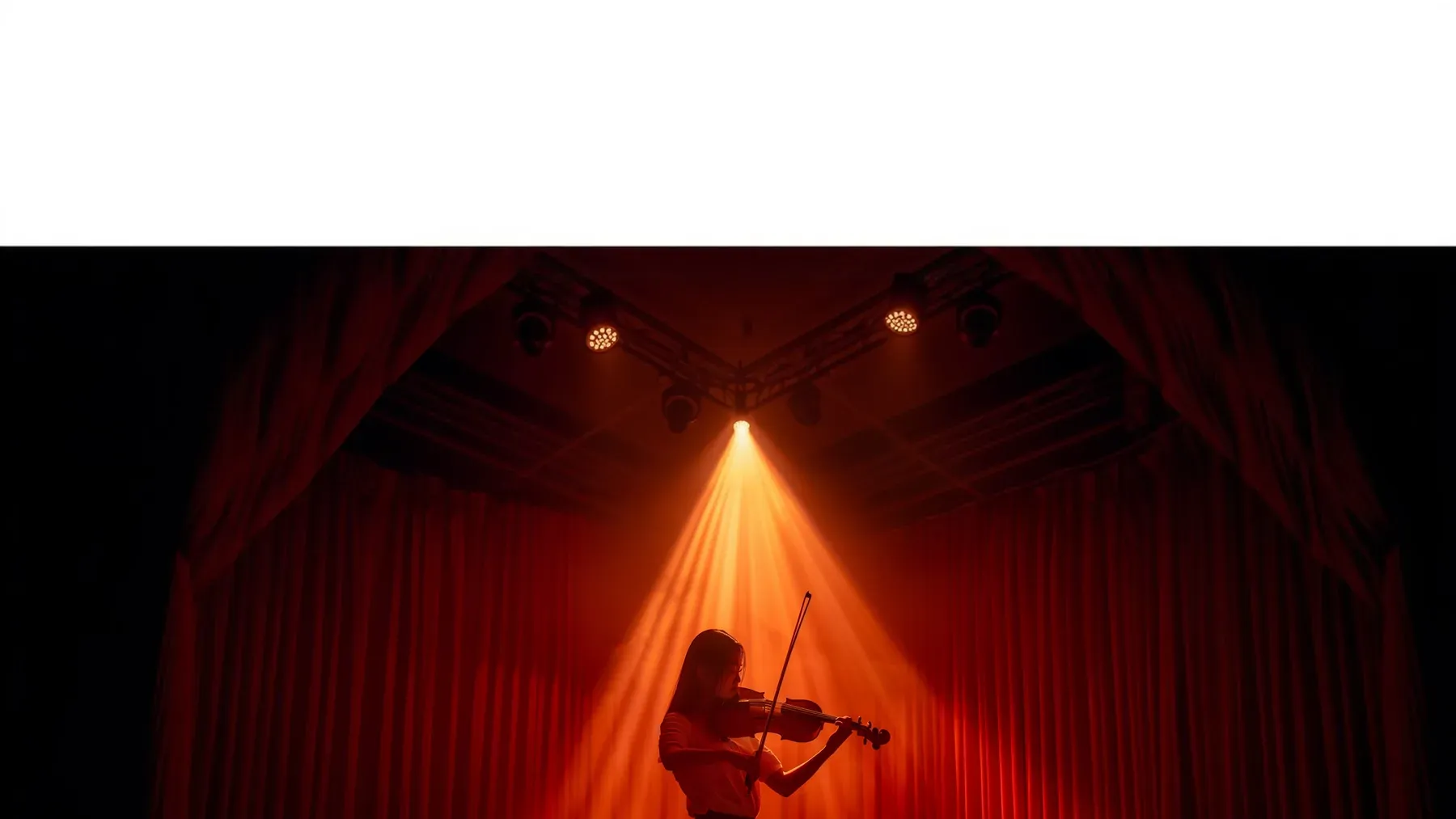
To write a prodigy afraid of becoming ordinary, identify what “ordinary” would take away. The feared loss may be family attention, financial support, public identity, artistic access, adult respect, or the one social role the character knows how to perform. Exceptional ability supplies the pressure. Dependence on exceptional status gives that pressure a plot.
A prodigy is exceptional in a particular domain. The character may hear harmonic structure after one rehearsal and still forget a friend’s birthday. She may perform a difficult concerto at an adult level and lack experience negotiating a rental contract. Skill develops unevenly, and early mastery does not suspend age, embodiment, money, relationships, or the need to learn.
Consider an unnamed eighteen-year-old violinist entering her first adult quartet residency. She performed concertos internationally as a child. Her family moved cities for teachers, sponsors financed instruments, journalists chronicled each youngest-ever milestone, and audiences learned to admire difficulty conquered early. At the residency, everyone can play. The first violinist is twenty-seven, the cellist is a patient arranger, and the violist hears structural weaknesses the prodigy misses.
The residency director asks her to take second violin in a new work. She hears a musical opportunity. She also hears a verdict: the remarkable child has become one competent adult among several.
Give the Fear an Exact Loss
“She fears being ordinary” remains abstract until the character can predict a consequence. Write a contingency sentence:
If I stop being exceptional at this, then this person or institution will withdraw this resource or recognition, which will prove this belief about me.
For the violinist, the sentence might read: If I am no longer the most impressive player in the room, the sponsor will end my instrument loan, my mother will see that the sacrifices were wasted, and everyone will discover there was never a self beneath the talent.
Each clause creates different scenes. The instrument loan creates a contract meeting. The mother’s sacrifice creates a difficult phone call. The absent self creates a free afternoon the violinist cannot enjoy. A broad fear becomes a network of observable pressures.
Research on gifted students should inform the mechanism without turning one study into a universal personality. Roberts and Lovett found stronger negative emotional and physiological responses to an experimentally induced scholastic failure in their sample of academically gifted adolescents than in comparison groups. Mofield and Parker Peters describe perfectionism as multidimensional: high standards and organization can support achievement, while concern over mistakes and doubt about action can create harmful evaluative pressure. These findings suggest possible character routes, not traits every gifted person must possess.
Separate four things in the character dossier:
| Layer | Question | Violinist’s answer |
|---|---|---|
| ability | What can she reliably do? | learn complex repertoire quickly and control intonation under pressure |
| achievement | What has she already done? | toured, recorded, and won youth competitions |
| label | What do other people call her? | phenomenon, youngest-ever soloist, future great |
| dependency | What requires the label to continue? | sponsorship, press interest, family narrative, and her own claim to deserve the cost |
The fear usually lives in the fourth row. Ability can remain real while the label expires. That gap is more interesting than revealing that the character was secretly untalented.
Show Intelligence Through Selection
A convincing prodigy does more than recite information or solve every problem first. Show what the character notices, which possibilities she rejects, how she practices, where she predicts trouble, and what she can transfer from one task to another.
During the first quartet rehearsal, the violinist notices that the recurring interval in the viola part anticipates the finale’s tonal break. She adjusts her bow contact so the second-violin line can expose it without becoming louder. This demonstrates expertise through a choice. The reader does not need a lecture on harmony to understand that she found a relationship and acted on it.
Give expertise five visible operations:
- Perception: she hears a pitch center drifting before anyone stops.
- Compression: she recognizes that four scattered errors share one fingering problem.
- Prediction: she knows fatigue will make a later passage unstable.
- Selection: she chooses one correction from several available techniques.
- Revision: she tests the correction and changes it when the ensemble result worsens.
The fifth operation prevents genius from becoming magic. Revision lets the reader see thought under resistance.
Also mark the edge of competence. The violinist can diagnose her own left-hand tension but misreads why the cellist requests a slower rehearsal. She assumes he cannot manage the tempo; he is protecting the composer’s phrasing. Her fast pattern recognition produces a fast, plausible, wrong conclusion.
Domain limits protect other characters from becoming props. The instrument technician understands humidity and wood movement. The arranger understands how a line functions across the whole quartet. The residency administrator knows the sponsor’s contract. The mother remembers costs the violinist was too young to see. Expertise remains impressive because it operates among other kinds of knowledge.
Create a Threshold Where Old Effort Stops Working
The plot needs a threshold, not a random humiliation. Childhood acclaim often compares a young performer with age expectations. Adult professional work compares interpretation, reliability, collaboration, repertoire, endurance, opportunity, and artistic judgment among highly trained peers. The measuring system changes.
Build that threshold in three stages.
First, let the old method succeed. The violinist learns the new score overnight and arrives with every technical passage secure. Her preparation is genuinely excellent.
Second, reveal what the old method cannot solve. She has decided every phrase alone, so she resists the tiny timing changes that make chamber music breathe. Her polished part prevents four musicians from creating one interpretation.
Third, make adaptation visible and costly. She must stop playing long enough to hear how her line changes the violist’s entrance. She must ask what another musician intends. She must accept a rehearsal recording in which her individual sound is less prominent and the quartet is better.
This distinction keeps effort from becoming a moral trick. More practice is useful for an unlearned passage. More solitary practice cannot solve a coordination problem. The character needs a different strategy.
Mofield and Parker Peters distinguish approach coping, such as problem solving and seeking support, from avoidance responses that move away from the stressor. Their study also warns that apparently productive problem solving can still be driven by fear of failure. In fiction, that means an extra six hours of practice can look admirable while serving avoidance. The violinist practices the solo passage until dawn because she does not want to ask the quartet why her entrances feel wrong.
For a related character pattern, the guide to writing a perfectionist who turns errors into verdicts helps distinguish high standards from a mistake that seems to condemn the entire self.
Let Other People Need Different Versions of the Prodigy
The label survives because it performs jobs for other people. Give each relationship a version of the character it rewards.
Her mother needs the prodigy to prove years of disrupted work and travel produced a future. The sponsor needs a public story that attracts donors. The residency director needs a musician who can contribute without dominating. The younger students need evidence that early talent opens a life. A childhood teacher needs continued access to the origin story. The quartet needs a colleague who can listen.
None of these people requires pure selfishness. The mother may love her daughter and still panic when the residency reduces solo appearances. The sponsor may fund valuable access and still prefer a marketable narrative. Mixed motives create negotiations rather than villains.

Track what each person does after a setback. Who offers comfort before asking for the score? Who immediately proposes a comeback concert? Who hides the bad review? Who treats the change of chair as routine professional work? Reactions teach the protagonist what kind of belonging is available.
The rival deserves the same care. The adult first violinist may be less dazzling in a solo excerpt and better at shaping rehearsal, recovering from errors, and helping colleagues enter confidently. The prodigy envies abilities that complicate her definition of talent. The article on professional envy when the rival deserves admiration offers a useful way to let admiration sharpen rather than flatten the conflict.
Give the prodigy one relationship unrelated to exceptional output. A neighbor may care whether she returns a borrowed key. A cousin may want help choosing shoes. An elderly street musician may discuss weather, bus routes, and the pleasure of playing a tune people recognize. Ordinary interaction should not cure her. It gives her evidence that attention can survive without a demonstration.
Make Failure Change Strategy
Plan failure as an information event. Decide what happened, what the character expected, what public meaning others assign, what she privately concludes, and which next action follows.
At a preview concert, the violinist takes the first violinist’s chair after an illness. She plays the difficult passages accurately. In the quiet movement, she pushes the tempo past the cellist’s breathing room and loses the ensemble at the return. The group recovers, but a review calls the performance brilliant and strangely solitary.
The review hurts because praise protects her old identity while naming its limit. A simple failure would let her blame nerves or preparation. Mixed feedback forces interpretation.
Avoid making growth immediate. Her first responses may include:
- reading only the sentence that praises brilliance;
- requesting a solo engagement during quartet rehearsal week;
- blaming the cellist’s conservative tempo;
- hiding the review from her mother while assuming she has already seen it;
- practicing the failed return alone without studying the ensemble cue;
- treating a colleague’s suggestion as pity.
Each response should buy short-term protection and create a later cost. The solo engagement reassures the sponsor, then leaves the quartet underprepared. Concealment avoids one phone call, then makes the mother’s arrival feel like surveillance. Blame protects competence, then prevents the needed rehearsal change.
This is where impostor feelings may appear, though they are distinct from prodigy status. The character may attribute every success to early publicity and treat one adult setback as proof that the fraud has finally been exposed. The guide to turning impostor feelings into concealment and action can help keep that pattern behavioral rather than diagnostic shorthand.
The turning point occurs when the violinist asks for the full rehearsal recording and listens to every part. She marks where her choices reduced another player’s options. Her goal changes from proving she can lead to understanding what leadership asks the others to do.
Write an Arc Beyond the Label
Do not resolve the arc by making the prodigy renounce ambition, lose talent, or declare that everyone is equally skilled. A stronger ending changes the relationship among excellence, identity, and belonging.
David Corbett’s The Art of Character treats crises of insight as moments when habitual self-protection becomes visible and a person chooses another path. Nancy Kress’s Characters, Emotion & Viewpoint recommends dramatizing conflicting values through small decisions, then showing the character’s attitude toward the value she did not choose. Apply both ideas before the climax.
Give the violinist a series of smaller choices:
- She credits the violist’s structural insight in a sponsor interview.
- She keeps a difficult solo opportunity and declines a second one that would damage the quartet.
- She tells her mother the chair assignment before explaining why it matters artistically.
- She requests help with an ensemble passage she can play perfectly alone.
- She attends a younger student’s recital without turning the evening into advice.
These choices build evidence that she can remain ambitious while tolerating shared attention.
At the final performance, the quartet premieres a work whose central theme passes through all four instruments. The sponsor wants promotional footage centered on the former child star. The violinist can preserve the familiar image by exaggerating her line, or protect the interpretation by letting the theme leave her hands. She chooses the ensemble sound and later insists that the release name all four musicians.
The choice carries cost. The sponsor may reduce individual promotion. Her mother may need time to grieve the future she imagined. A critic may call the performance mature, a word the violinist once heard as less exciting than miraculous. Growth becomes credible because the old reward does not disappear before she chooses.

End with a future the character can actively inhabit. She still wants difficult work. She now measures a rehearsal by discoveries, recoveries, useful risks, and the quality of shared decisions as well as applause. “Ordinary” stops meaning worthless. It begins to include practice, friendship, error, rent, aging, teaching, collaboration, and a career long enough to contain changing forms of excellence.
Build the Character Trajectory in NovelOS Studio
NovelOS Studio can keep exceptional ability connected to the relationships and consequences that make it dramatic.
- Use The Oracle to define domain skill, blind spots, formative acclaim, private fear, public label, current desire, and the belief attached to becoming ordinary.
- Store the residency, sponsor agreement, instrument loan, rehearsal customs, competition history, press environment, and professional music world in The Architect.
- Map parent, teacher, sponsor, rival, colleague, critic, student, and audience expectations through Connections, including what each relationship gives and withdraws.
- Collect performance research, repertoire notes, interview language, and possible failure thresholds on Spark before committing to the arc.
- Sequence the chair assignment, rehearsals, preview failure, avoidance costs, smaller corrective choices, premiere, and changed ensemble dynamic in The Blueprint and Timeline View.
- Draft competence through perception and selection in Manuscript, using Smart Mentions to keep contracts, people, and prior performances available inside the scene.
- Use The Alchemist to inspect repeated emotional explanation, preserve voice, and test whether each revision makes thought and action clearer.
- Set research, scene, chapter, and word-count goals. Move the finished book into Editorial Foundry for EPUB, DOCX, PDF, or HTML output.
NovelOS Studio is a local Windows and macOS application with one lifetime license for the owner’s computers. The project can carry a prodigy’s early acclaim, exact craft, status dependencies, avoidance choices, relationship changes, scene order, revision, progress, and finished-book production together. That continuity helps the reader see why losing first place feels catastrophic, and why choosing a larger life can demand more courage than winning again.
Sources and further reading
- Shawn M. Roberts and Suzanne B. Lovett, “Examining the ‘F’ in Gifted: Academically Gifted Adolescents’ Physiological and Affective Responses to Scholastic Failure,” Roeper Review.
- Emily L. Mofield and Megan Parker Peters, “Perfectionism, Coping, and Underachievement in Gifted Adolescents: Avoidance vs. Approach Orientations,” Education Sciences.
- Kenneth G. Rice, Zeta Suh, and colleagues, “Perfectionism in Gifted Students: Moderating Effects of Goal Orientation and Contingent Self-Worth,” School Psychology Quarterly.
- Jennifer Crocker and Riia Luhtanen, “Contingencies of Self-Worth, Academic Failure, and Goal Pursuit,” Personality and Social Psychology Bulletin.
- Ann Robinson, “Does That Describe Me? Adolescents’ Acceptance of the Gifted Label,” Journal for the Education of the Gifted.
- Nancy Kress, Characters, Emotion & Viewpoint: Techniques and Exercises for Crafting Dynamic Characters and Effective Viewpoints.
- David Corbett, The Art of Character: Creating Memorable Characters for Fiction, Film, and TV.
- Dwight V. Swain, Creating Characters: How to Build Story People.