A Prison Break Novel Is a War Between Two Adaptive Systems
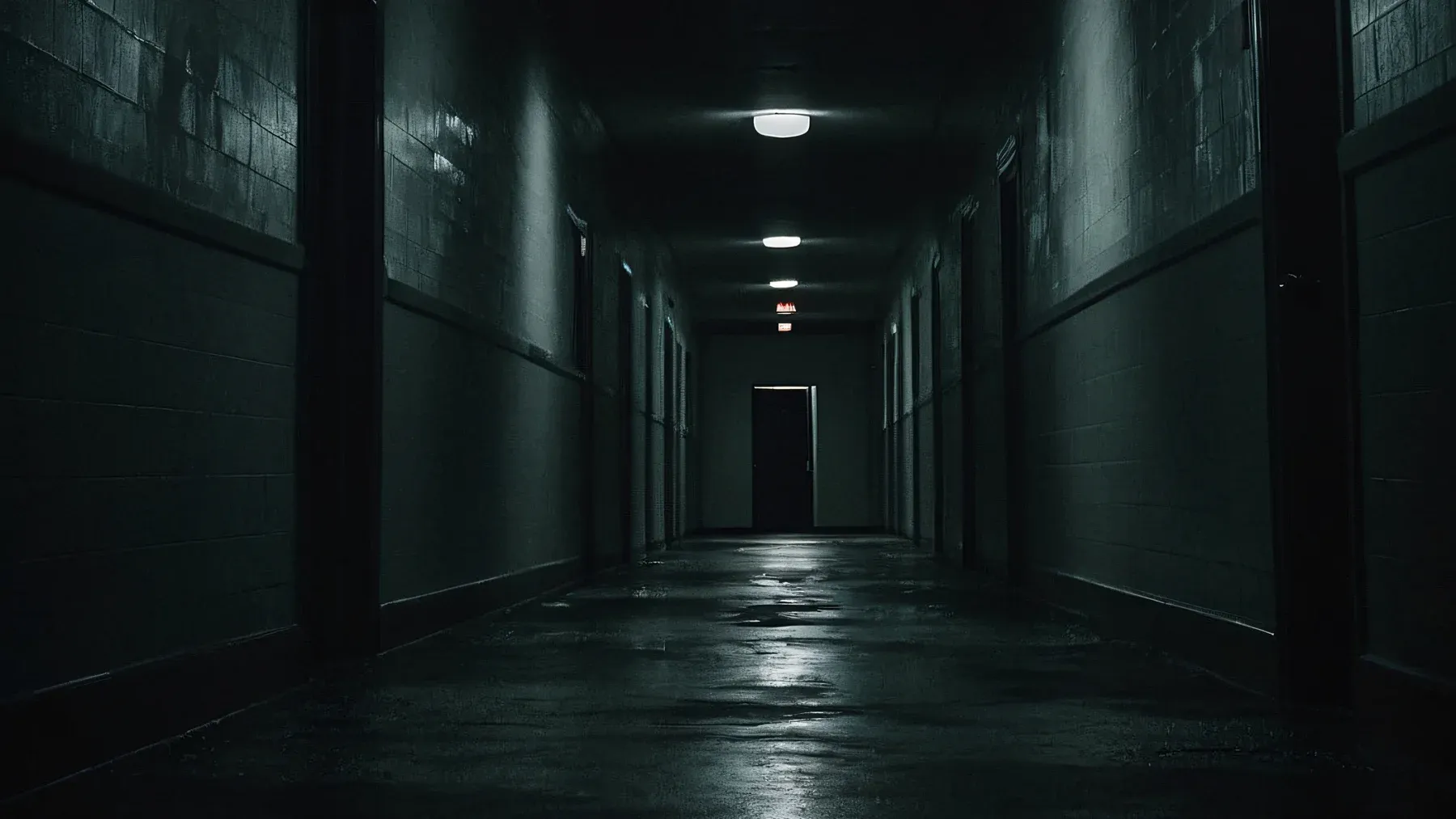
A prison break novel works when the prison and the escape plan can both learn. The institution watches, classifies, restricts, rewards, searches, and changes procedure. The people planning to leave observe those patterns, assemble partial knowledge, test assumptions, and revise after every response.
That contest produces stronger suspense than an elaborate route alone. A wall is static. A system notices that a tool is missing, moves a worker, changes a count, cancels a delivery, pressures an ally, and turns yesterday’s opportunity into today’s evidence.
Consider a former rail-signal controller held in a mountain detention compound built around a freight depot. The state uses prisoners to catalogue seized records and reclaim abandoned rail equipment. A transfer order will move the controller to an undisclosed facility in ten days. They also find a ledger linking prison labor to the company operating the freight line.
The deeper goal is to carry evidence that can identify people who disappeared through the compound. That purpose collides with escape. Evidence creates custody risk and gives allies reasons to help or betray the plan.
The route matters. The dependencies make it a novel.
Build the Institution as a Living Opponent
Research the jurisdiction, period, facility type, legal status, population, staffing, health care, communication, labor, transport, visitation, segregation, and surrounding geography that your story actually uses. Prisons and detention sites differ. A generic maze assembled from movies will produce arbitrary obstacles.
For the fictional mountain compound, map five institutional layers:
- Official movement: housing, meals, work crews, medical visits, legal access, transport, and counts.
- Operational movement: contractors, freight, maintenance, waste, food, records, equipment, and emergency response.
- Informal movement: favors, messages, barter, protection, warnings, and staff shortcuts.
- Information flow: who can see schedules, orders, camera reviews, work lists, disciplinary notes, and transfer records.
- Response authority: who can search, isolate, reassign, delay transport, change procedure, or conceal a failure.
The controller studies the compound through their assigned work. They recognize which rail signals remain connected, which freight manifests are copied, and which schedule changes originate outside. Other prisoners know different parts: a kitchen worker sees contractor arrivals; an infirmary orderly knows who misses count with authorization; a records clerk sees transfer codes; a quarry crew understands the outer terrain.
Nobody should possess a miraculous blueprint. Knowledge is situated and sometimes wrong. A contractor’s routine may change after a safety audit. A locked door may matter less than the staff member who controls the work list.
Give the institution ordinary competence. Staff can be tired, corrupt, kind, cruel, careful, frightened, or ambitious without becoming uniformly foolish. Procedures overlap because one failure should not open every boundary. When an irregularity appears, somebody records it, misreads it, exploits it, or escalates it.
The earlier guide to captivity scenes with narrative momentum explains how changing objectives and information keep confinement active. A prison break expands that principle across a coordinated institution.
Draw the Dependency Graph Before the Route
A route map answers where the protagonist hopes to move. A dependency graph answers what must be true before each movement can occur.
The controller’s first plan is to leave with a freight inspection crew. Work backward from that outcome:
- Entry to the inspection crew requires a valid assignment.
- The assignment requires a vacancy and approval from a supervisor.
- Reaching the freight platform requires the correct clothing and a count explanation.
- Remaining on the movement list requires the controller’s transfer status to stay hidden from local staff.
- Carrying the ledger requires a copy, concealment, and a recipient outside who can authenticate it.
- Continuing beyond the compound requires transport knowledge, shelter, communication, and a decision about identity.
Each dependency has an owner, failure signal, and fallback. The records clerk can alter a work list but cannot control the supervisor’s headcount. The kitchen worker can create a vacancy but cannot choose the replacement. An outside lawyer can authenticate documents but receives monitored mail slowly.
Mark dependencies as required, replaceable, or helpful. If every element is required, one failure ends the book. If everything has an easy substitute, reversals feel cosmetic.
Then mark which dependencies share a source. The clothing and assignment may both come from the same workshop supervisor. That creates efficiency and concentrated risk. When the supervisor becomes suspicious, two branches fail together.
The dependency graph also reveals order. The protagonist cannot copy the ledger before learning its page code. They cannot recruit the records clerk before offering a credible way to protect the clerk’s sibling, who remains inside. They cannot contact the lawyer until they know which evidence can be verified independently.
This method keeps preparation dramatic because every acquisition changes exposure. The plan becomes a chain of decisions rather than a shopping list.
Give Every Resource a Custodian and a Price
Objects and information reach the protagonist through people. Ask who controls each resource, why they might share it, and what they expect afterward.
The records clerk supplies transfer codes because the ledger may explain a missing partner. A quarry mechanic provides knowledge of the freight equipment because the operating company withheld safety treatment after an injury. The kitchen worker reports contractor days in exchange for a message to family. The infirmary orderly refuses involvement at first because any transport disruption will reduce medicine deliveries.
The protagonist must contribute value too. They decode obsolete rail notation, identify which corporate records will survive legal scrutiny, and use signal expertise to prove that a fatal work accident was caused by a falsified maintenance order. Competence makes recruitment plausible, while limited authority keeps it costly.
Create a resource record with six fields:
| Field | Dramatic question |
|---|---|
| Custodian | Who currently controls access? |
| Stated price | What do they openly request? |
| Protected interest | What are they actually trying to preserve? |
| Exposure | Who can infer the exchange occurred? |
| Withdrawal point | What event would make them leave the plan? |
| Residual debt | What obligation survives even if the escape succeeds? |
The records clerk’s stated price is a place on the route. Their protected interest is information about the missing partner. When the protagonist learns that taking two people will invalidate the work assignment, the alliance gains pressure. A simple promise becomes a decision about whose freedom the plan was built to serve.
Avoid treating supporting characters as equipment dispensers. They should alter terms, withhold knowledge, misunderstand risk, or pursue a related plan. The quarry mechanic wants the ledger published. The records clerk wants a private search first. The kitchen worker wants names released without exposing family correspondence. They agree on movement and disagree on what must leave with them.

Let the Institution Learn From Symptoms
The prison rarely discovers the complete plan at once. It notices symptoms: a copied form, an absent tool, unusual interest in a schedule, an unexplained conversation, a worker in the wrong queue, or a discrepancy between two records.
Build an institutional suspicion ladder:
- A supervisor notices the controller requesting an obsolete freight manual.
- A routine inventory finds one ledger volume shelved in the wrong sequence.
- Staff interpret both events as theft of metal-sale records rather than escape preparation.
- Management moves the controller from records work to quarry sorting and audits the archive.
- The audit reveals altered transfer codes, increasing scrutiny of the clerk.
- Headquarters advances the protagonist’s transfer by three days.
The response follows limited evidence. It damages the plan without making the institution omniscient.
Let adaptations have costs for the prison too. Reassigning the controller creates a gap in signal-record processing. Searching the archive delays freight documentation. Advancing the transfer requires an unscheduled vehicle and outside authorization. Those costs generate new opportunities, though each arrives with different risks.
The protagonist’s team should learn in return. They discover who received the audit order, which department cares about the ledger, and how quickly headquarters can change transfers. Every countermeasure reveals something.
Keep causality visible. In Scene & Structure, Jack M. Bickham explains that a setback should arise logically yet unexpectedly from a scene’s goal and conflict. Visually inspected pages 39, 56, and 65 connect reversals with changed conditions, later consequences, and apparent movement away from the larger goal.
Apply that to each preparation scene. The protagonist obtains the manual, but the request draws attention. The clerk changes the work list, but the audit freezes access. The lawyer receives one page, but asks for chain-of-custody proof that requires the missing ledger cover. Progress creates the next vulnerability.
Convert Failures Instead of Resetting the Plan
After a plan breaks, preserve what earlier preparation can still do. A prison break feels engineered when old resources acquire new functions.
The freight-crew plan fails when the controller loses records access and the transfer moves forward. Reassess the dependency graph:
- The obsolete manual still explains how the company labels emergency rail crews.
- The quarry assignment now places the protagonist near damaged equipment awaiting inspection.
- The frozen archive keeps staff focused on documents while the physical ledger moves to an evidence office.
- The unscheduled transfer vehicle must pass a public rail-safety checkpoint outside the compound.
- The lawyer can have observers at that checkpoint if the team sends credible timing.
The revised objective becomes entering the transfer convoy with the evidence and forcing a verifiable public interruption at the checkpoint. This is riskier than disappearing with a freight crew. It also better serves the evidence goal.
Use a conversion table after every major failure:
| Lost function | Remaining asset | New function | Added cost |
|---|---|---|---|
| Work-list cover | Freight manual | Recognize the convoy’s inspection procedure | Requires reaching the checkpoint visibly |
| Archive access | Memorized ledger codes | Identify the correct evidence box | One ally must remain near records |
| Quiet departure | Advanced transfer | Guarantees outside movement | Adds guards and a shorter clock |
| Private recipient | Lawyer and observers | Establish public custody | Makes the protagonist identifiable |
The revision should become harder in one dimension and stronger in another. Here it loses secrecy but gains witnesses. The protagonist must decide whether escape means disappearance, survival, testimony, or disruption.
The escape-scene method for a plan that cannot stay intact can help at execution scale. For a full novel, each conversion should also change alliances and the institution’s next response.
Make the Break Change People Who Remain Inside
The plan uses routines other prisoners depend on. A freight disruption can delay medicine, an audit can expose correspondence, and a missing worker can trigger collective punishment. Design these consequences before the climax.
List affected groups and the harm they can anticipate. Then let the protagonist reduce, transfer, accept, or disclose that harm. They cannot erase every cost.
The infirmary orderly agrees to pass checkpoint timing only after the team separates medicine inventory from the freight records the authorities will seize. The kitchen worker withdraws when the revised public interruption could expose family messages. The records clerk chooses to remain inside long enough to move correspondence away from the audited shelves, surrendering the promised place on the convoy.
That choice should belong to the clerk. The protagonist can argue, offer alternatives, or admit what the plan cannot provide. They cannot turn another person’s sacrifice into proof of their own goodness.
During execution, headquarters orders every work crew confined after the transfer convoy leaves. The protagonist learns this before the checkpoint. Continuing will worsen conditions inside. Turning back will place the clerk and copied ledger under immediate suspicion. The team sends the evidence index to the lawyer and proceeds, creating outside scrutiny that may limit retaliation without magically preventing it.
After the interruption, officials call it an attempted escape and deny the labor records. Families use released names to file petitions. The company suspends freight work, cutting prisoner income. Legal observers reach some detainees while others are moved.
The article on writing a rebellion whose factions want different futures offers a useful extension: collective pressure contains incompatible priorities. Freedom for one protagonist should not flatten everyone inside into a grateful audience.
Change the Objective Beyond the Perimeter
Crossing the formal boundary ends one dependency graph and activates another. The protagonist needs medical care, identity, communication, shelter, legal strategy, and a way to authenticate the ledger. Search, surveillance, family pressure, and public narrative continue.
At the checkpoint, the controller causes an inspection dispute by identifying a safety inconsistency the private company cannot ignore in front of observers. The scene ends with the evidence changing hands and the protagonist leaving the guarded convoy during the public confusion. Keep the mechanics subordinate to the choices and fictional system.
Outside, the controller can vanish into the mountain road or remain long enough to give a recorded statement establishing how the ledger was kept. The first option protects immediate freedom. The second strengthens the case and reveals their face.
They testify. That decision completes the deeper objective and creates a new problem: movement must now happen under a known identity. The lawyer’s team can offer transport but cannot promise safety. The protagonist no longer controls whether the evidence becomes public, only whether their account joins it.
The final chapter should return to people inside. The records clerk receives a legal visit under observation. The infirmary delivery resumes under an external audit. The kitchen worker’s family messages remain undiscovered. Some missing names are confirmed; others remain unresolved.
End with changed practice rather than abstract freedom. On a distant road, the protagonist hears a freight signal using the emergency pattern they taught the clerk. It may be a warning, greeting, or proof that the institution has not silenced every channel. The escape has consequences in both directions.

Coordinate the Contest in NovelOS Studio
A prison break novel asks the writer to align people, routines, documents, resources, suspicions, failures, and clocks. NovelOS Studio keeps the prison and plan equally legible while the manuscript remains the primary work.
- Define the controller’s skill, transfer deadline, evidence goal, limits, loyalties, and evolving idea of freedom in The Oracle. Add the clerk, mechanic, kitchen worker, orderly, supervisors, guards, contractors, lawyer, observers, and people affected inside.
- Store the compound, housing, work areas, archive, quarry, freight system, checkpoint, terrain, procedures, transfer codes, ledger, equipment, communications, and outside institutions in The Architect.
- Map custody, debt, protection, employment, kinship, trust, coercion, correspondence, evidence, withdrawal conditions, and residual obligations with Connections.
- Explore route alternatives, institutional responses, resource conversions, alliance terms, public-interruption choices, and aftermaths through Spark.
- Put observations, acquisitions, audits, reassignments, transfer changes, convoy movement, checkpoint events, evidence handoff, testimony, searches, and legal response in The Blueprint. Timeline View aligns the ten-day deadline with counts, work, freight, outside contact, and institutional adaptation.
- Draft surveillance pressure, negotiation, confinement, execution, and aftermath in Manuscript. Use The Alchemist to compare technical and character-led passages; the writer approves every revision.
- Track dependencies, custodians, prices, failure signals, suspicion level, plan knowledge, resource conversions, people left inside, evidence custody, scene goals, consequences, word count, and revision status.
- Produce the completed novel as a reflowable ebook, print PDF, editable Word or rich-text file, Markdown, plain text, or a self-contained web edition through Editorial Foundry.
Use NovelOS Studio as a local desktop workspace on Windows or macOS. Its lifetime license activates on every computer you own. Revise the plan while preserving its causes, and let the institution respond with credible limits. Build a prison break whose freedom has a real price.
Sources and further reading
- Jack M. Bickham, Scene & Structure, especially visually inspected PDF pages 39, 56, and 65 on immediate goals, logically earned setbacks, later plot consequences, and apparent movement away from the larger objective.
- Office of Justice Programs, “If It Ain’t Broke, Break It: Continuous Improvement in Prison Security”, on security systems being tested and updated rather than remaining static.
- ScreenCraft, “Anatomy of a Script: Escape Plan”, on layout, routine, assistance, preparation, and character expertise in an escape premise.
- Writers Helping Writers, “Character Motivation Entry: Escaping Confinement”, on the external goal, stakes, methods, complications, and possible internal growth attached to escape.
- Lummi source: moody hallway
- Lummi source: collaborative interaction
- Lummi source: tree-lined road