Make the Mythic World Argue With the Character

Myth retelling worldbuilding works when the inherited world changes what a character can choose. Cosmology creates material conditions. Ritual assigns authority. Sacred objects carry custody and risk. A divine bargain alters food, travel, kinship, law, or time. Character then becomes the person who must live inside those consequences.
This is the practical meaning of balancing worldbuilding and character in a myth retelling. The task has little to do with giving each side an equal number of paragraphs. A world detail earns space when it changes a desire, permission, cost, source of evidence, or relationship.
The Homeric Hymn to Demeter offers a powerful model. Persephone’s disappearance drives Demeter to withdraw from Olympus. Crops fail. Mortal survival and the gods’ offerings are endangered. Negotiation follows, Persephone returns for part of the year, and the settlement changes the recurring order of the world. The family conflict, agricultural system, divine economy, and ritual aftermath operate together.
For one continuous craft example, imagine a retelling set in a mountain valley whose winter seed supply is held below ground. The valley council claims that the first frost requires a chosen keeper to enter the vault and remain there until thaw. An adult seed inspector discovers that the rite also hides the council’s monopoly over drought-resistant grain. Her mother leads the surface cooperative and threatens to withhold planting until her daughter returns.
The inspector’s escape is only one part of the craft problem. Who may hold the seed, who bears winter scarcity, and whether reunion requires obedience all belong to the relationship.
Read the Source World as an Engine
Begin with the source before inventing extra kingdoms, costumes, or magic. The earlier guide to writing an original myth retelling explains how to compare variants and choose the governing question. For this pass, ask what the source world does when a character acts.
Write a five-part engine:
- Character rupture: What loss, refusal, trespass, promise, or desire disturbs the existing order?
- World response: Which natural, divine, political, or economic condition changes?
- Human exposure: Who loses food, safety, movement, status, memory, fertility, burial, or lawful protection?
- Authority response: Who can negotiate, interpret, punish, conceal, or repair the change?
- Recurring settlement: What new rule, season, office, ritual, boundary, or obligation remains afterward?
For Demeter and Persephone, the rupture is abduction and separation. Demeter’s grief and anger become agricultural refusal. Mortals face famine, while the gods face the loss of offerings. Zeus, Hermes, Hades, Demeter, and Persephone occupy unequal positions in the negotiation. The divided year and Eleusinian rites make the resolution part of the world’s continuing structure.
This reading prevents a familiar failure: borrowing the source image while dropping its causal reach. Pomegranate seeds, torches, winter flowers, or an underworld gate can create recognition. Their dramatic value depends on the powers and obligations attached to them.
In the valley retelling, the underground vault replaces the underworld as a controlled domain. Stored grain replaces supernatural fertility as the mechanism connecting a family separation to public survival. The first-frost rite makes the inspector’s descent legible to the community. The useful question is what each transfer causes. If eating a ceremonial seed binds her to the vault, who verifies the act, who benefits from the rule, and what happens to the winter ration if she refuses its authority?
Record uncertainty where the source varies. Myths have histories, competing versions, and later interpretations. The world engine belongs to the particular source pattern your novel engages. It should never be presented as the single universal meaning of the myth.
If the borrowed events still need a causal sequence, first use the two-spine myth retelling outline to separate recognizable source functions from the new consequences. The pressure method here begins once those events exist and asks what kind of world makes each consequence unavoidable.
Put the Character Where the Rule Hurts
A character-driven myth retelling needs a contradiction between the world role assigned to the protagonist and the life that person is trying to build.
The inspector wants three things. She wants the valley to survive a second failed harvest. She wants professional authority over seed testing. She wants an adult relationship with her mother that does not reduce either woman to keeper or rescuer. The council’s rite combines those desires into one trap: entering the vault proves her expertise and public loyalty while placing her under inherited control.
Write the contradiction as a complete sentence:
Because the valley treats custody as sacred service, the inspector can protect the seed only by accepting an office that denies her the right to decide when service ends.
Now test each important worldbuilding category against that sentence.
| World element | Character pressure |
|---|---|
| vault access law | entering gives the inspector evidence, while leaving without permission makes her testimony unlawful |
| first-frost rite | public consent appears settled before she learns the full terms |
| seed ration system | exposing the monopoly could trigger panic buying before alternate distribution exists |
| cooperative oath | her mother can organize resistance but cannot command the daughter’s return |
| underground climate | samples degrade when moved, so proof and safety cannot travel together easily |
| seasonal office | replacing one keeper may preserve the same coercive structure |
This table tells you which facts deserve scenes. A decorative genealogy of former keepers can wait. The legal status of a keeper’s testimony matters now because it changes the inspector’s options.
The method also protects agency. A protagonist gains depth from deciding among costs generated by the world. If the solution appears as a forgotten exception that erases every price, the world has stopped pressing on character.
Follow Every Rule to Daily Life
Mythic rules feel substantial when they reach bodies, work, objects, and routines. For each major rule, trace three surfaces: personal experience, institutional adaptation, and relational consequence.
Take the valley’s claim that grain sealed at first frost remains fertile through winter.
At the personal surface, the inspector sleeps beside germination trays, measures humidity, treats fungal exposure, and watches her own meals shrink when a test batch fails. The rule has temperature, labor, hunger, and fatigue.
At the institutional surface, the council controls door seals, ration ledgers, sample certification, and the public calendar. Millers cannot accept grain without a keeper’s mark. The cooperative maintains informal stores because the official allotment privileges council estates.
At the relational surface, every message between mother and daughter carries two meanings. A request to release a seed lot may be sound agricultural advice, political pressure, or an attempt to pull the inspector back into a child’s role. The daughter can reject the command and still recognize the hunger above ground.
The local reference The Dramatic Writer’s Companion describes storyworld as a place readers enter through characters. On directly inspected PDF pages 238 through 242, its “As the World Turns” exercise develops physical and spiritual reality, governing rules, law, power, economics, social dynamics, communication, ritual, core values, success, failure, advantages, and obstacles. The practical lesson is connection. These categories gain dramatic force through how characters perceive, use, resist, and depend on them.
You can create a pressure chain for any invented fact:
Rule → operation → custodian → unequal effect → character decision → residue
For example:
Only the keeper may certify stored grain → each sack receives a seal → the council owns the seal press → independent farmers wait longer → the inspector lends her mark to the cooperative → two conflicting ledgers now exist.
The final item matters. Residue gives the decision a future. The duplicate ledger can become evidence, expose an ally, invalidate a shipment, or allow the council to accuse the inspector of sacrilege.
This approach extends the earlier article on making food scarcity shape a fictional world. In a retelling, scarcity also translates the inherited myth into the protagonist’s specific moral and relational problem.
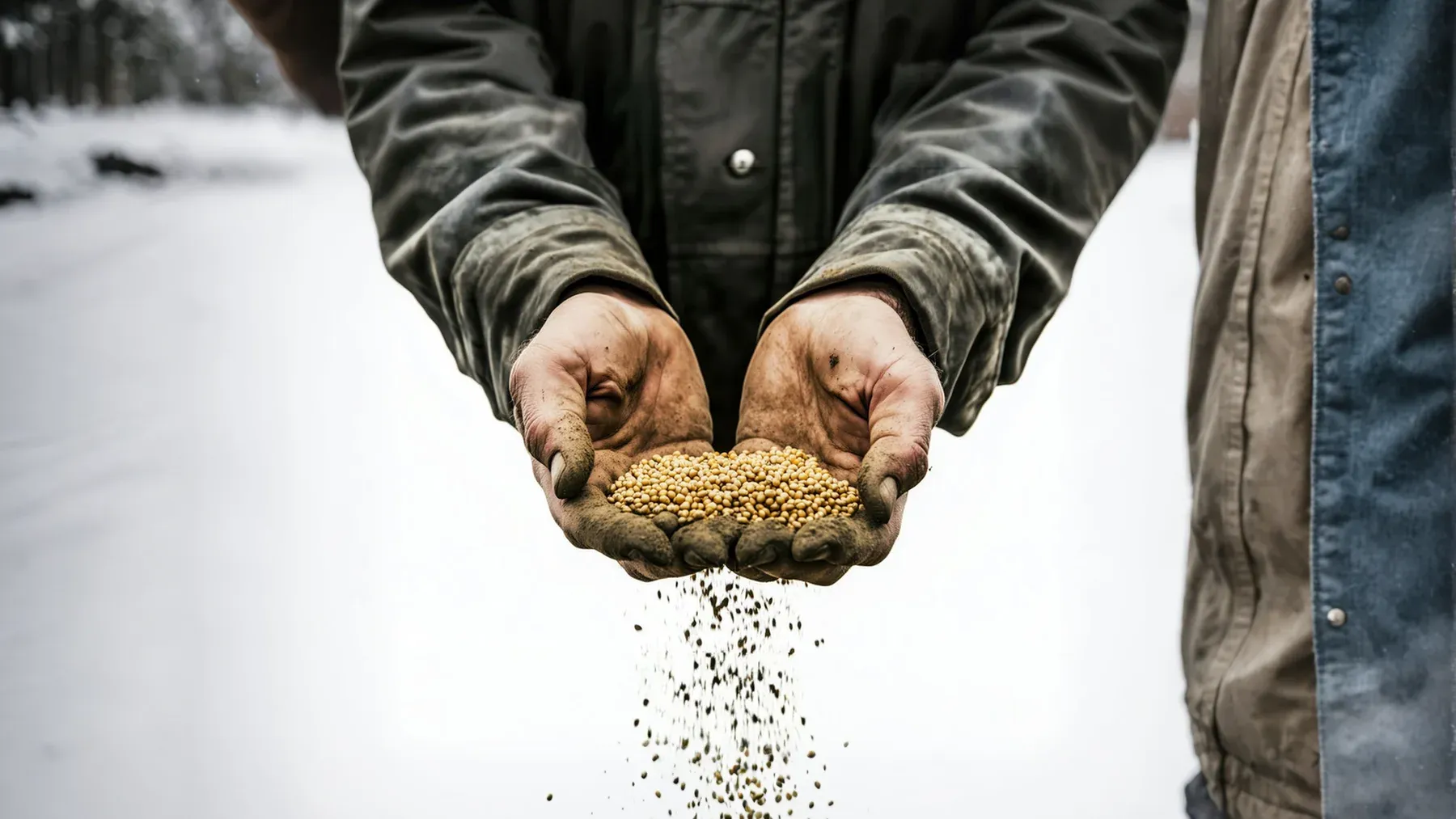
Let Institutions Interpret the Myth
A mythic world feels thin when every person agrees on what its rules mean. Shared ritual can support rival interpretations because characters occupy different positions inside it.
The council says the keeper’s winter confinement is a reciprocal bargain: one person protects the seed so the valley can live. The cooperative says the rite began as shared stewardship and became captivity after the council seized the vault doors. Older farmers remember a winter when two keepers served together. Temple records omit that year. Vault workers treat the sacred rule as a safety protocol because opening warm surface air can ruin stored grain.
Each interpretation should produce behavior. Belief becomes dramatic through permission, refusal, duty, sacrifice, and enforcement.
Give each faction four entries:
- the outcome it wants preserved
- the source, object, office, or memory that authorizes its reading
- the cost it expects somebody else to absorb
- the evidence that could force revision
The inspector’s mother has firsthand memory of ration fraud, cooperative records, and the ability to stop surface distribution. Her evidence is strong, yet her proposed planting strike places landless households at immediate risk. The council possesses law and ceremony but has altered yield figures. The workers know the physical vault and fear a political confrontation that might open it at the wrong temperature.
Avoid writing one faction as the author’s annotation. Let every reading explain a real part of the system and fail somewhere else. That gives the protagonist a world to investigate rather than a lecture to accept.
Turn Exposition Into Contested Knowledge
Retellings can carry a heavy explanatory load. Readers may know one version of the myth, another version, or none. The invented setting adds further rules. Exposition stays readable when information changes control in the present scene.
Before explaining a fact, identify four things:
- Who needs it now?
- Who currently controls it?
- What decision changes after disclosure?
- What remains uncertain?
The inspector does not need a tour of the vault she has trained to enter. She notices the replacement seal on a chamber that should be empty. A worker explains the temperature history because opening it could destroy the evidence. The explanation matters during a choice: break the council seal and risk the seed, or preserve the chamber and lose the chance to prove hoarding.
Use vocabulary according to viewpoint. Council members call the underground term “the keeping.” Workers divide it into intake, cold rest, germination watch, and thaw release. The mother calls it “taking our daughters.” The same structure acquires institutional, technical, and intimate meaning without a narrator pausing to define the theme.
You can also let knowledge travel badly. A ritual phrase becomes a legal clause, then a ration-office instruction, then a warning told to children. Each form leaves something out. The protagonist’s work is partly interpretive: she must learn which omission protects safety, which protects power, and which protects a relationship from a truth it cannot yet hold.
The local Storyworld First warns that exhaustive planning can delay the novel and recommends identifying the worldbuilding areas the current story actually needs. On directly inspected PDF pages 7 and 10, the author distinguishes useful preparation from staying in the invented world forever. A scene-level information test provides that boundary. Research and build the facts required to make the next consequential choice credible.
Make the Climax Spend Both Systems
The climax should require the protagonist to use knowledge of the mythic system and knowledge of the relationship. If either half can be removed while the ending still works, the article’s balance problem remains inside the novel.
Suppose an early thaw warms the outer vault. The council orders the inspector to seal the drought-resistant grain in the colder private chamber. Her mother begins the planting strike, believing public pressure will force the doors open. Vault workers warn that opening every chamber together will create condensation and destroy much of the seed.
A purely technical ending has the inspector fix the ventilation. A purely emotional ending has mother and daughter reconcile while someone else solves distribution. The integrated climax asks the inspector to publish the two ledgers, release seed chamber by chamber, and refuse the council’s exclusive keeper seal. Her mother must end the total strike and organize guarded surface distribution under terms she does not fully control.
Their choices answer different parts of the inherited pattern. Reunion no longer means restoration of the old household. Seasonal return becomes accountable movement between vault and surface. The keeper’s role becomes a rotating technical office with public records and a right of withdrawal. Some seed is lost because the delay and conflict had material consequences.
Test the ending with six questions:
- Which world rule makes the final choice difficult?
- Which earlier skill makes it possible?
- Which relationship history makes its cost personal?
- Which institution can enforce or resist the result?
- Which ordinary person experiences the change afterward?
- Which part of the world remains beyond the protagonist’s control?
Then write a short aftermath in daily terms. Farmers receive smaller but more diverse packets. Former keepers testify. The mother and daughter work in separate rooms during the first public audit. Their reunion has warmth and limits. The changed world can be seen through a new practice rather than explained as a completed theme.

Build the Pressure Map in NovelOS Studio
This kind of retelling needs source research, invented systems, contested interpretations, character knowledge, scene causality, and a visible aftermath. NovelOS Studio gives the novel one connected workspace for all of them.
- Give the inspector, her mother, council members, vault workers, farmers, millers, landless households, and former keepers distinct Oracle records. Capture the protected outcome, accepted version of the rite, available evidence, and overlooked cost for each person.
- Define the seasonal covenant, vault climate, seed classes, seals, ration law, cooperative history, ritual language, food calendar, and disputed records in The Architect.
- Use Connections to map kinship, custody, employment, food dependency, political leverage, testimony, technical trust, and the routes by which seed and information reach the surface.
- Test alternate world engines, protagonist roles, institutional interpretations, chamber failures, and seasonal settlements in Spark before committing them to the draft.
- Arrange ritual, descent, discoveries, message delays, ration changes, strike decisions, warming chambers, releases, and public audit through The Blueprint and Timeline View. On each Scene Card, identify the active rule, the decision it pressures, the resource it changes, and the residue left behind.
- Draft technical work, family conflict, council language, and the integrated climax in Manuscript. Use The Alchemist to compare exposition passes while keeping the original wording available.
- Track seed quantity, chamber temperature, public rations, knowledge by faction, seal custody, relationship boundaries, source functions, scene goals, daily word count, and revision progress with project goals and custom trackers.
- Prepare bookstore EPUBs and print PDFs in Editorial Foundry. For editing and flexible reading, it can also create a self-contained HTML edition, plain TXT, Markdown, RTF, and DOCX.
On Windows and macOS, NovelOS Studio keeps this complete retelling project local. Its lifetime license can be activated across all of an owner’s computers. Build a myth retelling where the world changes because the character finally chooses.
Sources and further reading
- Homeric Hymn to Demeter, lines 398 onward, Perseus Digital Library, on reunion, the divided year, Demeter’s return, restored growth, and the rites taught at Eleusis.
- Thomas W. Allen and E. E. Sikes, commentary on the Homeric Hymn to Demeter, on the sequence connecting separation, Demeter’s withdrawal, famine, negotiation, return, and ritual foundation.
- The Metropolitan Museum of Art, “Mystery Cults in the Greek and Roman World”, on Demeter, Persephone, agricultural cycles, Eleusis, and the rites associated with the hymn.
- Cambridge University Press excerpt, Modern Adaptations of Greek Tragedy, on adaptation and the malleability of myth across acts of reception and retelling.
- Will Dunne, The Dramatic Writer’s Companion, directly inspected PDF pages 238 through 242, printed pages 211 through 215, on entering a storyworld through characters and developing its rules, authority, economics, rituals, values, success, failure, resources, and obstacles.
- Jill Williamson, Storyworld First, directly inspected PDF pages 7 and 10, on limiting preparation to the worldbuilding the book needs and returning to the manuscript.
- Lummi source: golden wheat field
- Lummi source: hands holding seeds
- Lummi source: mother and daughter