A Missing Person Mystery Begins With the Life Left Behind

An empty chair is not evidence that someone is missing. It becomes evidence when the person was expected to occupy it, someone can explain why, and the broken expectation carries a credible risk.
That distinction gives a missing person mystery its first piece of structure. The opening question is rarely “Where are they?” because absence has not yet been established. The first question is “Why does this absence mean something today?”
A late train, a forgotten appointment, and an unanswered message may be ordinary for one character and alarming for another. Before the search can begin, the writer needs a model of the missing person’s normal life: routines, responsibilities, relationships, health, transport, privacy, recent stress, and the people capable of recognizing a meaningful deviation.
Imagine a municipal map conservator who often works after hours and dislikes phone calls. A partner finds bread dough collapsed beside a preheated oven, while the conservator’s bicycle and raincoat are gone. Being late is ordinary. Leaving a hot oven during a careful baking routine is not. The interrupted action establishes recent intention and suggests that departure was sudden or expected to be brief.
It does not prove harm. The mystery remains open because voluntary departure, accident, coercion, deception, and deliberate violence can all fit the earliest facts. The writer’s job is to test those explanations fairly until one accounts for the entire life left behind.
Establish an absence threshold
The absence threshold is the point at which a character has enough deviation plus risk to act. It keeps the first report from feeling like plot convenience.
Build it from four variables:
- Baseline: what the missing person normally does in this situation
- Deviation: which current behavior falls outside that pattern
- Vulnerability: what makes delay dangerous, such as weather, medication, age, threats, injury, or unfamiliar terrain
- Observer knowledge: why this particular person recognizes the deviation
The partner knows that the conservator sometimes ignores messages for hours. That baseline lowers concern. The heating oven and unfinished dough raise it. A recent threat connected to disputed land records raises vulnerability. Knowledge of the baking routine makes the partner a credible observer.
Use specific behavior rather than vague intuition. “Something felt wrong” can accompany evidence, but it cannot replace it. A missed school pickup, an uncollected prescription, livestock left unfed, an accessibility device left behind, or a shop opened but never closed gives the observer a concrete reason to change course.
The threshold should also fit the reporting system in the setting. In the United Kingdom, official guidance states that people do not need to wait twenty-four hours before contacting police. Police response depends on risk and local practice, and the risk level can be reassessed as new information arrives. Other jurisdictions have different procedures, so research the exact place and period used in the novel.
Avoid turning ordinary privacy into suspicious behavior. A separate account, unknown friendship, private medical appointment, or unshared ambition can reveal limits in a relationship without proving a double life. Intimacy produces precise knowledge in some areas and complete ignorance in others. The partner understands bread, sleep, and cycling routes while knowing little about a conflict inside the archive. The distinction between privacy and active concealment is developed further in writing secrets in fiction.
That uneven knowledge makes the missing person a character instead of a clue container. Record what each witness genuinely knows, what they assume, and what they need to believe about the absent person. Their testimony will reveal both the subject and themselves.
Run event time and discovery time separately
Missing person plots usually contain two chronologies.
Event time records what actually happened to the missing person. Discovery time records when the investigator learns each part. Confusing them creates impossible deductions, premature suspicion, and witnesses who know facts before anyone tells them.
Begin with three anchors:
- Last confirmed point: the latest event directly supported by a reliable observation or record
- Last plausible point: a later event that may involve the person but lacks enough confirmation
- Recognition point: the moment someone crosses the absence threshold and begins seeking help
For the conservator, a coworker’s face-to-face conversation at 2:10 p.m. may be confirmed. A transit camera showing the same raincoat at 3:05 is plausible because the face is obscured. A message sent from the conservator’s account at 4:22 proves account access, not physical safety. The partner recognizes the absence at 6:40 after finding the oven.
Grade each timeline entry by source type:
| Source | What it can establish | What it cannot establish alone |
|---|---|---|
| Direct witness | A person resembling the subject was seen under stated conditions | Exact identity when distance, memory, or visibility is poor |
| Device record | A device or account performed an action | Who held it or whether data were delayed |
| Physical trace | An object changed location or condition | Who caused the change without further evidence |
| Routine inference | An action was likely within a time range | An exact timestamp or motive |
| Hearsay | Someone reported another person’s claim | The underlying event until corroborated |
The bread dough can estimate a range only after considering room temperature, recipe, and when the yeast was mixed. The oven may show intended return, accidental forgetfulness, or staging. Good evidence narrows possibilities while retaining its limits.

Record when each fact enters discovery time. Investigators may obtain camera footage on day one and understand its importance on day four. A witness may remember a license plate after seeing a public appeal. A receipt can exist from the opening yet remain undiscovered in a coat pocket.
This separation also controls suspense. Readers can know more than the investigator, less than the investigator, or exactly the same amount. The choice determines whether a section works as mystery or suspense. Keep the knowledge relationship deliberate instead of revealing facts whenever the pace slows.
Test explanations before collecting suspects
A long suspect list can make an investigation look busy while weakening its logic. Start with competing explanations for the absence. Each explanation should predict evidence, identify a search priority, and contain a possible disproof.
For example:
| Explanation | Expected evidence | Immediate action | Evidence against it |
|---|---|---|---|
| Voluntary departure | Preparations, destination contact, money or transport use | Check intended routes and trusted contacts | Essential plans and needs were abandoned without workaround |
| Accident or medical crisis | Route hazard, injury risk, interrupted communication | Search likely paths, hospitals, and emergency contacts | Later verified activity away from the route |
| Coercion or deception | Sudden meeting, unusual contact, staged message, another person’s access | Trace who could summon or impersonate the person | Independent proof of free movement after the contact |
| Deliberate harm | Threat, concealment, cleanup, false account, advantage gained | Protect evidence and examine opportunity | Timeline makes the suspected act impossible |
| Concealed protective action | Prior research, risk to another person, selective secrecy | Identify what or whom they may be protecting | Behavior consistently serves a different goal |
These are working explanations, not genre promises. The investigator updates them as evidence changes.
Suppose the conservator had applied for a residency in another city. Voluntary departure becomes more plausible. The application also predicts planning: travel, housing, communication with the program, and a reason to abandon work without notice. When the director confirms that the conservator planned to decline unless the partner agreed to move, the application remains emotionally important but weakens as an explanation for today’s disappearance.
That is a useful false lead. It changes the partner’s understanding of the relationship, sends the search to a relevant witness, and produces information about the land dispute. Eliminating the hypothesis still advances the novel.
Be precise about access. Who could enter the home, borrow the coat, unlock the bicycle, send from the account, alter archive records, or know the private route? Opportunity should arise from established relationships and systems. Technology creates records and ambiguity; it should not become an unlimited source of miracles.
Search authority matters too. A partner, journalist, volunteer, private investigator, and police officer have different legal access to records, property, interviews, and devices. If a civilian obtains protected information, show the consent, public source, personal connection, deception, or consequence that made it possible.
A lead earns space by changing the search
The investigative unit of story is not “find a clue.” It is:
question, action, finding, interpretation, changed priority
The partner asks why the conservator left during baking. They identify people capable of requesting a short urgent meeting. A delivery driver reports a municipal vehicle outside. Because several departments use the same fleet, the sighting does not identify a culprit. It changes the priority from broad voluntary-departure checks to the conservator’s recent official contacts and vehicle logs.
Every major lead should change at least one of five things:
- risk: how urgently the person may need help
- area: where the next search or interview belongs
- authority: who must become involved to act lawfully
- explanation: which account of the absence grows stronger or weaker
- relationship: what the investigator now understands about the missing person
If a clue changes none of them, it probably exists only to extend the page count.
Vary the labor according to purpose. An interview tests memory and motive. A route reconstruction tests time and physical possibility. Records test access and sequence. A public appeal widens the witness pool while introducing false sightings and privacy costs. A physical search tests a bounded area selected for a reason.
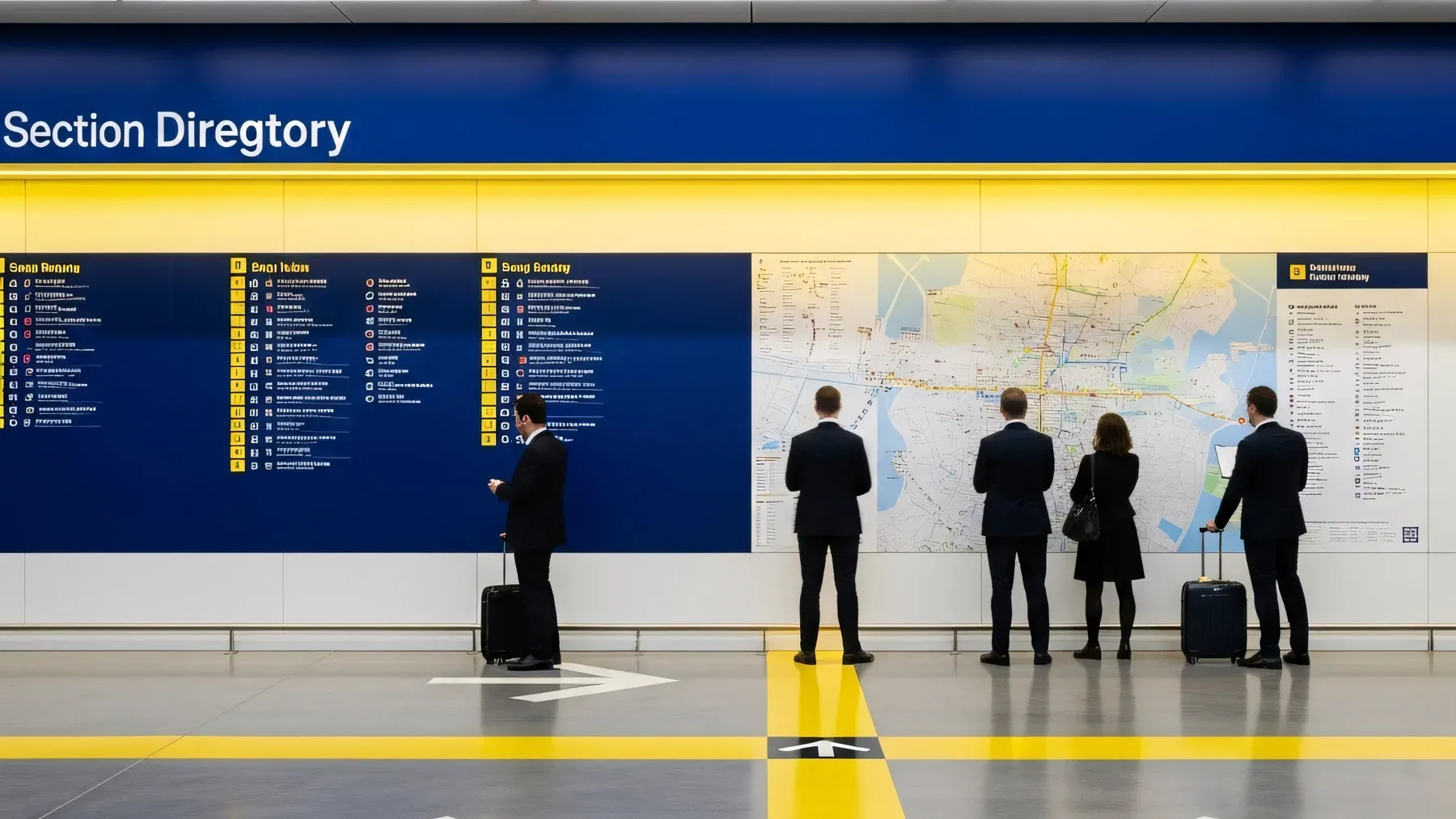
Search geography must behave like an active setting. Divide terrain by travel time, visibility, weather, transport mode, accessibility, and the missing person’s habits. A canal towpath after heavy rain presents different risk from a staffed transit station. Show who coordinates volunteers, how areas are recorded, and how searchers avoid contaminating evidence or creating another emergency.
The official response can change as risk changes. Police.uk lists possible early steps such as searching the home and last-seen area, checking hospitals, examining phones or computers, speaking with neighbors, reviewing CCTV, and using specialist search resources when required. Select only the steps justified by this case. A helicopter or dive team should follow a risk assessment and geographic reason.
Publicity is also a plot decision. Which photograph is released? Which health details are necessary? Could an appeal alert someone controlling the missing person, expose a private identity, or attract fabricated sightings? The person searching may want maximum disclosure while another relative protects information the missing person never shared publicly.
Jane K. Cleland’s Mastering Suspense, Structure & Plot argues that slow revelation works when action-oriented incidents keep changing perception. Apply that principle to the search. Delay the answer through credible work and contradictory meaning, rather than withholding an obvious fact from the viewpoint character.
Let the resolution return agency
A fair solution accounts for both the disappearance and the interrupted life.
If the conservator was lured to inspect an original flood map, the answer must explain the unfinished dough, municipal vehicle, account message, archive dispute, and residency application. It should also explain which facts were unrelated. A life contains details that matter emotionally without causing the crime.
The strongest resolution changes the meaning of the opening object. The conservator expected to leave for ten minutes because the caller claimed a water leak threatened a document. The oven was left on through urgency, professional duty, and a belief that the meeting was safe. What looked like carelessness becomes evidence of a trusted pretext.
Allow the missing person to act during the unseen interval. If alive, they may test an exit, conceal evidence, protect another person, mislead a captor, or leave a trace based on knowledge established earlier. Recovery should not reduce them to cargo waiting for the investigator.
If the person left voluntarily, preserve their right to choose while explaining why others reasonably feared harm. UK guidance notes that when police find an adult, they will not provide that person’s whereabouts without permission. That fact can matter to fiction: being found safe does not automatically restore access, intimacy, or control to the family searching.
If the story ends in death, identification or recovery answers location and cause while leaving grief, responsibility, and institutional consequence open. Avoid treating a body as the final clue that tidies every relationship.
Audit the solution with six questions:
- Does it fit every confirmed timeline point?
- Does it explain the misleading evidence without improbable coincidence?
- Could each involved person perform the actions attributed to them?
- Did earlier leads change the search for valid reasons?
- Does the missing person’s behavior arise from established character?
- What decision remains after the location is known?
The final question keeps the resolution from ending at retrieval. The partner may need to expose municipal corruption, accept that the relationship contained unknown ambitions, or let the conservator decide which private details become public. The search ends, but knowledge has changed the people who conducted it.
Keep the search accountable in NovelOS Studio
A missing person mystery needs exact control over routines, evidence, access, geography, event time, discovery time, and changing relationships. NovelOS Studio keeps those systems connected inside one local-first writing application for Windows and macOS.
Build the investigation with the parts designed for each problem:
- Give the missing person goals, routines, fears, contradictions, skills, private plans, and agency in Cast & World before defining what their absence means.
- Map partners, relatives, coworkers, witnesses, officials, and people with physical or digital access through Connections.
- Store police procedure, jurisdiction, archive rules, transport, hospitals, terrain, institutions, and the land dispute in Architect.
- Compare alternate disappearance explanations and their predicted evidence in Spark Ideation while keeping speculation separate from canon.
- Put the real event sequence and the investigation sequence on Scene Cards in Blueprint.
- Use Timeline View to record observation ranges, device events, reports, searches, interviews, and the later moment when each clue becomes understood.
- Draft the interrupted routine before the theory in Manuscript so readers experience absence through character rather than exposition.
- Review false leads, repeated questioning, and clues that fail to alter action with Alchemist while deciding which suggested changes belong in the book.
- Track drafting and revision progress with Goals and Trackers, then create EPUB, PDF, DOCX, RTF, Markdown, text, HTML, and print-ready editions through Editorial Foundry.
NovelOS Studio stores the project locally and supports .novelos archive export and import for complete-project backup or transfer. The license can be activated on unlimited personal Windows and macOS devices, which keeps the same evidence model available wherever the writer works.
A missing person mystery becomes compelling when the search reconstructs a whole life instead of reducing someone to an answer. Build the two timelines and every changing explanation in NovelOS Studio, then let the person at the center remain capable of changing what the search finally means.
Sources and further reading
- Jane K. Cleland, Mastering Suspense, Structure & Plot: narrative questions, complex characterization, action-led slow revelation, and changes in reader perception.
- Police.uk: What happens after you report a missing person
- College of Policing: Missing persons investigations
- GOV.UK: Report or find a missing person