Food Should Become Evidence in a Culinary Mystery
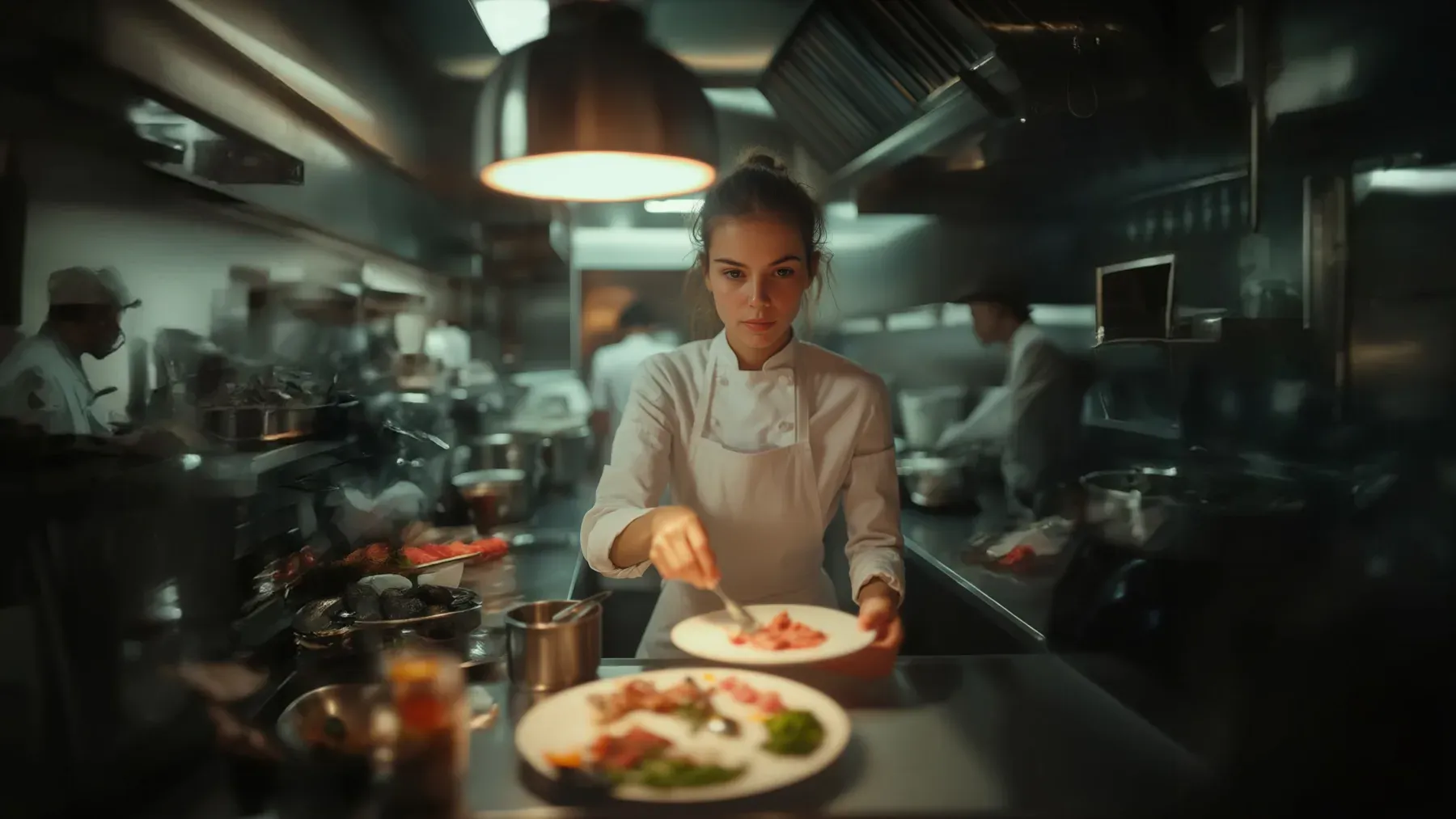
A culinary mystery works when food carries evidence through a process. An ingredient passes through hands, changes under preparation, reaches a diner by a specific route, and leaves records or waste behind. The writer must make that chain understandable enough for readers to investigate.
Design two sequences before drafting: the true food chain and the culprit’s hidden chain. Every fair clue reveals an intersection, challenges a false account, or removes an innocent person’s plausible access.
Suppose a restaurant critic collapses after eating a chef’s signature mushroom broth. The chef immediately sees two anomalies. Her broth is strained until clear, yet this bowl is cloudy. Small dark seeds cling to its rim, although the recipe contains no whole seasoning after straining. Police know the critic once damaged her career with a review about unsafe foraging, so her motive and expertise look stronger than her observation.
The chef cannot identify an unknown toxin by tasting it. She can say what her dish should contain, which step would remove a visible seed, and which workers could alter the bowl. Laboratory analysis and traced movement must establish the rest. Culinary knowledge opens the investigation; it does not replace proof.
Build the Food Chain and Crime Chain Separately
Write the food chain first as if no crime occurs. Follow the dish through receiving, storage, preparation, cooking, holding, plating, service, consumption, and disposal. For each event, record the item, time range, location, handler, container, transformation, and surviving record.
The restaurant receives cultivated mushrooms from a regional supplier before breakfast. A prep cook verifies the lot and stores them in a labeled crate. The chef inspects, roasts, simmers, and strains them. A line cook portions the finished broth for service. The chef reheats and plates one order. A server carries the bowl to the critic. The diner uses the table’s spice mill before taking the first spoonful.
That action belongs to the meal while taking place outside the kitchen. The dangerous material can enter through the mill without every cook losing sight of every ingredient.
Next, build the culprit’s chain:
- A restaurant investor learns that the critic is investigating false local-sourcing claims.
- The investor knows his habit of seasoning every first course at the table.
- During an earlier promotional event, the investor kept an old mill matching the dining-room set.
- Before service, the investor changes the critic’s reservation to a table hidden briefly by a flower display.
- The old mill replaces the current one during that blind interval.
- After the collapse, the correct mill is pushed beneath a service cabinet and later enters the wrong waste crate.
- Public suspicion is directed toward mushrooms and the chef’s foraging history.
First decide the culprit’s objective, means, access, concealment, and desired false explanation. James N. Frey calls this hidden action the “plot behind the plot.” Other characters can then collide with it through their own goals.
Mark the chain intersections: the table change, equipment swap, seasoned broth, displaced mill, and false sourcing records. Evidence should enter the reader’s view at those positions.
The guide to fair-play mystery clues can help decide when each visible fact should appear. Specialized food knowledge remains fair when context lets a careful reader understand its consequence before the solution.
Mark Every Transformation That Changes Evidence
Cooking does more than move ingredients forward. It combines, separates, heats, cools, dissolves, browns, ferments, filters, and discards. Each transformation changes what later evidence can mean.
Create a transformation ledger for the central dish:
| Step | Intended change | Evidence it can remove | Evidence it can create or preserve |
|---|---|---|---|
| Inspection | reject damaged material | loose soil or packaging debris | supplier label, lot identity, visual notes |
| Roasting | develop flavor and reduce moisture | original surface texture | pan residue, timing, aroma, browned edges |
| Simmering | extract flavor into liquid | intact ingredient shape | concentration, vessel use, batch relationship |
| Straining | remove solids | seeds, stems, fragments | cloth residue and a clear final appearance |
| Portioning | divide one batch for service | certainty about which ladle served whom | container count and shared-batch comparison |
| Reheating | return a portion to service temperature | some volatile sensory detail | burner time and handling sequence |
| Table seasoning | alter one diner’s bowl | nothing from the kitchen batch | a unique contact point after service |
This ledger protects the solution from retroactive science. If the seeds could not survive straining, they entered later. If other portions test clear, the original batch becomes less likely. These facts relocate access without identifying the culprit.
Use official process language as a model without claiming that every fictional restaurant falls under one exact rule. The FDA Food Traceability Rule organizes certain supply chains around critical tracking events and key data elements, including receiving, shipping, transformation, and lot codes. For a novelist, the reusable idea is that an ingredient’s identity must remain linked to events that changed its location or form.
The restaurant’s records need local realism. Invoices, prep labels, tickets, staff rotas, payments, waste collection, and cameras each preserve a different slice. Research the jurisdiction before assigning legal duties. A model Food Code is a technical baseline, not proof that every locality adopted identical language.
Research the chosen hazard through qualified health and toxicology sources. Avoid exact harmful preparations or invented certainty about onset. The case needs a plausible clinical window, testable material, and professional responders.

Give Each Worker an Ordinary Path Through the Scene
A restaurant already contains movement, authority, fatigue, noise, and overlapping responsibility. Build suspect access from the work rather than letting every character wander conveniently through the kitchen.
Draw the physical path for each role. The chef moves between pass, stove, cold storage, and office. The line cook remains near the hot station except during restocking. The server crosses the pass, dining room, service cabinet, and payment terminal. The dishwasher handles bus tubs, glass racks, waste, and equipment returned from tables. The investor can enter the office and dining room but requires permission behind the line.
Then give each worker a harmless secret that changes action:
- The line cook substituted a cheaper stock during a shortage and fears dismissal.
- The server leaked tomorrow’s menu to the critic for money.
- The dishwasher broke a current spice mill and concealed the damage.
- The supplier harvested on protected land and altered a delivery address.
- The chef knew the local-sourcing advertisement was exaggerated but postponed confronting the investor.
These secrets are effective because their owners act. The server deletes a message. The dishwasher moves the recovered mill into a glass crate. The supplier refuses to show a location record. The line cook lies about which container clouded the broth. Their behavior obscures the true chain while preserving distinct reasons for doing so.
Frey’s mystery method treats suspects through motive, means, and opportunity and urges them to work against suspicion rather than wait passively for interviews. Adapt that principle to the restaurant. Motive can involve wages, credit, reputation, debt, ownership, family recipes, contracts, or exposure. Means depends on ingredients and equipment. Opportunity follows a shift, delivery, table assignment, key, or ordinary duty.
Workplace pressure should remain visible. OSHA’s restaurant materials identify burns, cuts, slips, strains, and workplace violence among service and cooking hazards. A server may forget a detail while carrying hot plates around a spill. A cook’s taped wrist can limit a task. A high storage shelf can decide who asked for help.
A ticket proves an order was entered, not which bowl arrived. A camera may show a worker entering storage without revealing what they carried. A clocked payment places a server at a terminal without freezing everyone else.
Separate Sensory Observation From Confirmation
A culinary sleuth earns credibility by knowing the limits of expertise. Organize each sensory clue into four stages: observation, hypothesis, discriminating test, and confirmation.
The chef observes cloudiness and dark seeds. She hypothesizes that this bowl changed after straining. She compares it with retained broth and other portions from the same service container. Investigators secure the bowl and mill for laboratory work. Each stage narrows the question without letting aroma become a verdict.
Use sensory knowledge to select a test. A stale-oil smell may direct attention toward a garnish. An unexpected texture can suggest an addition after blending. Uneven surface cooling can indicate a delay between pass and table. None provides an exact time or chemical identity.
Temperature evidence needs ranges because bowl material, portion size, stirring, heat lamps, and measurement delay affect cooling. The chef may show that the critic’s bowl was delayed relative to a neighboring order, but cannot assign an exact duration.
CDC outbreak guidance offers a valuable reasoning model even though this case concerns a deliberate act rather than a multistate outbreak. Investigators combine epidemiologic information, traceback, and food or environmental testing. One stream alone may mislead. A positive sample still needs a consumption link; a negative sample does not prove the entire food was clear; interviews suffer from incomplete memory.
Translate those limits into mystery questions:
- Exposure: Who consumed which components, and who remained well?
- Traceback: Which lots, containers, tools, and handlers converge on the affected bowl?
- Testing: What material appears in the bowl, mill, retained batch, preparation space, and relevant belongings?
The chef knows where samples should differ. Investigators preserve custody, obtain records, interview witnesses, and interpret laboratory results. That collaboration is stronger than an amateur performing every profession.
The article on building an investigation scene from hypotheses and evidence develops this movement from observation through competing explanations and a consequential next action.
Let Records Disagree for a Traceable Reason
Make record discrepancies arise from how each system is used.
The ticket says the broth left the pass at 8:57. A wearable records dining-room entry at 8:58. The camera loses the bowl behind flowers. A later photograph shows the older mill, while waste records place the current one in a glass crate. The systems describe different events, so they can disagree without malfunctioning.
Build a record reconciliation table with source, claimed event, actual event, error mechanism, and person who benefits. The sourcing invoice claims local heritage pepper. A distributor record identifies imported bulk pepper. The investor relabeled the expense to support marketing and satisfy a financing condition. The critic noticed the mismatch and scheduled a private meeting after dinner.
That fraud supplies motive while changing clue interpretation. At first, the pepper discrepancy suggests adulterated seasoning caused the death. Later testing clears the restaurant’s current pepper. The real value of the invoice is its private accounting code and the investor’s access to old promotional equipment.
Allow innocent discrepancies to teach the system. The prep label shows one time because staff batch labels at the end of a task. The camera clock runs forty seconds fast after a power reset. The dishwasher uses the glass crate for any small broken tabletop object. Readers learn to compare records by function rather than treating digital timestamps as omniscient narration.
Food also carries social evidence. The investor markets the chef’s family broth as untouched tradition while changing suppliers for scale. Staff want predictable hours and credit; the supplier wants an honest contract; the critic wants a career-making story. These interests make the meal worth investigating beyond its contents.
If the novel uses a recurring neighborhood, the guide to cozy mystery communities and clue networks can help connect commerce, reputation, care, gossip, and repeated relationships. The procedural chain can support a cozy tone without making the death or labor invisible.
Make the Reconstruction Survive Three Tests
The final reconstruction should answer three separate questions: how the dangerous material reached the diner, why this victim and restaurant were chosen, and what uniquely connects the culprit to the hidden chain.
First prove route. Retained broth and other servings do not contain the material found in the critic’s bowl. The solids would not pass the established straining process. Residue appears inside the substituted table mill. The victim’s habitual use of that mill completes the exposure path.
Then prove selection. Reservation history shows that the investor moved the critic to the obscured table after recognizing the name. Messages and draft notes establish that the critic planned to confront the restaurant about sourcing fraud. The false mushroom narrative exploited the chef’s public history and drew attention toward the kitchen.
Finally prove identity. Photographs connect the substituted mill to an earlier event managed by the investor. A distinctive repair on its collar matches event records and explains knowledge of its heat sensitivity. The critic’s draft invoice bears an accounting code used only in the investor’s private ledger. Properly collected testing supports contact between relevant material and an item under the investor’s control. Each fact needs a documented route into the case.
The chef may stage a controlled service walk-through, but a theatrical reflex cannot stand as the only proof. James Scott Bell argues that an ending must resolve suspense and justify its surprise. His “second doorway” is a major clue or crisis that supplies the final push. Here, the recovered current mill converts a vague kitchen-poisoning theory into a table-equipment case.
After the arrest, repair the restaurant. Staff demand back pay, reliable substitution records, and credit. The supplier wants false marketing removed. The chef corrects the sourcing claims, compensates suppliers, shares authorship of the revised broth, and keeps the fatal dish off the menu until the investigation closes.
The final meal can be a staff supper whose work is visible. Who prepared it, who is paid, whose recipe is named, and which supplier provided the food now matter. Changing the table shows what the investigation taught the community.
Trace the Whole Case in NovelOS Studio
A culinary mystery crosses people, ingredients, equipment, spaces, records, service timing, and competing explanations. NovelOS Studio keeps the dish chain and crime chain connected to the scenes where readers encounter them.
Build the case with the Studio’s full set of story tools:
- Generate alternate dishes, false routes, harmless secrets, business motives, and solution tests with Spark.
- Develop chefs, cooks, servers, dishwashers, suppliers, investors, critics, inspectors, diners, and investigators through The Oracle.
- Store recipes, ingredients, lots, equipment, rooms, suppliers, regulations, sensory properties, and fictional hazard rules in The Architect.
- Map employment, money, recipe ownership, sourcing, rivalry, credit, secrecy, loyalty, and suspicion with Connections.
- Lay out receiving, preparation, service, collapse, interviews, tests, discoveries, and reconstruction in The Blueprint. Timeline View can compare the true food chain, culprit’s actions, ticket times, camera offsets, and each suspect’s account.
- Draft appetizing food and precise investigative action in Manuscript while keeping the relevant evidence records near the scene.
- Track proof obligations, evidence custody, restaurant solvency, staff trust, and the sleuth’s changing theory with custom goals.
- Use The Alchemist to test clearer sensory language beside the original without turning an observation into unsupported certainty.
- Prepare the solved mystery in Editorial Foundry for EPUB or PDF readers, a DOCX or RTF editorial pass, and Markdown, TXT, or self-contained HTML workflows.
The Windows and macOS apps keep the unpublished case file local and under the writer’s control. A complete .novelos archive can move the restaurant, cast, evidence, plan, and manuscript to another computer for import. Your license activates on every computer you own, while Mobile ships on iOS and Android on the same licence, installed from the browser. Build the food chain, suspect movement, proof, and final culinary mystery in NovelOS Studio.
Sources and further reading
- FDA, Food Traceability Rule and Critical Tracking Events
- FDA, Food Code
- CDC, Multistate Foodborne Outbreak Investigation Steps
- OSHA, Young Worker Safety in Restaurants: Cooking
- James N. Frey, How to Write a Damn Good Mystery, especially the chapters on the plot behind the plot, active suspects, motive, means, opportunity, and reconstruction.
- James Scott Bell, Conflict & Suspense, especially PDF pages 91 and 107 on justified surprises, a resolving final conflict, and the clue or crisis that enables the climax.
- Lummi source: focused chef in a professional kitchen
- Lummi source: culinary ingredients display
- Lummi source: intimate restaurant meeting