A Framed Narrative Is a Story Under Pressure
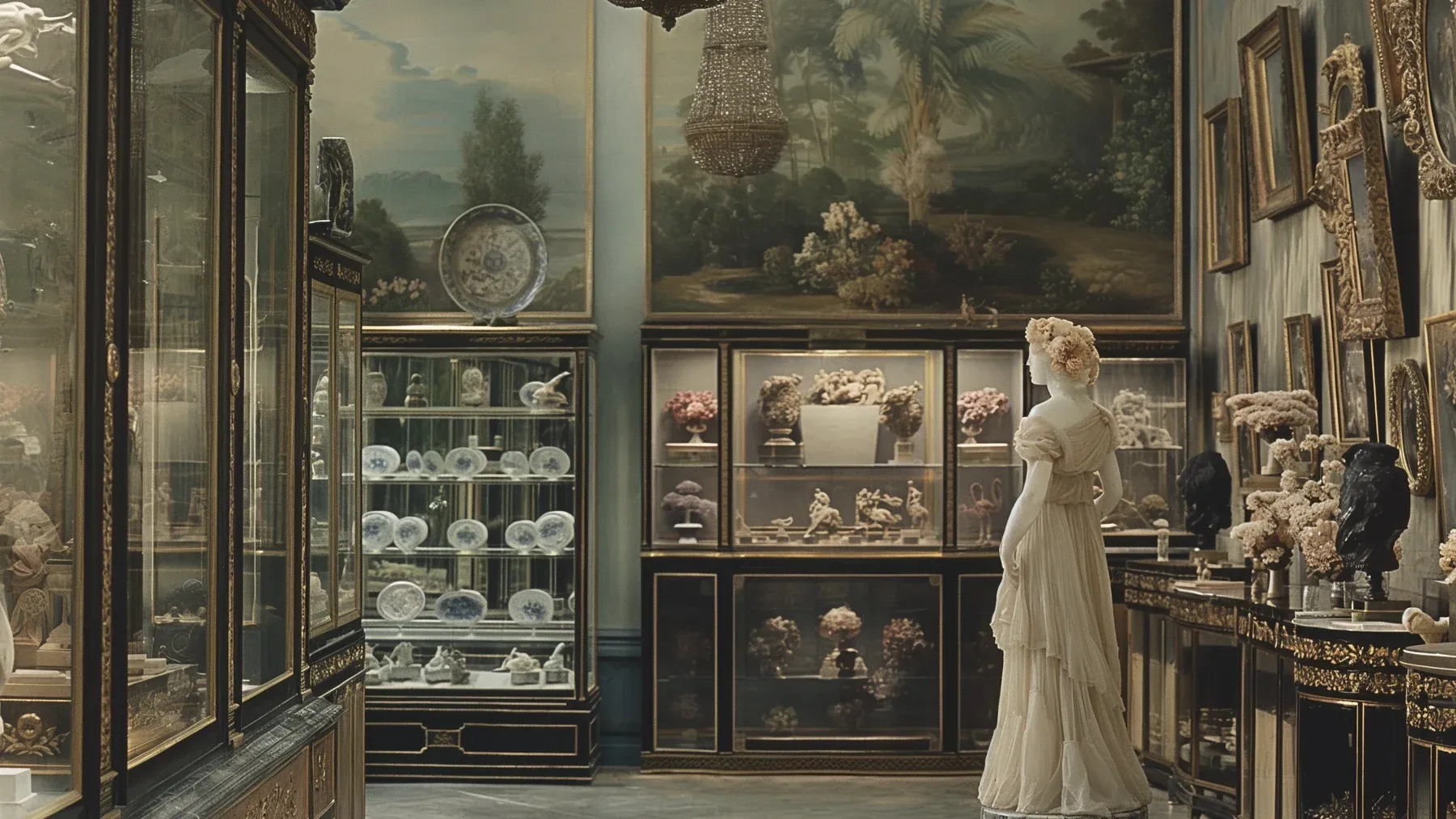
A framed narrative places one story inside an act of telling, reading, recording, translating, performing, or investigating it. The outer layer is the frame. The account it contains is the inner story. The form earns its place when the inner story passes through a person or medium and changes a decision in the frame.
That last condition matters. A retired museum registrar can describe how a sacred mask entered a city collection forty years earlier. The acquisition story may be gripping on its own, yet the frame becomes essential only because the registrar is speaking at a restitution hearing today. A panel must decide whether to return the mask. A community representative can challenge the account. A missing shipping ledger can change who controls the evidence. The past reaches the reader through a contested present action.
This is why a framed narrative differs from a flashback. A flashback dramatizes an earlier event within a character’s current experience. A frame adds a second narrative situation: someone produces an account for someone else. It also differs from a simple retrospective first-person novel. A sentence such as “I understand now what I missed then” establishes hindsight. A visible hearing, letter, interview, bedtime tale, trial record, manuscript, or performance establishes a frame when that act has its own participants and consequences.
Move past the mechanical question, “How do I put a story inside another story?” Ask: What happens to this story because this teller gives this version to this audience now? The answer supplies the frame’s conflict, its selection logic, and its ending.
Test whether the book needs a second act of storytelling
A frame creates extra work for the reader. They must track at least two moments in time, two versions of the narrator when the teller also appears in the past, and two sets of immediate stakes. The structure should create an effect a direct chronology cannot provide.
Begin with a removal test. Summarize the inner story in one paragraph, then delete the hearing, interview, manuscript discovery, or other outer situation. What disappears?
If only an atmospheric opening disappears, the book may need a prologue or a short introductory note. The test for a prologue that earns its place can help with that smaller job. If the deletion removes the source of the account, the reason readers distrust or reinterpret it, the danger of disclosure, or the decision produced by its reception, then the frame is doing structural work.
For the museum novel, removing the hearing would erase several essential pressures. The retired registrar has immunity only for statements made before the panel. The community representative suspects that the official catalog hides an earlier owner. The museum director can stop the proceeding if the testimony wanders beyond the acquisition under review. The registrar’s account is therefore shaped by legal protection, personal guilt, institutional language, and a clock.
Write four sentences before outlining chapters:
- The inner story shows what happened during the acquisition.
- The frame shows why this version is being offered at the restitution hearing.
- The receiver can accept the provenance, challenge it, or force disclosure of another record.
- By the end, hearing the account causes a transfer of authority that a private memory could not cause.
The sentences should name different work. When both layers merely reveal the same past, the outer plot will feel thin. Give the frame a live objective that can succeed or fail before every historical question is answered. The registrar wants the panel to return the mask while protecting the junior conservator who hid the ledger. The community representative wants a complete chain of custody. Their objectives overlap enough to sustain conversation and conflict, yet they demand different disclosures.
A framed novel can contain several inner tales, as The Canterbury Tales and One Thousand and One Nights do, or one dominant account, as many confession and interview structures do. In either form, the outer situation explains why these stories appear together. It also determines who gets to speak, in what order, and at what cost.
Trace narrative custody from event to decision
Writers often track the physical custody of a clue while overlooking the custody of the story that explains it. A useful framed-narrative outline follows six positions:
Event → witness → account → carrier → receiver → response
The event is what occurred in the story world. The witness perceived only part of it. The account is the version that witness can or chooses to produce. The carrier may be a voice, edited transcript, journal, deposition, oral tradition, recording, translation, or damaged archive. The receiver interprets what arrives. The response changes the outer situation.
In the running case, a colonial collector removes the mask after a local custodian refuses a sale. The young registrar witnesses the collector dictate a false “gift” description. Decades later, the registrar gives oral testimony. A legal clerk converts that testimony into the hearing record. The community representative compares it with names preserved in her own archive. The panel pauses the museum’s planned loan and orders the hidden ledger produced.
Each arrow creates a craft question. What could the witness actually perceive? Which detail would the teller suppress from shame? Does the medium preserve hesitation, gesture, marginal notes, or interruptions? Who controls editing? What does the receiver know before the account begins? Which action becomes available afterward?
This chain prevents a common reliability mistake. An unreliable narrator does not need to falsify every event. Reliability can change at each transfer. The registrar may recall the collector’s words accurately and misread the custodian’s silence. The transcript may remove a long pause that revealed fear. The panel may treat institutional paperwork as stronger evidence than oral history. The community representative may recognize that a translated place name identifies the ceremonial owner.
Separate facts from claims while planning. For every important detail, record:
- what happened in the underlying event;
- what the witness noticed then;
- what the teller believes now;
- what enters the account;
- what the receiver concludes;
- what the reader can infer beyond that conclusion.
These layers let the novel create uncertainty without making the inner story disposable. A late revelation can revise meaning while preserving the witnessed action and its emotional consequence. The registrar truly signed the false catalog entry. She falsely believed the custodian had abandoned the claim. The hidden ledger corrects that belief and increases her responsibility rather than cancelling the preceding chapters.
The method also clarifies voice. The past registrar may notice workmanship, storage conditions, and professional hierarchy. Her older self may use cautious institutional phrasing because every sentence enters a public record. The clerk’s transcript may flatten both voices. Control narrative distance separately in the frame and inner story so a change of layer also changes the reader’s relationship to the speaker.

Return to the frame when reception changes
A framed narrative can remain inside the historical account for half the book or return after every short tale. Page count does not determine the correct rhythm. Reception does.
Return to the frame when something the receiver can think, demand, risk, or do has changed. In the hearing, the first return might occur when the registrar describes a red wax seal. The community representative recognizes the seal as a custodial mark, while the museum catalog calls it a merchant stamp. That disagreement changes the next question. The second return might follow the registrar’s admission that she translated the collector’s field notes. The director invokes confidentiality. The frame now has a new obstacle. A later return occurs when the inner account reaches the alleged gift, because the representative can produce a conflicting photograph.
This creates a reception hinge:
inner disclosure → receiver’s interpretation → outer action → altered conditions for the next disclosure
The last term is crucial. An interruption should affect what can be told next. The panel grants protection, narrows the question, calls another witness, orders a recess, or exposes the teller’s personal stake. When everyone resumes in the same position, the return acts as a reminder rather than a scene.
Transitions need orientation, especially when both layers use the same first-person narrator. Give each layer a small set of stable signals. The hearing may use present tense, the scratch of the clerk’s keyboard, and direct questions. The inner account may use past tense, close sensory access, and section headings drawn from catalog numbers. Typography can help, although the prose must remain intelligible in audio and accessible digital formats where visual styling may disappear.
Avoid repeating the complete transition ritual every time. Once the contract is clear, a question can pull the reader out of the past in one line. A physical answer can send them back. The registrar remembers dust rising from the opened crate; in the hearing room, the representative slides a conservation photograph across the table; the image becomes the cracked storage wall the younger registrar had been told never to inspect.
The return pattern should grow in force. Early hinges test context. Middle hinges challenge ownership and motive. Late hinges change control of the telling itself. The receiver may stop being a passive audience and become a co-narrator by supplying missing evidence. The teller may lose the ability to finish the prepared version. An editor may reveal that pages were rearranged. That progression lets the frame develop a plot rather than serving as a bookmark.
If the story is built from letters, reports, recordings, or other artifacts, the five-clock method in the epistolary novel guide can distinguish event, composition, transmission, reception, and revaluation. A frame adds a broader live situation around those documents, so mark which reception events occur on the page and which are merely implied.
Make the inner ending alter the outer choice
The inner story and frame require different climaxes. The inner climax resolves the central action being recounted. The frame climax resolves what happens because the account was received.
In the museum case, the inner climax occurs when the young registrar signs the false provenance and hides the shipping ledger rather than destroying it. That decision completes the acquisition story. The outer climax arrives when the older registrar reveals where the ledger is and the community representative must decide whether to accept a private return, demand a public finding, or expose another person who helped preserve it.
The connection can be tested with a consequence sentence:
Because the receiver has heard and interpreted the inner story, they now choose ___, which changes ___ in the frame.
If the blank can be filled only with “understand differently,” keep working. Changed understanding matters when it changes allegiance, evidence, access, obligation, safety, status, or action. The representative withdraws consent for the museum’s traveling exhibition. The panel recognizes the community archive as evidence. The registrar gives up control of the official account. These outcomes exist in the frame and arise from the telling.
Closure need not answer every factual question. Rasley’s point-of-view craft guide argues that the frame’s central issue needs enough resolution for the overarching narrative to feel complete. That means the novel should close the action it opened. A hearing reaches a ruling or an explicit failure to rule. A confession reaches its intended listener or is intercepted. A storyteller wins another night or loses the audience. A discovered manuscript changes hands, is published, is suppressed, or is recognized as a forgery.
The final return should also measure the distance traveled. Compare the frame’s opening and closing states:
- Who possessed the account?
- Who was authorized to interpret it?
- Which version held institutional power?
- What could the receiver do?
- Who carries the story forward now?
This is a sharper ending test than simply echoing the opening image. The same hearing room can appear at both ends, but the second scene should contain a changed distribution of knowledge and authority. The panel began by asking the registrar to authenticate the museum’s paperwork. It ends by asking the community representative what conditions should govern the mask’s return.
Track that promised transformation alongside the book’s other obligations. The method for story promises and payoffs helps ensure that a conspicuous omission, disputed author, interrupted tale, or unexplained receiver earns an answer with suitable weight.
Build both narrative layers together in NovelOS Studio
A frame becomes difficult to revise when the inner plot lives in one outline, the outer hearings live in scattered notes, and the knowledge chain exists only in the writer’s memory. NovelOS Studio brings the two layers into one project so each crossing point can have a visible job.
NovelOS Studio supports that work across the novel:
- In The Oracle, define the younger registrar, older teller, community representative, panel members, collector, and custodian as people with different objectives, knowledge, vocabulary, and authority. The age-separated versions of the registrar can share identity while retaining distinct pressures.
- Use The Architect to preserve the museum’s acquisition rules, the community’s custodial practices, the hearing procedure, and the history that makes the same record mean different things to each side.
- Map trust, institutional power, authorship, concealment, and inheritance through Connections. This reveals who can validate an account, who benefits from the official version, and who has been denied the right to answer it.
- In The Blueprint, distinguish inner scenes from frame scenes while keeping their causal links visible. Record the disclosure, receiver interpretation, outer response, and changed telling condition on every reception hinge. Timeline View can separate when an event happened from when it was narrated or challenged.
- Explore alternative tellers, media, and receivers in Spark. Reframing the same event as a private confession, public hearing, edited archive, or oral performance quickly shows which version creates the strongest consequence.
- Draft and arrange both layers in The Manuscript. Chapter hierarchy keeps long embedded sections legible, while a complete read reveals whether readers lose the frame or resent its returns.
- Use goals and custom trackers for unresolved custody links, reception hinges, teller knowledge, receiver knowledge, and frame promises. A tracker gives the revision pass a defined target instead of asking whether the structure merely “feels clear.”
- Refine the older and younger voices with The Alchemist while keeping every suggested change under author control. Then move the finished book through Publish for DOCX, EPUB, PDF, or HTML output.
The frame earns its pages when storytelling itself becomes an event. Someone chooses a version, a medium carries it imperfectly, another person interprets it, and the outer world changes in response. Build those connected acts in NovelOS Studio so the story within the story reaches the final page with its source, pressure, and consequence intact.
Sources and further reading
- The Power of Point of View by Alicia Rasley, especially “Writing Inside the Frame” and “Constructing the First-Person Frame Story.”
- The borders of narrative, H. Porter Abbott, The Cambridge Introduction to Narrative.
- Narration, Prose Fiction, Indiana University Pressbooks.
- What is a Frame Story?, Oregon State University Guide to English Literary Terms.
- Narrative Structure in Maupassant: Frames of Desire, Angela S. Moger, PMLA.