A Dream Sequence Must Alter the Waking Story
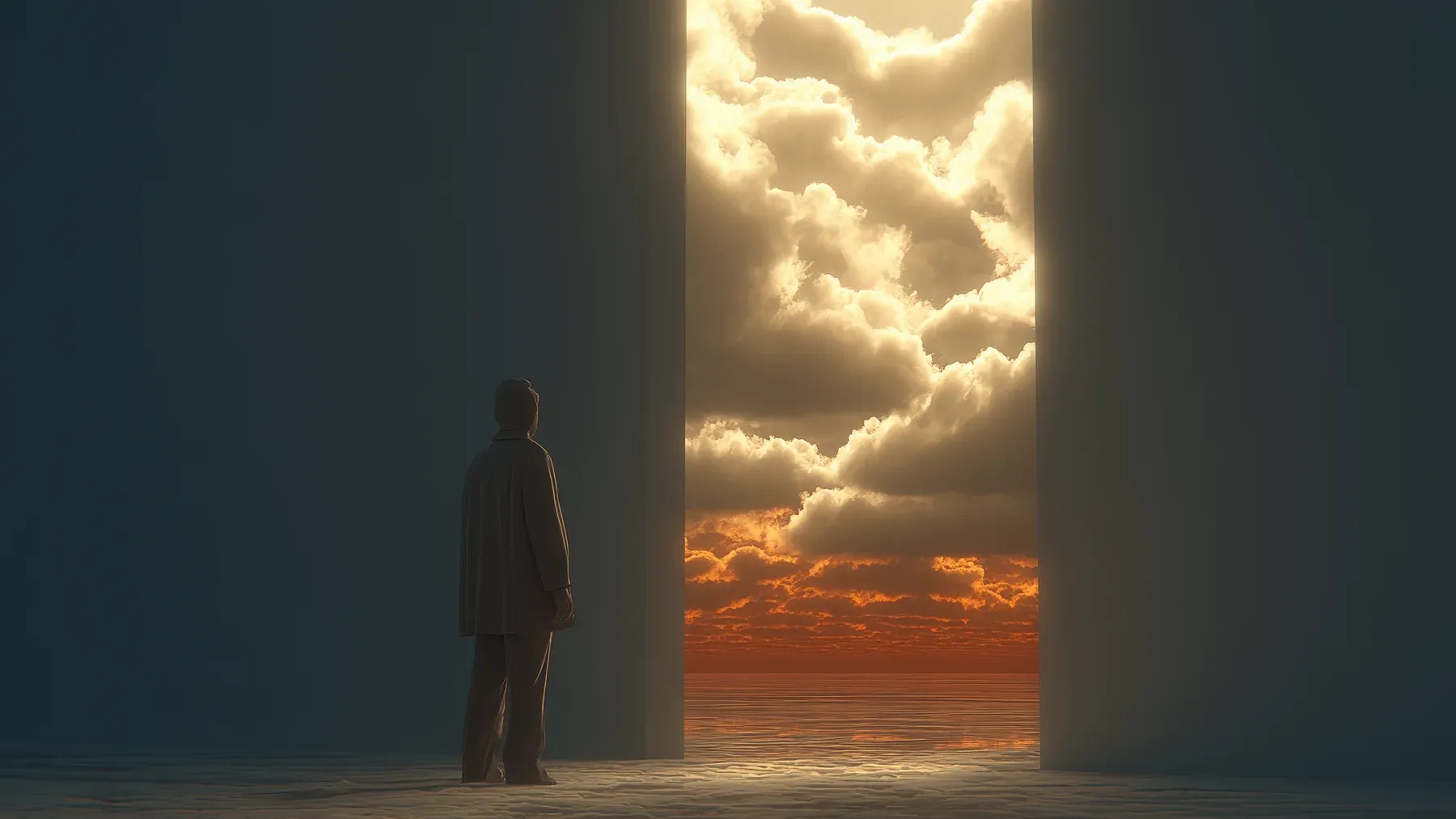
To learn how to write a dream sequence, begin after the character wakes. What will the dream make this person notice, fear, investigate, confess, or choose? If the answer is “nothing,” the sequence offers atmosphere without story movement. A useful dream leaves residue in the waking plot.
That residue does not make the dream prophetic or objectively correct. A dream can connect observations the character has avoided, give shape to a mixed emotion, rehearse a feared choice, or distort a relationship until its hidden pressure becomes visible. The character may interpret it badly. The dramatic requirement is changed attention followed by changed behavior.
Consider an astronomer whose sister disappeared after leaving a police evidence office. The astronomer insists that every relevant detail was reported, yet avoids thinking about a blue-tagged key returned to the desk that night. After seeing a photograph of the office and handling the sister’s old coat, the astronomer dreams of an observatory where every star is a key and every telescope points down into a locked room. Upon waking, the astronomer checks the original statement, notices that it records only “a brass key,” and begins asking who removed the blue tag.
The dream has done something ordinary reflection could not do as forcefully. It placed procedure, guilt, professional imagery, and sibling loss inside one sensory event. Its value lies in the investigation it causes, not in proving who took the sister.
Start With the Waking Pressure
A convincing dream is fed by the novel around it. Recent sights, unfinished conversations, body sensations, memories, and fears supply its raw material. Readers can discover some sources later as long as the sequence feels generated by this character at this moment.
Before drafting, list the last twenty-four hours of waking input:
- the astronomer saw an evidence-room photograph with rows of blue tags
- the mother accused the astronomer of treating the search like a research problem
- the sister’s coat still smelled faintly of cedar and train smoke
- an observatory alarm sounded during a failed calibration
- police said the key had no evidentiary value
- the astronomer avoided opening an old message from the sister
Then state the dream’s primary job in one sentence. In this case: force the astronomer to connect the missing tag with the habit of surrendering uncertainty to authority. The sentence is for the writer. It does not appear in the dream.
A sequence can have one strong job and several secondary effects. It may reveal grief while redirecting attention. It may expose desire while foreshadowing a later choice. Trouble begins when it must explain backstory, predict the climax, introduce supernatural rules, symbolize every relationship, and frighten the reader in three pages. Select the pressure that needs transformation now.
Nancy Kress traces emotion through backstory, motivation, and present desire. Apply that causal chain to the dream. The astronomer’s backstory includes praise for precision and shame about emotional uncertainty. The present desire is to find the sister without admitting a procedural mistake. The dream therefore turns imprecise memory into instruments, labels, coordinates, and repeated failed measurements.
Ask why a waking scene cannot perform the same job. If the character can simply remember the blue tag during breakfast, that may be cleaner. The dream earns its length when simultaneous contradiction matters. The astronomer can return the key and refuse to release it in the same instant. The observatory can be both a safe workplace and the evidence office. The missing sister can accuse, comfort, and remain unreachable without the narrative declaring which response is true.
Use the character’s bias to shape setting before you increase the unreality. The astronomer notices alignment, distance, reflected light, equipment noise, and classification. Another character under the same pressure would dream through different material.
Build a Personal Image Bank Before Writing Symbols
Dream symbolism becomes readable through context, recurrence, and change. A universal dictionary is unnecessary. Water, doors, teeth, birds, and falling can mean almost anything. The novel must establish what an image means to this person and then let the dream alter that relationship.
Create an image bank with four columns:
| Waking element | Personal association | Dream transformation | Possible waking echo |
|---|---|---|---|
| blue evidence tag | detail dismissed by police | stars tied to keys by blue thread | rows of tags in the evidence office |
| telescope | trusted way to find distant truth | points down into a locked room | astronomer turns a photograph upside down |
| sister’s coat | absence held as physical proof | becomes the observatory roof | cedar smell returns near a suspect |
| calibration alarm | professional failure | sounds whenever a key is surrendered | alarm rhythm matches an audio recording |
Choose two or three major images. Develop them through interaction rather than adding a parade of oddities. The blue thread snags on the astronomer’s wrist. Cutting it darkens one star. Following it leads to the sister’s coat stretched over the observatory. Each change modifies the central pursuit.
An image works best at two levels. The key must remain something that opens, identifies, transfers possession, or proves access. Its emotional meaning grows from that physical function. When a symbol performs no literal work, readers can feel the author placing it on display.
The guide to objects as subtext offers a useful test: track who handles the object, who owns it, who refuses it, and what changes when it is absent. Dream physics can exaggerate those transactions. The desk clerk may remove the tag and pin it to the sky. The astronomer may carry the key while every door recedes.
Avoid decoding the dream immediately afterward. The astronomer should not wake and explain that the star-keys represent guilt. Let the first interpretation be concrete: the blue color was missing from the statement. Later events can deepen or contradict the association.
If the dream belongs to a fantasy system, separate personal imagery from magical information. A supernatural messenger may use a symbol the character has never encountered, but the novel must establish why that channel can transmit facts and what makes the message unreliable. Personal association alone cannot provide unknown evidence.
Give the Dream an Objective and One Impossible Rule
Strangeness still needs movement. Give the dreamer something to reach, prevent, recover, or ask. The goal keeps readers oriented while physical logic changes around it.
The astronomer wants to reach the sister at the central telescope before the calibration alarm sounds a seventh time. That objective creates direction and a deadline. The impossible rule is simple: every time the astronomer hands a key to an authority figure, the telescope moves farther away.
One rule is often enough. It can transform spaces and repeat actions while the emotional relation remains stable. Additional impossibilities should grow from it. The corridor lengthens because another key is surrendered. The sister’s voice arrives through the instrument because distance has become the cost of obedience. Random levitation or a talking animal would dilute the sequence unless already present in the character’s image bank.
Build the dream in beats just as you would any scene:
- Orientation: the astronomer recognizes the observatory and sees the sister at the telescope.
- First attempt: a uniformed clerk asks for the key, and surrendering it lengthens the corridor.
- Recognition: the astronomer notices blue thread connecting the key to a star.
- Escalation: every effort to follow procedure removes another star from the sky.
- Choice: the astronomer refuses the final request and cuts the thread.
- Emotional result: darkness arrives, but the locked room beneath the telescope opens.
The dream does not need a conventional victory. It needs a change in the dreamer’s relation to the pressure. Refusing the key does not rescue the sister. It makes the astronomer willing to distrust an official record after waking.
Write concrete sensations. “Everything became surreal” communicates no experience. Blue thread tightens against skin. Metal warms in the palm. The floor tilts with the slow precision of a telescope mount. The sister’s coat brushes the dome like canvas in wind. Precise impossibility gives the reader something to inhabit.
Ursula K. Le Guin describes rhythm as central to prose movement and recommends variety rather than one preferred sentence length. Use rhythm to embody the dream’s transformations. A long sentence can carry the astronomer through several associated spaces without a hard transition. A short sentence can make the alarm interrupt. Repetition can establish a rule, then a changed repetition can signal the turn.
Read the sequence aloud. Dream language may bend syntax, compress time, and repeat sounds, but every sentence still has to lead the reader into the next. Confusion about meaning can be deliberate. Confusion about who is acting or what the character wants usually weakens the scene.

Tell Readers What Kind of Danger They Are Watching
Readers often resist dream sequences because the story appears to promise literal danger and then cancels it with awakening. The issue is the broken contract. A chase, death, or catastrophe presented as waking reality borrows stakes from events that never occurred.
Orient readers early enough that they can invest in the right outcome. The transition into sleep may be visible. An impossible condition may appear in the first paragraph. A recurring motif may already identify dreams. The viewpoint character may partly recognize the state. Explicitly labeling the sequence is also acceptable when clarity serves the novel.
Once oriented, readers can care about honest dream stakes:
- whether the character will face an avoided memory
- which desire or fear controls the sequence
- whether a recurring dream changes
- what emotional cost the character carries into waking
- whether a supernatural contact is understood correctly
- how sleep loss or physical movement affects the body
The astronomer cannot literally rescue the sister through the telescope. The meaningful question is whether the astronomer will keep surrendering the key. Readers know the action is symbolic and can still feel the cost because it dramatizes a waking pattern.
If the character experiences the dream as real, the prose can preserve that immediacy without deceiving the audience. Establish one impossible fact before the danger peaks. The astronomer sees stars beneath the floor before a faceless officer gives chase. Readers recognize the altered state and interpret the pursuit as pressure rather than a fake police attack.
Recurring nightmares need development. Repetition alone may be psychologically plausible, but a novel selects instances for narrative effect. Change one element each time: the door opens, the pursuer speaks, the dreamer reaches a different room, or a familiar object changes owner. The difference should reflect new waking knowledge.
A prophetic dream requires the same fairness as prophecy without spoilers. Define who sends it, what can be perceived, how symbolism distorts the message, and why interpretation remains uncertain. A dead relative cannot deliver reliable plot facts simply because the writer needs a shortcut.
Avoid treating one dream image as a diagnosis. The astronomer’s key dream does not prove a universal psychological truth. Its meaning comes from documented events, established associations, and the action taken afterward. The character may still be wrong about the officer who removed the tag.
Let the Waking Scene Complete the Dream
Awakening is a hinge rather than an eraser. The dream’s final image should affect the first waking perception, and the waking scene should turn that effect into behavior.
The astronomer wakes before dawn with one hand closed around a coat button. A streetlamp draws a blue line across the ceiling. Instead of explaining the dream, the character writes three words: tag, desk, returned. The original police statement comes next. The missing color becomes visible because the dream changed attention.
Build the aftermath through a residue chain:
Dream image -> waking interpretation -> action -> evidence -> revised interpretation
The star-key suggests the blue tag. The astronomer interprets the omission as deliberate, requests the evidence-room log, and learns that the key was returned under a different case number. That evidence supports concern about the record while undermining the first suspicion about a particular officer. The dream started inquiry; it did not solve it.
This distinction protects the novel’s causality. The character may follow an inaccurate interpretation and incur a cost. Calling the mother to accuse police could damage trust. Breaking into the evidence office could expose the investigation. A dream earns dramatic power when acting on it has consequences.
Echo imagery later with restraint. In the evidence room, blue tags hang in rows like a low sky. The astronomer turns a photograph upside down and notices a reflected key. The prose need not announce the connection. Readers remember images through changed context.
Match the payoff to the sequence’s prominence. A half-page anxiety dream can alter mood or reveal avoidance. A recurring multi-page sequence should affect major choices, relationships, or the central mystery. Long symbolic passages create an expectation of later relevance.
During revision, read the waking trigger, dream, and aftermath as one unit. Mark the source of each major image, the character’s objective, the rule, the emotional turn, and the first action after waking. Remove any image that belongs only to the author’s private code.
Then perform the deletion test. Remove the dream and join the surrounding waking scenes. If nothing important changes, compress the sequence or strengthen its residue. If a direct memory produces the same effect with greater force, use the memory. The dream deserves space when its simultaneous contradictions, altered language, or supernatural channel performs unique work.

A dream with several recurrences, objects, memories, and later payoffs can become difficult to track across a long manuscript. NovelOS Studio keeps the altered sequence connected to its waking causes and results:
- Record the astronomer’s backstory, denial, associations, present desire, and changing interpretation in Cast & World.
- Use Connections to link the sister, key, blue tag, coat, evidence office, observatory, police statement, and people who handle each object.
- Store the observatory, evidence room, recurring sensory details, and any supernatural dream rules in The Architect.
- Explore several dream jobs, image combinations, and waking consequences in Spark before committing to a long sequence.
- Arrange the waking trigger, dream, first interpretation, investigation, evidence, and later visual echo as linked Scene Cards in The Blueprint.
- Separate objective events from memory, dreams, and later retellings with Timeline View, then follow draft progress through goals and writing trackers.
- Draft the rhythm, repetition, sensory impossibility, and waking hinge in The Manuscript.
- Test alternate sentence rhythms in The Alchemist while preserving the original and choosing the version that remains clear when read aloud.
A dream sequence belongs in the novel when waking pressure generates its images, an objective carries the reader through altered logic, and the aftermath changes what the character does. Let the dream redirect attention rather than certify truth. NovelOS Studio keeps the character psychology, recurring imagery, chronology, scene consequence, prose, and writing progress together until the final waking payoff reaches the page.
Sources and further reading
- Natasha Stares, “How to Write a Dream Sequence That Isn’t a Cliché”
- Nancy Kress, Characters, Emotion & Viewpoint, especially the chapters on motivation and rendering emotion through action, dialogue, thought, and sensation.
- Ursula K. Le Guin, Steering the Craft, especially “The Sound of Your Writing” and “Sentence Length and Complex Syntax.”