A Discovery Scene Must Create a New Objective
A discovery scene succeeds when new evidence makes the character’s current objective obsolete. The gasp, opened letter, uncovered body, or impossible measurement may create surprise. The scene earns its place through the work that follows: observation changes a hypothesis, the revised hypothesis changes risk, and the risk produces a decision.
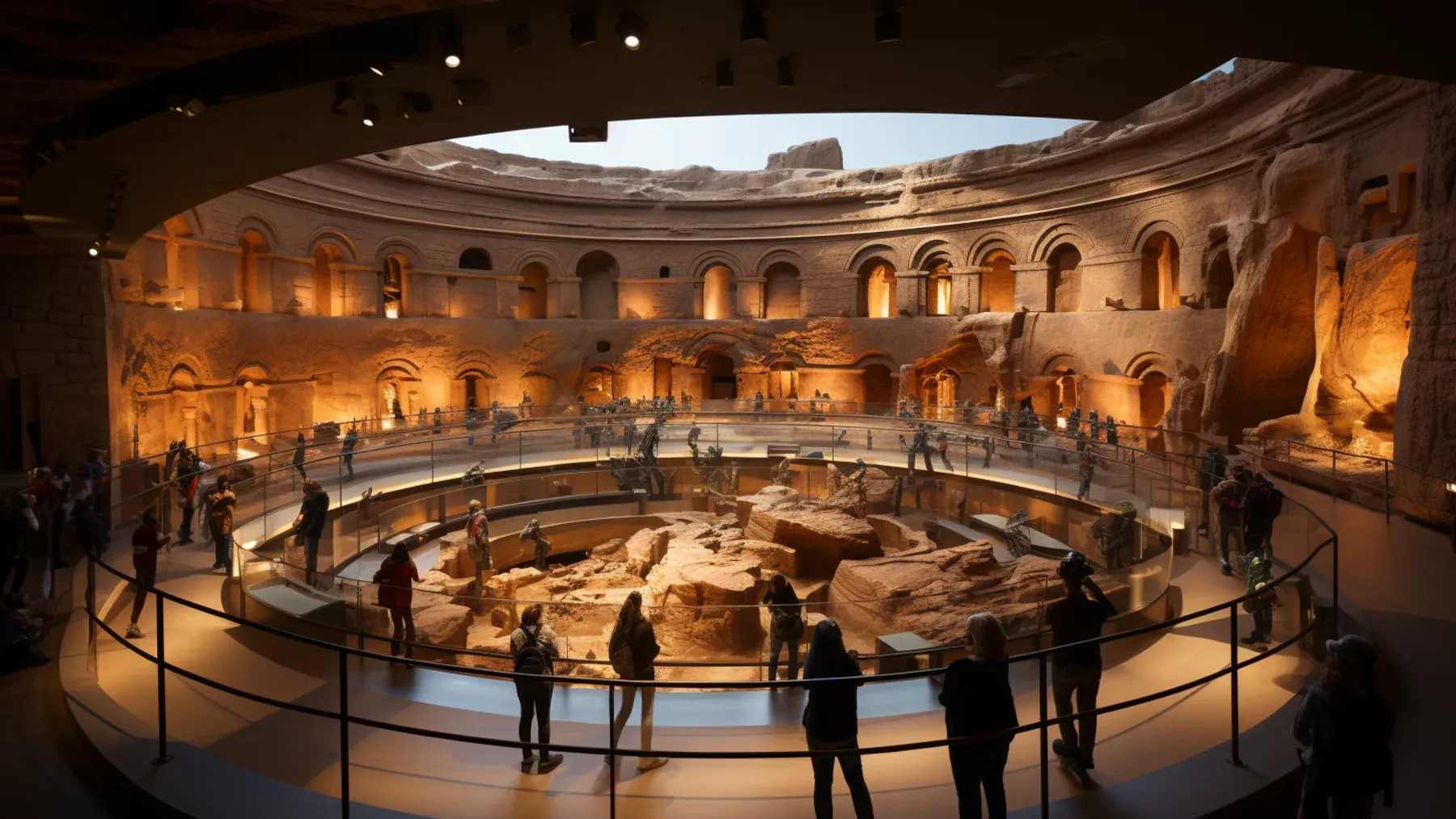
An archaeologist enters a sealed observatory to prove that its astronomers predicted an ancient earthquake. The objective is already active. She knows which records would answer the question and why the answer matters before officials demolish the structure at sunrise.
Inside, she finds a star table whose final column appears to be written in her own hand. The page contains her habitual correction mark and the ink formula she mixed last winter, yet its material belongs to the ancient archive. The evidence answers the question she brought into the room and replaces it with a more dangerous one: How could her unfinished work already exist here?
That replacement is the engine of a discovery scene. The character enters with a model of reality, meets something the model cannot explain, and leaves committed to an action that would have made little sense beforehand.
Give the Scene a Question Before You Give It an Answer
A discovery has dramatic direction only in relation to a prior expectation. Randomly finding an extraordinary object may begin an adventure, but the scene becomes sharper when the character is already trying to establish, recover, prevent, or disprove something.
Write the incoming objective as a verb with a testable result:
- identify who altered the navigation log;
- locate the source of a hospital contamination;
- recover a missing contract before the vote;
- establish whether the observatory recorded the earthquake;
- learn why the messenger abandoned the southern road.
The objective controls attention. An archaeologist seeking astronomical records notices catalog numbers, ink, paper fibers, corrections, and missing folios. A thief searching the same room notices locks, patrol intervals, portable valuables, and exits. Description becomes selective because the viewpoint has a job.
Add a usable hypothesis before the first anomaly. The archaeologist suspects officials suppressed a successful prediction to protect a powerful builder. That belief tells the reader what she expects to find and creates a baseline against which the page can register as surprising. Her desire to clear a mentor also gives the hypothesis emotional weight, which makes her vulnerable to interpreting ambiguous evidence too quickly.
The entry question needs a present consequence. Demolition begins at sunrise. Another tremor has been recorded. The mentor’s hearing starts in two hours. Time pressure limits how much evidence can be gathered and turns verification into a choice among imperfect options.
This preparation does more than make the discovery plausible. Research on narrative interest distinguishes three useful information effects. Curiosity concerns a gap in the past: what happened here? Surprise occurs when new information violates a prediction and forces a mental update. Suspense looks forward: what will happen now that the discovery has changed the possible outcomes? A well-built scene can move through all three. The archaeologist begins curious about the buried forecast, experiences surprise at the handwriting, and ends in suspense over what officials will do if they connect the table to her.
The incoming objective also prevents a reveal from floating outside causality. In Scene & Structure, Jack M. Bickham describes an ending turn as a logical result of the goal and conflict that preceded it. New information becomes a strong reversal when it answers the active scene question in a way that redirects the same story.
Separate the Trace From the Meaning
Writers often compress four different acts into a single sentence: the character sees an object, understands its origin, infers the hidden event, and knows who is responsible. The speed can feel artificial even when the conclusion is correct.
Give the discovery four layers:
| Layer | Question | Observatory example |
|---|---|---|
| Observation | What is physically present? | The final column uses darker ink and a repeated hooked correction mark. |
| Interpretation | What might that feature indicate? | The hand resembles the archaeologist’s field notes. |
| Confidence | How strongly does the evidence support that reading? | The resemblance is strong, while authorship remains unproven. |
| Consequence | What becomes necessary if the reading is true? | Secure the page and investigate the ink’s origin before demolition. |
Put observation on the page before conclusion whenever the viewpoint allows it. Readers can see the hooked mark, the scratched-out numeral, and the future date before the character thinks I wrote this. Participation makes the turn satisfying because the audience performs part of the update.
Concrete traces also expose disagreement. The assistant may accept the age of the paper and dispute the handwriting match. A conservator may identify modern contamination. An official may agree that the page is anomalous while rejecting time travel as an explanation. People can share observations and fight over meaning.
Extraordinary conclusions need boundaries. The archaeologist can establish that the marks resemble hers, that the ink includes her unusual binder, and that the page came from a sealed bundle. She still cannot establish who wrote it or how it entered the archive. Let her language preserve that difference. “This uses my formula” carries more credibility than “My future self sent this through time.”
The distinction also helps with non-mystery discoveries. A lover sees two train tickets; the tickets do not prove an affair. A commander sees an abandoned defensive post; absence does not identify the deserter’s motive. A physician sees an unexpected test result; one result may require confirmation. The dramatic implication can be large while the factual claim remains narrow.
Use the method from foreshadowing a later reveal to plant fair traces, but let each earlier detail perform an ordinary first function. The missing ink vial supplied a workplace inconvenience. The mentor’s warning sounded like professional caution. After the discovery, both acquire a second meaning. Reinterpretation feels stronger when previous scenes were alive before they became clues.

Let the Evidence Resist the First Explanation
Verification creates drama when it consumes time, access, trust, or part of the evidence. A character who instantly scans an object and receives the complete answer has learned information; a character forced to choose a test has entered conflict.
Before writing the test, list at least three live explanations. For the star table:
- The archaeologist somehow writes the column in the future and it reaches the past.
- A contemporary forger copied her hand and formula.
- She learned the correction mark from an older source without remembering it.
- The page is ancient, but the final column was inserted after the chamber was unsealed.
Then ask what each explanation predicts. A recent insertion may disturb thread, dust, or page edges. A copied hand may reproduce obvious letterforms while missing pressure habits. An inherited correction mark may appear in other tables. A modern ink test might distinguish forgery, though sampling it would damage the only page.
This is a craft adaptation of competing-hypothesis reasoning, not a demand that every novel become a forensic manual. Its value is structural. Each test can eliminate one easy answer while opening a harder problem. The plot advances through changed possibilities rather than a stack of clues that all point in the same direction.
Current forensic-science guidance offers useful cautions for evidence-centered fiction. NIST lists contamination, broken custody, mislabeling, unvalidated methods, contextual bias, misinterpretation, and poor documentation among common routes to error. Studies of investigative reasoning likewise warn that an early favored explanation can shape which details people seek and how they evaluate ambiguity. These principles give a writer credible sources of conflict:
- an official tells the conservator what result is expected before examination;
- the finder handles the page before recording its original position;
- a test consumes the sample needed for a later comparison;
- two experts receive different contextual information;
- the person who verifies the result also has a stake in demolition;
- a missing item in the custody log becomes as important as the object itself.
Let competence improve the discovery without granting omniscience. The archaeologist recognizes scripts and material culture. The assistant understands optics. The conservator knows adhesives and fibers. Their specialties create interdependence, disagreement, and reasons to share or conceal evidence.
The strongest verification step often creates a cost. A reagent could establish that the binder matches the archaeologist’s formula while removing one character. Calling the conservator could strengthen the claim and alert the demolition authority. Photographing the page could preserve its appearance and expose metadata showing who entered the chamber. A test should alter the situation even when it fails.
Control the Reveal by Changing the Best Explanation
Reveal order matters because every new detail is interpreted through what came before it. Instead of ranking clues from small to large, arrange them so each one changes the best available explanation.
For example:
- A different hand appears in the final column. The likely explanation is a later ancient editor.
- The hooked correction mark resembles the archaeologist’s. Coincidence or unconscious imitation becomes possible.
- The ink contains her private binder. Contemporary forgery becomes the leading explanation.
- The binding thread passes continuously through the disputed leaf. Simple insertion becomes difficult.
- The final date lies twelve years ahead. The evidence now threatens her future choices.
- One copied number contains a mistake she made yesterday and has shown to only one person. The circle of access suddenly narrows.
The sequence does more than increase magnitude. It repeatedly changes who might be responsible, what kind of story is unfolding, and which action is rational. The reader’s provisional model keeps moving with the character’s.
Avoid hiding nouns that the viewpoint plainly sees. “She opened the folio and found the thing that changed everything” withholds information through authorial coyness. If the character recognizes the item, name it. Uncertainty can remain in provenance, meaning, reliability, motive, or consequence.
Strategic withholding works when viewpoint supplies a reason. A secondary character may conceal the page’s wording while visibly changing plans. A frightened witness may remember only fragments. A protagonist may misclassify an object because their expertise has a blind spot. In each case, the limitation belongs to the story world.
When the fact concerns a concealed person rather than an artifact, the same discipline applies. The guide to giving a secret-identity reveal consequences shows how recognition must alter trust, danger, and available action beyond the exposed name.
Emotional response should also process the exact implication. The archaeologist checks measurements because procedure delays fear. She grips the folio when the assistant reaches toward it. She hears the demolition team above and begins packing before she has consciously admitted that she plans to steal the page. Physical action can carry cognition and emotion together.
Convert Knowledge Into the Next Objective
A discovery can create an interval of shock, thought, and choice. Bickham’s account of sequel structure moves from emotion through thought and decision into action. The duration is flexible. A betrayal may require chapters of reconsideration; an approaching fire may compress the whole process into a glance and a shouted order.
Give the character a real decision rather than a predetermined handoff. After finding the page, the archaeologist could publish it, leave it under official custody, destroy it, hide it, confront the assistant who knew about yesterday’s error, or take it to the mountain array where her ink formula was developed. Each option protects one value and endangers another.
Write a conversion statement during revision:
Before the discovery: prove the ancient astronomers predicted the earthquake and clear the mentor.
After the discovery: preserve the disputed page, identify who had access to yesterday’s calculation, and reach the mountain array before officials connect her to the anomaly.
The difference should be visible in a verb. She locks the ordinary records in the official case, slips the disputed folio beneath her field board, and tells the assistant to prepare the mountain vehicle. An explanation can accompany the choice, but action makes the changed story undeniable.
Let another person resist. The assistant refuses to falsify the inventory. The conservator argues that removing the page destroys the custody record. Their objections reveal consequences the viewpoint wants to ignore and turn knowledge into relationship pressure.
The following scene must inherit a changed condition: missing evidence, a new destination, damaged trust, a suspect who knows they were observed, or a deadline that now means something different. The guide to character choices that cause the next scene applies directly. If the next chapter could proceed unchanged after the discovery, the turn has supplied trivia instead of causality.

Track the Fact, the Inference, and the Decision in NovelOS Studio
A discovery scene draws power from information scattered across the novel: who created an object, who handled it, what the viewpoint recognizes, which earlier details support it, and what later action it causes. NovelOS Studio brings that evidence history and the resulting scenes into one working project.
- Build the discoverer, assistant, conservator, mentor, and officials in The Oracle, including expertise, blind spots, prior hypotheses, and the value each person protects when interpreting the page.
- Record the observatory, mountain array, archive procedure, demolition authority, dating methods, and ink composition in The Architect, so verification follows the world’s actual constraints.
- Use Connections in Cast & World to map creation, custody, access, dependence, and suspicion around the evidence.
- Ask Spark for alternate explanations, tests, costs, or reveal orders, then keep the version that best changes the character’s choices.
- Place the incoming objective, anomaly, observations, competing inferences, verification cost, resistance, decision, and first action on Scene Cards in The Blueprint.
- Align the page’s material history, yesterday’s calculation, chamber access, sunrise demolition, and future date in Blueprint’s Timeline View.
- Draft the moment-to-moment noticing and reaction in The Manuscript, with the causal plan close enough to prevent atmospheric description from swallowing the scene.
- Use The Alchemist to review repeated explanations or premature conclusions while preserving the writer’s control over uncertainty and voice.
- Set drafting and evidence-continuity review targets through Goals and Trackers. When the story is finished, Editorial Foundry prepares ebook and document editions in EPUB, PDF, and DOCX, alongside RTF, Markdown, plain text, and single-file HTML output.
The Windows and macOS application keeps the editable novel on the writer’s computer. A personal key covers the writer’s own machines, while .novelos archive export and import provide a direct route for moving the complete project or keeping a separate backup.
The discovered fact is only the hinge. What matters is the movement from old question to resistant evidence, from evidence to bounded inference, and from inference to a costly verb. Build that complete movement in NovelOS Studio, then make the next scene impossible without it.
Sources and further reading
- Jack M. Bickham, Scene & Structure, Writer’s Digest Books
- Presence, Flow, and Narrative Absorption, Frontiers in Psychology
- What Happened and What Proves You Wrong?, Journal of Police and Criminal Psychology
- Challenges to Reasoning in Forensic Science Decisions, Forensic Science International: Synergy
- A Practical Approach to Mitigating Cognitive Bias Effects in Forensic Casework, Forensic Science International: Synergy
- Examples of Errors in Forensic Science, National Institute of Standards and Technology
- The Big Reveal, Writer’s Digest