Knowledge, Privilege, and Obsession Drive Dark Academia
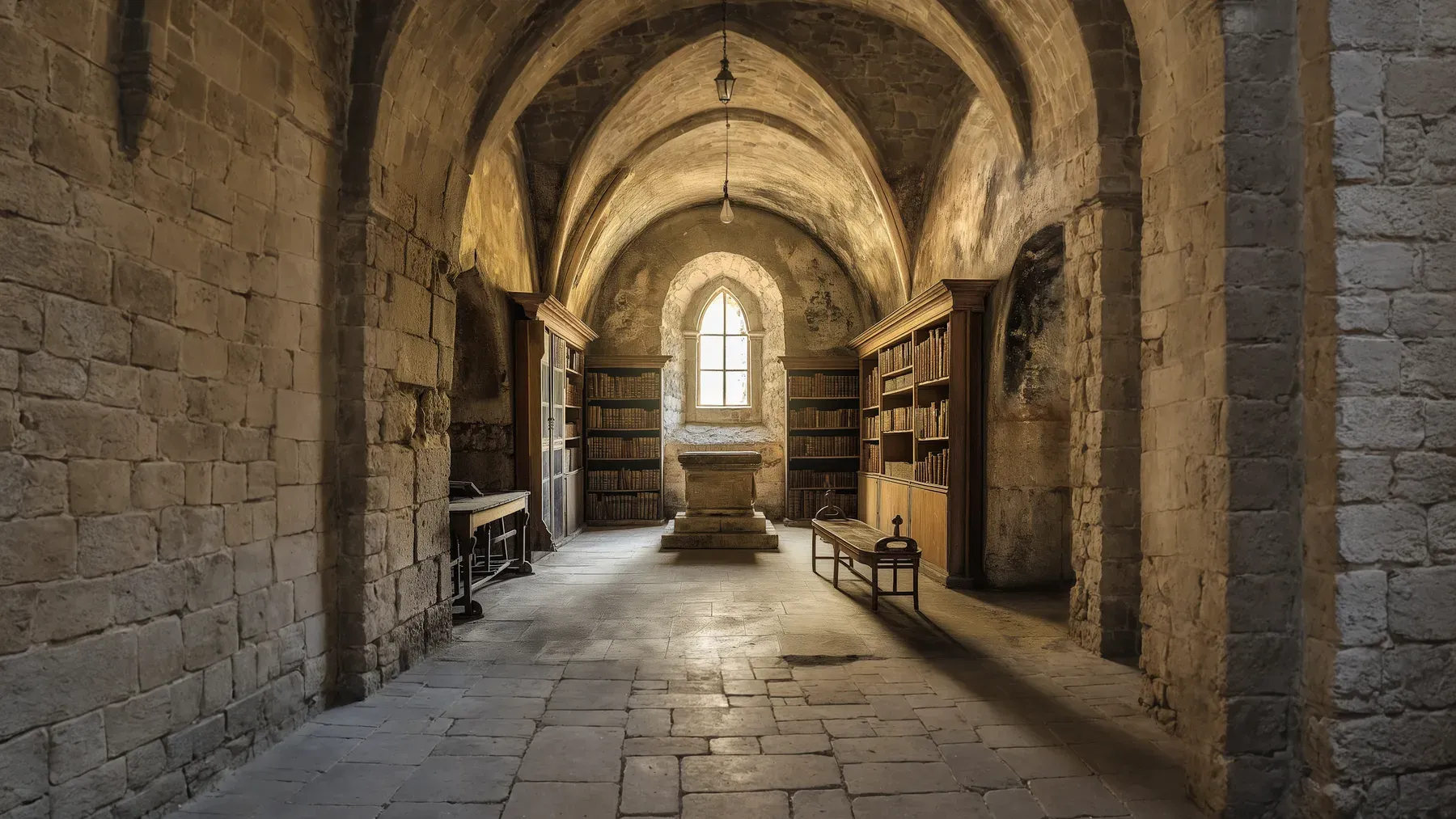
Dark academia is easy to recognize in fragments: a stone library, winter light, handwritten Greek, a brilliant seminar, a coat damp from rain. Those images promise intellectual intensity. A novel needs to ask who receives that promise, who maintains it, and what the pursuit of knowledge permits people to do.
Recent scholarship describes dark academia as both a literary genre and an internet aesthetic. It links the form’s nostalgia to anxieties about higher education, while criticism repeatedly returns to elitism, Eurocentrism, exclusion, and the gap between romantic study and actual academic labor. That history gives writers a more useful foundation than a catalogue of props.
Begin with a field of knowledge that changes a public decision. At an old college, a student translates a language with no living fluent speakers. The department’s work determines whether museum objects are returned and whether families can reclaim land taken after a war. A disputed treaty verb has two defensible readings: surrendered or entrusted for safekeeping. The college favors the first because its largest donor holds the land.
Now the archive feels dangerous because entry affects ownership. A seminar can transfer authority. A citation can silence a claimant. The gothic building still matters, but its beauty has a source and a political use.
Test the premise before decorating the campus
A strong dark academia premise can be stated through four connected sentences:
- The characters desire a form of knowledge.
- An institution controls the recognized route to that knowledge.
- Belonging grants a reward that the characters cannot easily obtain elsewhere.
- The pursuit asks them to accept, conceal, or commit harm.
The translation student wants to understand a fragment annotated by her late mother. The college controls the archive, authentication process, fellowships, and tribunal appointments. Admission gives her time with the manuscripts and a community that treats grammar as consequential. Remaining inside eventually requires her to describe her mother’s alternate reading as methodologically unsound before the evidence has been tested.
If the four sentences do not produce pressure, the story may be campus fiction with dark styling rather than dark academia. That is a valid novel, but the writer should know which engine is present. Murder and secret societies are optional. Intellectual desire, controlled belonging, and compromised judgment are more fundamental.
Let the institution offer something genuinely valuable. The student experiences joy when a damaged suffix preserves the perspective of a scribe dead for centuries. Peers argue over syntax at breakfast. A conservator teaches her to identify a repair made from a different century. The department preserves materials that might otherwise have disappeared.
This pleasure explains attachment. If every professor is fraudulent and every class empty, leaving requires little sacrifice. A persuasive institution creates real knowledge and community while distributing their benefits unequally. Characters can love the work, depend on the college, and still confront what its authority protects.
The magic-school design guide offers a related lesson: curriculum, assessment, and risk become convincing when they grow from the subject. Dark academia applies that principle to intellectual practice and then asks how prestige changes who may practice it.
Make scholarship produce an action
Research scenes stall when characters read until the plot delivers an answer. Give the field a method, a contested standard, and a consequence outside the classroom.
For the translation case, the student must establish the fragment’s age, reconstruct a damaged clause, compare other uses of the verb, identify who commissioned the copy, and explain the degree of uncertainty. Each task generates a different scene. Conservation grants physical access. A seminar tests the reading in public. An interview with descendant families challenges the archive’s categories. The land tribunal converts linguistic judgment into policy.
Write the central argument in its strongest competing forms. The professor argues that surrendered matches later legal copies and that courts need a stable reading. The student argues that those copies removed an evidential marker showing the clause was ritual speech rather than witnessed agreement. Both positions use evidence. The conflict grows when she learns the department accepted an uncertain dating method in a donor-friendly case five years earlier.
The problem is selective rigor. Show the selection rather than asking a villain to announce it. One manuscript is dismissed for uncertain provenance; another receives the benefit of contextual inference. One student’s speculation is adventurous; another student’s becomes proof of poor training. Standards gain dramatic force when readers can see where they move.
Give academic work material consequences at every scale:
- A catalog description determines which community can request an object.
- A fellowship credit determines who can continue studying next term.
- A professor’s citation decides whose interpretation enters the tribunal record.
- A translation choice changes the legal relationship between a college and a valley.
The student should also be wrong in a meaningful way. Her mother’s annotation makes one possibility visible, but grief encourages her to treat it as proof. A descendant historian later identifies a recurring consent formula that neither college translation captures. Scholarship matters because correction matters too.
Audit who can afford access
An institution may advertise equal admission while distributing time, risk, and information unevenly. Convert privilege into a weekly calendar rather than a speech.
The scholarship student catalogs donations for fifteen hours, attends seminars, completes language exercises, and travels home by bus to help a sibling. A wealthy classmate attends the professor’s private dinners, accepts an unpaid excavation placement, and learns about fellowships before they are posted. Both work hard. Only one person’s week contains protected research time.
Audit access through four resources:
- Time: who can study without paid work or family care
- Permission: whose name, credential, reference, or social ease opens a room
- Information: who hears about opportunities and expectations early
- Recovery: who can survive a failed project, public error, or lost grant
Then put those differences into choices. The professor invites the student to a six-week expedition with three days’ notice. Accepting means losing her cataloging income and housing eligibility. Her classmate calls the invitation generous because he can use it. He is perceptive and kind, yet accustomed to opportunities that arrive without a financial trap.
Include the labor supporting the intellectual world. Archivists control handling because objects are fragile. Cleaners know which offices burn lights after midnight. Administrative staff understand how a conduct review moves. Translators outside the college supply expertise while receiving acknowledgments instead of authorship. Descendant communities live with the legal effects of scholarship conducted about them.
Gatekeeping also needs moral variation. An archivist restricts a damaged fragment to prevent further loss. A dean restricts the same fragment to protect a donor. The action looks similar at the door, but its authority, purpose, and remedy differ. Treat every denied request as a question of who sets the rule, what harm it prevents, and who can appeal.

Let the institution defend itself in sequence
An old college can feel omnipotent when the draft treats it as one mind. Real institutional power becomes more credible when different people perform compatible acts for different reasons.
The student finds evidence that the disputed fragment entered the archive during a forced evacuation. No hidden council orders her removal. The collection closes for a conservation review. Her supervisor advises a leave of absence. The scholarship office opens a conduct inquiry over an improperly copied key. A lawyer warns that premature publication could encourage fraudulent land claims. A donor offers to fund her at another university.
Each action has an intelligible justification. Together they remove access, time, credibility, and local allies.
Map the sequence as an authority relay:
discovery → office notified → rule invoked → resource restricted → public explanation → appeal route
For each handoff, record what the person fears losing. The archivist fears damage to irreplaceable material. The supervisor fears the collapse of a life’s scholarship. The scholarship officer fears appearing partial. The lawyer protects the college from liability. The donor protects title to the land. Institutional defense emerges because these interests align temporarily.
The college also chooses a story about the student. It describes her as grieving and too close to her mother’s work. The language sounds compassionate while disqualifying her expertise. The professor offers to publish the provenance finding under his own name so the evidence will appear credible. Care, prestige, and appropriation occupy the same proposal.
Pressure should divide allies. The wealthy classmate wants to leak every scan. The archivist knows publication could expose burial locations to looting. A descendant advocate refuses to let the college decide which risks her community may take. The student must recognize that scholar-versus-college is an incomplete conflict. People beyond the institution have authority over what the documents describe.
If the novel contains an elite circle, the secret-society guide can help build recruitment, compartmentalization, obligations, and exit. Add such a group only when it controls a capability the ordinary institution does not. Robes and midnight meetings cannot substitute for an operating reason.
Make obsession pay before it costs
The student begins sleeping in an archive preparation room. Extra hours give her proximity to her mother’s notes, praise from a professor, and the first social world in which her intensity looks admirable. Obsession solves grief, status, and uncertainty before it damages anything.
Track two ledgers. The reward ledger records discovery, belonging, mastery, recognition, and emotional relief. The cost ledger records sleep, money, relationships, judgment, consent, and physical health. Escalation becomes believable when early rewards arrive quickly and later costs are displaced onto other people.
Her first sacrifice is a family visit. Then she uses the classmate’s seal to request a restricted document without explaining the legal risk. Later, she refuses to share a scan with the descendant historian because she has begun treating the discovery as personal inheritance. Her opposition to institutional ownership slowly reproduces its logic.
Give obsession a changing moral sentence. At first she thinks, The work deserves more time. Later it becomes, Rules written to protect theft have no authority. Near the climax: Only I can prevent them from burying this. Each sentence contains a defensible premise and a widening claim to exceptional permission.
Other characters should want different things from the same knowledge. The professor seeks the definitive grammar before retirement. The archivist wants long-term preservation. The classmate wants achievement independent of his family. The descendant historian wants usable evidence returned under community control. Their shared attention creates intimacy, rivalry, and betrayal without requiring everyone to share one obsession.
The student’s decisive growth is epistemic as well as moral. She organizes a public translation workshop with conservators, rival scholars, legal observers, and descendant experts. No participant controls authentication, translation, risk assessment, and legal interpretation alone. The professor identifies a real flaw in her preferred reading. She succeeds by allowing the work to outgrow her ownership of it.
Make atmosphere reveal a transaction
Dark academia atmosphere becomes substantive when every beautiful object answers three questions: who paid for it, who may use it, and who keeps it functioning?
The reading room’s carved desks came from an estate acquired through the disputed treaty. Donor portraits face the seats reserved for fellows. Soft lamplight flatters vellum but strains the cataloger’s eyes during late shifts. A heated private stack connects to a cold public corridor where visiting researchers wait.
In her active-setting craft guide, Mary Buckham shows how place can carry backstory, class difference, internal conflict, and present danger at once. Apply that method by filtering the same room through different positions. The new student sees permanence. The cleaner sees wax, dust, and an impossible morning schedule. The archivist sees unstable humidity. The descendant historian sees family records displayed as institutional property.
Use repeated places to measure change. Early in the novel, the professor unlocks the inner archive while students gather behind him. At the end, the descendant historian uses one of several jointly held keys. The stone remains beautiful. Its beauty no longer serves as proof that the college deserves sole custody.
Avoid using collapse as glamour. Sleeplessness worsens translation accuracy. Cold damages dexterity. Stimulants produce a temporary sense of command and later confusion. The novel can depict intellectual intensity without presenting physical deterioration as evidence of genius.
The active-setting guide develops techniques for making place alter action, mood, and choice. In dark academia, the additional task is historical accounting. A corridor is atmospheric because it concentrates memory and authority, not simply because rain touches the windows.

Build the institution and the argument in NovelOS Studio
A dark academia novel has to coordinate scholarship, unequal access, institutional procedure, intellectual intimacy, and the history embedded in every room. NovelOS Studio can hold that complete system while the manuscript remains focused on choices.
- Develop students, professors, archivists, administrators, donors, external experts, descendant communities, manuscripts, departments, and customs in Oracle and Cast & World.
- Draw mentorship, patronage, citation, kinship, funding, access, rivalry, complicity, and control of evidence through Connections.
- Test rival translations, research routes, ethical failures, workshop designs, and endings in Spark without flattening uncertainty into one early answer.
- Use Architect to shape the student’s pursuit through intellectual reward, exclusion, boundary crossing, correction, and redistributed authority.
- Arrange the treaty’s creation, manuscript copies, acquisition history, prior scholarship, present discoveries, tribunal dates, and changing interpretations with Blueprint and Timeline View.
- Draft seminars, archive encounters, procedural meetings, and the public workshop in Manuscript. Refine argumentative clarity and atmospheric repetition with Alchemist while keeping every interpretation under author control.
- Measure research, drafting, and revision milestones with Goals and trackers, then prepare reader editions through Editorial Foundry.
The Windows and macOS studio stores its novel projects locally. A .novelos archive lets you export the project from one computer and import it on another, and the license supports unlimited personal devices. Mobile access remains planned for the future. Editorial Foundry can produce a digital EPUB, a print-oriented PDF, editable DOCX or RTF, Markdown, TXT, and a standalone HTML book.
Dark academia earns its darkness when knowledge is precious, belonging changes judgment, and beauty records the concentration of power. Build the institution in NovelOS Studio, then follow the argument far enough to discover who gets to interpret, preserve, and possess its truth.
Sources and further reading
- Joanna T. Kaczmarek, “Dark Academia”, Zagadnienia Rodzajów Literackich: the phenomenon’s development as internet aesthetic and literary convention, historical imagery, elitism, Eurocentrism, and contemporary critical expansion.
- Maria H. Nguyen, “Nostalgia in Dark Academia”, English Studies in Canada: nostalgia, liberal-arts desire, campus anxiety, obsession, elitism, and exclusion.
- “Dark Academia as Internet Genre and as Reading Practice”, Culture as Text: aestheticized scholarship, marketable tropes, academic fulfillment, historical critique, and reading practice.
- Mary Buckham, A Writer’s Guide to Active Setting, PDF pages 128 and 131: setting as backstory, class difference, conflict, emotional meaning, and orientation.
- Designing an original magic school
- Building a functional secret society
- Using active setting to shape conflict