Blackmail Works Only While the Secret Still Has Leverage

A credible blackmail plot needs more than a damaging secret. The blackmailer must make a believable threat, direct it toward an audience whose reaction matters, and demand something the target can provide. The target needs reasons to resist, comply, conceal the coercion, or risk disclosure. Change one condition, and the leverage changes with it.
That change gives blackmail enough movement for a story. A demand repeated for ten chapters becomes an invoice with ominous wording. A working plot is a contested transaction. Both people test what the other knows. Each exchange creates evidence. Compliance may protect the old secret while producing a worse one. Even the audience can change its response as events become public.
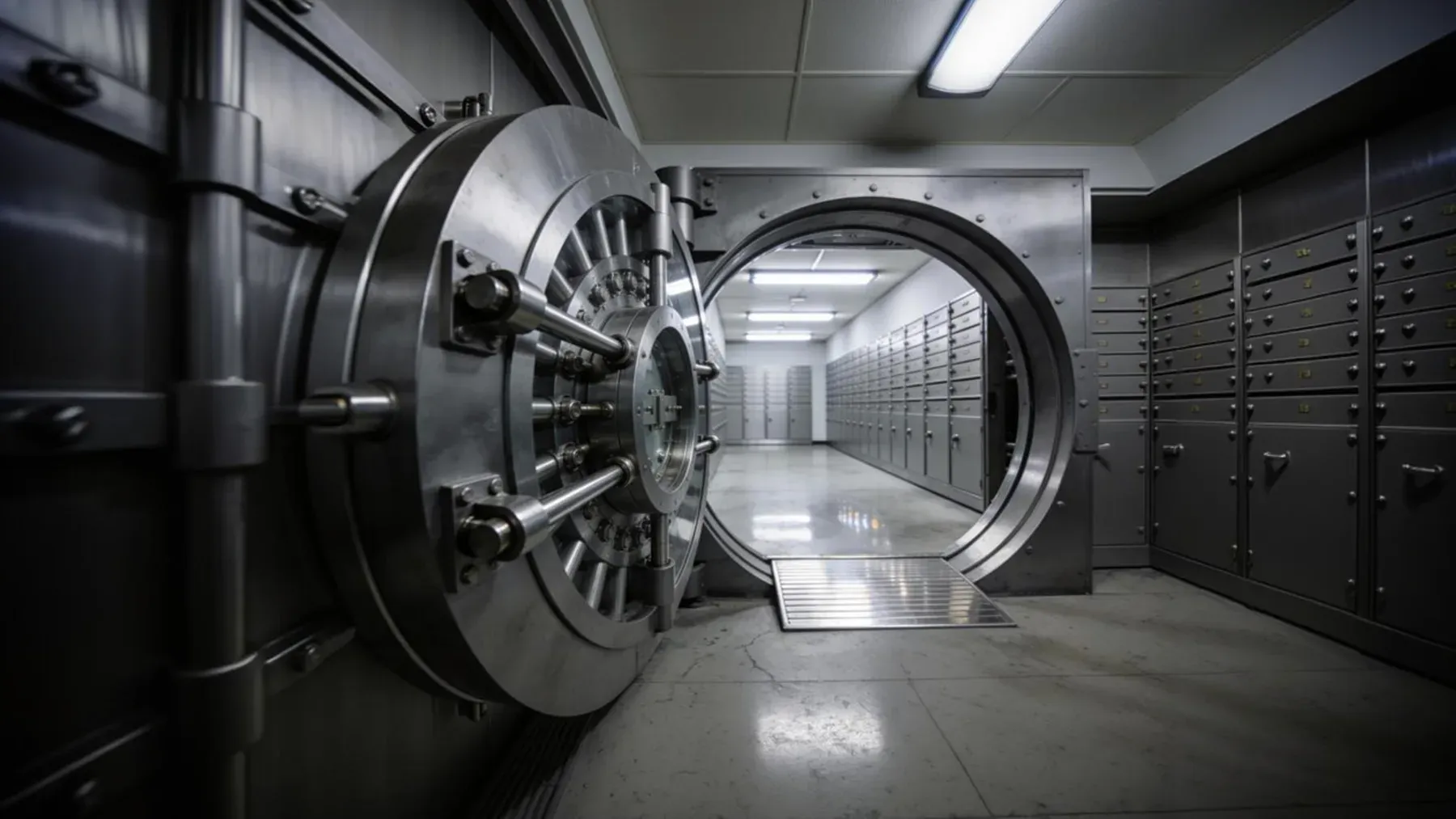
Consider a municipal archivist who backdated a preservation notice by thirty-six hours. The alteration stopped the demolition of an occupied apartment block long enough for its tenants to obtain an injunction. It also violated the archivist’s duty and could invalidate the protection if exposed. One evening, a message arrives with an image of the original scan log: leave the sealed land-record vault unlocked on Thursday, or the file goes to the city ethics office.
The secret is serious, but the plot begins with the choice created by the demand. If the archivist obeys, an unknown person enters a protected collection. If she refuses, she may lose her career and reopen the tenants’ danger. If she confesses, she cannot control which consequence comes first. Every available action carries a different loss.
The threat has to survive five questions
Before plotting the exchanges, test the blackmail premise as if the target were skeptical. What happened? What can the blackmailer prove? Who will receive the information? What will that audience do with it? What does the blackmailer want in return?
These questions belong in one chain because a frightening fact does not automatically create usable leverage. A photograph may prove that the archivist entered the records room after hours, yet say nothing about an altered notice. A scan log may show that a file changed, while leaving the editor’s identity uncertain. A complete audit export with her credentials, workstation, and timestamp is stronger. The distinction between suspicion and proof determines how boldly the blackmailer can speak and how much room the target has to challenge the claim.
The threatened audience matters just as much as the material. The archivist fears at least three audiences: the ethics office can suspend her, a court can revisit the preservation order, and the tenants can feel betrayed by the person who claimed to protect them. Each audience has different knowledge, procedures, and power. Sending the same audit file to all three would produce different consequences at different speeds.
Write the feared consequence as a sequence rather than a label:
If the ethics office receives the audit export, it opens an investigation. The inquiry freezes the altered notice. The property owner asks the court to lift the injunction. Demolition can resume before the tenants establish the building’s safety violations through another route.
Now the reader can understand why exposure feels urgent. The target is protecting a job, a group of residents, and a questionable moral decision, all through the same concealment. If the causal sequence has a weak link, the target should notice it. Perhaps an investigation would take months, the injunction has an independent legal basis, or the audit export can be explained. Either repair the threat or let the target exploit the weakness.
The demand must fit the target’s capacity. An archivist can change access permissions, misfile a box, delay a request, authenticate a copy, or reveal a room’s schedule. Asking her for ten million dollars would make the premise absurd unless the story has established that she controls such money. Asking her to leave a vault unsecured uses access she genuinely possesses and points toward the blackmailer’s hidden objective.
Blackmail law varies by jurisdiction, so a crime novel should research its setting. For story design, the useful distinction is that a threat seeks money, property, access, silence, an official act, or another valuable concession. Cornell’s Legal Information Institute connects blackmail with threats and things of value. Crown Prosecution Service guidance for England and Wales also shows that a demand can sound like a request and the threatened disclosure may itself be lawful. Menace can sit inside a courteous offer.
This is also why the guide to writing secrets that alter present behavior matters here. The blackmailer gains power only because the hidden event already affects what the target values, avoids, and believes about herself.
The first demand should reveal the shape of the trap
The opening demand has two jobs. It must force an immediate decision, and it must give the target something to investigate. If it contains no operational detail, the target has no reason to believe it. If it explains everything, the middle loses its work.
The archivist’s message includes a cropped scan log, the vault number, and a Thursday deadline. Those details prove access to restricted information. They also raise questions. Why Thursday? Why that vault? Why ask for entry instead of a particular deed? Why expose the alteration after entering, when disclosure would invite scrutiny of the breach?

The target should answer pressure with established competence. The archivist checks whether the screenshot uses the current audit interface, compares it with reports available to different departments, and looks for an embedded case number. She also asks who knows that the vault’s lock awaits replacement.
Competence turns passive fear into costly inquiry. Each check can narrow the possible sender while creating a trace the blackmailer may detect. Opening the audit may alert an administrator. Asking security about the lock may reveal that she knows about Thursday. Contacting the tenants’ lawyer spreads the secret before she knows whether the evidence is genuine.
The blackmailer needs comparable reasoning. Why this target? Why this method? Why now? A person who wants one land deed has other possible routes. Blackmail becomes necessary because the archivist’s credential can make the access look routine, because the collection is being transferred on Friday, and because the blackmailer cannot risk a request that creates a public record. Those constraints explain the deadline and limit the antagonist’s choices.
That creates a useful asymmetry. The blackmailer knows which deed matters but may misunderstand why the notice was altered. The archivist knows the archive but does not know the intruder’s real purpose. Neither side owns the whole truth. Their actions produce suspense because readers can see that a wrong inference will change the next move.
Give the target serious alternatives before compliance. She can challenge the image, tell a trusted lawyer a limited truth, or move the relevant boxes for legitimate conservation. A bluff may prompt disclosure. Confiding creates an ally and a witness. Moving the boxes may reveal that she has identified the objective.
This decision process is more persuasive than claiming she has no choice. In Conflict & Suspense, James Scott Bell links a forceful objective with meaningful loss and active opposition. Here, the objective is provisional: identify what the blackmailer wants before Thursday without triggering exposure. The opposition remains dangerous because it can adapt.
Every exchange must alter the balance
The middle of a blackmail story often weakens through repetition. Another message arrives, the amount rises, and the target obeys again. Volume increases while the dramatic situation stays fixed. Escalation requires a change in knowledge, proof, access, alliance, time, or moral liability.
The first exchange might confirm that the blackmailer has only a screenshot. The archivist asks to see the complete export before cooperating. The reply includes one uncropped field available only to the internal investigation team. She has gained information about the source, while losing hope that the image is fabricated.
The second exchange can expose the larger aim. She quietly transfers the requested deed to another storage room. The blackmailer immediately changes the demand from an unlocked vault to her personal access card. That response proves live knowledge of the archive. It also reveals that the physical box matters more than plausible deniability.
The third exchange should make compliance create fresh leverage. If she lends the card, the access system records her credential at a new crime. The blackmailer can threaten to expose the vault entry, while the archivist gains evidence that somebody used her identity.
A simple exchange record helps keep this progression causal:
| After this contact | The target learns | The blackmailer gains | A route closes |
|---|---|---|---|
| The audit image arrives | The old alteration is discoverable | Proof that the archivist reads the channel | Ignoring the threat |
| She asks for verification | The source can access an internal field | Confirmation that exposure frightens her | Dismissing the image as a bluff |
| She moves the deed box | The intruder is monitoring current custody | Evidence that she has begun resisting | Quietly hiding the object |
| The access card is demanded | The goal requires authenticated entry | A path to implicate her in a second offense | Safe compliance |
Deadlines should change the available action. David Heska Wanbli Weiden observes in Poets & Writers that a ticking clock forces action before consequences arrive. Thursday matters because the transfer begins Friday morning. After that, the deed enters a witnessed digital inventory and becomes harder to remove. The blackmailer’s need creates the clock, giving the target something to reason about.
Leave residue after every contact. Messages have timestamps and routing information. A note has paper, phrasing, access, and a delivery location. A spoken threat leaves memory and behavioral change. The FBI’s public guidance tells recipients to preserve messages and exact details, a useful reminder that the threat can become evidence. The blackmailer must manage the risk created by contact.
Scene-level suspense comes from the action the contact demands. A message read in private can be quiet while still changing the entire plot. A conversation can remain polite while both speakers test what the other understands. The article on sustaining tension through changing evidence and choices goes deeper into keeping one unresolved outcome active without repeating the same beat.
The escape must change what disclosure can do
Killing, arresting, or overpowering the blackmailer may end the immediate danger, but it does not automatically solve the leverage. Copies can remain. An accomplice can release them. The relevant audience may already have received the file. A satisfying resolution answers the more difficult question: why can the old threat no longer force the same choice?
The target can change the evidence, the audience, the demanded resource, or her own willingness to absorb the consequence. Those paths produce different endings.
The archivist might disclose the alteration herself, but the story must prepare what she can preserve by doing so. During the middle, she discovers that the injunction also rests on an asbestos report the owner suppressed. She gives the record to the tenants’ lawyer and ethics office before Thursday. Her admission still costs her position and may bring charges, yet the building no longer depends on the backdated notice. The threat loses its most urgent consequence.
The vault plot still needs resolution. The changing demand reveals that the intruder needs her credential attached to the entry. She arranges a witnessed transfer of the deed, preserving custody and making covert access useless. The answer grows from information acquired during the sequence and pays off her archival skill.
The reversal carries damage forward. The tenants may appreciate the result and distrust the method. A colleague who defended her may face scrutiny. The archivist accepts responsibility without receiving immediate restoration. Blackmail forced her to compare the life protected by secrecy with the life created by continued compliance.
That moral movement gives the ending more weight than a clever trap alone. The target begins by believing she must control when other people learn the truth. She ends by surrendering that control in a way that protects evidence, gives the affected people agency, and denies the blackmailer a private monopoly on disclosure. The old secret remains consequential. It simply stops functioning as a command.
An earned reversal answers the earlier clues. Thursday pointed to the records transfer. The credential demand pointed to identity rather than entry alone. The cropped image pointed to an internal source. The same principle behind earned foreshadowing and payoff applies: readers need enough preparation to recognize the solution after it arrives.
Build the whole coercion chain in NovelOS Studio
Blackmail crosses character psychology, institutional rules, evidence, relationships, chronology, and scene consequence. Splitting those elements across unrelated notes makes it easy to forget who can authenticate the proof or why the deadline exists. NovelOS Studio keeps the coercion chain beside the manuscript where it will be tested.
- Define the archivist’s protected values, shame, professional skill, feared audiences, and changing willingness to confess in The Oracle. Give the blackmailer a specific objective, constraint, and stopping point so the antagonist acts like a strategist with something to lose.
- Model the archive, preservation process, audit permissions, court procedure, and custody rules in The Architect. The setting becomes a working institution whose rules create access and resistance.
- Use Connections to map the tenants, property owner, ethics investigator, archive colleagues, lawyer, and anyone capable of verifying or misreading the evidence. This is where the threatened audience becomes concrete.
- Keep alternate secrets, demand forms, proof weaknesses, and reversal ideas on Spark while testing which combination creates the strongest moral pressure without breaking plausibility.
- Plot each contact in The Blueprint with the evidence shown, response attempted, information gained, liability created, and route closed. Timeline View can align Thursday’s deadline with the deed transfer, investigation steps, access logs, and disclosure sequence.
- Draft the quiet confrontations in Manuscript, then use The Alchemist for a controlled prose pass on repetitive threats, overexplained subtext, and exchanges whose language does not reflect the current balance.
- Set a focused audit in Progress and Goals for the full blackmail sequence. Review one contact at a time and confirm that every scene changes the reader’s forecast or the target’s options.
- When the novel is ready, move it through Book Layout and Publish for EPUB, self-contained HTML, PDF, DOCX, RTF, plain-text, and Markdown output.
A convincing blackmail plot is a changing contest over who can make information cause harm. NovelOS Studio gives that contest one connected home, from the first compromised record through the final decision about disclosure. Build the secret, proof, audience, demand, deadline, and moral cost together, and readers can understand why compliance is tempting, resistance is dangerous, and the eventual escape is earned.
Sources and further reading
- James Scott Bell, Elements of Fiction Writing: Conflict & Suspense, rendered PDF pages 71 and 74: objective, professional or psychological loss, and an active opposition force.
- Jane K. Cleland, Mastering Suspense, Structure & Plot, rendered PDF page 86: competing obligations that force a consequential choice.
- Blackmail, Cornell Legal Information Institute: a general U.S. definition connecting threats, demands, and things of value.
- Theft Act Offences: Blackmail, Crown Prosecution Service: demands, menaces, gain or loss, and why apparently lawful disclosure can still be used coercively under England and Wales law.
- Threat Intimidation Guide, Federal Bureau of Investigation: preserving message details and electronic evidence after a threat.
- Cultivate Suspense: Lessons From Thrillers, Poets & Writers: causal escalation, ticking clocks, antagonist motivation, and prepared reversals.