Class Passing Changes Who Is Allowed Into the Room

The infrastructure analyst has enough authority to approve a hotel during an emergency inspection. They still check the room rate before entering the lobby.
The department will reimburse it. Their colleagues assume reimbursement means the cost is irrelevant. The analyst knows the payment may remain on a personal card for six weeks. They choose a cheaper hotel across town, arrive late to the morning briefing, and let the team believe traffic caused the delay.
That small decision reveals more about class passing than a misplaced fork at a formal dinner. The analyst possesses the salary, title, education, and professional vocabulary associated with the group. They lack its financial cushion. Concealing that difference protects their standing and changes how they perform the work.
Class passing in fiction occurs when other people read a character as belonging to a social class or class background different from the one the character understands, claims, or came from. The character may deliberately conceal facts, allow an assumption to stand, learn a valued style, acquire genuine membership, or move between settings where the same cue receives a different interpretation. A strong story therefore needs a class system, an audience, a benefit, a risk, and a material consequence.
Research supports treating class judgment as an interaction rather than a costume code. In five studies, Kraus and colleagues found that U.S. participants inferred social class from brief speech at rates modestly above chance, and that hiring-experienced listeners made different competence, fit, salary, and bonus judgments. The researchers explicitly note that above-chance perception remains far from error-free. Nine experiments by Oh, Shafir, and Todorov found that subtle clothing cues changed competence ratings for the same faces even when participants were told clothing was irrelevant. These findings describe particular experimental settings. They show how observers can convert a cue into an unjustified judgment, not how to diagnose a person’s class.
A qualitative workplace study by Kallschmidt and Eaton adds another dimension. Its twenty participants were White men in the United States who had experienced upward mobility, so its themes cannot represent every class, gender, racial, cultural, or national experience. Within that group, concealment and disclosure happened for different reasons and unevenly across relationships and time. That pattern gives fiction a more useful engine than one secret awaiting one public reveal.
Decide What Class Controls in This Story
Class must control something concrete before passing can produce conflict. Begin with the setting rather than a universal list of elite manners.
Ask what distributes safety, time, authority, education, credit, housing, healthcare, privacy, travel, and influence. The answers may depend on wages, inherited property, debt, occupation, family name, caste, race, citizenship, land, schooling, patronage, religion, region, guild membership, or access to an institution. Their relationship changes by place and period.
For the infrastructure analyst, the decisive institution is a national public-works agency. Recruitment favors graduates from three universities. Promotion requires temporary assignments that assume employees can front travel costs. Senior staff build trust during unpaid weekend activities. Managers describe these practices as evidence of commitment and cultural fit.
Now distinguish four resources:
- Material resources include income, savings, property, transport, insurance, credit, and people able to absorb a sudden cost.
- Institutional credentials include degrees, licenses, titles, school records, and membership that an organization recognizes.
- Social access includes introductions, references, family networks, mentors, and advance knowledge of how a gate operates.
- Cultural fluency includes language, expectations, tastes, timing, self-presentation, and the ease produced by long familiarity.
These categories influence one another without moving together. The analyst has a respected degree and limited savings. A colleague has inherited security and weak technical skill. A contractor lacks the preferred education and knows every unofficial route through the agency. This unevenness prevents the novel from reducing class to rich and poor characters with predictable tastes.
Lauren Rivera’s study of hiring at elite U.S. professional-service firms found that evaluators used shared leisure, experiences, and self-presentation when assessing fit. Its case concerns a narrow labor market, yet it supplies a valuable craft question: which judgments are presented as neutral merit while rewarding familiarity available to a smaller group?
Build one gate where that question affects the plot. The agency director selects a leader for the emergency inspection. The analyst has the strongest engineering record. Another candidate belongs to the director’s sailing club and can afford indefinite travel. The analyst gains the assignment after allowing the director to assume they also grew up sailing. That silence creates access, obligation, and a future test.
Separate What the Character Owns From What They Perform
Class passing becomes shallow when every acquired behavior is treated as counterfeit. People learn. Speech changes with audience and time. Education creates knowledge. New tastes can be sincere. A character can belong to a profession, neighborhood, or friendship while remaining shaped by earlier scarcity.
Create three columns for each important class signal:
| Signal | What is genuinely theirs | What others infer |
|---|---|---|
| technical vocabulary | expertise earned through study and fieldwork | expensive schooling and family guidance |
| careful formal speech | a practiced professional register now used naturally | an affluent childhood |
| reluctance to discuss holidays | privacy about years spent working | regular international travel |
| knowledge of hotel systems | a parent’s maintenance job | frequent luxury stays |
The conflict sits between fact and inference. The analyst does not fake technical competence. They edit the route by which they acquired it. A childhood spent helping a parent repair hotel boilers becomes “early exposure to facilities management.” The phrase is accurate enough to survive and selective enough to mislead.
Speech deserves this precision. Kraus and colleagues found judgments tied to pronunciation, tone, and rhythm beyond written content, but the accuracy in one study was only modestly above chance. A fictional observer should therefore interpret speech through expectation and bias. One manager hears calm authority. A former classmate hears the analyst suppress a regional vowel. A contractor notices that the analyst changes register with maintenance staff and reads it as respect rather than deception.
The code-switching dialogue guide can help distinguish audience-sensitive language from a simple lie. The key question is what each shift accomplishes. Does it create mutual understanding, avoid a stereotype, claim authority, protect a relationship, or distance the speaker from someone whose recognition feels dangerous?
David Corbett’s The Art of Character treats social roles as sources of contradiction and describes a mask as both concealment and protection. That distinction matters here. The analyst’s professional manner protects access in an institution that has already mistaken class familiarity for competence. The same protection becomes harmful when it requires silence while colleagues demean people with the analyst’s background.
Make Concealment Spend Money, Time, Attention, and Trust
A class-passing plot needs an operating cost. Embarrassment alone cannot carry a full novel.
Follow the analyst through one inspection week. They pay the hotel deposit and postpone a utility bill. They decline an informal dinner where the team revises its plan. They spend an hour researching a sailing reference made by the director. They remove a parent’s name from a public biography because the agency’s contractor database would expose the family connection. Each correction protects one assumption while consuming a resource needed elsewhere.
Use a pressure account with four balances:
- Money: What must the character buy, borrow, delay, insure, or pretend is affordable?
- Time: What preparation, travel, research, second job, or recovery does belonging require?
- Attention: Which names, stories, pronunciations, rules, and omissions must remain consistent?
- Trust: Who is denied context needed to understand a decision or consent to its consequences?
The balances should interact. Because the analyst stays across town, they miss the dinner. Because they miss the dinner, a colleague assigns them the least desirable survey zone. That zone contains evidence of falsified maintenance reports. The financial workaround creates the discovery that drives the plot.
Scarcity also changes risk calculation. A colleague can challenge a director because family money makes dismissal survivable. The analyst supports the objection privately and remains quiet in the meeting. Readers can understand the calculation while seeing its cost to the colleague who stood alone.
Avoid arranging every scene as a near exposure. Some concealment succeeds and delivers real benefits. The analyst receives responsibility, develops expertise, and forms lasting friendships. Passing is powerful because it works often enough to become part of ordinary life.
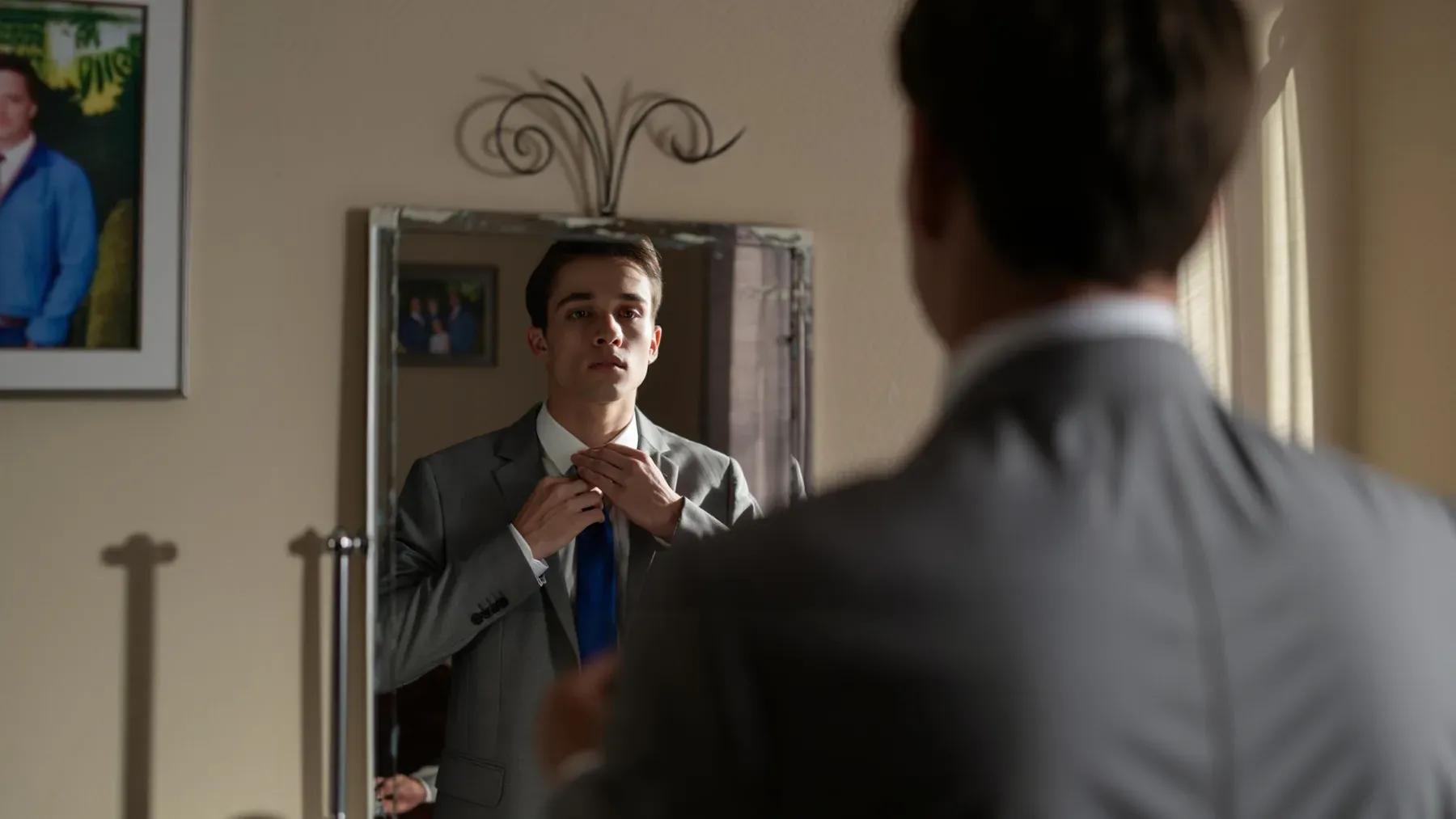
Give Each Observer a Different Class Story
No clue carries a fixed meaning. An observer combines it with prior beliefs, interests, and access to information.
The agency director reads the analyst’s reserve as confidence. A maintenance worker reads it as the caution of someone accustomed to being judged. A wealthy colleague sees refusal of an expensive restaurant and assumes dietary discipline. The analyst’s parent sees unanswered messages and recognizes avoidance.
Map knowledge by relationship instead of labeling the background simply secret or known:
- The director knows the degree, performance record, and invented sailing implication.
- The closest colleague knows about the parent and assumes the family is financially secure.
- The parent knows the money pressure and does not know the analyst concealed their connection.
- A maintenance worker recognizes shared technical habits and has no reason to know the family history.
- A former classmate knows the scholarship years and believes the analyst is entitled to privacy.
This arrangement creates scenes based on incompatible partial truths. The colleague offers to split a large expense, believing the gesture unnecessary. The parent calls the hotel during the inspection. The maintenance worker mentions the analyst’s childhood skill in front of the director. None of these people exists merely to expose the protagonist.
Kallschmidt and Eaton’s limited workplace study found concealment associated with anticipated judgment, pity, privacy, embarrassment, and the sense that others would not understand. Disclosure could occur to connect, help, respond to cues, deepen closeness, or because circumstances forced it. For fiction, give every disclosure a recipient and purpose. Telling a junior employee may offer solidarity. Telling a partner may repair a misleading financial agreement. Telling the director may serve evidence in the public-works investigation. Those are different acts.
Intersection matters because class cues are never perceived in isolation. Race, caste, gender, disability, migration, sexuality, religion, language, and regional identity affect who receives the benefit of ambiguity and who is scrutinized. Research the relevant setting and community rather than transferring the analyst’s workplace pattern into every story.
The article on hidden feelings in fiction offers tools for separating surface action from private interpretation. Here, keep the external consequence visible. The analyst smiles through a sailing story, then signs an inspection schedule that places them far from the archive they need to examine.
Make Disclosure Change Access Rather Than Purify the Character
A public revelation is useful only when it changes what people can do.
The published guide to writing a secret that changes every conversation explains how concealment redistributes knowledge. A class-passing story adds institutional access and material exposure to that relationship pressure.
The inspection uncovers maintenance records altered to protect a politically connected contractor. The analyst’s parent repaired equipment at the site and reported the discrepancy years earlier. That complaint was buried. The analyst can establish the chain because they recognize a shorthand used in the parent’s notebooks, but acknowledging the source reveals a family relationship omitted from the agency’s conflict declaration.
Design the climax as competing responsibilities:
- preserve the formal investigation and risk losing evidence tied to an undeclared relationship
- disclose the relationship, submit the notebooks, and accept review of their own conduct
- protect the parent from public attention while allowing the contractor’s account to stand
- leak the material anonymously, gaining speed while weakening provenance and due process
The analyst chooses disclosure with documentation. The choice does not redeem a supposedly shameful origin. It admits a professional omission, gives investigators usable evidence, and transfers some control to the parent, who decides which personal records may be released.
Consequences remain distributed. The contractor loses immediate access to the project pending review. The analyst is removed from the inspection and keeps employment while an ethics inquiry proceeds. The colleague learns why money shaped earlier decisions and also learns that the analyst allowed false assumptions to affect shared plans. The parent gains recognition for the old report and resents becoming visible on the agency’s terms.
End the class arc with changed practice rather than a return to an untouched authentic self. The analyst creates a travel-advance policy so employees no longer finance agency work, credits maintenance staff in the final report, and corrects one assumption about the family when it matters. They retain formal speech, technical authority, acquired friendships, and tastes formed in the new environment. The future is less dependent on concealment because one gate has changed.

Build the Class System and Its Consequences in NovelOS Studio
Class passing crosses character history, institutional rules, money, dialogue, relationships, documents, and plot timing. NovelOS Studio keeps those elements attached to the novel instead of reducing the arc to a list of costume details.
Use the studio as a class-pressure model:
- The Architect defines property, education, employment, credit, travel reimbursement, professional ethics, neighborhoods, transport, cultural expectations, and the public-works institution.
- Cast & World and The Oracle develop the analyst’s material resources, learned fluency, genuine skills, protected history, present ambition, feared judgments, and decisions under pressure.
- Connections records what the director, colleague, parent, classmate, contractors, and maintenance staff know, assume, provide, withhold, and risk.
- Spark explores alternate gates, mistaken inferences, disclosure recipients, evidence paths, and consequences before the strongest combination enters the manuscript.
- The Blueprint and Timeline View align reimbursement delays, inspection travel, the old complaint, altered records, family contact, missed meetings, disclosure, review, and institutional reform.
- The Manuscript holds the professional register, private calculation, expense decisions, document scenes, and relationship-specific disclosures in close context.
- The Alchemist supports controlled revision where exposition overwhelms action, class signals become stereotyped, or different observers sound too similar, while the original passage stays visible.
- Progress & Goals tracks setting research, sensitivity review, scene drafting, continuity checks, deadlines, word targets, and the larger manuscript’s progress.
- Editorial Foundry prepares the completed novel for ebook and print as EPUB or PDF, for editing as DOCX or RTF, and for lightweight distribution as Markdown, TXT, or a self-contained HTML file.
NovelOS Studio is a local-first desktop application for Windows and macOS. A .novelos export packages the complete project for later import on another supported computer. One license supports the owner’s personal machines without a fixed activation ceiling.
Class passing becomes compelling when social judgment has material power and every act of concealment changes the character’s available future. Build that connected class system in NovelOS Studio, then let access, knowledge, money, and trust determine what belonging costs.
Sources and further reading
- Kraus and colleagues, “Evidence for the Reproduction of Social Class in Brief Speech”, five studies on U.S. speech cues, class inference, and hiring judgments, with accuracy and sample limits reported in the article.
- Oh, Shafir, and Todorov, “Economic Status Cues From Clothes Affect Perceived Competence From Faces”, nine experiments separating faces from subtle clothing-status cues.
- Kallschmidt and Eaton, “Are Lower Social Class Origins Stigmatized at Work?”, a qualitative study of concealment and disclosure among twenty upwardly mobile White men in the United States.
- Rivera, “Hiring as Cultural Matching: The Case of Elite Professional Service Firms”, an interview, observation, and document-based study of hiring within a narrow group of elite U.S. firms.
- David Corbett, The Art of Character, local theory reference library, PDF pages 78 through 81 and 88 through 89 on public identity, secrecy, masks as protection, social roles, and contradictions created by concealment.