Genre and Form
Pastiche
Pastiche deliberately imitates or combines styles from earlier works, periods, or genres, usually as homage rather than ridicule.
Pastiche in a story
It can celebrate a tradition, test its conventions in a new context, or create a layered historical voice.
Original fiction example
A lunar mystery uses the clipped chapters, social observation, and clue etiquette of a 1930s country-house novel.
This example is original to the NovelOS glossary. It illustrates the term without borrowing a passage from a published novel.
Why writers use it
Use pastiche when the borrowed style actively shapes the new story's pleasures and meanings.
A useful revision question: Where does this device change what the reader understands, expects, or feels? If removing it leaves the passage unchanged, it may need a clearer function.
A common mistake
Surface imitation can feel hollow when the writer has not understood the source's deeper structure.
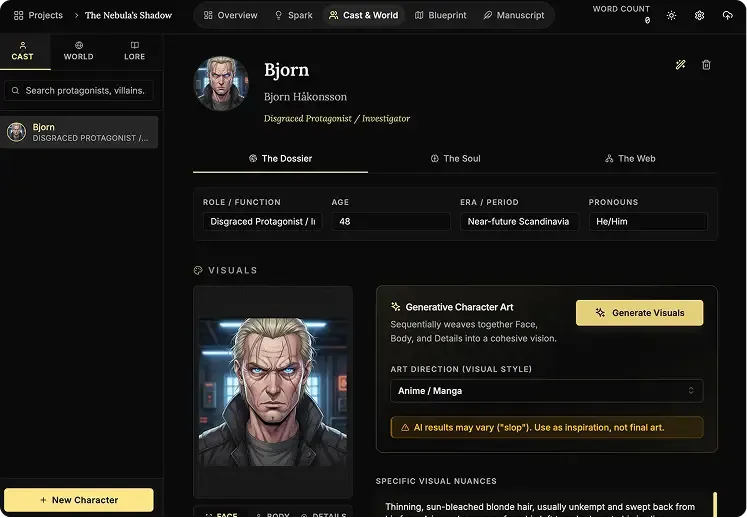
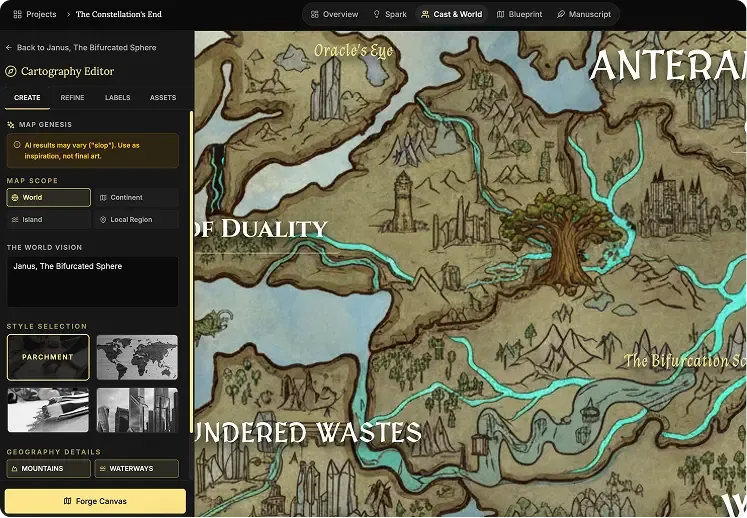
Use pastiche in NovelOS Studio
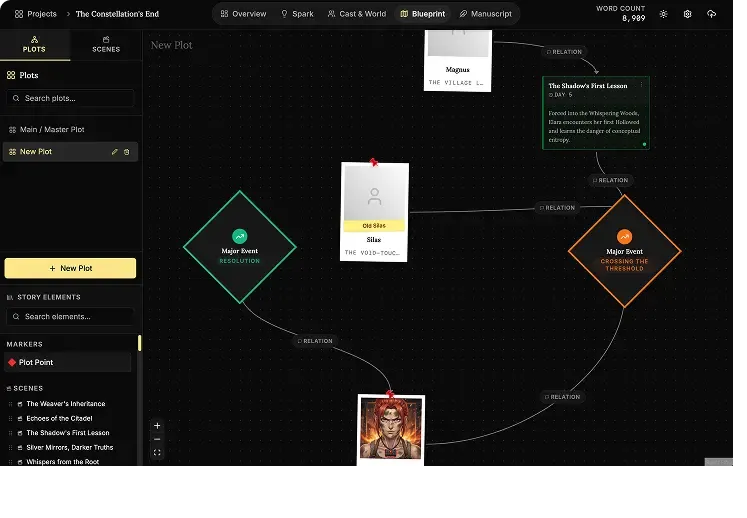
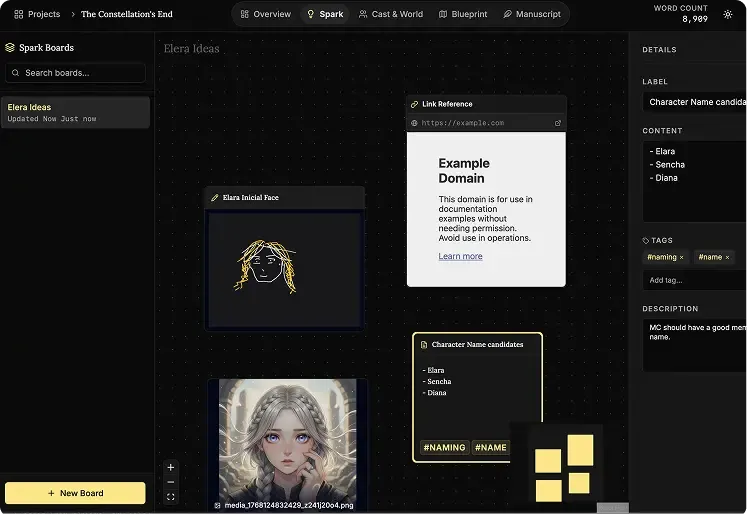
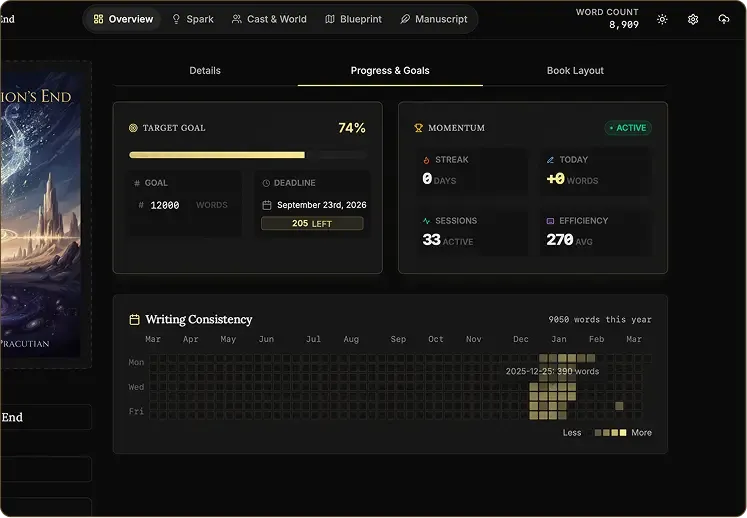
Shape the form through visual planning, connected scenes, plotlines, and arcs. The Blueprint sits inside the same NovelOS Studio project as your characters, world, timeline, manuscript, goals, tracker, revision tools, and publishing exports.
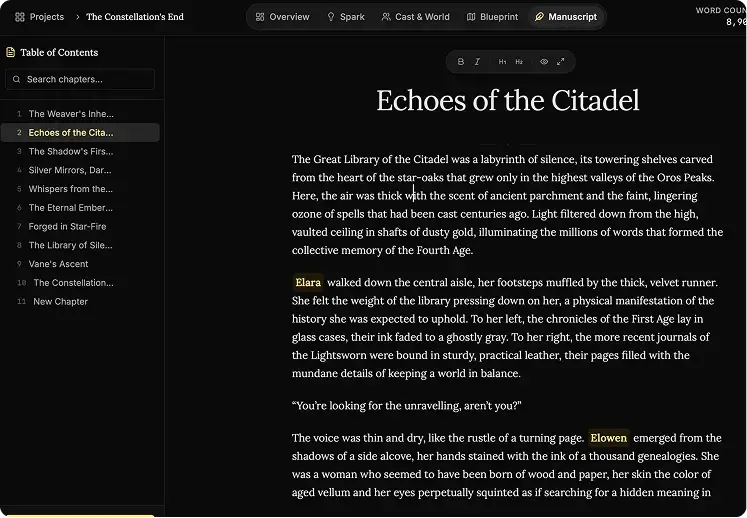
Record the idea where it affects the book, test it in scenes, and revise it beside the surrounding prose. NovelOS Studio keeps the craft decision attached to the novel instead of leaving it in a separate worksheet.