Narrative Technique
Intertextuality
Intertextuality is the network of relationships between a work and other texts, stories, genres, or cultural forms.
Intertextuality in a story
A novel may quote, revise, echo, parody, retell, or argue with earlier material.
Original fiction example
A space-colony novel repeats the structure of a sea-voyage epic while giving the supposed monsters their own archive.
This example is original to the NovelOS glossary. It illustrates the term without borrowing a passage from a published novel.
Why writers use it
Use intertextuality to create dialogue between stories and the assumptions they carry.
A useful revision question: Where does this device change what the reader understands, expects, or feels? If removing it leaves the passage unchanged, it may need a clearer function.
A common mistake
The new work must remain intelligible beyond recognition of the reference.
Use intertextuality in NovelOS Studio
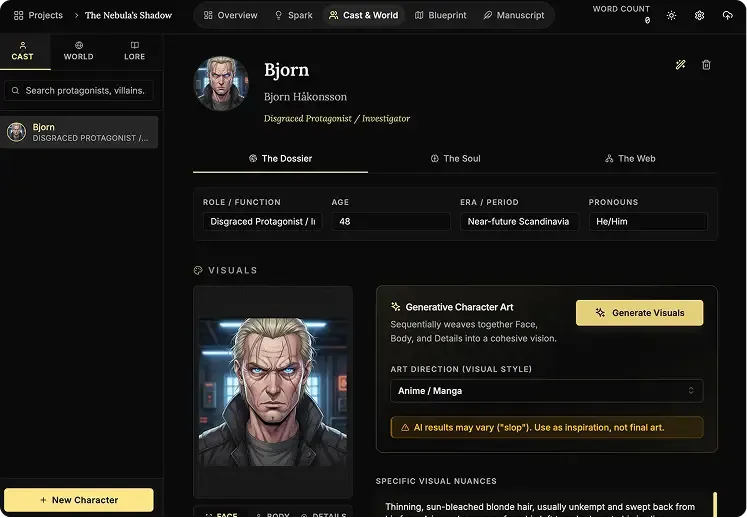
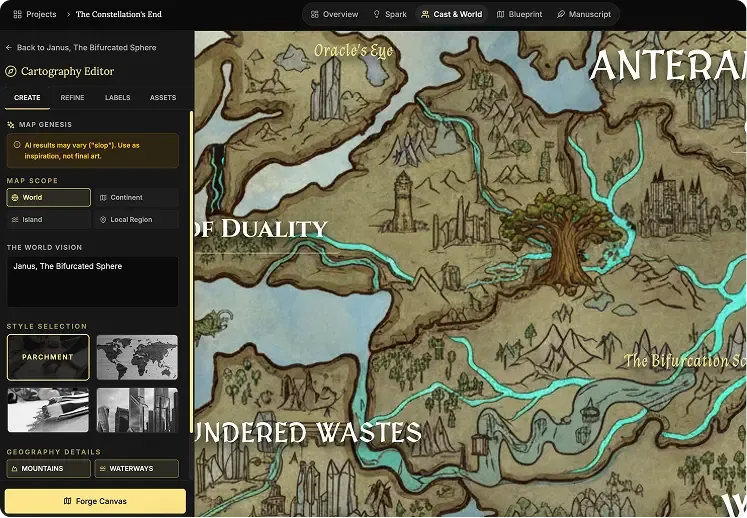
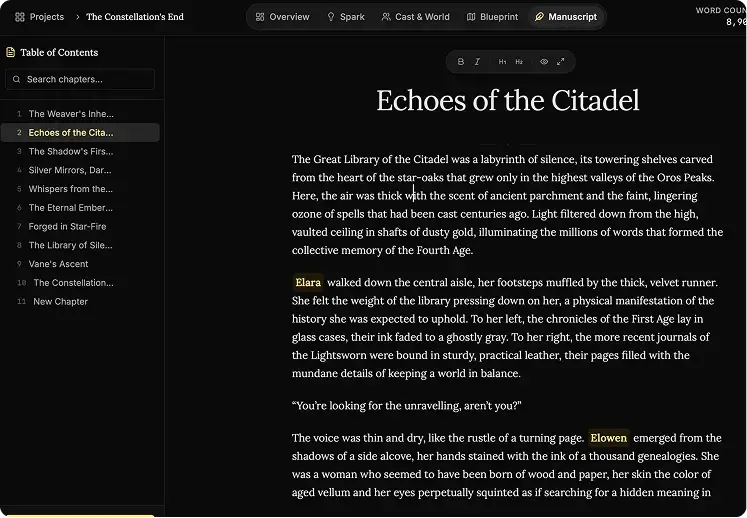
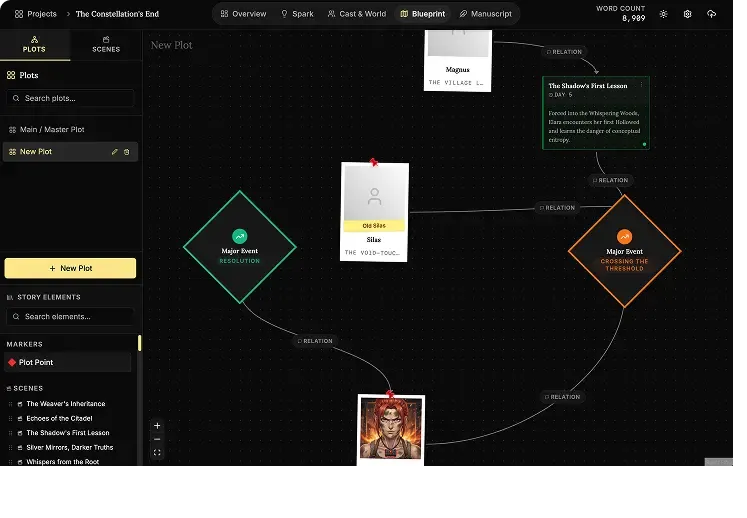
Draft with story knowledge, annotations, entity mentions, and project context nearby. The Manuscript sits inside the same NovelOS Studio project as your characters, world, timeline, manuscript, goals, tracker, revision tools, and publishing exports.
Record the idea where it affects the book, test it in scenes, and revise it beside the surrounding prose. NovelOS Studio keeps the craft decision attached to the novel instead of leaving it in a separate worksheet.