Narrative Technique
Free Indirect Discourse
Free indirect discourse is third-person narration colored by a viewpoint character's language and judgments without a reporting phrase such as she thought.
Free Indirect Discourse in a story
It blends narrator and character while retaining third-person grammar, allowing intimacy and flexibility in narrative distance.
Original fiction example
The committee had delayed again. Naturally, twelve signatures mattered more than a village running out of water.
This example is original to the NovelOS glossary. It illustrates the term without borrowing a passage from a published novel.
Why writers use it
Use it to let character attitude shape narration without filling the page with thought tags.
A useful revision question: Where does this device change what the reader understands, expects, or feels? If removing it leaves the passage unchanged, it may need a clearer function.
A common mistake
Unsignaled shifts between several characters' idioms can confuse viewpoint.
Use free indirect discourse in NovelOS Studio
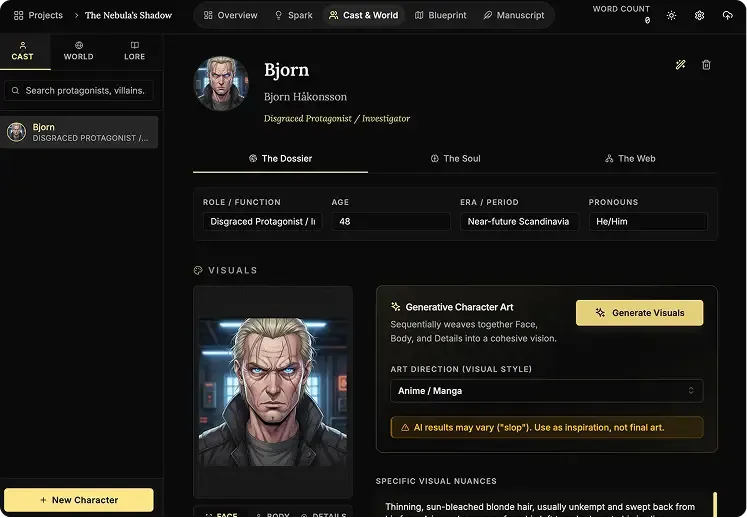
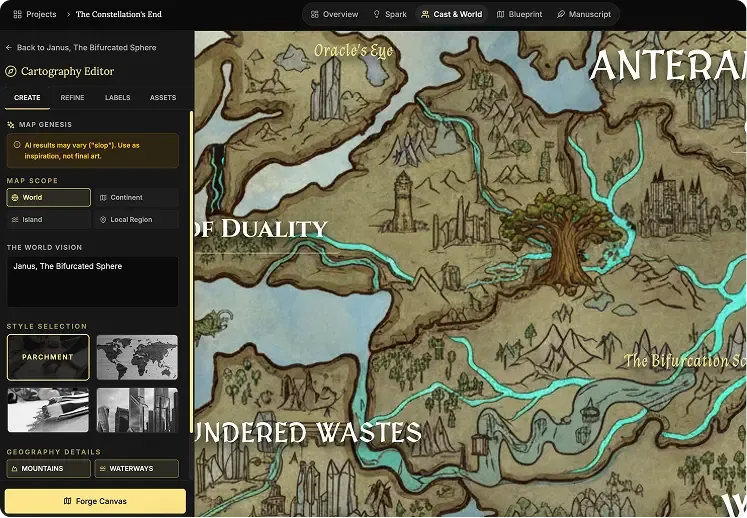
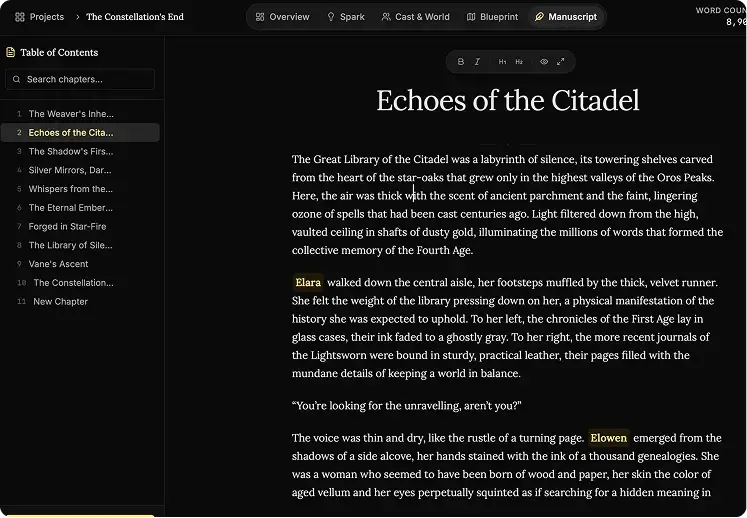
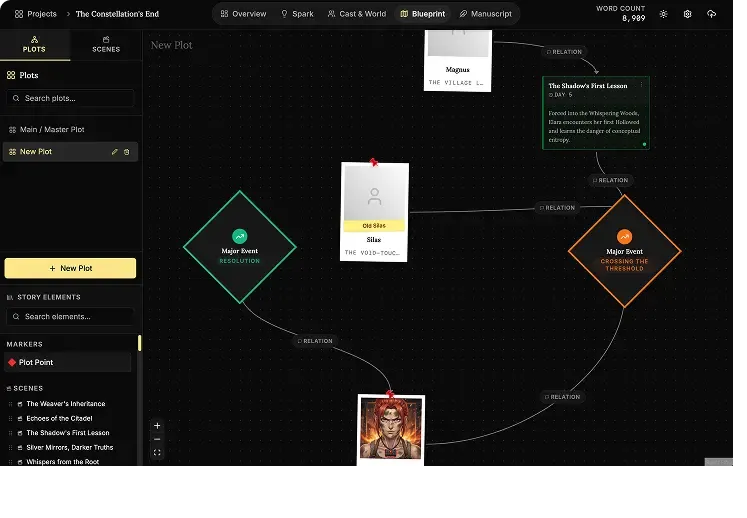
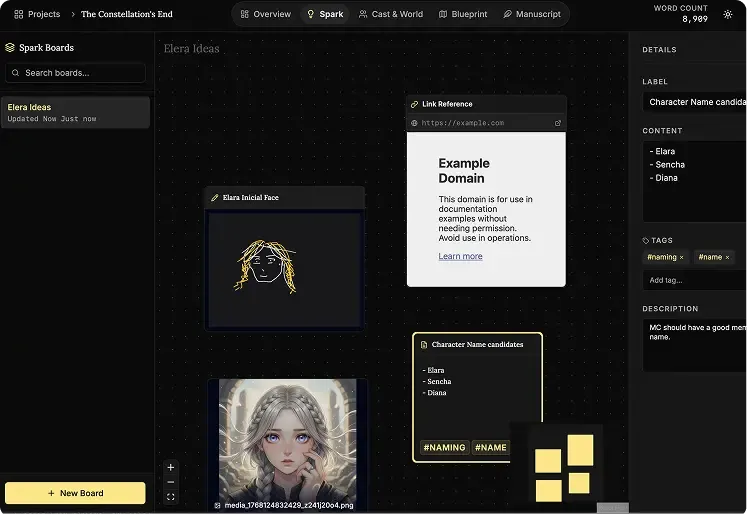
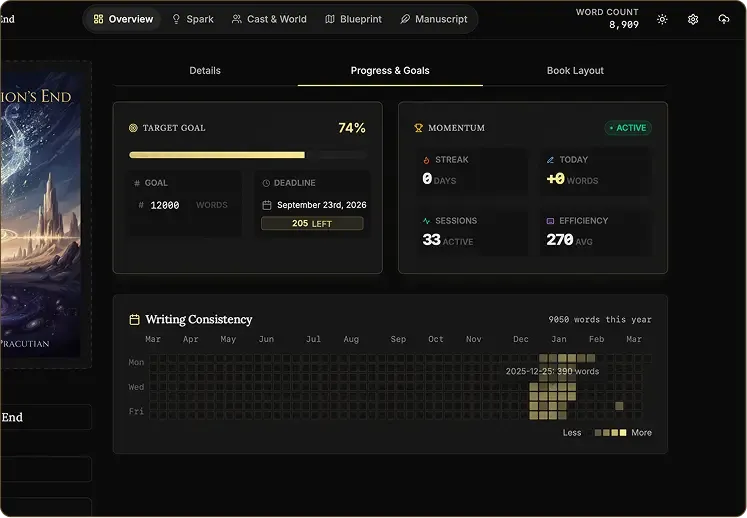
Draft with story knowledge, annotations, entity mentions, and project context nearby. The Manuscript sits inside the same NovelOS Studio project as your characters, world, timeline, manuscript, goals, tracker, revision tools, and publishing exports.
Record the idea where it affects the book, test it in scenes, and revise it beside the surrounding prose. NovelOS Studio keeps the craft decision attached to the novel instead of leaving it in a separate worksheet.