Figurative Language
Euphemism
A euphemism replaces a direct or disturbing expression with one considered milder or more socially acceptable.
Euphemism in a story
It can reveal politeness, fear, institutional concealment, cultural taboo, or the normalization of violence.
Original fiction example
The company calls the removal of inhabited villages terrain correction.
This example is original to the NovelOS glossary. It illustrates the term without borrowing a passage from a published novel.
Why writers use it
Use euphemism to show how language manages guilt, status, discomfort, or power.
A useful revision question: Where does this device change what the reader understands, expects, or feels? If removing it leaves the passage unchanged, it may need a clearer function.
A common mistake
The narrative should distinguish a character's phrasing from an endorsement of what the phrasing hides.
Use euphemism in NovelOS Studio
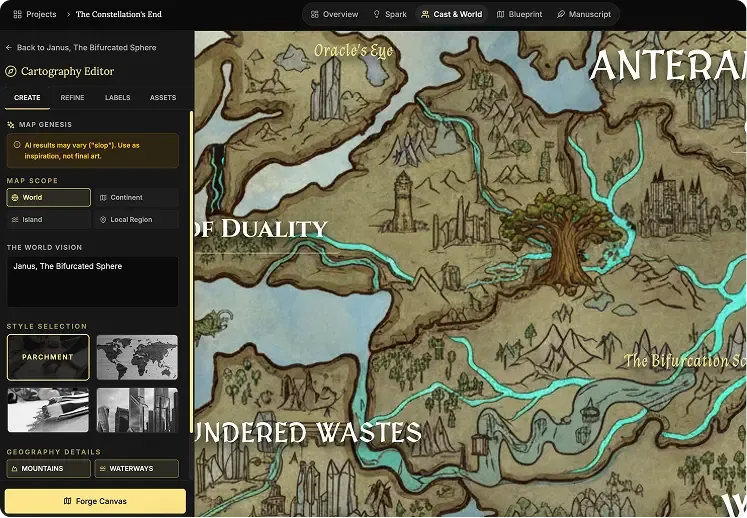
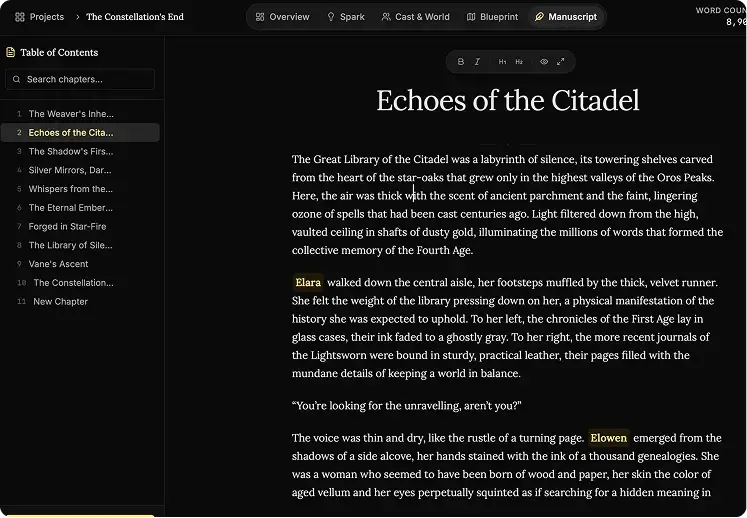
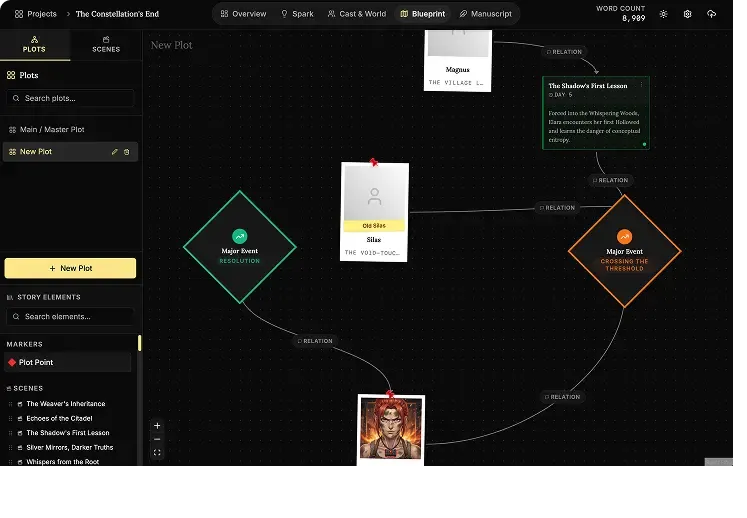
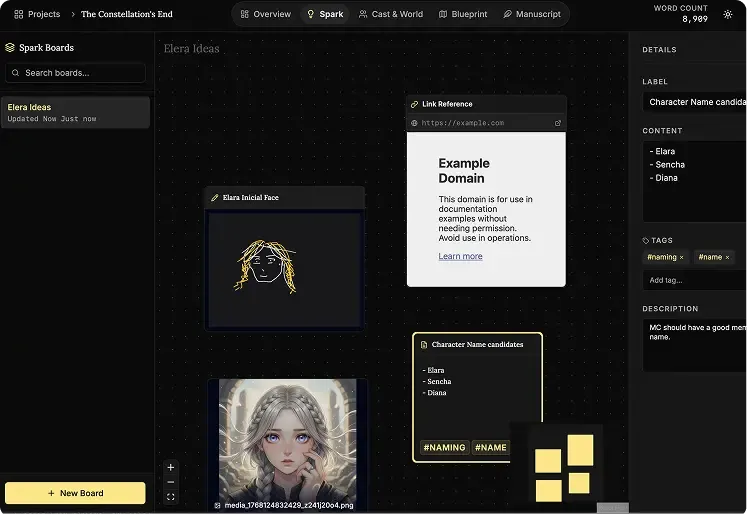
Review imagery, repetition, rhythm, and language choices in the context of the manuscript. The Alchemist sits inside the same NovelOS Studio project as your characters, world, timeline, manuscript, goals, tracker, revision tools, and publishing exports.
Record the idea where it affects the book, test it in scenes, and revise it beside the surrounding prose. NovelOS Studio keeps the craft decision attached to the novel instead of leaving it in a separate worksheet.