A Sports Romance Relationship Should Change With the Season
A convincing sports romance makes two promises. The central relationship will reach an emotionally satisfying happy ending or happy-for-now ending, and the sport will exert enough force to change how that relationship develops. Training cannot be wallpaper. Competition cannot disappear whenever the couple needs a date. The athletes’ bodies, careers, teams, calendars, and public identities all shape what intimacy costs.
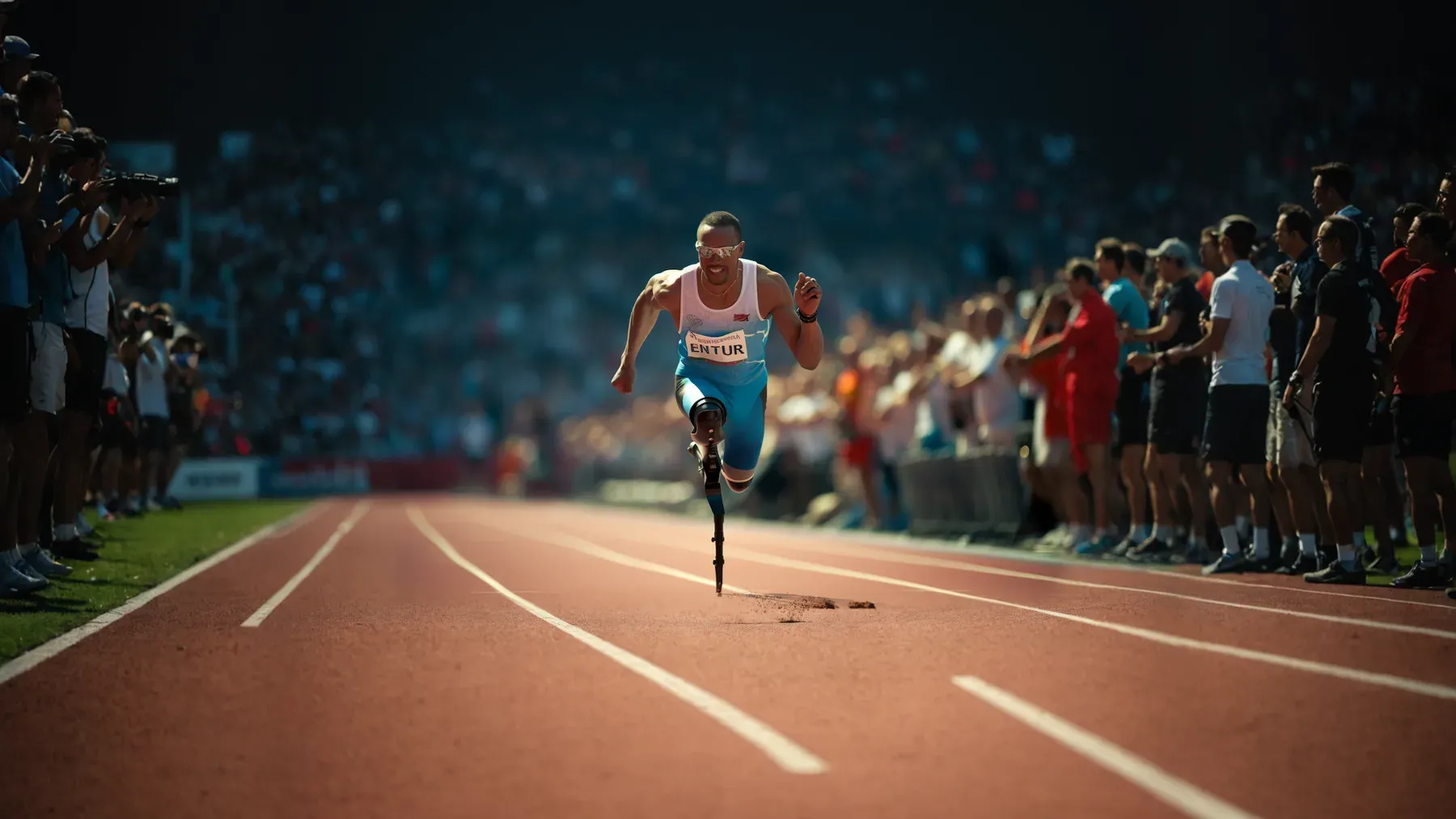
Imagine a 400-metre runner who has eight weeks until national trials. A hurdler joins the same training group while returning from a hamstring injury. One athlete needs to prove that a breakthrough season was repeatable. The other needs to decide whether pursuing one more championship is worth the physical and professional risk. Their sessions create proximity, but the season keeps revising the terms of that proximity.
The runner first admires the hurdler’s ability to describe why a stride pattern fails. The hurdler notices that the runner can hold form through the final bend while everyone else tightens. Competence starts the attraction. A selection deadline creates urgency. Recovery rules limit their time. An injury makes trust specific. By the ending, love must fit two careers whose futures no longer run on the same timetable.
That is the working principle of writing sports romance: let athletic pressure reveal character, force decisions, and alter the couple’s possible future.
Give the Love Story and the Season Separate Clocks
Start by identifying the competitive unit that contains the novel. It might be a rookie season, a playoff run, a championship camp, a contract year, a rehabilitation period, or the final tour before retirement. “Professional athlete” is too broad to produce useful pressure. A tennis player crossing continents, a reserve footballer waiting for minutes, and an Olympic hopeful planning one peak performance inhabit different stories.
Research the sport’s actual calendar before assigning romance beats. Learn when athletes build conditioning, sharpen event-specific skills, taper, travel, compete, recover, receive selection decisions, and negotiate contracts. Check governing rules and the culture of the particular level. A college athlete, a sponsored international competitor, and a semi-professional player with another job will experience money, authority, and privacy differently.
Then build two clocks.
The season clock tracks events the athletes cannot postpone: training blocks, trials, team selection, medical reviews, sponsor obligations, travel, competition, and contract decisions. The relationship clock tracks changed choices: first voluntary time together, first personal disclosure, first boundary negotiated, first conflict that cannot be solved inside practice, separation, repair, and commitment.
Place those clocks beside each other and look for causal contact. If a first kiss happens after a late session, what recovery or team rule makes staying longer a choice? If an athlete reveals a family fear during travel, why is that the first period of privacy available? If the couple separates before trials, which professional boundary remains necessary even while both still care?
The clocks should interact without behaving like a superstition. A good date does not guarantee a personal best. An argument does not mechanically cause defeat. Emotion can affect concentration, sleep, confidence, and communication, while sporting results retain uncertainty. Sometimes the athlete performs brilliantly while privately miserable. That contradiction often carries more truth than a neat emotional scoreboard.
In Characters, Emotion & Viewpoint, Nancy Kress defines motivation through what a character wants and connects that desire to story action. Sports romance usually gives each protagonist several simultaneous wants. The runner wants selection, respect, financial stability, and the hurdler. The hurdler wants a safe return, autonomy over medical decisions, a future beyond competition, and the runner. Scene pressure comes from deciding which want governs today.
For every major scene, write one sentence for each athlete: “Before this scene, this person wants…” Then record what the result makes them want next. The method prevents a training scene from becoming athletic decoration and prevents a romantic scene from forgetting the season.
Let Expertise Create Intimacy Before Confession Does
Sports romance has access to a particularly revealing form of attention. Athletes watch tiny changes in rhythm, effort, posture, breath, reaction, and recovery. Use that literacy to build character chemistry beyond flirting and banter. If the relationship develops across many practices, the method for giving a slow-burn romance visible progress can keep recurring proximity from feeling static.
The runner notices that the hurdler counts steps under their breath when anxious. The hurdler notices that the runner jokes during difficult repetitions and goes quiet when genuinely frightened. Neither observation requires immediate explanation. Repeated attention lets readers feel that each person has become important inside the other’s awareness.
Training can also reveal incompatible habits. The runner treats extra work as moral virtue and adds unscheduled starts after practice. The hurdler records every symptom because previous coaches praised silence until an injury became severe. One appears reckless to the other; one appears fearful in return. Both interpretations contain history and error.
Write the technical exchange with a simple sequence:
- Give the session a concrete performance objective, such as maintaining posture through the last 100 metres.
- Let each athlete interpret the problem through their own experience.
- Make one person offer a specific observation rather than a lecture.
- Allow the other to accept, modify, or reject it.
- Show the result in movement, then carry the emotional effect beyond the drill.
This keeps competence attractive while preserving autonomy. A love interest does not earn control over another athlete’s body by being knowledgeable.
Physical boundaries deserve the same precision. A coach, teammate, clinician, or training partner may touch for demonstration, spotting, treatment, or celebration. Professional access is not romantic consent. The hurdler can ask before repositioning the runner’s back foot in the blocks. The runner can decline an ice-bath conversation without rejecting the relationship. Small negotiations make later intimacy more credible.
Include pleasure as well as pressure. Athletes may love the clean execution of a difficult movement, the strange jokes of an early-morning squad, the sound of spikes on a track, or the relief of being understood by someone who shares the work. If the sport supplies only pain, the protagonists’ devotion to it becomes difficult to believe.
Treat Performance as a System, Not a String of Big Games
A competition result is produced by more than determination. Training load, recovery, technique, health, selection policy, equipment, travel, money, weather, coaching, and chance all contribute. You do not need to dramatize every factor. You do need to know which ones can change the plot.
Build a one-page performance model for each protagonist. Record the event or position, current level, current technical problem, physical constraint, decisive season milestone, source of income, authority figures, and consequence of missing the goal. Add the athlete’s own definition of success. That definition may differ from the coach’s or sponsor’s.
For the runner, success initially means making the national team. The deeper need is to believe last year’s improvement belongs to skill rather than luck. For the hurdler, success initially means returning to competition. The deeper need is to make a career decision without surrendering authority to the people who profit from the comeback.
Now design the training sequence as a change in evidence rather than a montage. During the first session, the runner fades at the bend. A later session shows better pacing but poor recovery. A practice meet confirms the technical gain under pressure. Each appearance of the sport answers one question and raises another.
Use detail where it affects a decision. A false start matters if it threatens qualification or exposes anticipation under pressure. A relay handover matters if the romance has changed team trust. A travel delay matters if it removes recovery time before a medical test. Technical language earns its place when readers can trace its consequence.
The guide to writing engaging training scenes can help turn repetition into visible adaptation. The key is variation. Change the objective, constraint, information, relationship, or cost. Six practices with identical emotional work will feel repetitive even if the drills differ.
Team sports create obvious interdependence, but individual sports also contain systems. Training partners share lanes and attention. Physiotherapists influence availability. Coaches allocate sessions. Teammates compete for relay places. Sponsors and federations shape publicity. Give these people goals beyond monitoring the romance.
A relay specialist needs the runner healthy. A younger athlete begins copying the runner’s secret extra work. The coach believes the hurdler’s comeback attracts resources that benefit the whole squad. A sponsor wants to package the training partnership as an inspirational campaign. Each response arises from a material stake.
This is also where public identity enters. Research the sport and setting before deciding how sexuality, gender, race, nationality, disability, class, religion, or celebrity affect disclosure. Universal acceptance and universal hostility are both shortcuts. One teammate may protect privacy, another may worry about team disruption, and an administrator may support the couple personally while exploiting the story commercially.
Put the Athlete at the Centre of an Injury Decision
Injury can intensify a sports romance because it affects body, identity, livelihood, and future. It also invites harmful shortcuts. Love cannot repair tissue, replace clinical expertise, or make risk disappear. A partner can offer support, ask better questions, and witness fear. The injured athlete remains the person making the decision.
The 2016 Bern Consensus on return to sport describes return as a process and emphasizes athlete-centred shared decision-making. It also recognizes psychological factors such as fear of reinjury, confidence, and motivation. This gives a novelist a stronger model than a single magical “cleared” scene.
For the hurdler, build a return-to-sport ladder:
- participating in rehabilitation without full training
- completing modified drills with the squad
- returning to unrestricted training
- entering a lower-stakes competition
- deciding whether another championship campaign is desirable
At each stage, track evidence, uncertainty, who advises, who decides, and what outside pressure exists. The clinician may explain risk. The coach may care about selection. The sponsor may need a comeback date. The hurdler may want one more race while fearing the body will fail in public.
The romance belongs inside that decision landscape. The runner discovers that the hurdler has hidden renewed pain after a high-speed session. The betrayal is not simply “you kept a secret.” The hurdler has been teaching the runner to respect recovery while refusing the same scrutiny. The runner’s concern is real, yet concern does not create a right to demand medical information.
Give the runner a connected failure. Their unscheduled starts have influenced a younger squad member who then strains a hamstring. What looked like private dedication has become team culture. Both protagonists must face how their coping strategies affect other people.
Their temporary separation can follow from professional boundaries rather than a flimsy misunderstanding. The hurdler returns to formal rehabilitation and asks the runner to stop acting as an informal monitor. The runner changes the extra-work habit and takes responsibility with the squad. They remain emotionally connected while doing work the relationship cannot perform for them.
Avoid using injury only to remove a powerful athlete from competition, elicit caretaking, or prove that love matters more than ambition. Recovery can be slow, nonlinear, expensive, boring, frightening, and socially isolating. Some injuries end careers; others change training; some remain manageable. Research the exact condition with qualified sources, and use informed readers when medical detail affects the plot.

Make the Happy Ending Work on Monday Morning
The decisive race should resolve the athletic question established by this particular book. It does not have to reward both protagonists with victory.
Suppose the runner qualifies for the national team while the hurdler completes unrestricted training but declines the comeback meet. One receives the public outcome they wanted. The other makes an autonomous choice that outsiders may call failure. The romance ending must understand both results.
Before the final commitment, place the practical future on the page. Where will they train? Who travels? How often? Can they date without one coaching the other? How will sponsorship, money, publicity, recovery, and retirement affect them? Which decision belongs to this season, and which can remain open?
A sports-romance happy ending should preserve two full people. The runner may leave for an international camp. The hurdler may begin coaching while deciding whether to race again. They choose scheduled visits, protected professional boundaries, and a rule that medical disclosure is invited rather than demanded. The commitment feels romantic because it responds to the lives the novel has actually built.
Test the ending with a Monday-morning question: after the kiss, announcement, or championship ceremony, what do they do next? If the answer erases one career, ignores rehabilitation, removes the team, or dissolves geography, the ending has avoided the hardest part of the premise.
The emotional proof lies in changed behaviour. The runner takes a rest day without treating it as weakness. The hurdler states a decision before a sponsor can narrate it for them. Each can admire the other’s expertise without claiming ownership of it. They walk into different workdays with a shared future they designed together.
Run the Whole Season Through NovelOS Studio
Sports romance produces continuity across bodies, calendars, relationships, institutions, and career decisions. NovelOS Studio keeps that network inside one local-first novel project, so the sporting plot remains attached to the love story instead of living in a separate research file.
- Build both athletes, coaches, clinicians, teammates, family members, agents, and sponsors through The Oracle and Cast & World. Record performance goals, fears, injury histories, public identities, private boundaries, and the wants that change after every major result.
- Map attraction, rivalry, authority, team duty, confidentiality, publicity, and trust with Connections. This makes it easier to see when a private choice creates a consequence for the squad or when a professional role makes intimacy ethically complicated.
- Keep governing rules, event terminology, season structure, venues, travel, contracts, selection research, training logic, and medical sources in The Architect. When the middle needs another credible pressure point, Spark can develop possibilities for the writer to test against those facts.
- Place sessions, recovery periods, competitions, medical reviews, sponsor appearances, disclosures, separation, and reunion in The Blueprint. Its chronological view helps compare the athletic clock with the relationship clock and exposes impossible travel or recovery gaps.
- Draft embodied training, competition, and intimate dialogue in Manuscript. During revision, Alchemist can help explore alternatives while the writer retains control of voice, consent, and medical meaning.
- Use goals and trackers for research, word count, season milestones, relationship turns, injury continuity, and revision. At production time, Editorial Foundry can build ebook and print-ready outputs through EPUB and PDF, editable handoff files through DOCX and RTF, plain-text options through Markdown and TXT, or one portable HTML book.
The desktop studio supports both Windows and macOS. Writers can export a portable .novelos project archive, then import it for a move or restore. The personal license permits activation across unlimited personal devices, and mobile ships on iOS and Android on the same licence, installed from the browser.
The strongest sports romance does not ask the athlete to leave the sport at the door of the love story. It lets every practice, boundary, setback, and decision clarify who these people are capable of becoming together. NovelOS Studio gives that entire season one place to develop, from the first charged observation through the future they choose after the final result.
Sources and further reading
- Romance Writers of New Zealand, “A Beginner’s Guide to Romance”: the central relationship and emotionally satisfying ending that define the genre.
- Kobo Writing Life, “Writing Sports Romance: A KWL Recap”: choosing and researching a sport, building complex athlete characters, and integrating sport with the romance.
- World Athletics, “Book of Rules” and “Technical Information”: current governing and technical references for athletics.
- Ardern et al., “2016 Consensus Statement on Return to Sport from the First World Congress in Sports Physical Therapy, Bern”, British Journal of Sports Medicine: return as a process, athlete-centred shared decisions, risk, and psychological readiness.
- Kress, Nancy, Characters, Emotion & Viewpoint, PDF pages 35 to 36: motivation as the character’s want and the basis for story action.
- Lummi: Paralympic Sprinter in Action, Runner on Red Track, and Doctor Consultation. Each exact record was checked as free, non-Pro, and available before conversion.