Space Travel Constraints Should Decide the Plot
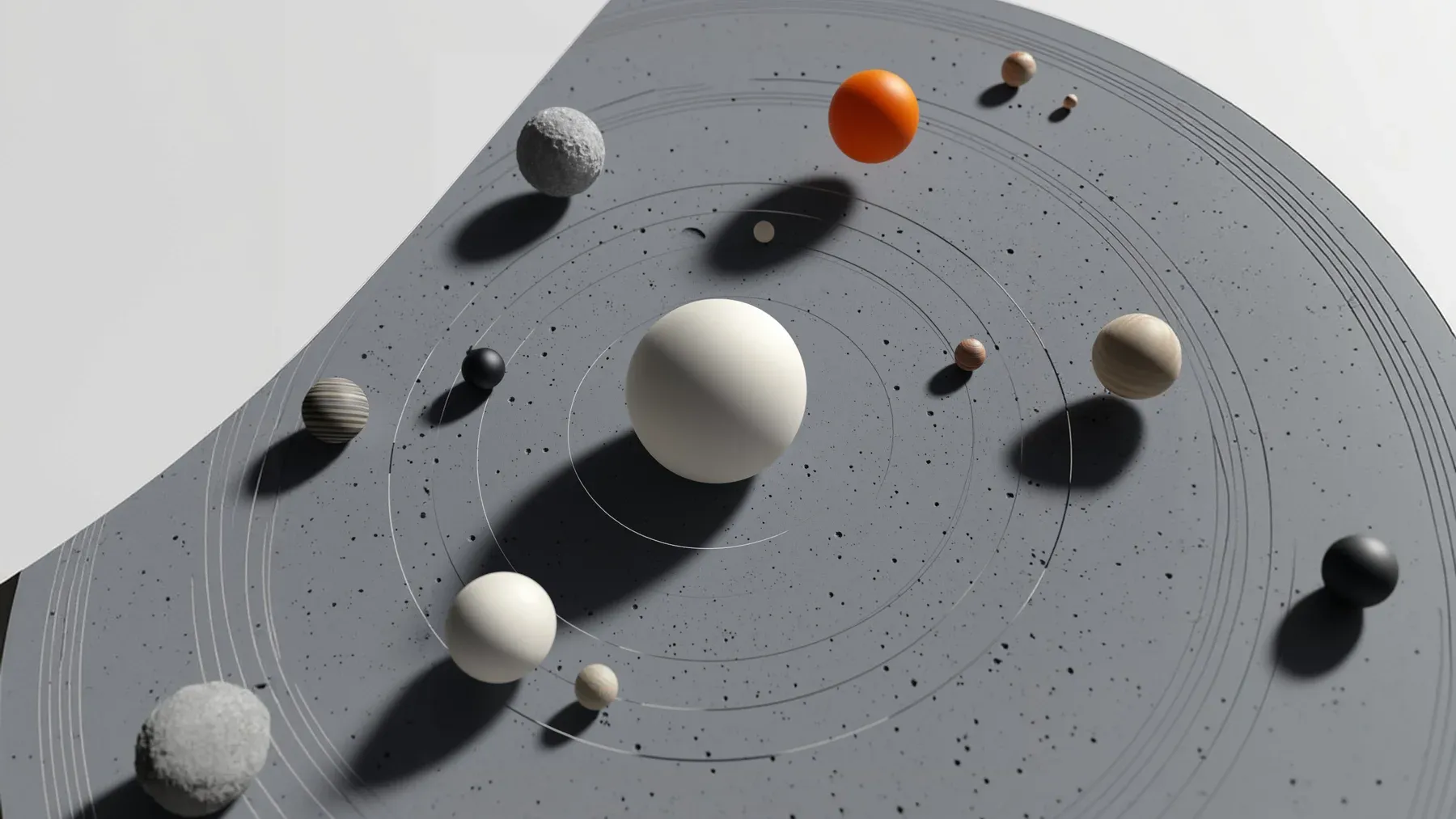
Space travel constraints are the physical and operational limits that determine when a spacecraft can leave, what it can carry, how it changes velocity, how long messages take, and what condition the crew reaches on arrival. For a novelist, their value is causal. A believable limit should force a decision now and change a later scene.
Imagine a medical courier waiting at an orbital shipyard. An ice-moon settlement needs three culture cases before an unfamiliar respiratory illness spreads through its sealed habitat. The courier ship can leave during a favorable transfer window tonight. One engine has passed inspection with a reduced thrust rating, however, and the requested cases add mass that was absent from the original flight plan.
The captain has several defensible choices. Leave on time with the reduced engine margin. Remove spare parts to keep the medical payload. Miss the window and accept a longer route. Send instructions ahead while the cultures follow later. Each choice preserves one value by spending another.
The voyage becomes a story because distance cannot be crossed on demand. Time, propellant, mass, information, health, and authority move at different rates.
Begin With the Constraint the Story Can Test
Your draft does not require a home-built mission-design program. The reader needs a stable model at the level required to judge the characters’ decisions. Begin by deciding which constraints can change the outcome.
For the medical courier, six facts may be enough:
| Constraint | Working rule | Story consequence |
|---|---|---|
| departure window | the low-energy route closes tonight | delay changes the whole journey |
| velocity budget | the damaged engine can perform the planned burns with little reserve | every correction becomes expensive |
| payload mass | cultures, shielding, food, and spare parts share one limit | saving one cargo may expose another need |
| signal delay | a reply takes hours to complete | the crew must act before advice returns |
| closed habitat | air, water, heat, microbes, and waste require continuous control | a minor fault can consume labor and power |
| arrival condition | the crew must still brake, dock, unload, and work | reaching the moon is only part of success |
These rules form a compact promise. Once readers understand them, later choices become legible. If the captain uses reserve propellant to correct a rushed departure, readers know that the cost will return at braking. If the engineer removes a spare carbon-dioxide scrubber to carry another culture case, the reader knows which failure has become harder to survive.
The local PDF The Ultimate Guide to Worldbuilding makes a useful distinction on visually inspected page 4: invented technology still needs consistent internal laws, while irrelevant detail can remain outside the story. Randy Ellefson’s Creating Places develops the same principle specifically for space travel. Its chapter on travel in space recommends deciding which realities technology overcomes, keeping those choices consistent, and treating changing orbital positions, travel time, and ship access as sources of conflict.
Choose one primary limit, two interacting limits, and one consequence the characters initially underestimate. The courier’s primary limit is its departure window. Engine margin and payload mass interact with it. The underestimated consequence is that a late arrival may leave the settlement medically functional yet politically unwilling to admit an exposed crew.
A Route Is a Sequence of Commitments
Spacecraft do not travel across a blank map by pointing at a visible destination and holding down an accelerator. They leave one moving orbit, follow a trajectory, and meet another moving body. The route usually contains distinct phases such as departure, acceleration, coast, correction, braking, orbit insertion, rendezvous, docking, landing, and recovery.
NASA’s launch guidance defines a launch window as a span in which safety and mission constraints can be satisfied. For an interplanetary trip, the positions and motion of the departure world and target help determine that span. The NASA Jet Propulsion Laboratory’s Mars exercise illustrates the underlying idea with a Hohmann transfer: the spacecraft follows an elliptical solar orbit and must reach the target’s orbit when the target arrives there.
Translate this into a route card rather than pages of equations:
- Origin state: current orbit, dock, surface, or transfer vehicle
- Departure condition: alignment, clearance, weather, traffic, or political permission
- Propulsive events: the burns that change the ship’s velocity
- Coast interval: what continues consuming food, power, patience, and equipment life
- Correction allowance: what can still be changed after departure
- Arrival work: braking, capture, docking, quarantine, unloading, and recovery
The card exposes where a decision becomes difficult to reverse. The courier can change its cargo before undocking. After the departure burn, throwing cargo away may improve maneuvering but cannot restore the fuel already spent moving it. Halfway through the coast, returning may require more time and propellant than continuing. Near arrival, an emergency acceleration may solve the calendar problem while leaving the crew unable to brake safely.
This differs from the empire-scale problems in writing space opera. A space-opera route may explain trade, military reach, and political autonomy across many worlds. Here the route is examined at mission scale, where one missed burn or late instruction changes the options available to a small group.
Propulsion Makes Every Addition Compete
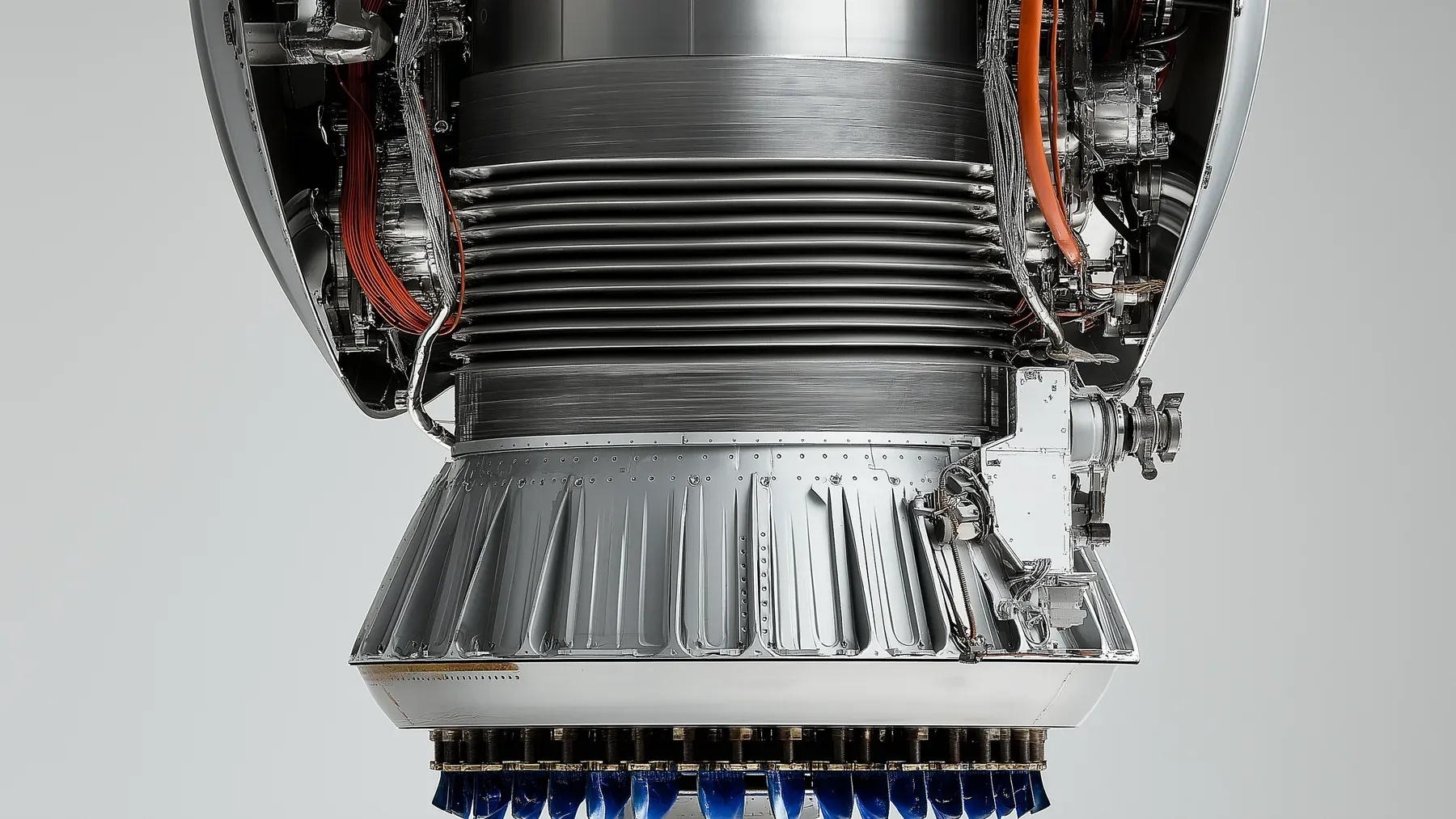
Writers often describe a ship as fast or slow. A more useful question is what changes in velocity it can still afford. Mission planners call that capacity delta-v. It is spent on departure, course corrections, braking, rendezvous, landing, and any unplanned maneuver.
NASA’s explanation of the ideal rocket equation shows why mass matters so much. A rocket changes velocity by expelling propellant, and the required mass ratio grows exponentially as the desired delta-v rises for a given propulsion performance. The precise calculation can remain in research notes. The dramatic principle is simple: propellant used to move propellant, structure, supplies, shielding, and cargo is unavailable for another maneuver.
Give the ship a velocity ledger:
| Planned use | Required share | Protected reserve | Who may release it? |
|---|---|---|---|
| departure and transfer | large | none | flight plan |
| course correction | moderate | partly protected | navigator |
| arrival braking | large | protected | captain and pilot |
| rendezvous and docking | small | protected | pilot |
| emergency avoidance | unknown | shared reserve | captain |
Percentages or abstract units work when exact kilometers per second would distract from the novel. Consistency matters more than ornamental precision. Establish whether the ship can accelerate continuously, burns briefly and coasts, uses a jump system at fixed gates, opens a corridor at rare alignments, or pays some other defined cost.
Then ask what the drive cannot solve. A jump may require a massive stationary aperture, leave the ship without communications, work only between mapped points, or demand days of heat rejection afterward. A fictional technology gains credibility when its consequence reaches jobs, schedules, law, class, and tactics.
In the courier story, the crew keeps the cultures and removes a replacement pump. That decision slightly reduces mass and preserves the mission’s purpose. It also makes a coolant anomaly during the coast dangerous. The engineer can isolate one loop, which reduces available power and leaves the crew deciding whether medical refrigeration or full environmental control receives priority.
Travel Time Must Continue Doing Work
A long voyage should change more than the calendar. For every interval, track consumption, exposure, deterioration, adaptation, and information.
NASA groups the human hazards of spaceflight into radiation, isolation and confinement, distance from Earth, altered gravity, and hostile closed environments. These hazards interact. Shielding adds mass. Exercise uses time, volume, and power. A storm shelter protects the crew while restricting access to equipment. Closed quarters increase the importance of air quality, microbes, noise, sleep schedules, and conflict repair.
Build a transit pressure sheet with thresholds rather than vague danger:
- water recovery can tolerate one failed component for four days;
- medical refrigeration needs uninterrupted power above a stated minimum;
- the crew has one radiation shelter that cannot hold every movable supply;
- a rotating habitat provides partial gravity only after deployment;
- two specialists can repair the coolant loop, but both cannot be awake continuously;
- one crew member needs several days of recovery before performing surface work.
Now the coast phase contains decisions. During a radiation alert, the culture cases enter the shelter and displace repair equipment. Reduced exercise keeps the engineer on the coolant problem and worsens the engineer’s arrival readiness. Waste heat from the medical refrigerator raises cabin temperature after the isolated coolant loop loses capacity. Nothing has attacked the ship. The voyage still accumulates plot.
The earlier guide to generation ship fiction follows survival systems across whole generations. A shorter mission needs the same causal thinking at a different scale. Buffers may last days instead of decades, yet food, air, water, maintenance, health, and legitimacy still depend on one another.
Signal Delay Changes Who Has Authority
Communication speed determines the size of a conversation. NASA notes that one-way delay between Earth and Mars varies with distance. A message may take about four to twenty-four minutes to arrive, which doubles the wait for a reply. Interference and geometry can also degrade or interrupt contact. Farther fictional distances enlarge that gap unless the story establishes faster communication.
Do not use delay only to make a character say, “We are alone.” Rewrite the decision process around it.
Separate three times in the scene:
- Event time: the coolant reading crosses its limit.
- Transmission time: the ship sends data and its proposed response.
- Decision deadline: the crew must isolate the loop before a reply can arrive.
Mission control can provide procedures, simulations, forecasts, and later analysis. The crew needs authority to recognize the actual condition and act inside a defined boundary. NASA’s work on delayed deep-space operations studies precisely this need for greater crew and system autonomy.
In the courier plot, the settlement sends an order to preserve all culture cases. The order was written before its leaders knew about the coolant fault. A later message warns that the illness may already have changed transmission pattern, but that message is still in transit. The captain cannot simply obey the newest instruction because “newest” has several meanings. It may mean most recently received, most recently sent, or based on the most recent evidence.
Keep a message ledger with sent time, received time, evidence cutoff, sender authority, requested action, and expiry condition. This prevents accidental instant knowledge and creates honest disagreement. The medic follows the instruction supported by better disease data. The engineer follows the threshold visible aboard the ship. The captain must decide which authority governs a condition neither sender could observe in time.
Arrival Should Collect the Voyage’s Costs
Many space journeys lose pressure at the destination because arrival is treated as a door opening. Make arrival a chain of constrained operations.
The courier must detect the moon, correct its approach, brake, enter the proper orbit, match velocity with the settlement, establish a seal, satisfy quarantine, move temperature-sensitive cargo, and recover enough crew capacity to work. Each phase depends on resources and decisions from the trip.
The reserved braking budget now matters. So does the pump left behind. The exhausted engineer can supervise docking or repair the refrigeration loop, with no trained replacement for either job. The settlement has rotated away from the original approach corridor because the delayed launch changed local time. Its leaders may refuse physical contact until the courier proves the cultures were never exposed to cabin air.
Let the climax combine established constraints. The ship cannot enter the settlement’s dock without contaminating it. It can release a sealed cargo pod, though the maneuver spends the reserve needed to avoid a debris field. The crew discovers that a remote laboratory on the moon’s night side can receive the pod. Reaching that site will delay treatment, but its independent power system can verify and expand the cultures safely.
The captain sends the pod. The choice succeeds because route geometry, remaining delta-v, quarantine policy, refrigeration history, and signal delay have all been prepared. The ending can remain costly. The settlement receives viable cultures, the courier misses its return window, and the crew must stay in orbit until another vehicle can carry the replacement pump.
That consequence distinguishes travel constraints from decorative realism. The voyage has rearranged work, trust, health, authority, and the characters’ future. If the same systems are primarily meant to create dread, space horror needs a different pressure pattern: restricted perception and bodily vulnerability become central rather than incidental risks within the mission.

Keep the Mission Coherent in NovelOS Studio
A space voyage asks the writer to coordinate moving locations, ship systems, resource budgets, message histories, crew condition, institutional authority, and a manuscript whose scenes may cover different clocks. NovelOS Studio gives that mission model a home beside every scene it controls.
- Build crew members, dispatchers, settlement leaders, specialists, patients, inspectors, and rescue contacts in The Oracle. Record expertise, decision authority, fatigue limits, loyalties, and the evidence each person can access.
- Define the ship, habitats, transfer points, propulsion model, life-support loops, medical cargo, quarantine rules, orbital locations, and technical vocabulary in The Architect.
- Use Connections to show which system powers another, which role controls a reserve, which settlement depends on the cargo, and which relationship changes when an order arrives too late.
- Explore alternate departure choices, cargo trades, drive limitations, failures, rescue routes, and arrival solutions in Spark before committing one path to the outline.
- Arrange departure, burns, coast intervals, corrections, message sends and receipts, health changes, failures, and arrival operations in The Blueprint and Timeline View. The separate timestamps reveal accidental instant replies or impossible recoveries.
- Draft technical action and close human judgment in Manuscript. Use The Alchemist when an explanation needs a clearer physical consequence or a tense procedure has become hard to follow.
- Track delta-v, power, water, repair hours, medical temperature, radiation exposure, crew readiness, scene goals, daily word count, and revision progress with project goals and custom trackers.
- Prepare the completed book in Editorial Foundry, with EPUB and print PDF for publication plus DOCX, RTF, Markdown, TXT, and a standalone HTML file for other workflows.
Choose the Windows or macOS edition and keep the mission’s working novel local to your own machine. A single lifetime NovelOS Studio license activates across the computers you own. Build a voyage whose limits keep shaping the story long after launch.
Sources and further reading
- NASA Glenn Research Center, “Ideal Rocket Equation”, on delta-v, exhaust velocity, propellant, and mass ratio.
- NASA Science, “Launch”, on powered flight, interplanetary trajectories, launch windows, and orbital motion.
- NASA Jet Propulsion Laboratory, “Let’s Go to Mars! Calculating Launch Windows”, on Hohmann transfers and meeting a moving planet.
- NASA, “5 Hazards of Human Spaceflight”, on radiation, isolation, distance, gravity, and closed environments.
- NASA, “Space Communications: 7 Things You Need to Know”, on signal delay, interference, and data integrity.
- NASA, “Houston, Do You Copy? HERA Crew Navigates Communication Delays”, on delayed communication and crew autonomy.
- Randy Ellefson, Creating Places: The Art of World Building, Volume II, “Travel in Space,” locally inspected EPUB chapter on invented propulsion, moving destinations, travel time, ship layout, and story consequences.
- M. D. Presley, The Ultimate Guide to Worldbuilding, visually inspected PDF page 4, on consistent internal laws and selecting details that affect character and narrative.
- Lummi source: artistic solar system
- Lummi source: detailed rocket engine
- Lummi source: astronaut in spacecraft