Siblings Remember the Same Childhood Differently

Writing sibling rivalry in fiction becomes easier once you ask what each child learned about their place in the family. Siblings grow up under one roof, yet they occupy different ages, responsibilities, alliances, and versions of a parent. They may agree that an event happened while disagreeing about what it meant. That difference can influence an adult decision decades later.
Imagine two adult siblings deciding whether to sell their father’s coastal radio station after he suffers a stroke. The older sibling manages the station’s debts from another city and believes a government buyout is the only responsible choice. The younger sibling has worked beside their father for twelve years and wants to keep the emergency frequency operating through the coming storm season. The station cannot be sold and preserved. Each sibling has knowledge the other lacks, and each believes childhood proved who should be trusted now.
They can protect each other from an outsider, repeat an old joke while furious, and use privileged knowledge as a weapon. The bond feels real when affection, comparison, loyalty, and injury remain active in the same scene.
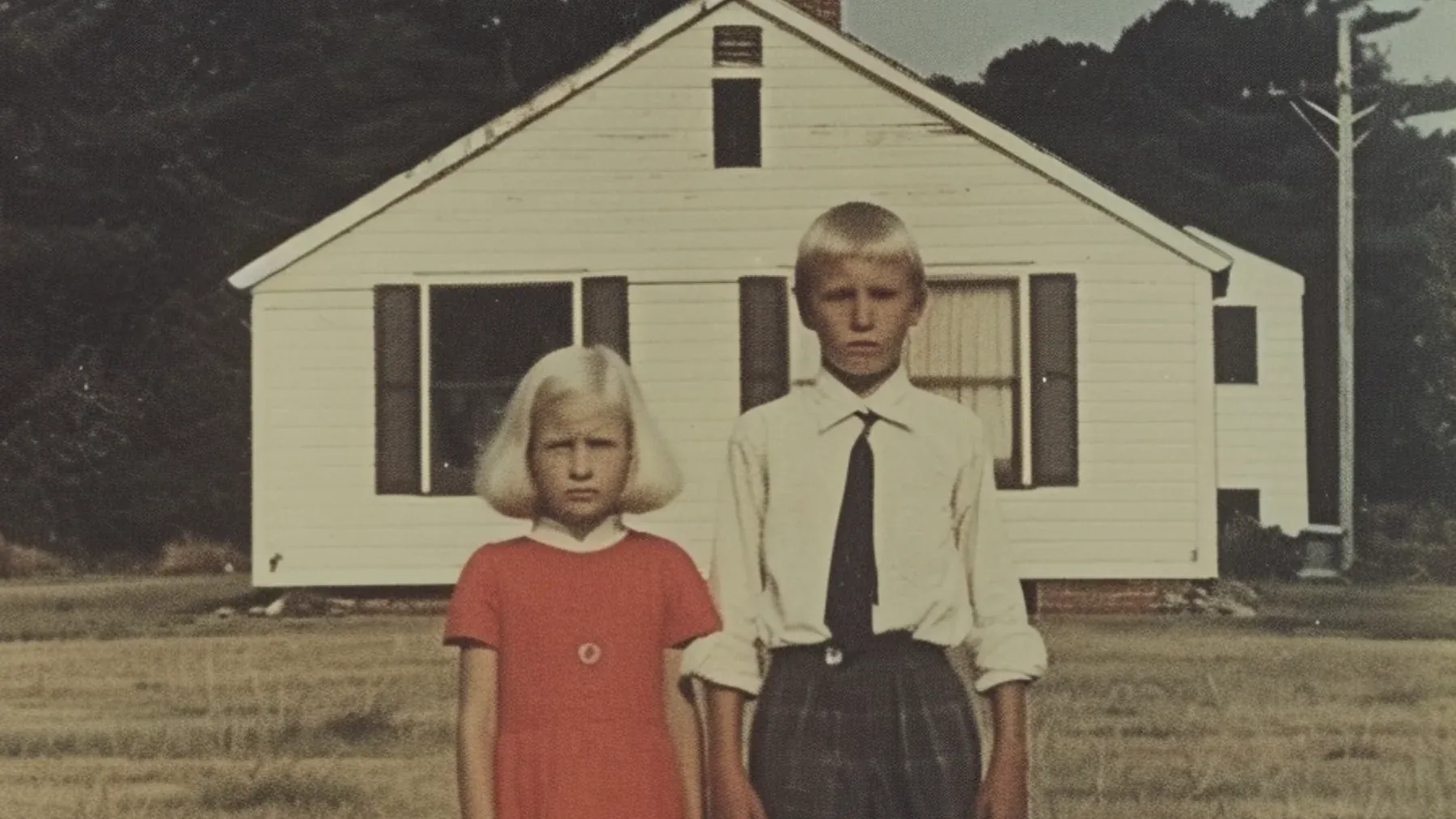
A Family Role Gives Each Sibling a Different Childhood
Families typecast children through repeated expectations. One becomes dependable, difficult, gifted, fragile, entertaining, invisible, or easy. The label may begin as a reasonable response to temperament, age, illness, or crisis. Repetition turns it into a role, and the role decides whose mistakes surprise the family, whose needs receive attention, and who is expected to absorb inconvenience.
The older sibling in the radio-station story was ten when their mother died and began handling invoices beside their father. Adults praised composure and called this child “the steady signal.” The younger sibling was six, prone to wandering the cliffs, and became “the weather vane,” the one whose impulses required supervision. Both descriptions contained evidence. The older child could organize a ledger. The younger child did take risks. Trouble begins when a response to grief becomes a permanent identity.
David Corbett’s The Art of Character suggests examining family life through specific episodes of joy, shame, fear, success, and failure. That scene-based approach is more useful than assigning labels alone. Write the moment when the role first became visible, the moment when the family rewarded it, and the moment when the character tried to escape it.
For each sibling, record four consequences:
- Permission: what could this child do that the other could not?
- Duty: what burden did the family treat as natural for this child?
- Excuse: which behavior was forgiven because it matched the role?
- Disbelief: what truth would the family struggle to accept from this child?
The older sibling received access to money, adult conversations, and the transmitter room. That access also removed the right to panic, leave, or admit confusion. The younger sibling received rescue from consequences and room to explore. In exchange, every good decision was treated as luck, and private choices attracted inspection.
A trusted role can become a cage. A protected role can supply comfort while denying authority. Both siblings defend an arrangement that once provided something valuable while carrying a cost the other failed to see.
Parental differential treatment research offers useful grounding here. Studies do not mean every fictional family must distribute attention equally. They show that siblings’ perceptions of different treatment matter to later relationship quality. For fiction, the important word is perception. The parent may have responded to age, health, or immediate need, while each child constructed a lasting explanation about worth.
Avoid treating birth order as destiny. Age changes what a child witnesses and what adults ask of them, but it does not automatically create personality. The older sibling becomes controlling because control once kept bills paid. The younger becomes watchful about condescension because genuine competence was repeatedly dismissed.
One Event Can Support Two Honest Accounts
Why do siblings remember the same parent differently? They encountered that parent from different vantage points, selected different details, and retold the past in support of developing identities. Autobiographical memory is reconstructive. Conversation can also change later recall. In a study where siblings remembered childhood events separately and then discussed them, participants incorporated details from one another’s accounts. A family memory can therefore be shared, contested, and socially revised at once.
During a severe storm twenty years earlier, the father took the older sibling into the transmitter room and sent the younger child to a neighbor’s cellar. All three agree on those actions. The older sibling remembers being trusted to relay coordinates after the antenna failed. The younger remembers pounding on the cellar door while the station windows shook. Years later, the father often told visitors that his “steady signal” helped save a fishing crew. He rarely mentioned that the younger child had spotted the crew’s emergency flare before being sent away.
Build a contested memory on three levels:
- The event record: actions, time, place, participants, and any recoverable evidence.
- The child’s conclusion: what the event seemed to prove about safety, love, competence, or belonging.
- The adult claim: how that conclusion supports a present desire.
The older sibling’s conclusion is that responsibility was earned under pressure. The present claim is that only the person who understands the finances can decide the station’s future. The younger sibling’s conclusion is that the family accepted useful observation but withheld authority. The present claim is that twelve years of operational work outweighs remote financial control.
A logbook may confirm that the older child relayed the coordinates. A newspaper photograph may show the younger child pointing toward the cliffs. New evidence changes the argument without appointing one perfect witness.
Use artifacts to disturb certainty. A water-stained log proves when the flare was reported but leaves open who first saw it. A cassette contains a pause before the father credits the older child. An old life jacket bears the younger sibling’s name crossed out and replaced by the older sibling’s. Each object changes one inference while preserving the dispute.
This is where objects can carry subtext without becoming puzzle-box clues. The siblings argue about whether the logbook belongs in an archive or should remain at the station. The literal issue concerns custody. Underneath it sits the question of whose account the family will preserve.
An objective flashback may settle who opened a door, but it cannot dictate what that action meant to a frightened six-year-old or an overburdened ten-year-old. Give readers stable facts and viewpoint-specific interpretation.

The Present Decision Turns History Into Plot
Rivalry becomes story when the siblings need one outcome that cannot be divided cleanly. Childhood comparison supplies emotional voltage. The present decision supplies direction, leverage, and a deadline.
The radio station’s government offer expires in nine days. Repairing the storm-damaged antenna requires money that currently covers their father’s rehabilitation. The emergency frequency serves isolated fishing villages, but a newer public system is scheduled to replace it next year. The older sibling has legal signing authority. The younger knows the equipment, local crews, and gaps in the public system. Each can obstruct the other, and neither can produce a responsible outcome alone.
List the forms of leverage before writing their major confrontation:
| Older sibling holds | Younger sibling holds |
|---|---|
| debt records and the buyout terms | operational knowledge and community trust |
| power of attorney | keys, passwords, and maintenance history |
| evidence that the station is insolvent | evidence that the public relay misses two coves |
| access to the rehabilitation account | the father’s recent verbal instructions |
Leverage prevents the scene from becoming a recital of old grievances. When the older sibling cites the repair estimate, the younger produces recordings of missed distress calls. When the younger invokes their father’s wishes, the older asks whether a post-stroke instruction can justify risking his care. Every memory changes a proposed action.
The strongest conflict grows from values that overlap. Both siblings want their father safe. Both care about the fishing community. Both want the family story to recognize their labor. They disagree about which duty has priority and who has earned the authority to rank those duties.
That shared concern allows the strategy to change. The older sibling initially uses formal authority, expecting paperwork to end the argument. The younger withholds a transmitter password, expecting practical indispensability to win. A failed emergency relay forces them to work together. The older discovers that the station still fills a real gap. The younger sees how quickly the rehabilitation account is shrinking. Cooperation adds evidence. It does not erase the rivalry.
The broader guide to writing inheritance disputes explains how family members assign market, use, and recognition value to the same property. Even without a death or contested will, the distinction helps here. The station has a sale price, a working purpose, and a symbolic claim about which child’s service mattered.
Ask of every sibling scene: what can each person do after this exchange that was impossible before it? A cutting remark may reveal pain, but plot movement requires a changed option, alliance, obligation, or piece of evidence. The sibling who was always considered reckless might become the only person authorized to operate the backup transmitter. The dependable sibling might admit the buyout paperwork concealed a penalty. Family history then changes action instead of merely coloring it.
Loyalty Should Complicate the Competition
Fictional siblings feel real when their behavior contains years of accumulated access. They know each other’s tells, allergies, evasions, old victories, and humiliations. That knowledge can produce care and cruelty through the same gesture.
The younger sibling notices the older has skipped lunch and silently heats the station’s usual soup. The older accepts it, then uses the moment of calm to place a sale contract on the table. Later, a local official calls the younger irresponsible. The older corrects him immediately, even though the same accusation appeared in their private argument. Loyalty has a boundary: family members may claim the right to criticize each other while rejecting an outsider’s simplified version.
Give the relationship ordinary fluency beyond combat:
- They divide a maintenance task without discussing who takes which side.
- One uses a childhood nickname only when asking for genuine help.
- Both anticipate the father’s repeated joke and answer in unison.
- One lies to a stranger, and the other recognizes the lie from a changed breathing rhythm.
- They disagree about the storm memory but remember the same smell of wet wool.
These habits create duration. They also make conflict more precise. A stranger can accuse the younger sibling of unreliability. The older sibling can cite the exact night when the younger abandoned a watch shift, which exposes a wound and the fact that the older kept count.
Allow care to create problems. The older sibling has been quietly paying the station’s insurance because admitting it would weaken the claim that the business is unsustainable. The younger has hidden the worst equipment failures to protect the father from forced retirement. Each protective act deprives the other of information and reinforces the old role. Loyalty becomes dramatically valuable because it carries a cost.
The family needs more than two witnesses. A neighbor recalls the flare report. A rehabilitation nurse sees the older sibling’s daily calls. Their father may depend on the rivalry because two competing children remain close and useful. Each witness has an interest and an incomplete view.
The subtext between what characters say and what they protect can make quiet sibling scenes as charged as open arguments. If the younger cleans salt from the older sibling’s coat while discussing antenna costs, the action can express care, territorial authority, and impatience at once. Readers understand the layers because the story has established who maintains the station and who habitually arrives from elsewhere.
Keep the possibility of abuse or exploitation distinct from ordinary rivalry. Shared blood does not require reconciliation, and equal narrative attention does not require equal blame. A fitting ending might establish a boundary, a limited partnership, a truthful apology, or permanent separation. The resolution must answer the particular pattern the novel exposed.
Revise the Bond as Two Histories and One System
A sibling rivalry becomes difficult to revise when the outline contains one family chronology while the prose depends on several private interpretations. Build a relationship file that preserves fact and disagreement separately. Then test how each scene changes the system.
Start with a two-column memory audit. For every formative event, write what the older sibling noticed, concluded, gained, and lost. Repeat for the younger sibling. Add a third column for recoverable evidence. If both accounts contain the same language, knowledge, and emotional emphasis, they probably belong to the author rather than to two distinct lives.
Next, chart the present argument as a chain:
Old role -> current assumption -> chosen tactic -> sibling’s response -> new evidence -> revised tactic
The steady child assumes formal authority will be respected, presents the buyout, encounters operational evidence, and proposes a temporary lease instead. The weather-vane child assumes expertise will be dismissed, withholds access, witnesses the financial risk, and offers a limited storm-season plan with an external audit. Growth appears through changed strategy before either person can explain it gracefully.
NovelOS Studio can hold both accounts inside one project while keeping the radio station, care decision, storm deadline, and manuscript connected:
- Build each sibling’s family role, private version of the storm, present objective, fear, leverage, and loyalty boundary in Cast & World.
- Use Genealogy and Connections to map the father, siblings, late mother, neighbors, fishing crews, officials, and competing sources of trust.
- Store the transmitter rooms, cliff path, cellar, rehabilitation center, equipment rules, and coastal history in The Architect.
- Explore several indivisible present decisions and their costs in Spark before choosing the conflict that best activates the childhood roles.
- Place the childhood storm, later retellings, father’s stroke, buyout deadline, equipment failure, and final decision in Timeline View through The Blueprint.
- Give every confrontation a Scene Card with starting leverage, the memory or evidence introduced, the tactical change, and the consequence, then use goals and writing trackers to measure progress through the draft.
- Draft the shared habits, private vocabulary, contested objects, and incomplete apologies in The Manuscript.
- Use The Alchemist to test alternative versions of a loaded exchange while keeping the original visible and choosing the phrasing that preserves both voices.
The ending does not need to prove whose childhood was accurate. It needs to show what each sibling can do after seeing more of the other’s position. Perhaps they reject the full buyout, fund their father’s care by selling unused land, and operate the emergency frequency only through storm season while the public relay is tested. The practical compromise works because both surrender an old claim to sole authority.
Sibling rivalry earns its place in a novel when family history keeps changing present action. Give each child a distinct position, let memory support competing adult claims, place one consequential decision between them, and allow loyalty to complicate every attempt to win. NovelOS Studio keeps those roles, relationships, memories, locations, deadlines, scenes, and prose visible together while you write siblings who came from the same family without becoming the same witness.
Sources and further reading
- Alexander C. Jensen and Shawn D. Whiteman, “Life Still Isn’t Fair: Parental Differential Treatment of Young Adult Siblings”
- Lauren French, Rachel Sutherland, and Maryanne Garry, “Discussion Affects Memory for True and False Childhood Events”
- Lillian M. Eckert and colleagues, “Sibling Differences and Parents’ Differential Treatment of Siblings: A Multilevel Meta-Analysis”
- David Corbett, The Art of Character: Creating Memorable Characters for Fiction, Film, and TV, especially “The Teeming World: The Character’s Sociological Nature.”
- Nancy Kress, Characters, Emotion & Viewpoint, on objects that carry family emotion through plot.