A Reunion Scene Begins With Who Both People Became
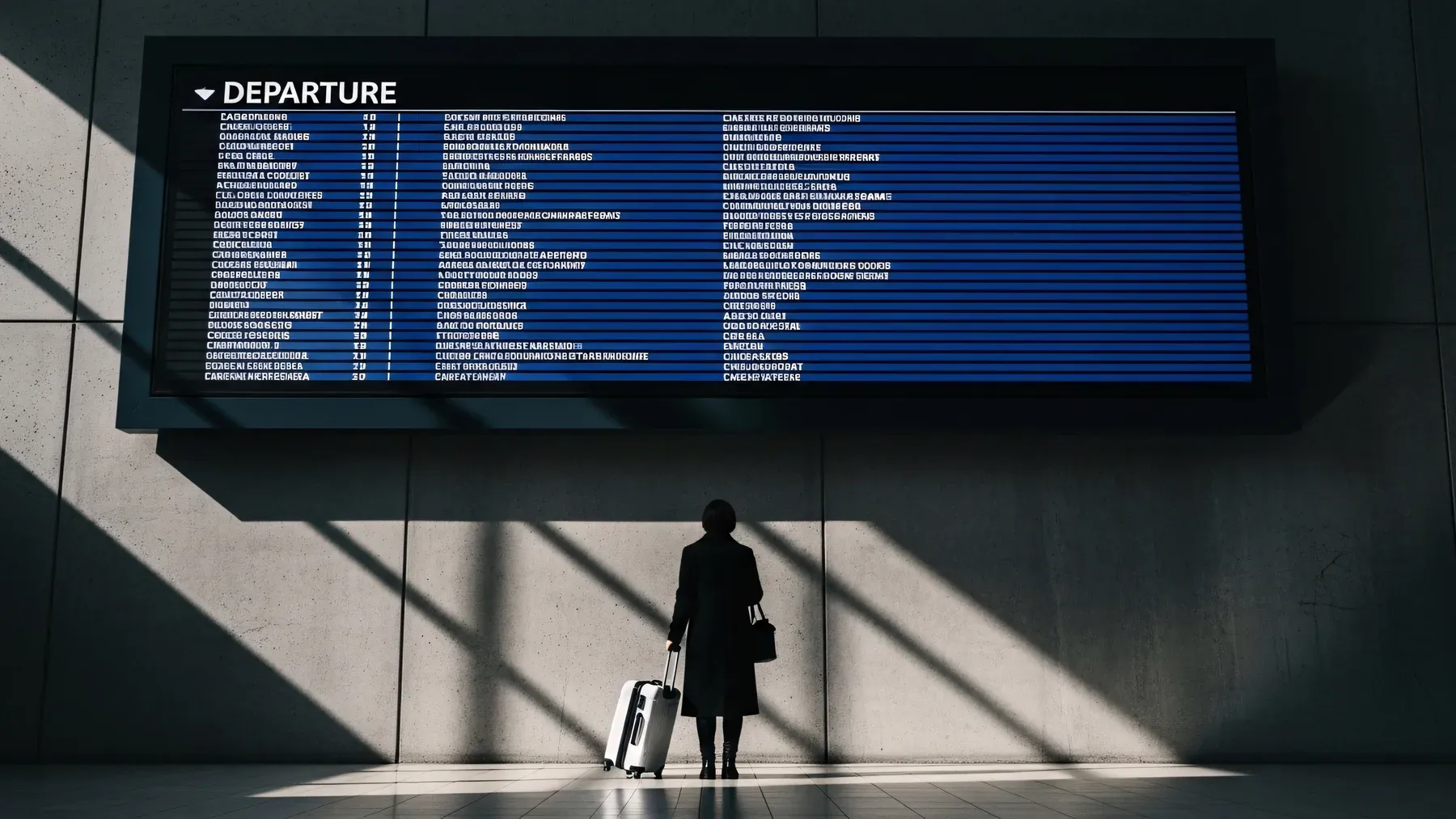
Two people meet at an airport after fourteen years apart. The returning parent still remembers a child who needed shoes tied before school. The daughter waiting beneath the departures board runs a repair business, supports a younger sibling, and has spent years making decisions without parental permission.
They recognize each other. That does not mean they know each other.
A reunion scene contains three relationships at once: the relationship that existed before separation, the relationship each person imagined during the absence, and the relationship now possible between the people who arrived. Emotion comes from the friction among those versions.
If the scene relies only on anticipation followed by an embrace, it may deliver warmth without changing the story. A dramatic reunion needs a practical question. Who has authority now? Which promise still applies? What explanation is owed? Where will the returning person sleep tonight? What can these characters ask of one another after years lived separately?
The daughter has agreed to collect the parent from the airport. She has not agreed that the parent will move into her home, reclaim a parental role, or decide what happens to the family workshop. The arrival forces those assumptions into the same place.
Build the two versions that arrive first
Long before the characters see each other, each has drafted the reunion privately.
The parent imagines an apology, tears, a drive through familiar streets, and entry into the old home. The daughter imagines a courteous pickup, a hotel, and a conversation after the younger sibling’s exam. Both plans feel reasonable to the person who made them. Their incompatibility gives the opening beats direction.
Write a private arrival brief for each character:
- What event do they believe ended the separation?
- What do they expect in the first thirty seconds?
- Which explanation have they rehearsed?
- What evidence of love, regret, or loyalty do they plan to offer?
- What sign would they interpret as rejection?
- Which role do they assume is waiting for them?
- What decision do they need before the encounter ends?
Do not make one brief correct and the other foolish. The parent sent money and voice messages whenever work allowed. The daughter experienced money arriving without anyone attending illness, school meetings, rent crises, or the death of a grandparent. One measures care through sacrifice abroad. The other measures it through presence and shared labor.
The history of contact determines the emotional distance. Regular calls can preserve affection while freezing each person’s image of the other. Censored letters create uncertainty. Messages sent through relatives invite distortion. Silence may be chosen, imposed, or misread. Record the channel, frequency, topic, omissions, and who controlled access.
Research on families reunited after migration describes the returning parent as an “absent presence” in household life. Children and caregivers adapt during the separation, and the return requires further adjustment to changed routines and roles. This is useful craft context, not a template for every family. Build the specific economic, cultural, legal, and emotional conditions of the fictional separation.
Show the imagined relationship before the meeting through action. The parent packs an old storybook as though the daughter still wants it read aloud. The daughter reserves a hotel room and rehearses calling the parent by a first name. These preparations create testable expectations.
Recognition is a sequence of corrections
At first sight, characters usually search for continuity. The parent notices the daughter’s familiar way of standing with weight on one heel. The daughter recognizes a green suitcase from old video calls. Those details provide the relief of identification.
Then correction begins.
The daughter moves to take the suitcase because the parent now uses a cane. The parent refuses help because returning as a dependent feels unbearable. The daughter hears the refusal as an attempt to reassert authority. A small movement has revealed health, pride, duty, and a changed power relationship.
Use a recognition sequence with four passes:
- Proof of continuity: a voice, gesture, object, phrase, or feature confirms identity.
- Evidence of time: the viewpoint notices a physical, social, or behavioral change.
- Failed prediction: one person acts according to the old relationship and receives an unexpected response.
- Revised tactic: they become warmer, more formal, more defensive, or more observant.
Specific changes matter because the viewpoint character interprets them. “She looked older” describes appearance. “She checked the elevator before committing her weight to the cane” shows what the daughter notices, what the parent tries to hide, and how care may enter the scene.
Change can appear through vocabulary, accent, dress, health, profession, religious practice, humor, touch, money, authority, or silence. Select details that affect the relationship. An altered hairstyle may matter if it violates a family expectation. A new accent matters if one character hears it as evidence of belonging elsewhere.

Touch should have conditions. Who initiates? Does the other person complete, endure, shorten, or avoid it? What happens immediately afterward? An embrace can be sincere while failing to settle the next question.
Nancy Kress’s Characters, Emotion & Viewpoint recommends preparing conflicting emotions through earlier evidence and rendering them through thought, behavior, bodily response, gesture, and dialogue. In a reunion, relief can direct the daughter toward the parent’s face while anger directs attention to the suitcase packed for a permanent stay. Let selective attention carry conflicting emotions instead of naming a long list.
Other people alter recognition. The younger sibling may call the daughter before the parent reaches baggage claim, demonstrating who has provided daily care. A driver may address the daughter as boss. A new partner may already know family stories. The return occurs inside a relationship network that continued growing.
Put a role negotiation under the conversation
The first conversation needs more than reminiscence. Give both characters a present objective attached to a role.
The parent wants the key to the family workshop, believing ownership and expertise still confer authority. The daughter needs a signature transferring equipment because debt negotiations begin tomorrow. Their legal, practical, and emotional claims overlap.
Make a role ledger:
| Role before separation | Who performed it during absence | What the returnee assumes now | What must be negotiated |
|---|---|---|---|
| Parent who made household decisions | Daughter and grandparent | Parental authority resumes | Advice, consent, and adult boundaries |
| Workshop manager | Daughter | Experience grants final say | Ownership, labor, debt, and leadership |
| Financial provider | Parent abroad plus daughter’s business income | Remittances created security | Actual costs, debts, and shared records |
| Caregiver to younger child | Daughter | Parent can take over | Trust, routine, and the child’s preference |
| Keeper of family history | Both in different places | One explanation should settle the past | Conflicting memories and missing context |
This ledger turns “they have changed” into scene material. The parent reaches for the workshop key. The daughter keeps it in her pocket. The parent offers to speak to the lender. The daughter explains that the lender already deals with her.
Dialogue works when each person pursues a different future through the same topic. The parent asks why the original sign was replaced, seeking proof that the workshop still belongs to the family they remember. The daughter describes safety repairs, seeking recognition of the work completed without them.
Let history appear when it changes the current negotiation. The daughter asks why the parent missed the grandparent’s funeral because it affects trust in today’s promise to remain. The parent explains an immigration restriction because it clarifies constraint. A chronological account of all fourteen years would stop the scene. Select the past that alters the decision in front of them.
If apology enters the scene, keep it distinct from reunion. Returning creates access to the conversation. It does not itself acknowledge harm. The parent can explain economic necessity and still need to address promises broken, calls avoided, or responsibility placed on a child. The guide to a meaningful apology scene can help separate explanation, responsibility, remorse, and repair.
Objects can become contested roles in physical form. The workshop key means authority. The old storybook means a child preserved in memory. A cane means present need that the parent may resist naming. Use a few objects whose ownership or use changes during the scene.
Give warmth and resistance equal causal weight
A reunion can be loving and difficult in the same minute. Warmth should change behavior rather than cancel conflict.
The daughter may accept the storybook, then say the parent will stay at a hotel. The parent may admire the repair business, then object to the workshop transfer. One response confirms affection; the other protects a boundary. Readers can hold both because each follows from an established value.
Avoid using an external interruption to save the characters from the hard exchange. A delayed suitcase, phone call, or arriving relative should alter the negotiation. The younger sibling’s call may force the daughter to decide whether to reveal that the parent has arrived. That decision makes the reunion part of the wider family.
Do not manufacture misunderstanding through unnatural vagueness. If a fact can be stated safely and both people need it, let someone state it. Durable conflict comes from meaning: whether the absence was sacrifice or abandonment, whether money creates a claim, whether the daughter had a choice when she assumed responsibility.
Reunion research across migration, deployment, and family reintegration repeatedly points toward changed routines, role renegotiation, communication, and adjustment over time. Fiction can translate those pressures into specific acts. Who cooks? Who disciplines a child? Who pays a bill? Who decides whether the workshop opens? The relationship becomes visible in ordinary authority.
If the characters cry or embrace, give the action a consequence. The parent cries after seeing the daughter’s burned hand from an old workshop accident. The daughter allows the parent to hold it, then asks whether they will sign the transfer. Emotional openness makes the difficult question possible rather than replacing it.
The same principle applies to anger. An accusation should produce information, a boundary, a retreat, or a changed tactic. Repeating the same grievance at greater volume creates intensity without movement.
End with a trial agreement
A reunion scene cannot prove that reintegration has succeeded. It can establish the first terms under which the relationship will be tested.
The daughter offers a trial agreement. The parent stays at the hotel for one week, visits the workshop after closing, does not contact the lender independently, and meets the younger sibling only after the sibling agrees. In exchange, the daughter postpones the equipment transfer for forty-eight hours and will review the accounts together.
The agreement is provisional, concrete, and difficult. It gives later scenes something to confirm or violate.
Possible reunion outcomes include:
- cautious contact under a clear boundary
- cooperation on a shared task while the past remains disputed
- renewed separation after accurate recognition
- a public welcome paired with private distance
- a temporary caregiving arrangement with changed authority
- a joint search for missing letters, records, or witnesses
- a promise whose credibility depends on a later action
Forgiveness is one possible development, not the required ending. A satisfying scene may end with a person finally seeing the other accurately and choosing limited contact. Reconciliation can take chapters. Some relationships should not resume.
Add a validation scene later. Kress argues that character change becomes credible when dramatized through action and later confirmed. The parent asks before entering the workshop, returns the key, respects the sibling’s refusal, or tells a relative that the daughter is the manager. The daughter shares a decision without surrendering authority. These acts show whether the trial agreement changed behavior.
The next scene should follow from the reunion outcome. Use the logic of character decisions that create the next scene: who must act, what obligation now exists, and what cost follows delay? The agreement about the workshop makes the account review necessary. A boundary violation can make the younger sibling withdraw.

Preserve both lives in NovelOS Studio
A reunion is hard to plan when one timeline follows the person who left and another follows the people who stayed. NovelOS Studio joins those histories in a private desktop workspace available on Windows and macOS.
Use the studio according to the relationship problem:
- Record each character’s remembered bond, private arrival brief, changed habits, fears, roles, and boundaries in Cast & World.
- Map family obligation, financial dependence, caregiving, ownership, resentment, and new partnerships in Connections.
- Store migration rules, workshop history, inheritance, community expectations, travel constraints, and household customs in Architect.
- Explore different failed predictions, role conflicts, and trial agreements in Spark Ideation before fixing the reunion’s direction.
- Place the departure, contacts, remittances, missed milestones, separate turning points, arrival, negotiation, and later validation on Scene Cards in Blueprint.
- Align both lives through Timeline View, including messages sent, messages received, public events, and the dates when each person’s role changed.
- Draft recognition, touch, interruption, mixed emotion, and boundary-setting in Manuscript while the separation history stays connected.
- Use Alchemist to review sentimental explanation, repeated grievances, and dialogue that avoids a fact merely to prolong conflict.
- Set separate drafting, continuity, and revision targets with Goals and Trackers. When the reunion novel is ready for readers, Editorial Foundry can create print-ready and digital PDFs, EPUB, single-page HTML, DOCX, RTF, TXT, or Markdown output.
The manuscript remains on the writer’s computer. Exporting and importing a .novelos archive moves or backs up the complete project, including the histories that support the reunion. One license key activates NovelOS Studio on any number of the author’s own Windows and macOS computers.
A reunion earns its emotion when two remembered people become two present people with a future to negotiate. Build both lives and the agreement between them in NovelOS Studio, then let later choices prove whether coming back can become staying differently.
Sources and further reading
- Nancy Kress, Characters, Emotion & Viewpoint: mixed emotional responses, dramatized character change, and later validation through action.
- Graham et al.: Left-behind children’s perspectives on relationships with return-migrant parents
- Dreby et al.: How separation and reunification shape immigrant children’s development
- Dolbin-MacNab et al.: Reunification and the renegotiation of family roles and relationships
- Sayers et al.: Postdeployment reintegration adjustment for service members and spouses