A Retrospective First-Person Narrator Needs a Present-Tense Stake

Retrospective first-person narration is a story told by a character looking back on events they experienced earlier. It contains two versions of the same person: the experiencing self who moves through the past with limited knowledge, and the narrating self who selects and interprets that past later.
The form becomes part of the plot when the later narrator has a reason to tell now, faces consequences for the account, and must decide what to reveal. Past events still supply most of the action. The telling situation supplies a second line of pressure that determines selection, order, commentary, and the meaning of the ending.
Imagine a retired flood engineer submitting a written statement before a public hearing. Thirty years earlier, a dam operator opened an emergency spillway, destroyed a riverside district, and saved the city center. The engineer was an apprentice in the control room and signed the surviving operations log. A newly recovered maintenance box proves the official timeline was incomplete. The hearing will decide whether displaced families receive compensation and whether the engineer retains a civic honor.
The novel now asks two questions. What happened during the flood? What will the older engineer admit about it today? If either question disappears, the chosen voice loses much of its structural value.

Define the Occasion of Telling
A retrospective narrator knows that the past story has ended. Readers usually accept this convention, yet a specific occasion of telling creates stronger choices. Nancy Kress identifies the central question directly in Characters, Emotion & Viewpoint: why is the narrator telling this story in this way? She discusses frame stories and the richer dual viewpoint created when an older self comments among scenes of a younger self.
Answer seven practical questions before drafting:
- Who receives the account?
- What form does it take?
- Why is it being made now?
- What result does the narrator want?
- What can the account cost?
- What evidence is available during composition?
- When must the account be finished?
The engineer is writing for a public inquiry, with lawyers, survivors, former colleagues, and family members likely to read the statement. It must be filed before Friday. The narrator wants the compensation vote to pass and initially wants to preserve the honor because it funds a scholarship. Admitting that the log was altered may help the families while exposing professional misconduct.
These facts affect prose. A private confession can dwell on shame without proving it. A sworn statement must distinguish observation, later discovery, and inference. A memoir for a child may explain family silences that a public document omits. The narrator’s relationship to the audience determines which facts require context and which words feel dangerous.
The article on giving every first-person narrator a reason to tell is useful even when the novel has one voice. Here, move beyond voice distinction and give the act of narration an outcome that remains undecided.
Split Knowledge Into Then and Now
Narratology commonly distinguishes the narrating self from the experiencing self. Antonia Stoyanova summarizes the first as the mature present consciousness telling the story and the second as the past consciousness whose experience can dominate parts of the narrative. This division gives retrospective first person its central instrument: later knowledge can frame an earlier mistake without erasing its immediacy.
Create a two-column knowledge ledger for every major event.
| During the flood | At the hearing |
|---|---|
| The river gauge rises faster than forecast. | Upstream sensor records were withheld from the control room. |
| The operator orders the spillway opened. | The order followed a private call from the mayor’s office. |
| The apprentice signs a corrected log. | The recovered box contains the uncorrected sheet. |
| The apprentice believes the district was empty. | Seventeen residents were still waiting for buses. |
The younger self must act from the left column. The older narrator may comment from the right, but commentary should perform a job. It can prepare a later reversal, identify the source of present shame, correct an earlier assumption, or expose the narrator’s continuing defense.
Avoid letting hindsight leak into perception. The apprentice cannot notice that a phone call is politically decisive before having reason to suspect it. The apprentice may notice that the operator closes the office door, returns without meeting anyone’s eyes, and changes the evacuation estimate. Those observations were available then. Their meaning becomes legible later.
The comparison of first person and third person viewpoints explains the basic access difference. Retrospective first person adds temporal access: the narrator can know more now than the viewpoint character knew inside the scene. Label the source of that knowledge rather than granting unexplained omniscience.
Budget Hindsight Instead of Hiding the Outcome
Kress notes a real tradeoff. A narrator who openly looks back may lose some ability to surprise readers about survival or broad outcome. The form gains perspective and a dual consciousness. Use that exchange deliberately.
Start by classifying what the opening reveals:
- survival: is the narrator alive, embodied differently, or speaking from an unusual state?
- public outcome: what version of the event does society already believe?
- private consequence: which relationship, belief, or loss remains unexplained?
- present uncertainty: what can still change because of the account?
The engineer can state on page one that the district flooded and the city survived. Concealing those facts would create brittle suspense because the hearing already assumes them. The novel can preserve stronger questions: why did the operator act early, who altered the log, why did the apprentice sign it, and what will the narrator do with the recovered sheet?
Hindsight becomes consequential when it redirects the reader’s question. “I did not yet know the mayor had called” announces information and can become repetitive. A more active intervention is: “For thirty years I described the next four minutes as confusion. The maintenance box leaves me that word no longer.” The sentence identifies a past defense, introduces present evidence, and promises a reassessment.
Use later commentary at structural hinges. The opening establishes the telling position. The first major correction shows that memory and record differ. The midpoint reveals what the narrator has avoided naming. The approach to the climax narrows the remaining disclosure. Continuous commentary after every paragraph drains the past scenes of momentum.
Give Memory an Evidence Boundary
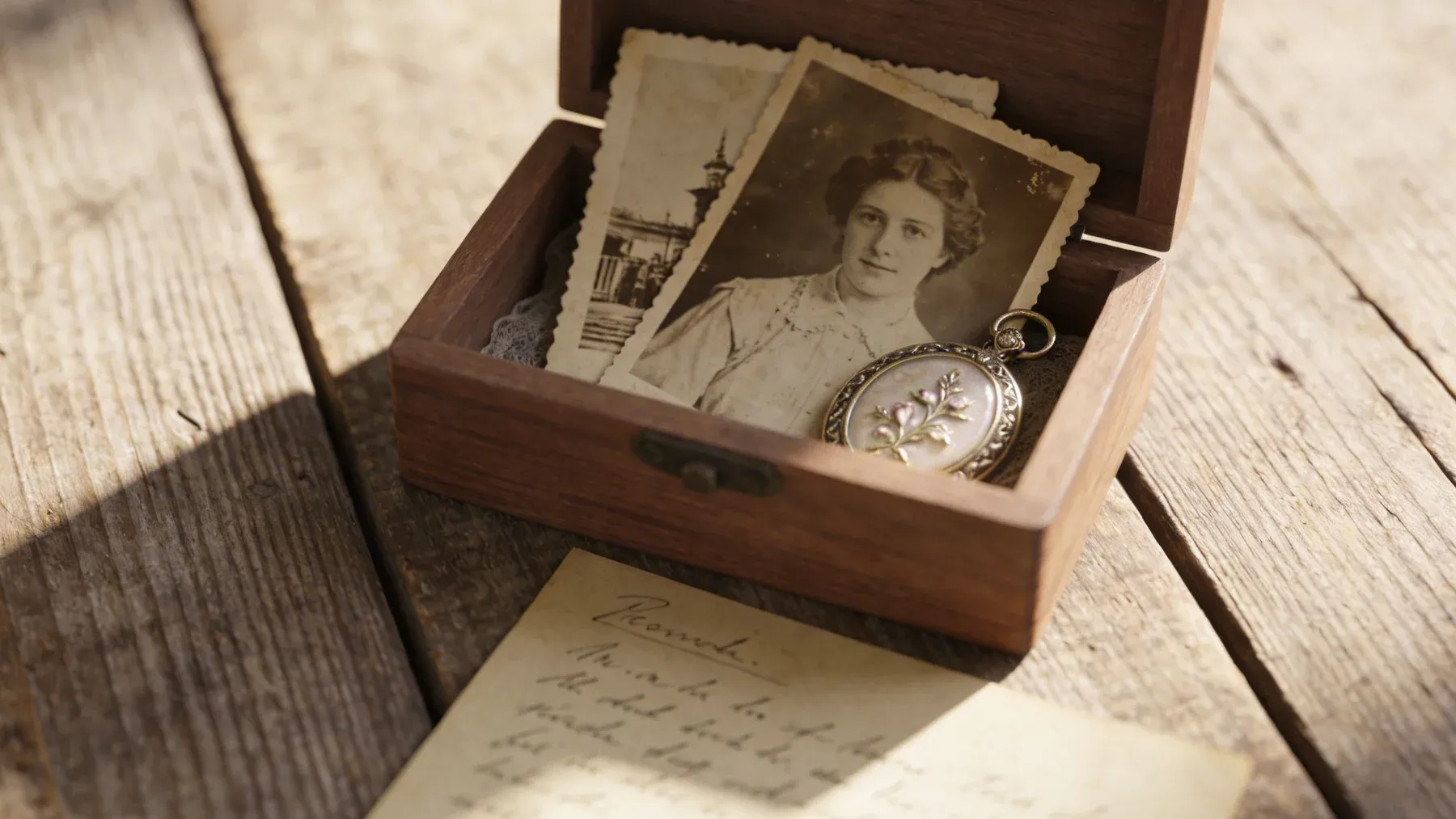
First-person retrospective prose often reproduces exact dialogue, room details, and sequences from decades earlier. Readers accept shaped narration, but the story becomes more persuasive when it signals what kind of access supports each passage.
Separate five sources:
- direct memory: what the narrator recalls experiencing;
- contemporaneous record: logs, letters, photographs, audio, or notes created then;
- later testimony: what another person explained afterward;
- reconstruction: what the narrator infers from several sources;
- uncertainty: what remains unavailable or disputed.
The engineer remembers the alarm’s metallic pulse and wet cuffs from carrying gauge sheets. The exact spillway times come from the original log. A dispatcher later explains why buses were delayed. A closed-door conversation between the operator and mayor cannot be rendered as witnessed fact. The narrator may report the call record, the operator’s changed behavior, and a plausible inference.
This boundary does more than defend realism. It generates plot. A missing page can force the narrator to contact a former dispatcher. A photograph may contradict the remembered position of a warning light. A sibling can refuse permission to quote a private letter. Evidence arrives in the narrating present and reshapes the next past chapter.
A study of first-person consciousness distinguishes retrospective description, quoted past thought, and narration that identifies closely with the past self. A novelist can use all three modes. Retrospective summary handles elapsed time and later understanding. Dramatized memory restores scene pressure. Explicit uncertainty prevents polished invention from posing as proof.
Build a source note beside every crucial fact. If the narrator has no route to it, revise the claim, add a source, or make uncertainty meaningful. This also keeps unreliability fair. The narrator may distort interpretation while the text remains precise about evidence.
Turn Selection and Omission Into Action
Every narrator selects, but a retrospective narrator with a present stake can make selection visible. The engineer begins the statement intending to describe technical conditions and avoid the apprentice’s own role. That intention controls order. The account explains rain, gates, warning systems, and chain of command before mentioning the corrected log.
Plan omissions as unstable decisions:
- what fact is being withheld;
- whom disclosure would help;
- whom it would harm;
- what explanation the narrator gives for delaying it;
- which event or evidence makes delay impossible.
The narrator withholds that the operator ordered the apprentice to rewrite a time entry. The initial justification is that the change did not alter the physical decision. The recovered sheet shows that three minutes separated a feasible district warning from an impossible one. A survivor’s testimony then reveals that officials used the corrected time to blame residents for staying.
The omission now affects more than trust. It helped create a public story that denied compensation. Writing becomes a sequence of actions: include the uncorrected sheet, identify the operator, admit the signature, explain the fear behind compliance, and accept cross-examination.
The guide to constructing an unreliable narrator without cheating helps when the older engineer still misreads motives or protects a self-image. Retrospective voice does not automatically require unreliability as a twist. A narrator can be candid about uncertainty and still discover that a cherished explanation was incomplete.
Give the reader evidence before the narrator’s final admission. The statement’s overly precise language around the log, avoidance of the word “altered,” and repeated insistence that the apprentice lacked authority should create an interpretable pattern. The reveal names pressure the prose has already carried.
Make Past Scenes Answer Present Questions
Chronological completeness is rarely the best organizing rule. Choose and order past scenes according to the narrating present’s developing problem.
For each chapter, write a paired turn:
- past turn: what changes for the experiencing self;
- present turn: why the narrating self can no longer tell the story in the previous way.
The chapter about the first flood forecast ends with the apprentice trusting the operator’s expertise. In the present, a calibration report shows that the operator knew the model was failing. The bus-depot chapter ends with the apprentice believing evacuation was complete. In the present, testimony identifies a canceled route. The log chapter ends with a signature. In the present, the narrator stops calling it a clerical correction.
This paired structure prevents hindsight from becoming a running essay beside the “real” story. Each timeline alters the other. Present evidence chooses the next memory. Re-entering the memory changes the statement being written. The past cannot change, but its public and moral consequences remain active.
Transitions need clear anchors. Mark whether a paragraph belongs to the control room, the writing desk, the hearing chamber, or a later interview. Repeated sensory bridges can help when they have causal meaning. The tap of rain against the present window recalls the old gauge room because the narrator has just opened that day’s forecast, not because every memory requires a cinematic dissolve.
Vary distance within the past. During the spillway decision, stay close to the apprentice’s limited perception. Between shifts, let the older voice summarize procedures and consequences. The switch should answer whether the reader currently needs lived uncertainty or later comprehension.
End the Event and the Act of Telling
A retrospective novel needs two resolutions. The past climax answers what the younger self did. The narrating climax answers what the older self does with the knowledge now.
During the flood, the apprentice signs the altered log and helps open the spillway. That choice saves thousands of people while contributing to a lie about the district. The younger self cannot understand the full political use of the signature, but can know that the recorded time is false.
At the hearing, the older engineer files the uncorrected sheet, relinquishes the civic honor, and testifies that technical necessity did not require the later cover story. The distinction matters. The novel need not reduce a complex emergency to secret villainy. It can separate the defensible decision to open the gate from the indefensible decision to falsify accountability.
Close the two selves through changed language. Early in the book, the narrator calls the apprentice “a junior employee following an emergency command.” Near the end, the narrator writes “I signed.” The shorter sentence claims agency without pretending the power difference vanished.
Then show a present consequence. The compensation measure may pass narrowly. The scholarship can receive a new name. Some survivors may reject the apology. A former colleague may dispute the account. Retrospective narration has altered the plot because telling changed evidence, reputation, and public action.
The final page should also answer why this account had to take the shape readers received. If the narrator wrote to influence a hearing, the selection, technical detail, delayed admission, and deadline should all belong to that purpose. Voice and structure become inseparable.
Track Both Selves in NovelOS Studio
Retrospective first person asks the writer to manage two knowledge states, two motives, multiple evidence sources, selected memories, omissions, and parallel turning points. NovelOS Studio can keep the telling situation connected to the past story it reshapes.
Set up the project around the divided narrator:
- Build younger and older phases of the narrator’s beliefs, fears, vocabulary, responsibilities, self-protective explanations, and goals with The Oracle.
- Record the dam, control room, district, spillway, warning network, maintenance box, inquiry rules, compensation process, civic honor, and technical terminology in The Architect.
- Map apprentice authority, operator command, political pressure, family loyalty, survivor distrust, and present accountability through Connections.
- Explore alternate occasions of telling, evidence discoveries, omission sequences, commentary lines, and present consequences in Spark.
- Pair past decisions with present revisions in The Blueprint. Timeline View can separate event time, record-creation time, discovery time, writing time, and hearing time.
- Draft close past scenes and the older voice’s measured interventions in Manuscript.
- Create custom goals and trackers for the statement deadline, chapter targets, disclosed evidence, unresolved contradictions, and each version of the narrator’s knowledge.
- Use The Alchemist to compare different distances and hindsight levels beside the current paragraph while preserving the narrator’s individual language.
- Move the finished account into Editorial Foundry for EPUB and PDF production, or supply later collaborators with DOCX, RTF, Markdown, TXT, or a single-file HTML edition.
NovelOS Studio has Windows and macOS editions, keeps the project on the writer’s own computer, and allows activation across the computers that owner uses. The past action, later evidence, divided voice, disclosure plan, trackers, manuscript, and finished edition remain connected. Write a retrospective narrator whose reason for telling changes what the novel can do.
Sources and further reading
- Antonia Stoyanova, “Sensory Modality as a Linguistic Sign of the Divided Self”, on the distinction between narrating and experiencing selves in first-person retrospective fiction.
- Varela and colleagues, “A Narrative Method for Consciousness Research”, on retrospective self-narration, quoted past thought, and narration that identifies with an experiencing self.
- Nancy Kress, Characters, Emotion & Viewpoint, especially PDF pages 173 and 174 on the reason for telling, framing a completed story, younger and older versions of a narrator, perspective, and the tradeoff with immediacy.
- Lummi source: man writing in a study
- Lummi source: vintage memory box
- Lummi source: woman gazing at dusk