A Locked-Room Mystery Is a Proof of the Possible
A locked-room mystery succeeds when the story first proves that a crime appears impossible, then shows which premise in that proof was false. The culprit may exploit time, identity, access, cause of death, a lock state, a witness angle, or the meaning of a recording. Readers should receive enough physical and human evidence to challenge those premises before the detective reconstructs the solution.
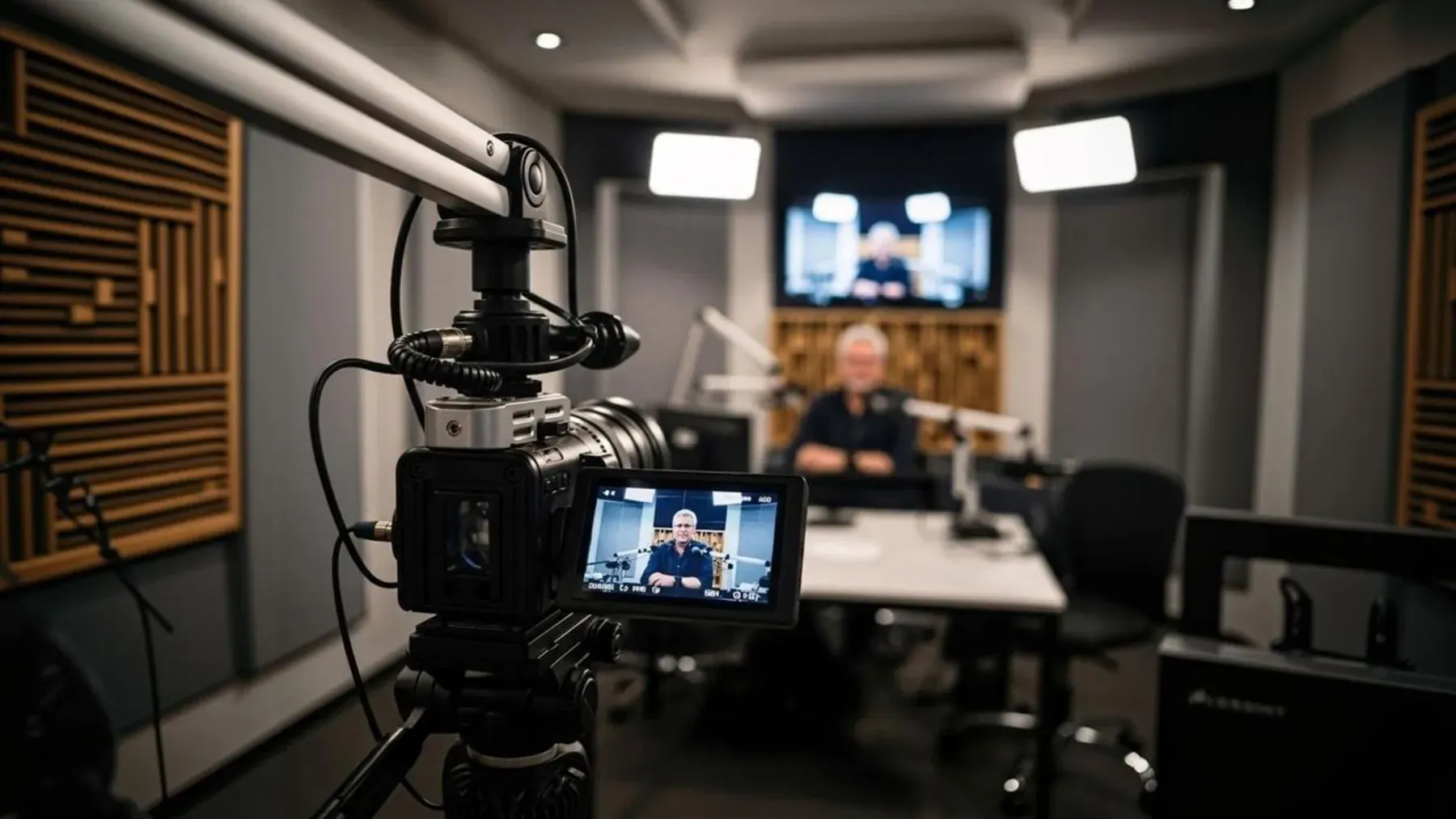
Imagine a composer found dead inside a soundproof studio. Witnesses watched someone in the composer’s red coat enter. They heard the inner bolt slide. A corridor camera shows no later visitor. At the scheduled broadcast time, the piano begins playing, stops after one violent chord, and remains silent. Firefighters remove a wall panel because the bolted door will not open.
The scene seems to establish four facts: the composer entered alive, sealed the room, performed for several minutes, and died before discovery. Those statements are conclusions. The actual observations are narrower: a person in a familiar coat entered, a metallic scrape sounded, music played, and a body was found behind a visible brass object.
That distance between observation and conclusion contains the puzzle.
Write the Sealed Condition as a Falsifiable Claim
“Nobody could enter” is too vague to test. Define the location, interval, relevant object, and basis for exclusion.
For the studio case, the sealed condition might read:
From 8:17, when the red-coated figure passed through the public door, until 8:31, when firefighters began opening the wall, no person crossed that door or any known person-sized opening, and the inner bolt appeared engaged.
This statement identifies what the mystery must establish and what a solution may challenge. It does not claim that the victim was alive at 8:17, that the figure was the victim, that the visible brass was the bolt, or that sound originated from live action.
Draw the room before choosing the trick. Include dimensions, doors, hinges, lock direction, windows, floors, ceilings, ducts, pipes, cables, furniture, adjoining spaces, sightlines, cameras, sensors, and structural changes. Mark who knows each feature and when the reader learns it.
The studio is an acoustic shell built inside an older theater room. A maintenance gap separates the two walls. Cables enter beneath a raised floor. A removable panel from the loading corridor allows equipment service. The public door crosses both walls through a deep vestibule. An electronic outer lock and manual inner bolt perform different jobs.
Every feature needs an ordinary reason to exist. The gap permits inspection. The raised floor isolates vibration. The removable panel allows heavy gear to reach the cable hatch. A fire-inspection lens shows part of the bolt. Readers will accept an unusual building when its parts support work beyond murder.
Introduce those parts before the reveal. A repair invoice mentions the panel. A technician complains about heat in the maintenance gap. A delivery photograph shows a speaker cabinet near the old cable hatch. The writer may delay significance while keeping existence visible.
This is where a locked-room mystery differs from a late secret passage. A concealed route that no earlier fact could suggest removes the impossibility by authorial privilege. A known maintenance space whose limited function was misunderstood allows readers to reason.
The broader fair-play mystery framework explains the reader contract in terms of observations, warrants, inferences, and rival solutions. The locked-room form applies that contract to a sharply bounded physical problem.
Separate Observation, Record, Testimony, and Inference
Build an impossibility ledger with four evidence classes. This prevents a camera, witness, or lock log from gaining more authority than it deserves.
| Evidence class | Studio example | What it proves | What it leaves open |
|---|---|---|---|
| direct observation | witness sees red coat pass the door | a similarly sized person wearing the coat entered | identity, health, intention |
| system record | credential log shows the composer’s badge | that badge opened the outer lock | who carried it, whether the door relocked immediately |
| testimony | technician says the bolt moved | the technician perceived brass through a narrow lens | full bolt position, angle, obstruction, honesty |
| inference | piano begins at broadcast time | a sequence of notes occurred | live player, stored instructions, exact source time |
Security devices deserve the same discipline. A camera records its field of view at a frame rate with a clock and retention process. A lock logs a credential or state transition. A motion sensor reacts to a defined threshold. None identifies a person or explains an event unless the system was designed and validated to do so.
List the negative claims too. “No one left” may mean no person was visible in continuous footage. It may mean witnesses remember no exit. It may mean an access system recorded no authorized opening. Those forms of absence have different strength.
Then test each item in the location. Ask a similarly built person to wear the coat. Walk the corridor at different angles. Measure how much of the bolt the inspection lens shows. Compare a door movement with the camera’s frame interval. Play stored and live piano passages through the same broadcast chain. Practical tests turn abstract doubt into clue-bearing scenes.
The investigation-scene guide helps keep these tests dramatic. Each action should update a theory, change access, expose resistance, or create a decision instead of becoming a report read aloud.
Find the One Premise That Makes Impossibility Collapse
Many weak locked-room solutions attack every condition at once: an unknown passage, forged video, identical twin, exotic poison, corrupt witness, and remote lock. The accumulation feels arbitrary because any mystery could be defeated by unlimited exceptions.
Look for a primary false premise that reorganizes most evidence. Common premise families include:
- wrong time: the victim died before or after the assumed interval
- wrong identity: the person seen was someone else
- wrong location: the relevant act occurred outside the sealed space
- wrong cause: the apparent weapon or injury did not cause death
- wrong lock state: the visible or recorded condition was misread
- wrong event: sound, light, movement, or message was automated or replayed
- wrong boundary: the room’s practical access differs from its public description
The studio puzzle centers on wrong time, supported by wrong identity and wrong lock state. The composer died before the red-coated entrance. A self-playing concert piano produced the broadcast. An assistant wore the coat and used the composer’s credential. Through the inspection lens, a short brass sleeve looked like the first section of an engaged bolt.
These supporting deceptions all protect one false premise: that the composer entered alive and performed. Once that belief falls, the impossible murder becomes a staged discovery sequence.
Plant clues capable of changing category. Publicity explains that the composition alternates live playing with stored piano instructions. At first this sounds artistic. Later it changes the music from proof of life into a timing instrument. A maintenance note says the bolt “looks engaged while the door still moves.” At first it suggests faulty inspection. Later it describes the sleeve effect exactly.
Give the nearest rival a serious test. Perhaps the victim entered alive and died from delayed poisoning. That theory fits the sealed interval and automated music. It fails because the body was placed beyond a service hatch after the poison window, and blood transfer shows the fatal injury occurred elsewhere. The correct solution should explain more evidence with fewer exceptions.
Reconstruct Operations and Residue
An explanation is stronger when investigators can repeat the mechanism under controlled conditions. Divide the culprit’s plan into operations, then require each operation to leave residue.
| Operation | Required access or skill | Expected residue |
|---|---|---|
| kill before the public entrance | private meeting and concealed work area | interrupted schedule, cleaned surface, moved instrument |
| move the body through equipment access | loading key and help with weight | wheel marks, disturbed dust, fiber transfer, witness memory |
| create a false entrance | coat, badge, body resemblance | badge custody gap, altered clothing, camera-limit test |
| imitate the bolt | sleeve and recorded scrape | different alloy, filing marks, misplaced offcut, sound file |
| perform after death | stored piano sequence and controller access | file timestamp, exact repeatability, controller log |
| preserve false discovery time | witnesses and broadcast schedule | rehearsed instructions, selective urgency, conflicting clocks |
Residue can be material, digital, temporal, social, or behavioral. A complicated plan should leave more residue than a simple one. Complexity becomes fair when it creates several discoverable surfaces rather than a magical display of intelligence.
Clock work needs special care. Record the source, displayed time, offset, owner, synchronization method, and possible alteration for each timestamp. The corridor camera may run ninety seconds slow. The stream may buffer twelve seconds. A lighting cue may use a local control clock. Readers can follow these differences when the narrative demonstrates them through one synchronization test.
Avoid relying on obscure expertise for the core insight. A specialist can identify the brass alloy or inspect controller metadata. The reader should already understand why those findings matter: the visible object was not the full bolt, and the piano could play without the victim.
The article on building a convincing false suspect is useful for secondary lies. The assistant may conceal the impersonation without knowing about the murder. A technician may alter a lighting log to hide an unrelated safety violation. Their actions create reasonable suspicion and retain consequences after exoneration.
Make the Trick Express the Motive
The method should grow from the culprit’s work, access, pressure, and values. A producer who profits from unauthorized rehearsal data can exploit automated performance, borrowed credentials, stored sound, and hidden labor. The staging becomes an extension of the wrongdoing instead of a puzzle pasted onto it.
The composer planned to expose the sale of private improvisations during the broadcast. The producer kills earlier, moves the body through equipment access, and makes the scheduled sequence sound like a final authorized performance. The apparent time of death protects a contract claim and redirects suspicion toward musicians who opposed release.
That motive explains why the plan uses this room and this night. It also constrains the culprit. The broadcast must continue. The producer cannot destroy all files without losing the commercial asset. Workers who understand the building become dangerous witnesses. The assistant must believe the impersonation serves a publicity surprise.
Let clue placement emerge from those competing needs. The producer retains a controller file because deleting it would disrupt playback. A brass offcut remains because fabrication occurred under deadline. A delivery worker remembers the equipment route because the culprit needed ordinary access to move the body.
The final reconstruction should answer the puzzle in the order readers experienced it:
- the victim died before the alleged sealed interval
- the body reached the studio through known equipment access before public observation began
- the assistant in the coat created a false proof of identity
- the sleeve and sound created a false proof of locking
- stored instructions created a false proof of life
- records and residue connect those operations to the producer
Follow the reconstruction with consequence. The assistant participated in deception. The theater ignored an unsafe inspection condition. The composer’s recordings remain disputed. Solving the mechanism restores causal truth without repairing every injury caused by the institution.
Test the Puzzle Inside NovelOS Studio
A locked-room mystery asks the writer to control architecture, access, clocks, knowledge, physical evidence, digital records, lies, motives, and the reader’s evidence window at once. NovelOS Studio keeps those parts attached to the same case:
- The Architect stores room layers, doors, locks, panels, ducts, cable routes, cameras, sensors, operating procedures, broadcast systems, and every rule the solution depends on.
- Cast & World records the victim, investigator, culprit, assistant, technicians, workers, witnesses, and specialists with access, skills, schedules, knowledge, incentives, and risks.
- Connections maps employment, badge custody, contracts, secrecy, trust, testimony, exploitation, and who can ask another person to perform a suspicious act.
- The Oracle supports development of a witness, suspect, specialist, or worker when the case needs someone occupying a precise operational position.
- Spark Ideation preserves competing sealed conditions, false premises, mechanisms, rival theories, clue carriers, and reconstruction scenes while the writer tests the cleanest version.
- The Blueprint and Timeline View align the true chronology, apparent chronology, system clocks, witness movement, evidence discoveries, theory changes, and final demonstration.
- The Manuscript lets the physical facts enter through action, partial sightlines, sound, work, questioning, and consequence rather than a late technical lecture.
- The Alchemist supports writer-controlled revision when explanation needs clearer phrasing or a clue needs less emphasis without changing its factual content.
- Goals and trackers can monitor floor-plan checks, timestamp reconciliation, clue placement, rival-solution testing, scene progress, word counts, and the reverse audit from every conclusion to its earlier evidence.
- Editorial Foundry creates EPUB, PDF, and browser-ready HTML editions. Separate output choices cover DOCX and RTF for outside editors, plus Markdown and TXT for durable plain-text copies.
Both Windows and macOS support the local desktop studio. The owner can activate one personal license on every computer they use. A .novelos archive export can be imported on another device with the room system, cast, clue plan, timeline, and manuscript together. Mobile ships on iOS and Android on the same licence, installed from the browser.
The impossible crime becomes satisfying when the final answer can be performed, measured, and traced to evidence already present. Build that proof in NovelOS Studio, then challenge every lock, clock, witness, recording, and conclusion before the reader does.
Sources and further reading
- Katharine Schellman, “Almost Two Centuries of Impossible Crimes”, on locked rooms as fair-play puzzles in which the how and who remain rationally solvable.
- James N. Frey, How to Write a Damn Good Mystery, chapters 8, 14, 17, and 18, inspected in the local theory library for motive, means, opportunity, reader-visible clues, reconstruction, and explanations delivered through conflict.
- Jane K. Cleland, Mastering Suspense, Structure, and Plot, PDF pages 116, 123, 125, and 127 to 129 visually inspected in the local theory library for perception, detail, expertise, organic red herrings, and restored innocence.
- A full fair-play mystery evidence audit
- Making evidence tests change an investigation scene
- Giving a false suspect a true hidden cause